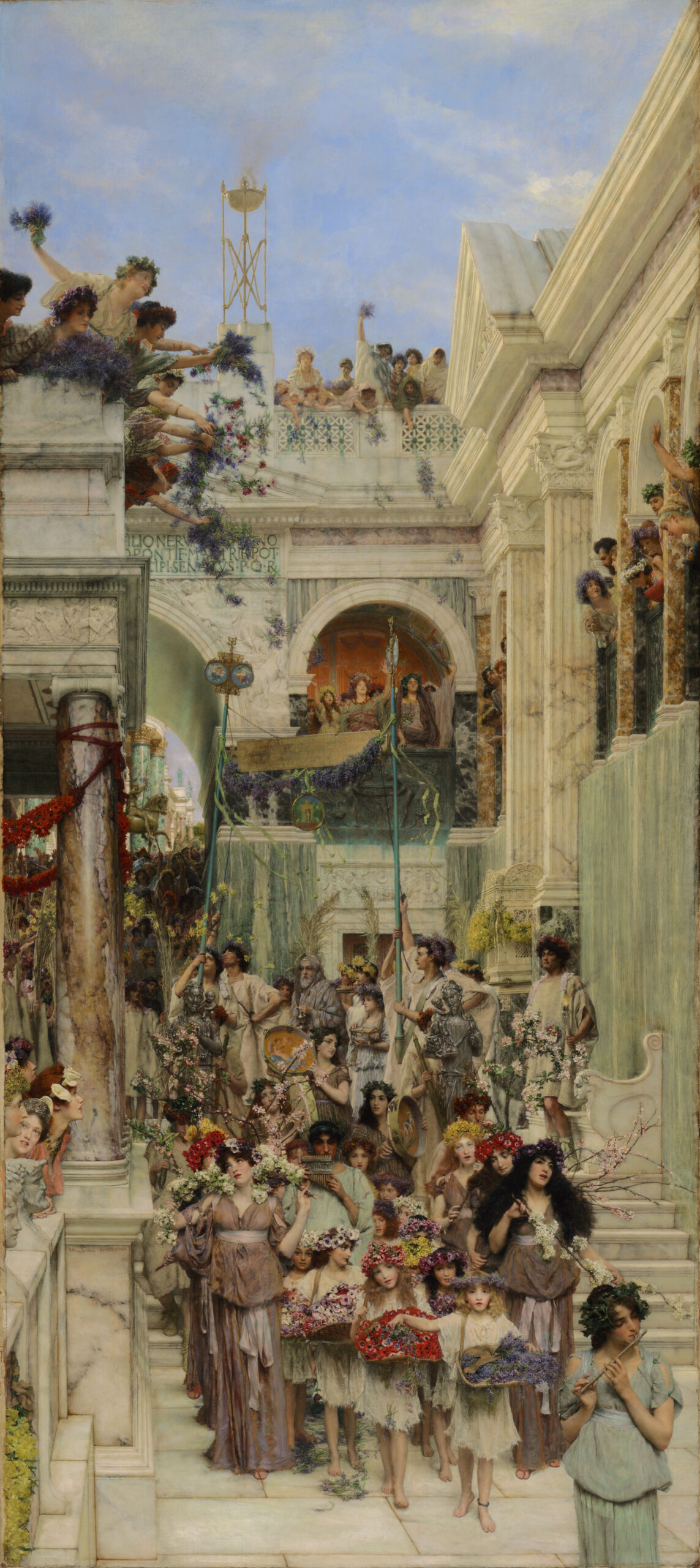
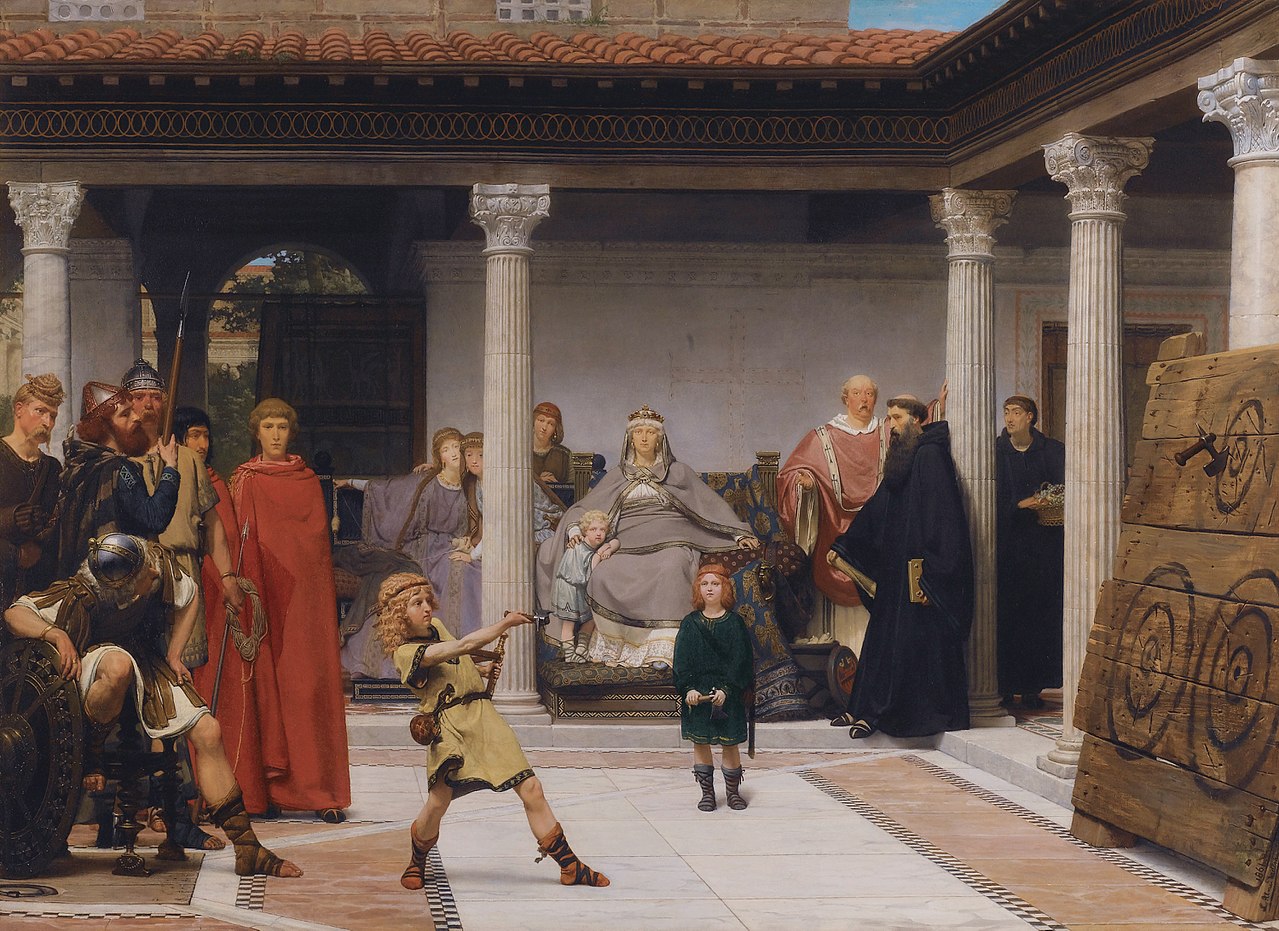
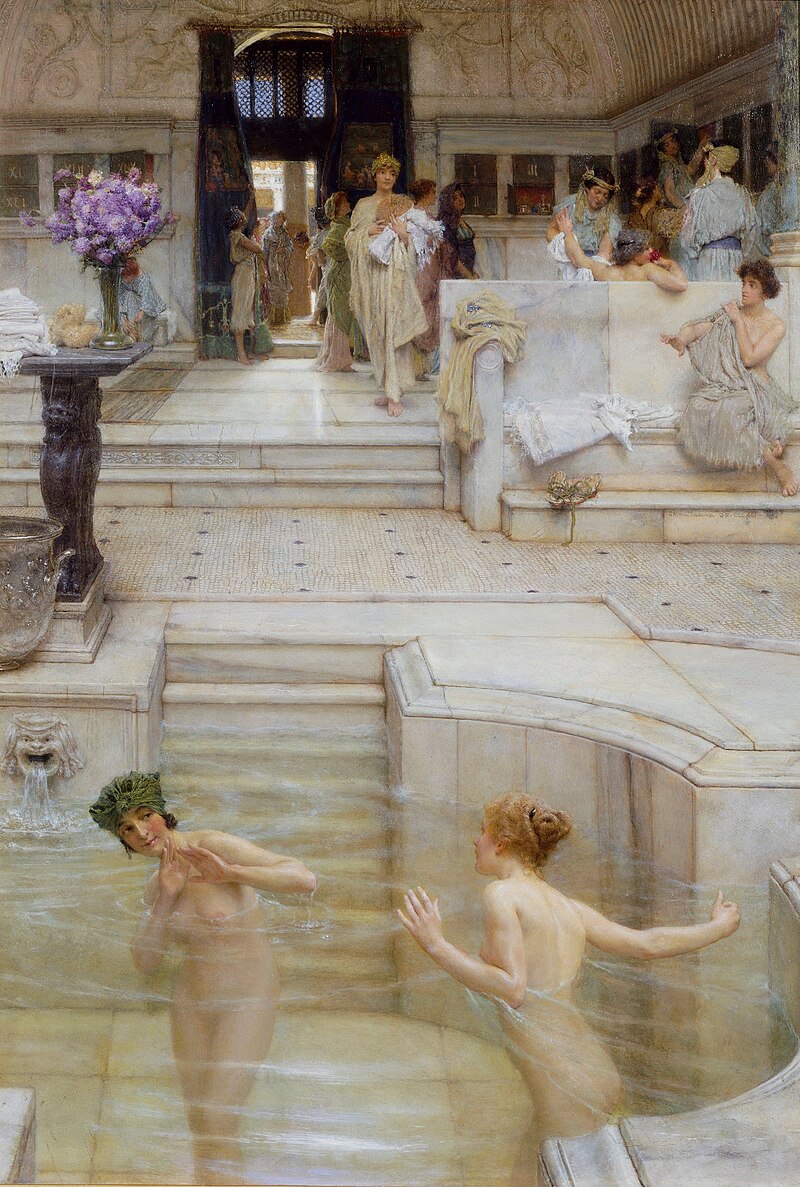
Lawrence Alma-Tadema (1836–1912) was a Dutch-born British painter renowned for his historical subjects and portraiture. Born on January 8, 1836, in Dronrijp, Netherlands, he studied at the Academy of Antwerp, where he assisted H. Leys in the execution of frescoes for the Town Hall in 1859. Early in his career, Alma-Tadema focused on medieval German history, but after visiting Italy in 1863, he shifted his interest to ancient history, particularly Roman, Egyptian, and Greek themes. From 1865 to 1869, Alma-Tadema lived in Brussels, and in 1870, he moved to London. In 1871, he married his second wife, Laura Eps, and was naturalized as a British citizen in 1873. He became an associate member of the Royal Academy in 1876 and a full member in 1879. Alma-Tadema was also honored with memberships in several prestigious institutions, including the Royal Institute of British Architects, the American Institute of Architects, the Royal Scottish Academy, and the Accademia di San Luca in Rome. In 1899, he was granted a title of nobility, and in 1905, he was awarded the English Order of Merit. Alma-Tadema passed away on June 25, 1912, in Wiesbaden, Germany. Alma-Tadema’s work is particularly known for its meticulous attention to detail and realistic portrayal of classical antiquity. His depictions of Roman life, including works like **”A Roman Emperor”** (1871), **”An Audience with Agrippa”** (1876), and **”In the Time of Constantine”** (1879), were highly regarded during his lifetime for their vivid realism in portraying textiles, metals, and marble. His style often infused a slightly dainty or idealized grace into the figures of ancient history, which became his signature. Though he was highly celebrated during his lifetime, earning a reputation that led to his burial in St. Paul’s Cathedral in London, Alma-Tadema’s name gradually faded from prominence after his death. Despite this, his home at Grove End Road in St. John’s Wood, London, which he designed himself, remains a testament to his love for classical interiors, as seen in many of his paintings.