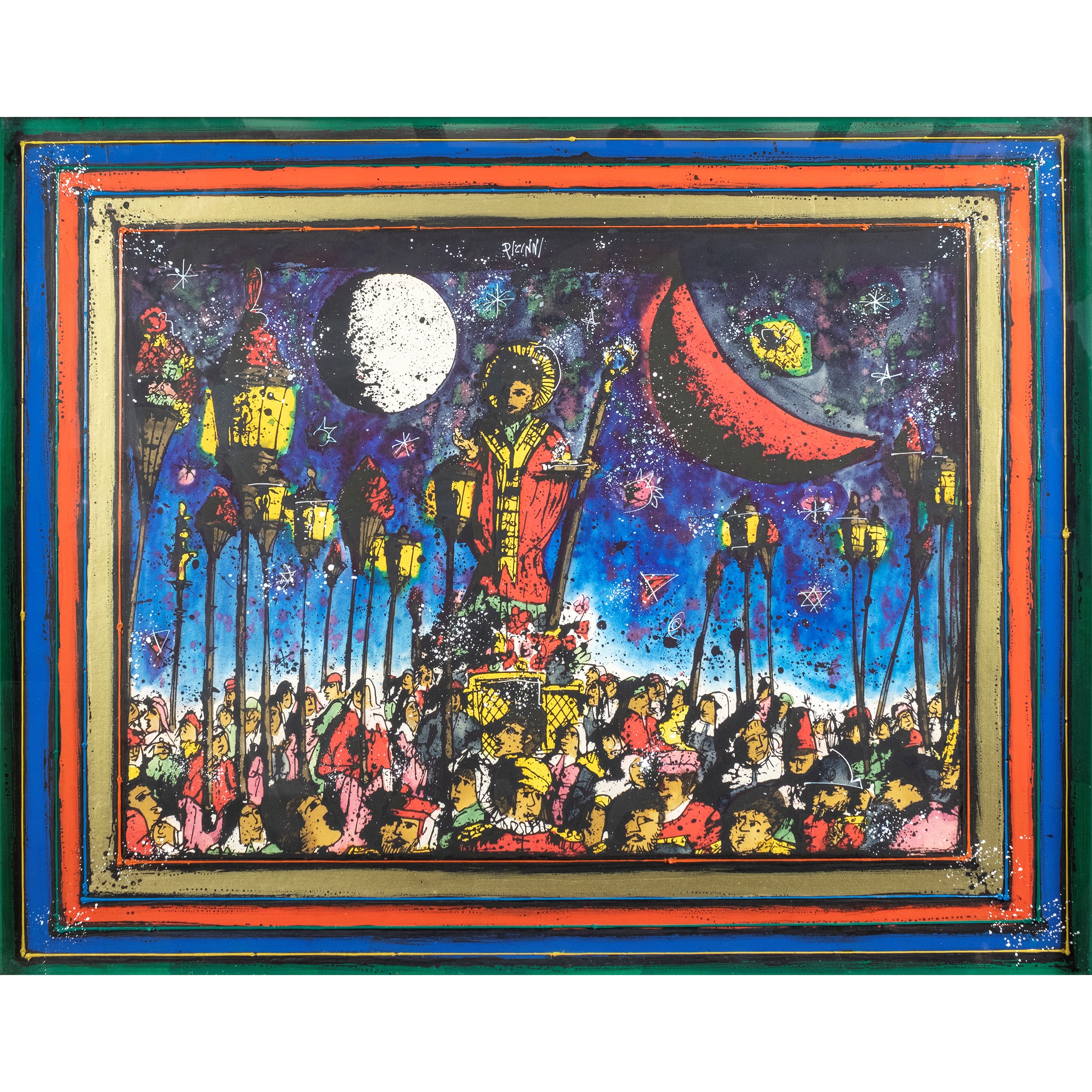
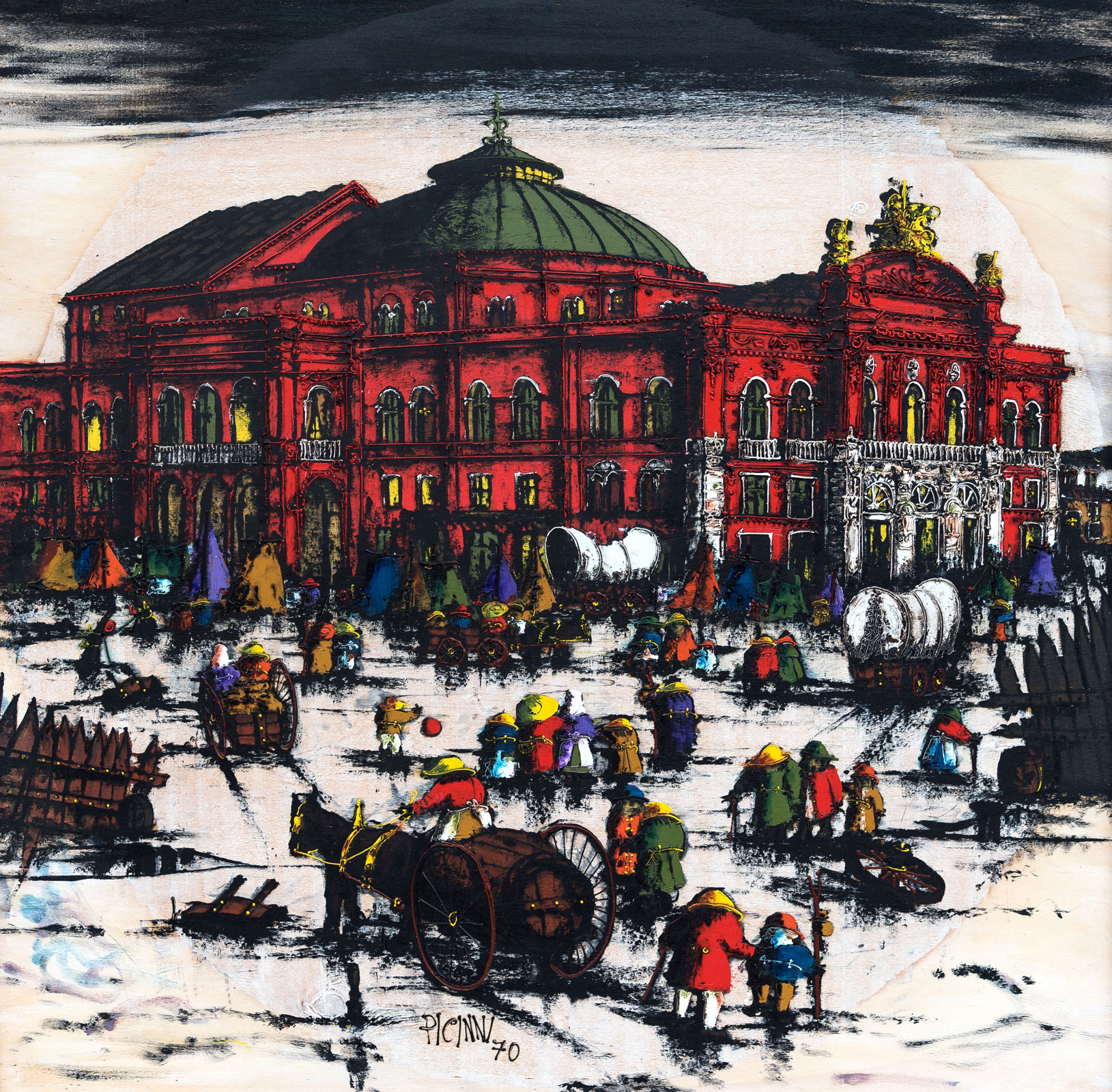
Gennaro Picinni, one of Italy’s most respected contemporary painters, was born in Bari on July 20, 1933. His artistic career began in 1950, and his early works were characterized by an abstract style. However, by the mid-1950s, he shifted direction, joining the ‘Painters of the Naviglio’ group in Milan alongside notable artists such as Crippa, Fontana, Giani, Peverelli, Scanavino, Sottsass, and others. Picinni’s distinctive artistic language is defined by the use of pure, textured colors arranged on a graphic foundation that draws from Flemish tradition. This unique style earned him the nickname “Fiammingo delle Puglie” (the Flemish of Puglia) and made him a prominent figure in the Italian art scene. At the height of his career, Picinni often explored religious themes in his paintings. Several of his works are part of the Vatican Museums’ collection, displayed in the modern art section of the Borgia Apartment. The paintings Picinni created between 1950 and 1955 represent a metaphor for his ‘destiny,’ which evolves into a transformative ‘project’ of reality. His reference to art critic Giulio Carlo Argan is not accidental. In an era that dangerously drifts toward post-organic thought and the homogenization of ideas, he believed that humanity’s only hope lies in the continuous reimagining of paths along which creativity and freedom can thrive. His abstractionism partly derives from Symbolist influences, Cubist deconstructions, and a deep attention to the interior life of the human being—its intimate, unknown landscapes. The external world seems to derealize, and forms become fragmented. This reflects a return to the past, to the “childhood of the world,” in search of a lost self within the labyrinthine mirrors of what we call external reality. For Picinni, painting became a mirror of the soul, one that almost seeks to disincarnate as it gazes toward eternity. Through his work, Picinni created a bridge between inner and outer worlds, using his art as a means to explore the complex and often hidden dimensions of human existence. His legacy endures not only for the visual impact of his creations but also for the depth of thought and emotion embedded within them.