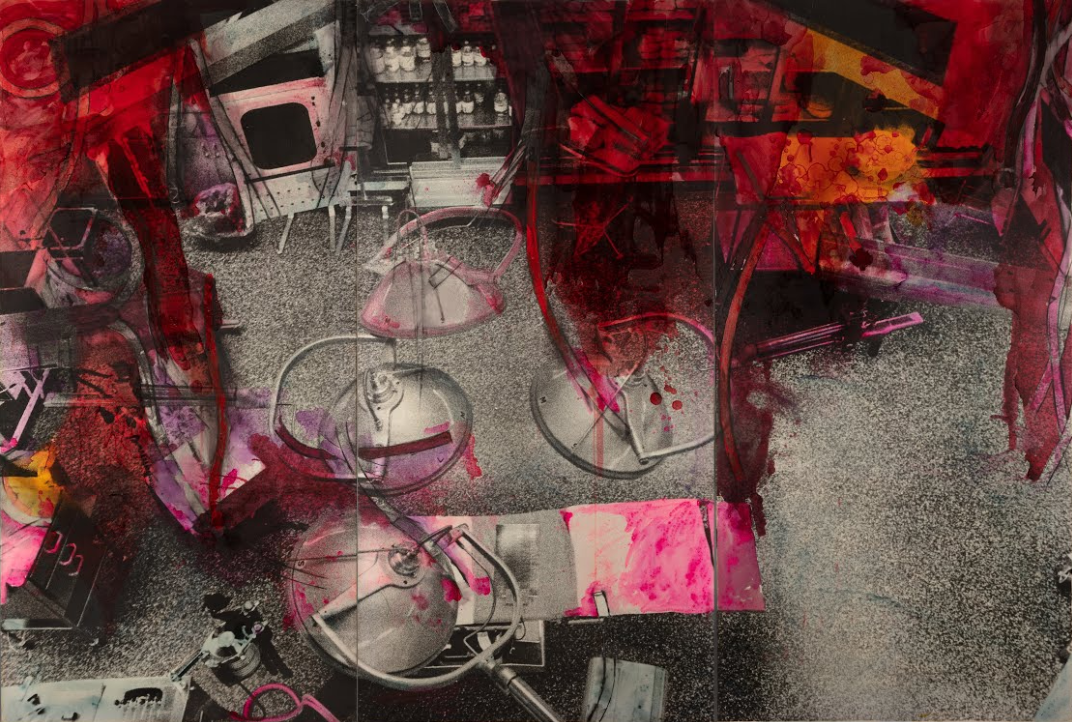
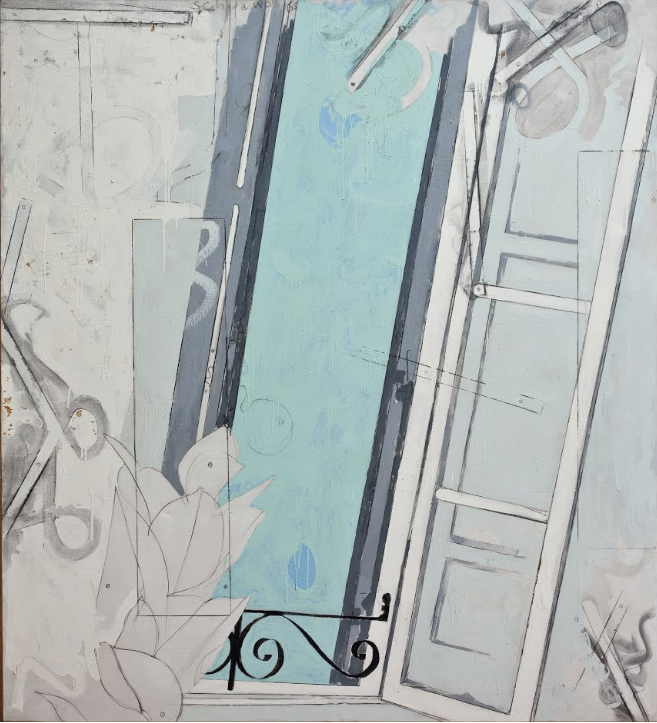
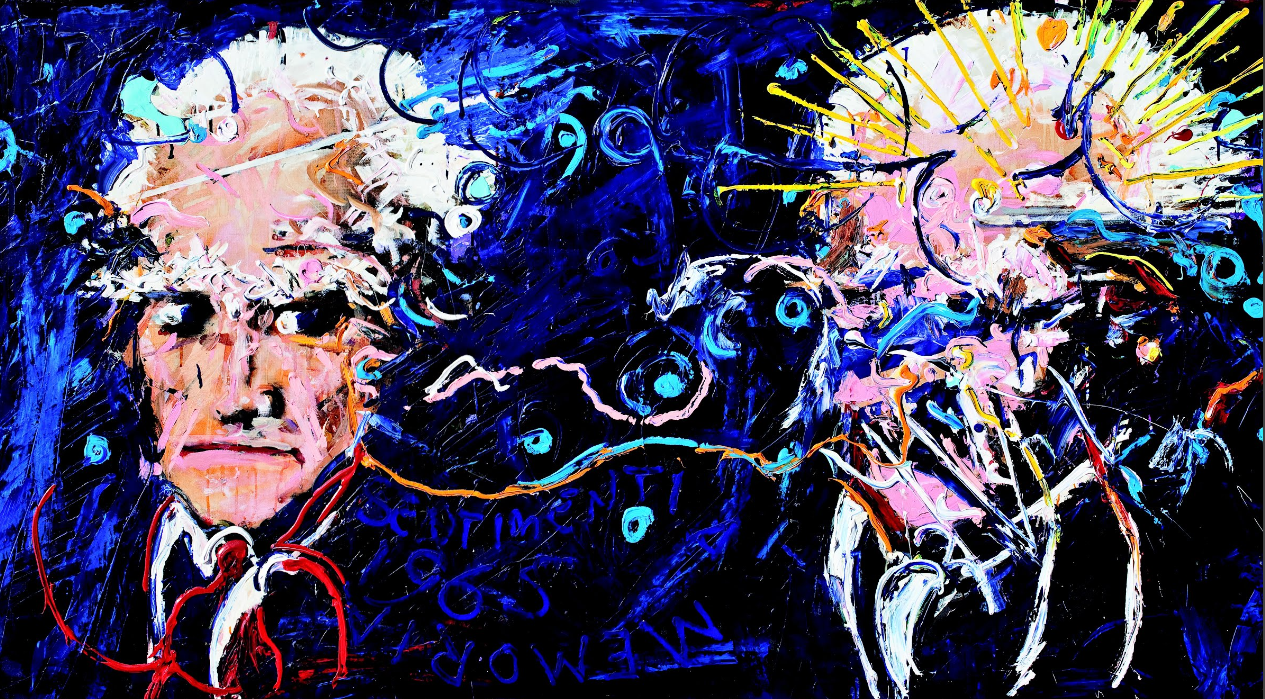
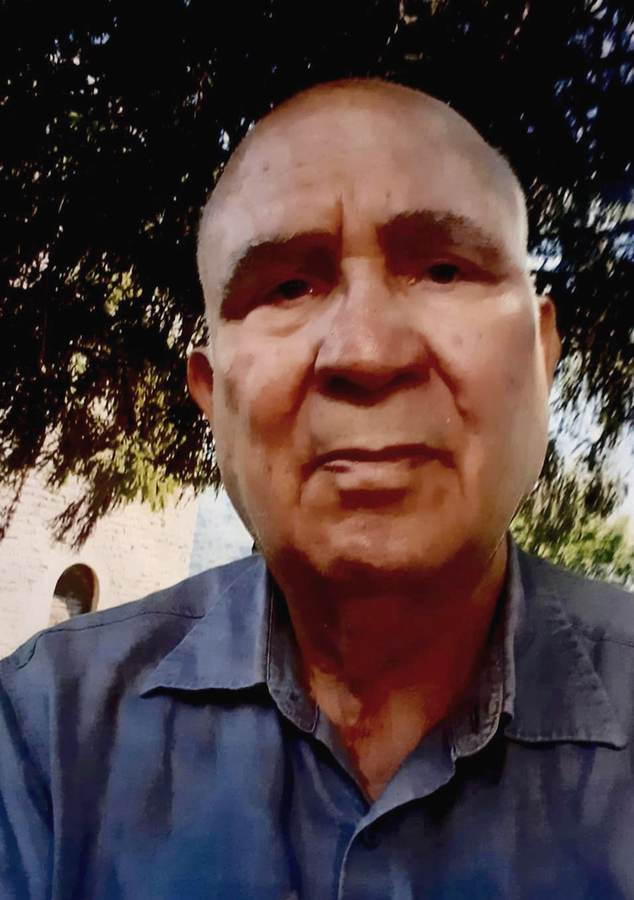
Mario Schifano, born in Homs (Libya) in 1934 and passed away in Rome in 1998, was one of Italy’s most significant artists of the 1960s and a key figure in the post-war international art scene. Known for his rebellious and provocative personality, Schifano became a central and charismatic figure, often compared to Andy Warhol for his eclectic and multifaceted nature, as well as his deep connection to Rome and his love for the good life. His innovative approach to art and his adventurous lifestyle made him a cult figure. His work was often shrouded in controversy, and doubts were raised about the authenticity of some of his pieces, prompting the establishment of a foundation in his name to preserve and protect his artistic legacy. Schifano was also deeply involved in music and cinema. In the 1960s, he befriended the Rolling Stones, with whom he developed a strong bond, even collaborating with them on the film *Trilogia per un massacro*. He frequently hosted parties with members of the band, and his partners, Anita Pallenberg and Marianne Faithfull, later became romantically involved with Rolling Stones members. However, Schifano’s life was also marred by drug addiction, which he began experimenting with in the United States. His use of substances influenced his art, and he often painted while under the effects of drugs. His apartment in Rome became a hub for drug-fueled parties, and his dependency led to numerous arrests, hospitalizations, and failed attempts at rehabilitation. Despite these struggles, Schifano remained a central figure in the art world. Born in 1934, Schifano moved to Rome with his family after World War II. He dropped out of school due to his controversial and provocative nature and went on to work as a shop assistant and later as a restorer at the Etruscan Museum in Villa Giulia. His first exhibition took place in 1959, but it was in the 1960s that he gained recognition. He joined the “Scuola di Piazza del Popolo,” a Roman artistic collective, and his style evolved from informal abstraction to monochromatic paintings, where he applied letters, signs, and images on a single-colored canvas. This approach brought him critical acclaim and led to several prestigious awards. Schifano also formed important connections with the art world during this period, including his friendship with Andy Warhol. In 1963, he participated in the *New Realists* exhibition in New York, showcasing his work alongside major figures of the Nouveau Réalisme movement. His innovative use of mixed media, blending painting with cinema and music, set him apart as a versatile artist. During this time, he also founded the psychedelic rock band *Le Stelle di Mario Schifano*, although he later left the band to focus on painting, while maintaining ties with both the music and film industries. He contributed to Marco Ferreri’s film *L’Harem* and produced *Trilogia per un massacro* in 1968. In the 1970s and 1980s, Schifano became increasingly recognized within Italy, but he briefly distanced himself from painting, which he saw as outdated, and experimented with innovative techniques such as screen printing. Despite his disillusionment with traditional painting, Schifano often returned to it, while also exploring new artistic expressions through media and television. This period included works using computer-generated images, which he translated into paintings on emulsified canvases. Schifano’s personal struggles with drugs continued, but in 1997, he was reintegrated after serving a sentence for drug possession. Sadly, he passed away in January 1998 from a heart attack at the age of 63, leaving behind a significant and lasting impact on contemporary art.