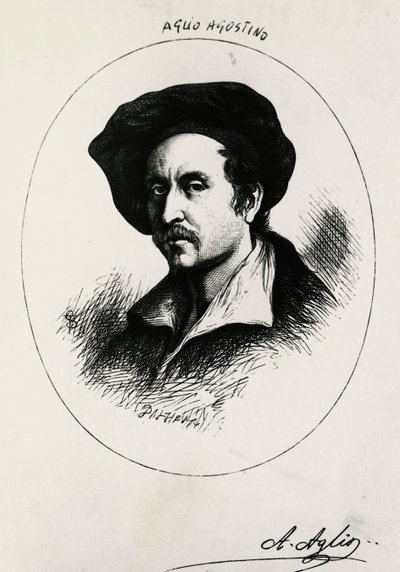
Jackson Pollock
Biography and criticism
Jackson Pollock remains one of the most iconic figures in modern art, known for his innovative and unique approach to painting. His name is synonymous with *action painting*, or *dripping*, a technique that revolutionized the art world and made him one of the most influential figures of the 20th century. Though many people are familiar with Pollock’s chaotic, colorful canvases, his life and creative process offer a deeper understanding of his art. Born in 1912 into a family of farmers, Pollock was always a nonconformist. His rebellious nature surfaced early, as he was expelled from two high schools for his misbehavior. His journey into art began with a fascination with color and form, influenced by Mexican muralists and Native American sand painting techniques. He went on to study art formally, but it was his encounter with Peggy Guggenheim that marked a pivotal moment in his career. Guggenheim provided Pollock with a contract that allowed him to focus entirely on his art, leading to his first solo exhibition in her New York gallery, *Art of This Century*. Pollock’s personal life was just as turbulent as his artistic one. Struggling with alcoholism and emotional instability, he died in a car accident at the young age of 44. Pollock, who was intoxicated at the time, crashed his car while driving with his lover Ruth Kligman and her friend. Kligman was the only survivor of the crash. Known for his groundbreaking technique of dripping, Pollock became a legend in the art world. While he didn’t invent the technique itself, he perfected it, earning him the nickname “Jack the Dripper.” Dripping, also known as *sgocciolatura* in Italian, involves allowing paint to fall freely onto the canvas, creating a spontaneous and dynamic composition. Pollock used industrial-grade enamel paints, which were cheaper and purer, allowing him to experiment freely. Pollock’s creative process was unique. Unlike traditional painters, he did not use an easel, instead placing his canvases flat on the floor. This gave him the freedom to move around the canvas and work from all angles. His movements while painting were described as almost trance-like, as if he were in a meditative state, immersed in the act of creation. He would move from one side of the canvas to the other, gradually building layers of paint in a way that felt like a dance. This fluid and energetic motion mirrored the very chaos of the world around him. Although Pollock’s works may appear chaotic, there was an underlying order to his technique. The speed at which he dripped the paint, as well as the distance from the canvas, were controlled in such a way that he unwittingly adhered to the principles of fluid dynamics. In fact, researchers discovered in the 1990s that his paintings exhibited fractal geometry and Fibonacci’s golden ratio, both concepts that were not known during Pollock’s time. While he never explicitly acknowledged the scientific elements of his work, he famously denied that his technique was random, insisting that there was intention behind every mark. Among Pollock’s most famous works are *Blue Poles*, *Lavender Mist Number 1*, *Mural*, *The Wolf*, and *Number 27*. *Number 17A* holds a particular place in art history as the first painting to fully embrace the dripping technique, and it is currently the fifth most expensive painting in the world, valued at $200 million. Pollock’s work continues to captivate collectors, with pieces like *Number 5* selling for an unprecedented $140 million in 2006, setting a world record at the time. Less well-known works, such as *Untitled Gouache*, have also fetched impressive sums, with one recently discovered in a garage estimated to be worth between $9 and $13 million. Pollock’s legacy endures not only because of his revolutionary technique but also because of the emotional depth and complexity of his work. He remains an enigmatic figure, an artist whose life and art continue to spark debate and admiration. His work is a testament to the power of creative expression, the importance of pushing boundaries, and the ever-present struggle between order and chaos.
Category of affiliation
- Painting

Artworks
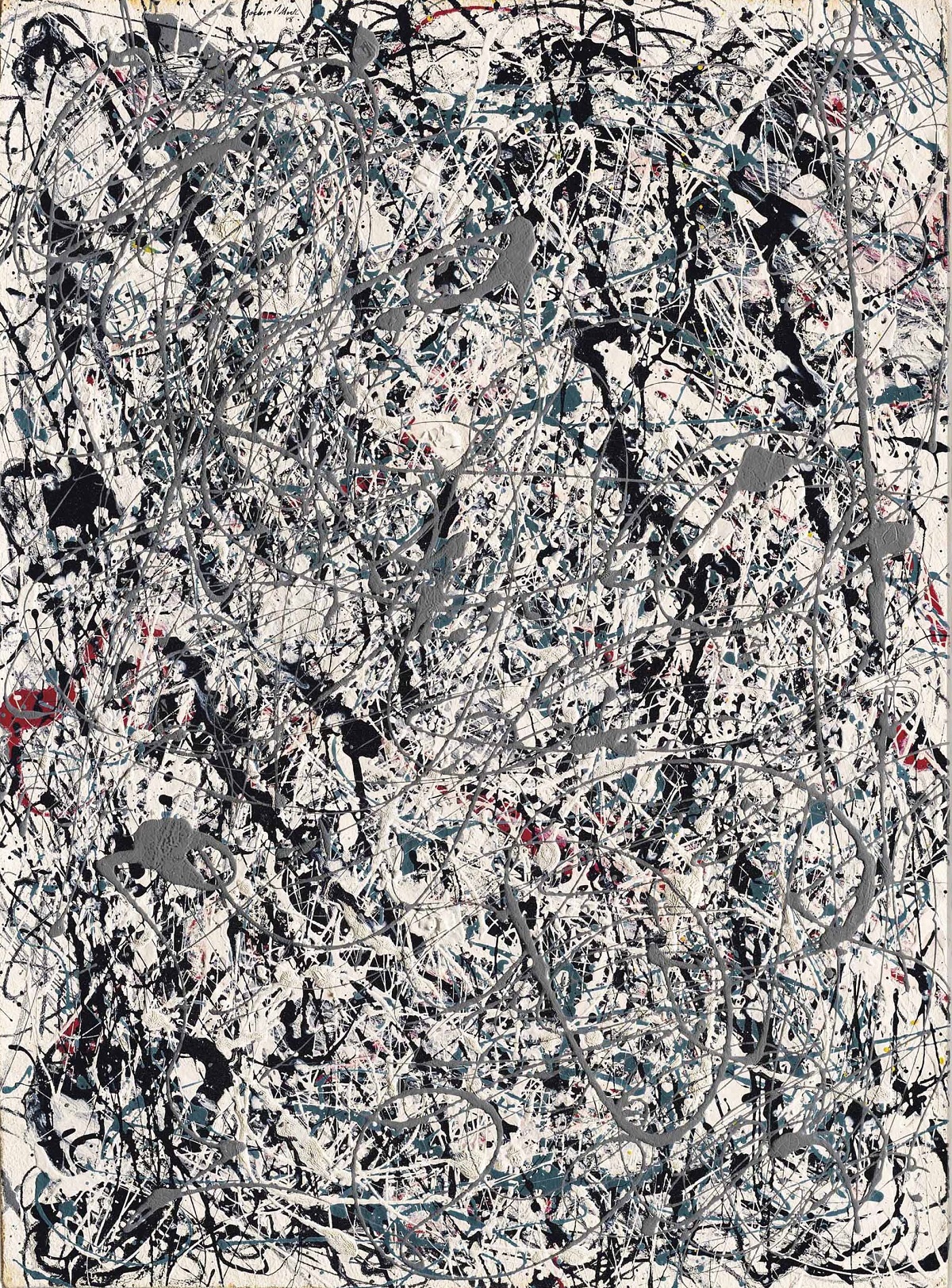
Number 19
- 1948
- Drip painting
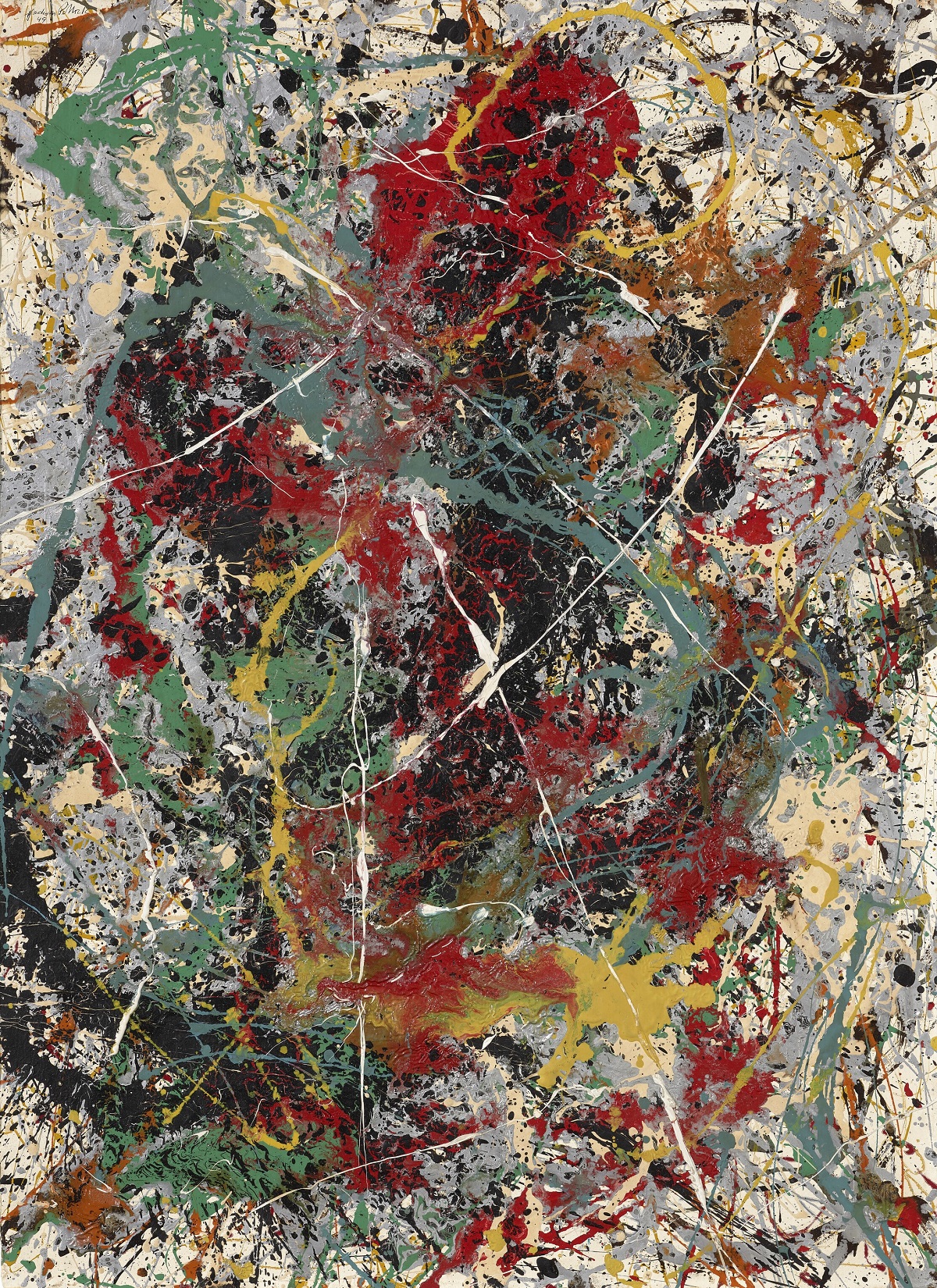
Number 31
- 1949
- 78,7 cm x 57,2 cm
- Oil, enamel, aluminum and chalk on paper mounted on masonite
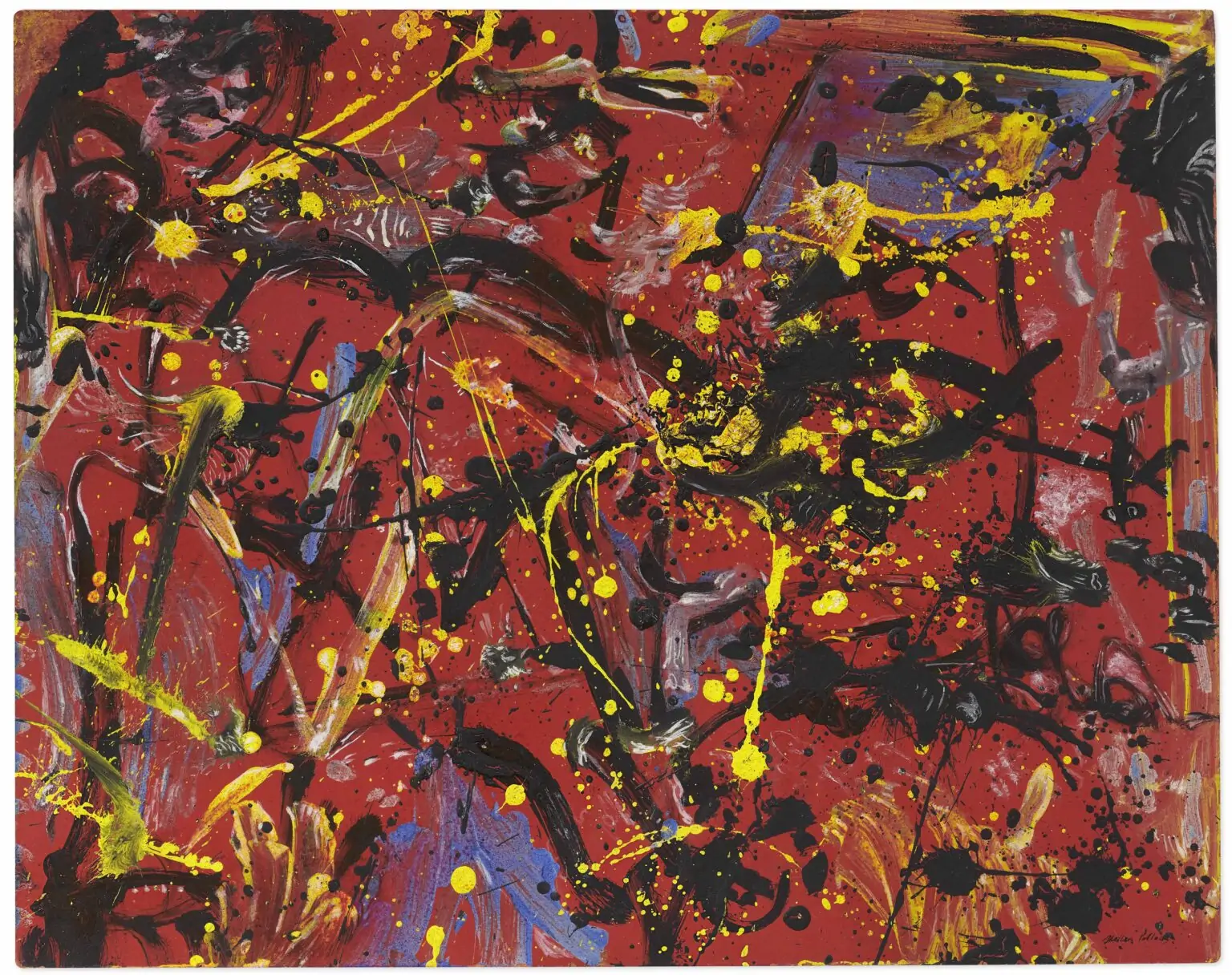
Red Composition
- 1946
- 48.9 cm x 59.1 cm
- Oil on masonite