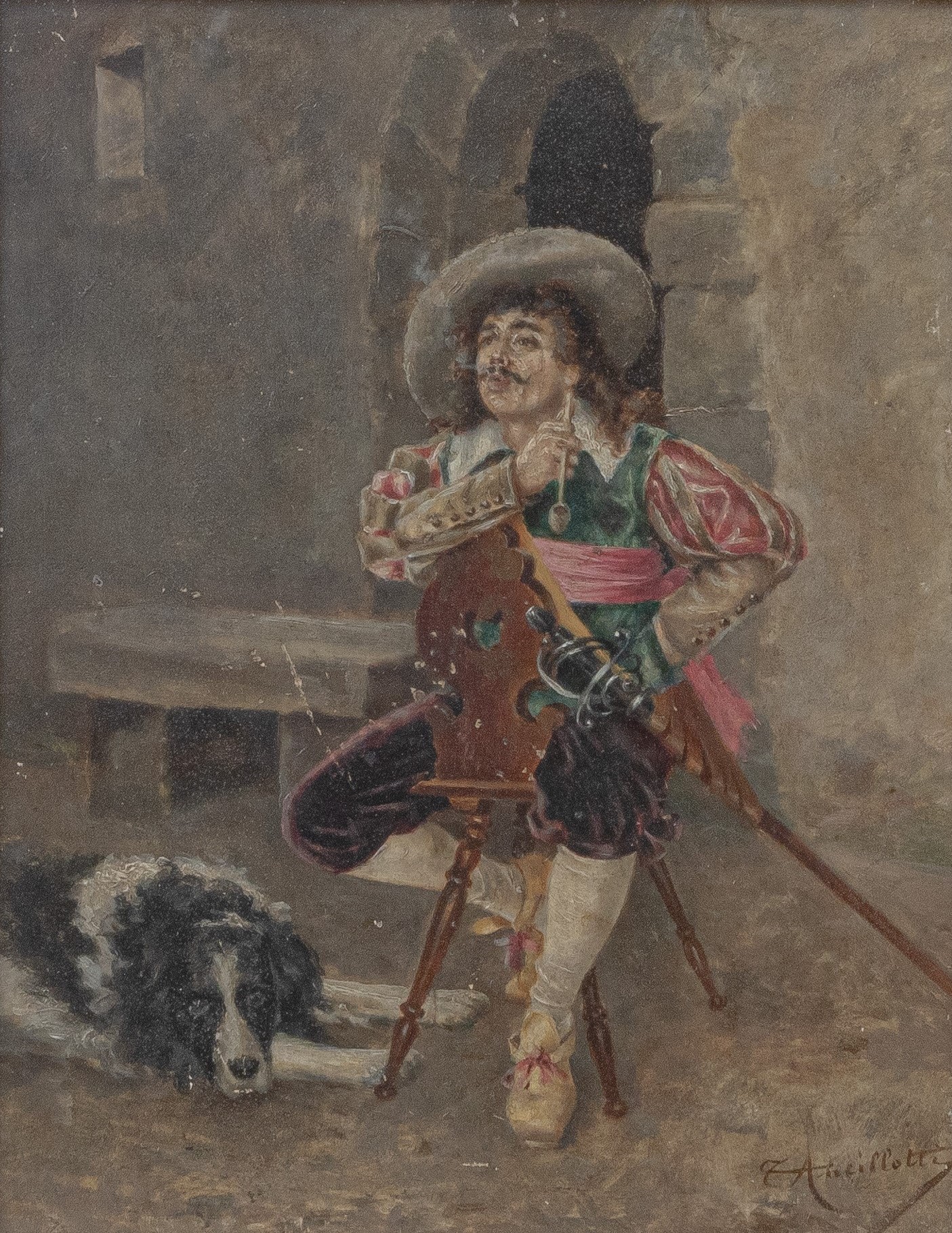
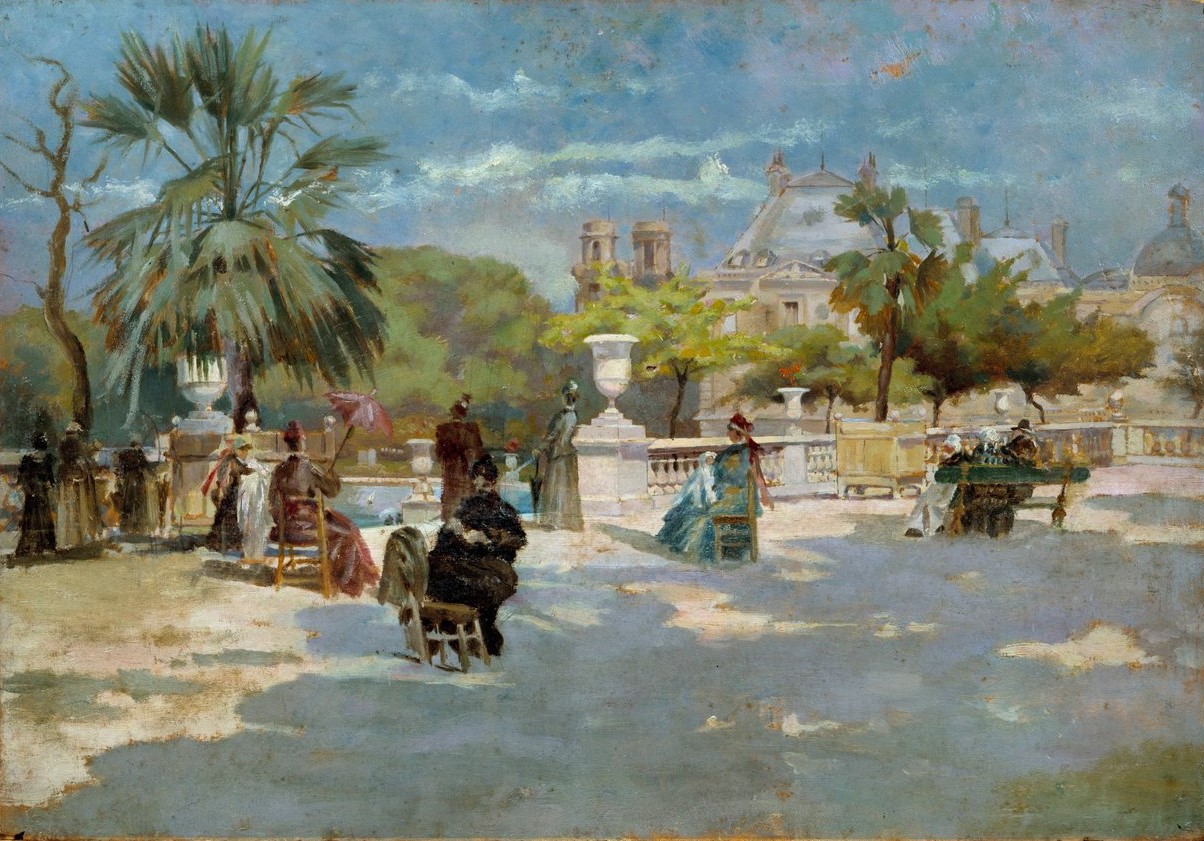
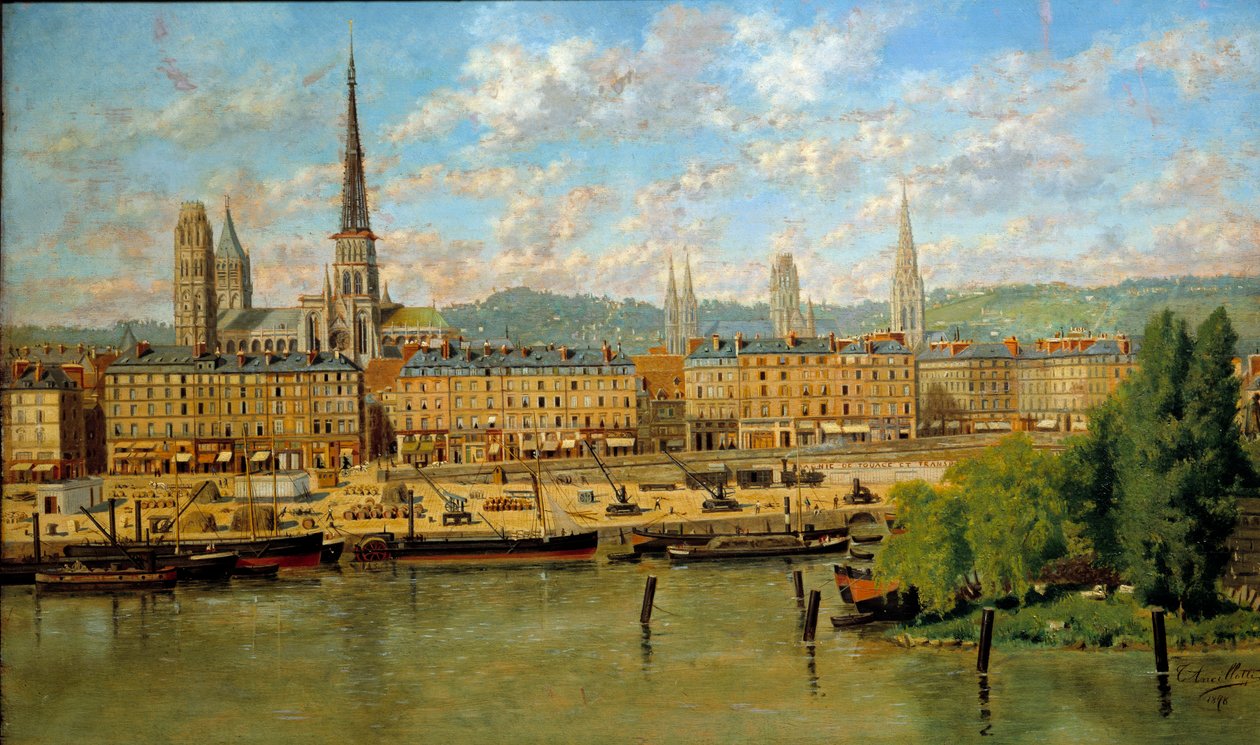
Torello Giovanni Battista Ancillotti was born on November 7, 1843, in Montepulciano, Italy, to Domenico and Fortunata Fontani. He started his artistic journey as an apprentice in his father’s carpentry workshop, but his true passion lay in the fine arts. He studied at the Accademia di Belle Arti in Florence, where he became close friends with fellow students such as Vinea, Cannicci, Cecconi, and Cecioni. His early life was marked by his active involvement in the wars of Italian independence, participating as a volunteer in both the Second (1859) and Third (1866) War of Independence. During this time, he also received a silver medal for a figure competition at the Academy of Fine Arts in Pisa (1863), where his family had relocated. In 1870, after his military service, Ancillotti married Demetra Corgialegno in Naples and settled in Florence. The couple had three children: Luisa, who tragically passed away at the age of nine, and two others, Demetrio and Beatrice. Ancillotti worked briefly at the National Library of Florence in the department of prints and heraldry. However, his true calling lay in the visual arts, and he was deeply influenced by the Macchiaioli movement and the work of Fattori, who would later mentor his youngest daughter, Beatrice. In 1877, Ancillotti moved to France, leaving his family behind in Florence. He settled in Rouen, where he began a prolific career as a genre painter, watercolorist, and sculptor. During his time in France, he became romantically involved with the Countess of Barr, and his work gained increasing recognition. He exhibited at the Salon de Paris for the first time in 1879, and continued to showcase his art there until 1892 (with a few exceptions). In 1883, he won a gold medal at the Amsterdam World’s Fair for his sculpture *Chef de bande*. Ancillotti’s time in Paris was marked by growing success and social connections. He became close friends with notable figures such as writer Guy de Maupassant and sculptor Medardo Rosso, whom he helped and encouraged. In 1889, he was appointed a member of the Italian jury for the Paris Exposition Universelle, where he exhibited a variety of works including oils, watercolors, and sculptures, such as the delicate *Rêverie (Rougeurs de soir)*, which was later donated to the Gallery of Modern Art in Florence. Ancillotti continued to live and work in Paris until 1893, when he exhibited his final portrait at the Galerie Georges Petit. Despite his success abroad, Ancillotti began to feel homesick and wished to be closer to his family. He also received an offer for a chair in sculpture at the Academy of Fine Arts in Florence, which prompted him to return to Italy. Upon his return, he resumed his participation in various exhibitions, including those organized by the Società delle Belle Arti. In 1896-97, he took part in the “Festa dell’Arte e dei Fiori” in Florence, where his work *La Manica (Marina)* was particularly praised by critic De Fonseca. Sadly, Ancillotti’s health deteriorated, and he passed away in Florence on June 13, 1899, at the age of 55. His legacy, however, endures through over 600 works by him and his daughter Beatrice, which were donated to the Gallery of Modern Art in Florence in 1979 by Beatrice’s daughter, Maria Goretti. Among Ancillotti’s most significant works are the genre paintings *Chez la Brocanteuse* (exhibited in Lyon in 1884 and now in the Société des Amis des Arts in Lyon), *Recherche sous l’Artillerie* (exhibited in 1887), and *La Voisine*, as well as his landscapes and marine paintings that combine Tuscan tradition with French influences. His sculptures, such as *Un pécheur à la ligne*, *Chef de bande*, and *Amour blessant la Force*, were also highly regarded and exhibited in prestigious venues like the Salon in Paris and the Amsterdam World’s Fair.