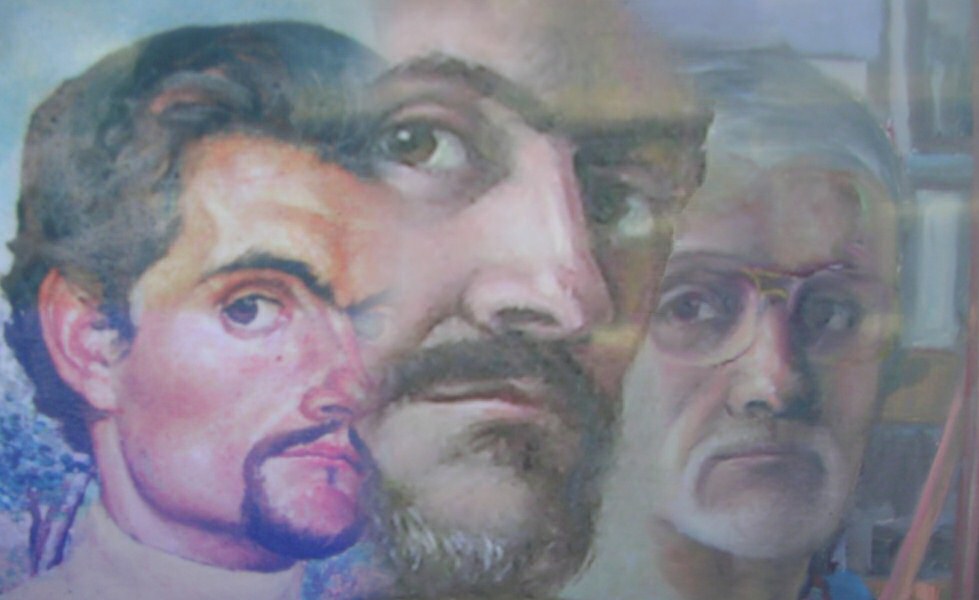
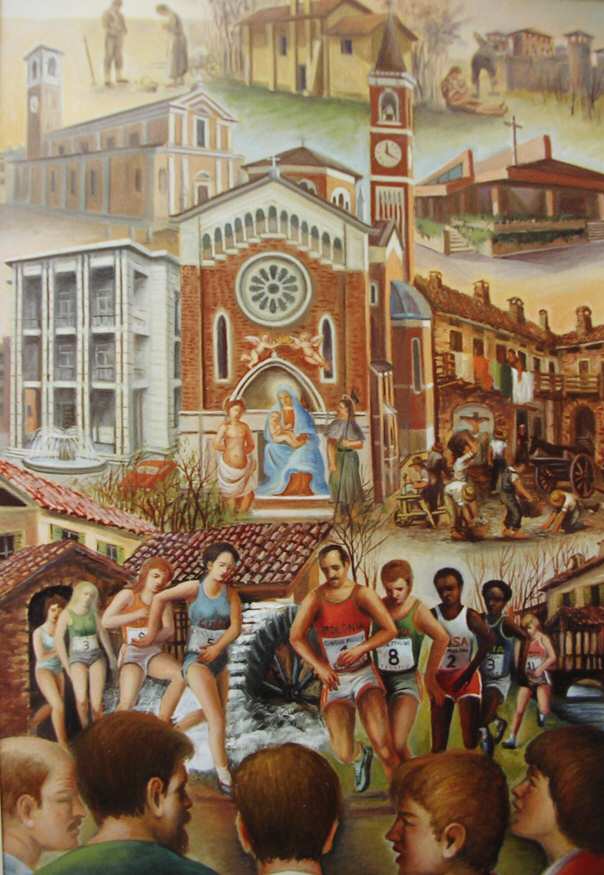
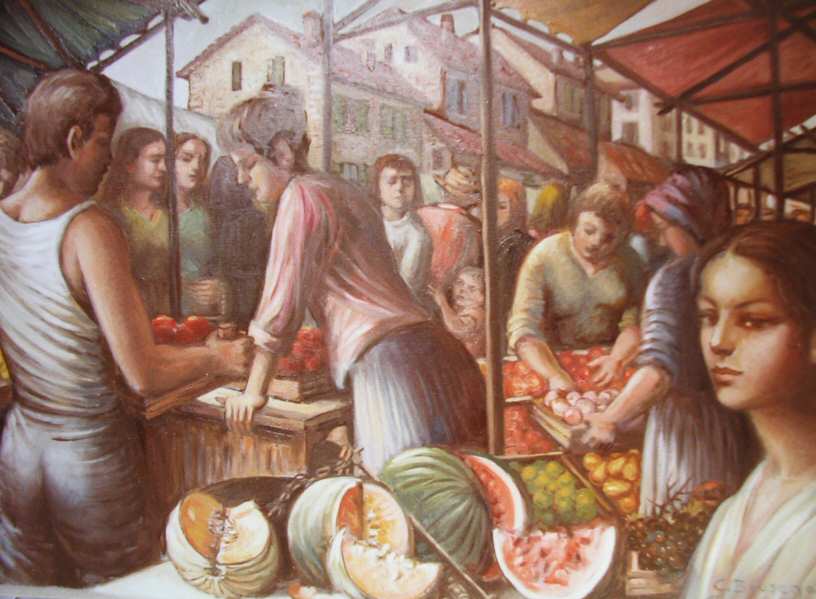
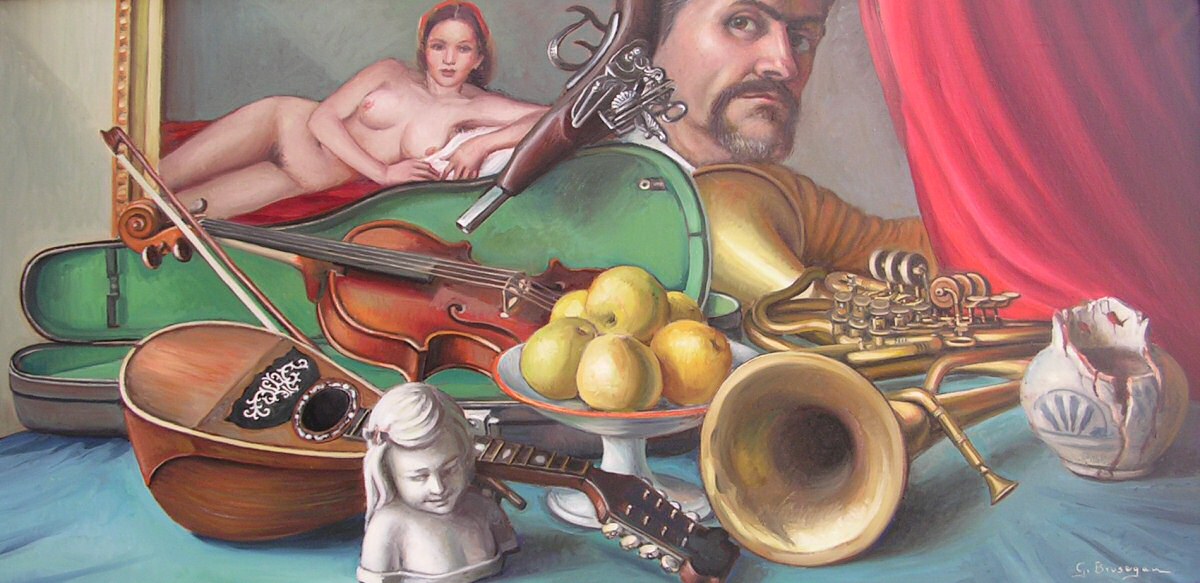
Gianfranco Brusegan was born in San Pellegrino Terme (Bg) on March 9, 1936. Due to his father’s job transfers (he was a customs officer), he first lived in Cannobio (No) on Lake Maggiore and later, during the war, in Oleggio (No), where he attended elementary and middle school (which he completed at the Salesian College in Novara). He moved with his family to Desenzano al Serio in Albino (Bg), where he attended the “Carrara” Academy of Fine Arts in Bergamo, studying under masters Achille Funi and Trento Longaretti. The family later moved to Castelvetro di Modena, where he completed his artistic maturity diploma in Bologna. He participated in competitions and group exhibitions and taught drawing in a private studio in Bologna with professors Pancaldi and Marri. He collaborated with Paul Film of Modena in animation and set design for cartoons for RAI (Carosello). He moved with his family to Legnaro, Padua, to the house of his maternal grandfather, painter Capuzzo Domenico, a renowned sacred art decorator, and collaborated with him on works in several churches in the Padua area. After his grandfather’s passing, he continued collaborating with sacred art painter Sorgato from Padua. In 1964, he married Anna Rinaldi from Castelvetro (Mo) and moved to Cogollo del Cengio (Vi), where he taught Art Education in a middle school. Gianfranco Brusegan stands out for an artistic journey that combines a passion for sacred painting, teaching, and a strong cultural commitment to his community. His art, characterized by a careful study of both traditional and modern painting techniques, is deeply rooted in the religious domain, as demonstrated by the numerous works created for churches and places of worship. However, it is not only his work in sacred painting that makes him interesting, but also his dedication to art education, both with young students and adults, contributing to the formation and spread of visual culture through courses and exhibitions. Brusegan has successfully combined his personal experience as a painter with an ongoing teaching career, instructing in numerous schools and organizing creative courses through which he conveyed not only artistic techniques but also the value of research and personal expression. His career, which has seen him participate in group exhibitions and receive recognition, confirms his solid reputation within the Italian art scene, as evidenced by his works held in private collections and included in important art catalogs. Despite his rigorous approach and dedication to education, Brusegan’s art does not limit itself to mere technical reproduction but is enriched by a continuous search and sensitivity that reflects in his painting, able to engage with the public and invite reflection. The artist has been a spokesperson for art that is both traditional and innovative, rooted in the past but open to contemporary ideas. In essence, his work represents a balance between academic rigor and creative freedom, and his ability to adapt and grow both as an artist and as an educator makes him a figure of great value for the visual culture of our time.