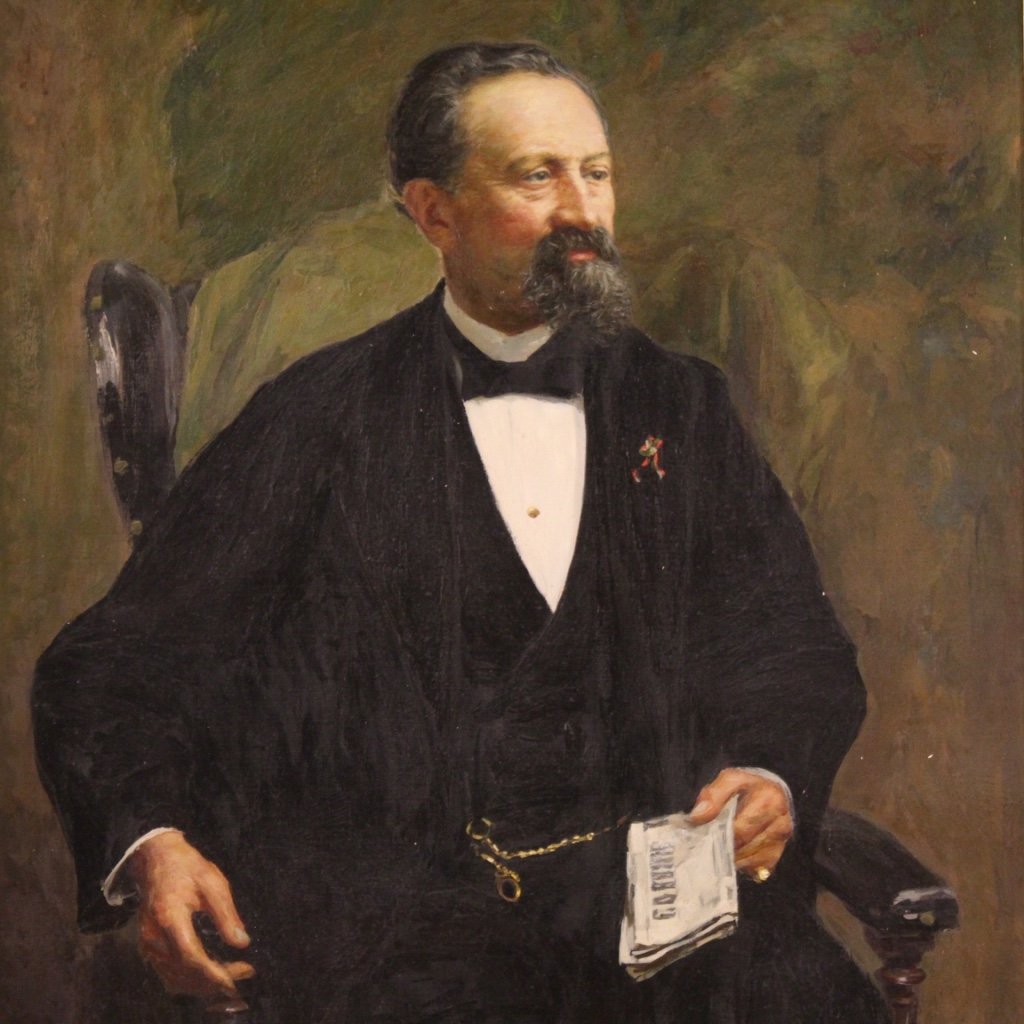
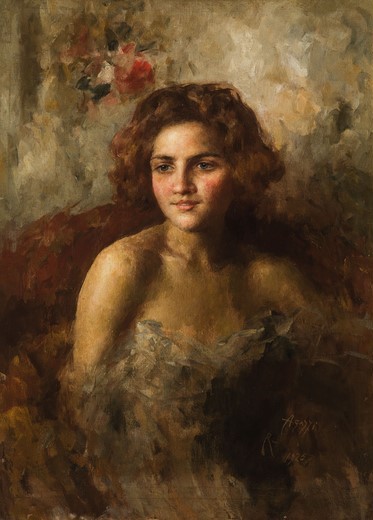
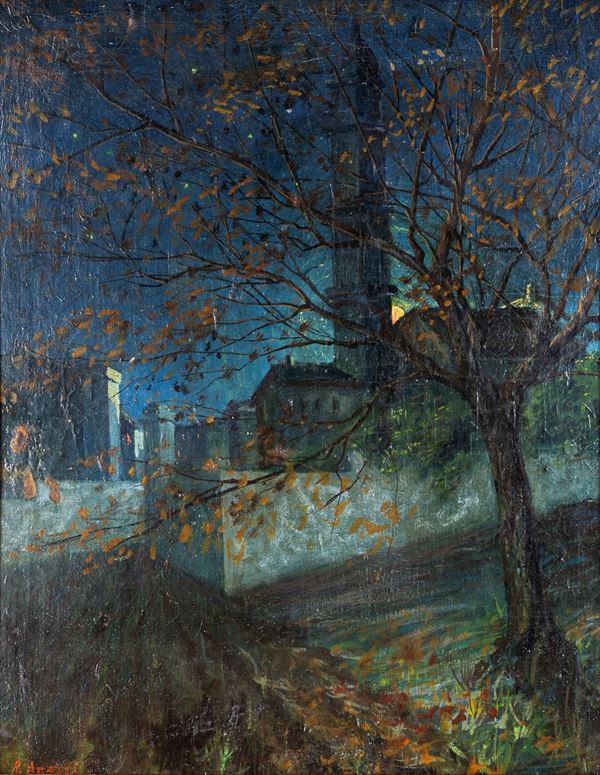
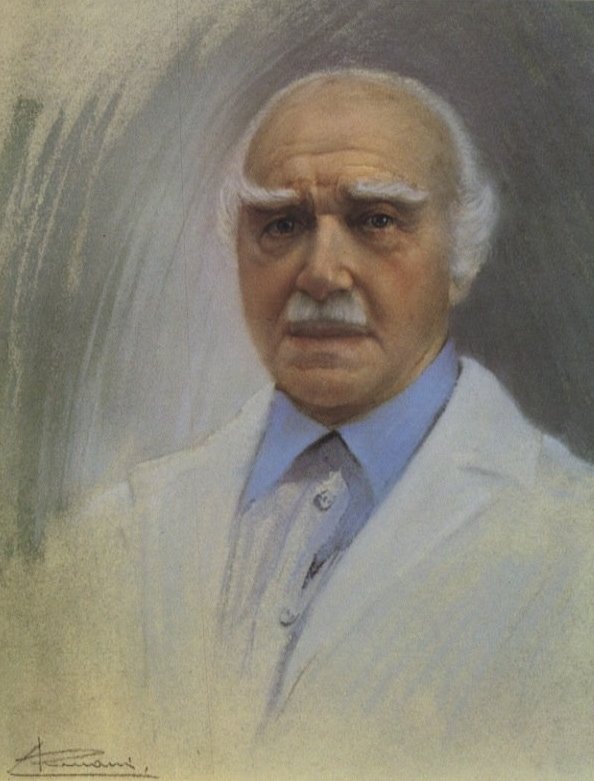
The son of Francesco and Pierina Moscheni, owners of an inn, Rinaldo Agazzi was born into a family that moved from Mapello to Bergamo in 1871. He began his artistic training at the Accademia Carrara in Bergamo under Enrico Scuri and later continued his studies at the Accademia Libera in Rome, where he was contemporaries with Giovanni Cavalleri, Giuseppe Aureli, Cesare Bertolotti, and Carlo Botti. During his time in Rome, Agazzi was strongly influenced by the Neapolitan verist painters such as Ettore Tito, Francesco Paolo Michetti, Vincenzo Irolli, and Francesco Mancini. At the same time, he absorbed influences from the Lombard and Venetian schools, particularly from Giacomo Favretto and Luigi Nono. These varied influences played a crucial role in shaping his artistic personality, which initially adhered to verismo before evolving toward portraiture in the style of Cesare Tallone. In 1884, Agazzi returned to Bergamo, where he settled in Via Osio and began working at the Istituto di Arti Grafiche. The difficult economic conditions of the time forced him to produce large quantities of genre paintings, which were easier to sell. This situation had severe personal consequences, leading to a period of mental health struggles and hospitalization in a psychiatric institution. His personal life was also marked by family issues, including the arrest of his brother-in-law, an event that inspired him to create the painting L’arresto. In 1899, Agazzi participated in the third International Art Exhibition in Venice, exhibiting alongside his younger brother, Ermenegildo, who was also his pupil. He went on to take part in numerous exhibitions both in Italy and abroad, including in Torino, Milan, Venice (where he exhibited La colazione at the XII International Art Exhibition in 1920), Bologna, Paris, Barcelona, London (1913, at the Watercolorists’ Exhibition), Florence, and Munich (at the Quadriennali in 1905 and 1909). He was present at nearly all the major European art events from 1884 until World War I, gaining recognition from collectors and critics alike. Among his many solo exhibitions, the posthumous ones stand out: one at the Palazzo della Permanente in Milan in 1941, with a catalog introduction by R. Giolli and G. Cerrina, and another in Bergamo in 1945, with a catalog introduction by U. Ronchi. Another exhibition in Bergamo also took place later, with a catalog introduction by Mario Monteverdi. The Agazzi Prize, a painting, watercolor, and graphic art competition, is named after Rinaldo and his brother Ermenegildo, in honor of the artists’ birthplace in Mapello.