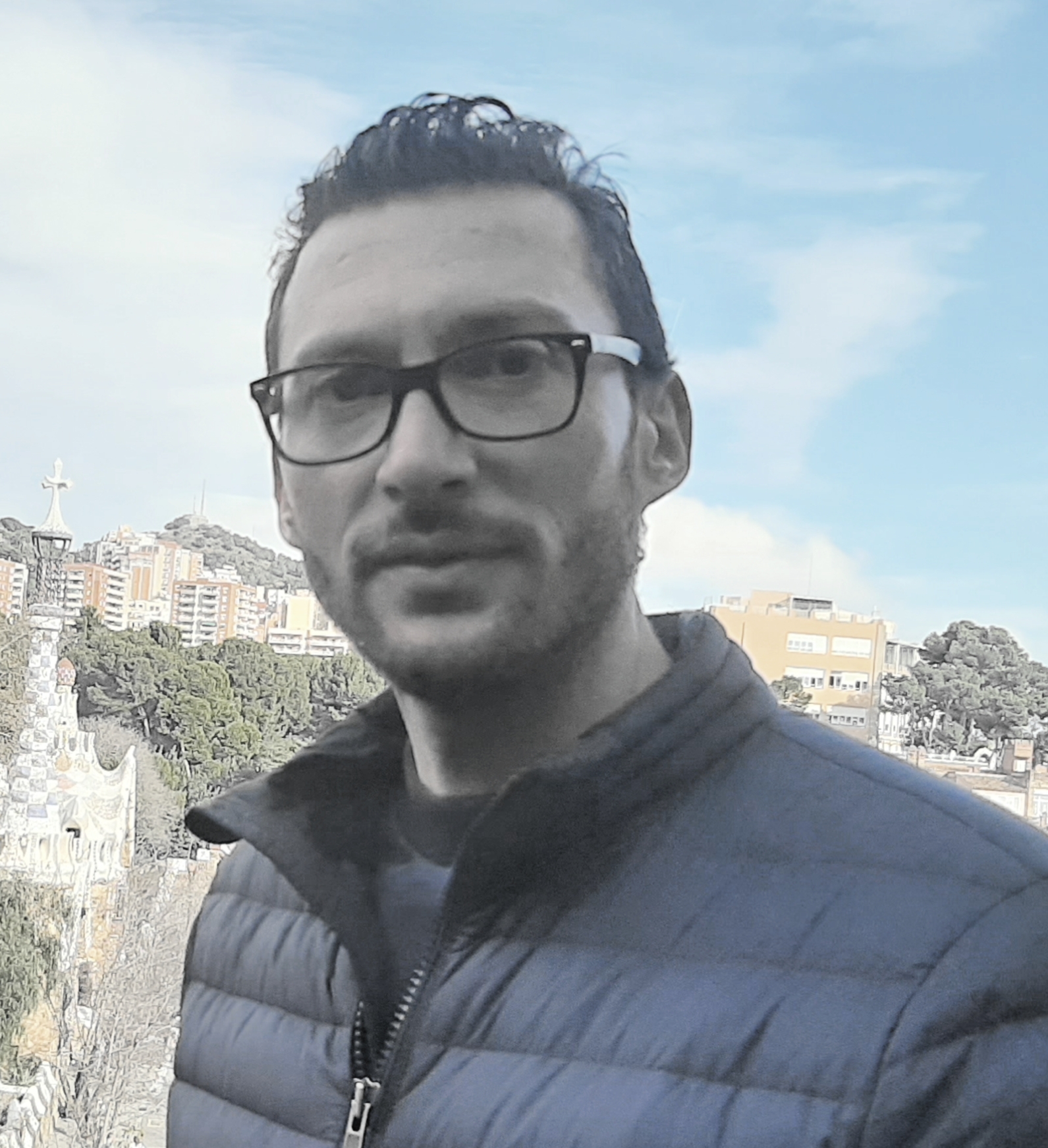
Federico Pisciotta
Biography and criticism
Federico Pisciotta is a contemporary Italian artist born in Rome on October 30, 1975. He began studying painting in the early 1980s under the guidance of Master Gino Righetto and Giorgio Vespaziani. Later, he moved to the Art School of Master Roberto Ascolese, which he attended until the early 1990s. In 1993, he graduated from the VI State Artistic High School of Rome and in 1997, he obtained his degree in Painting from the Academy of Fine Arts in Rome, studying with Nunzio Solendo and Sandro Trotti. After teaching for several years in the capital, he devoted himself exclusively to painting and contemporary artistic research. Since 2013, he has lived and worked in Fara in Sabina at his studio “700Artecontemporanea.” He has participated in group and solo exhibitions in Italy and abroad, showcasing his works at prestigious public spaces such as the Venanzo Crocetti Museum Foundation, Rome, the Palazzo delle Esposizioni, Rome, Palazzo Barberini, Rome, Palazzo dei Congressi, Rome, the Monumental Complex of the Mouth of Truth, Rome, the Historical Museum of the Carabinieri, Rome, Forte Sangallo, Nettuno, Rome, the Civic Archaeological Museum, Anzio, Rome, the Stables of Palazzo Aragona, Vasto, Chieti, the Cà de Carraresi Museum, Treviso, the Emilio Greco Museum, Catania, the Vigo di Torre Archirafi Palace, Riposto, Catania, MUMA, Museoteatro della Commenda di Prè, Genoa, the Galata Museum of the Sea, Genoa, the Cloister of the Holy Trinity, State Archive, Venice, DAP1 Gallery, Warsaw, DomagkAteliers, Halle 50, Munich, Battersea Art Centre, London, the Italian Pinacoteca, Batumi, Georgia. He has received institutional recognition and awards both in Italy and abroad. He has also participated in the most important international art fairs in Milan, Genoa, Forlì, London, New York, Miami, and San Diego. One of his latest projects, presented in Germany in 2014, uses a personal process of reinterpreting painting, supported by multimedia interactions that evoke the obsessive presence of digital iconography. The main subjects presented are taken from the most famous video game players, some of which are created through the hybridization of historical and virtual characters, then placed in a context entirely foreign to the video game narrative but easily relatable to our post-social habits. His video players made of plexiglass, backlit with RGB LED lamps, disrupt the balance of traditional painting, creating a transitional space for the image that highlights the precariousness and illusions of postmodern society. Federico Pisciotta stands out in the contemporary art scene for his ability to blend the physical world with the digital one in an ongoing dialogue where virtual reality and human perception intertwine and blur. His artistic research, as seen in the project *The Game Exhibition*, explores the psychological and emotional dynamics that emerge from interacting with technology, particularly with video games. In this sense, Pisciotta’s work is not only a reflection on art and digital culture but also a sensory experience that invites the viewer to confront the illusion and fragility of our time. His approach to virtual images is laden with symbolism, transforming the video game context into a metaphor for the contemporary human condition, one marked by “precarious balances” and “daily obsessions.” His choice to draw from video games like *Beyond: Two Souls* for his works is no coincidence: Pisciotta immerses himself in narratives that question existence and death, challenging the boundary between the tangible and the imaginary. The video game thus becomes not just a narrative medium, but a gateway into a “second reality” that, while seeming illusory and ephemeral, has become a daily habitat for many. The presence of joysticks and game buttons in his works is not merely an aesthetic reference but an invitation for active participation from the viewer. Just as in the game, where the user is called to become a protagonist in the narrative, Pisciotta encourages an interaction that goes beyond mere passive observation. In this play of references, the audience becomes part of a broader reflection on the fracture between reality and virtuality, between the concrete and the digital, that permeates our modern lives. The result of this research is art that does not simply represent the world but, on the contrary, questions and challenges it, using visual language and technology to tell the contradictions and ambiguities of our era. Pisciotta’s works push us to confront a present where reality and virtuality are increasingly intertwined, where every technological artifact becomes a symbol of an existence that slips between appearance and truth. His painting is, in fact, imbued with a constant tension between the physical world and the digital one, creating a visual experience that challenges traditional conventions and invites deep reflection.
Category of affiliation
- Painting
Technique
Painting
Quotations
The highest market valuation achieved with a painting is €3.000
Critiques received from
Immediato, Rossetti, Zuccali, Spagnuolo, Bianchi, Severi

Artworks
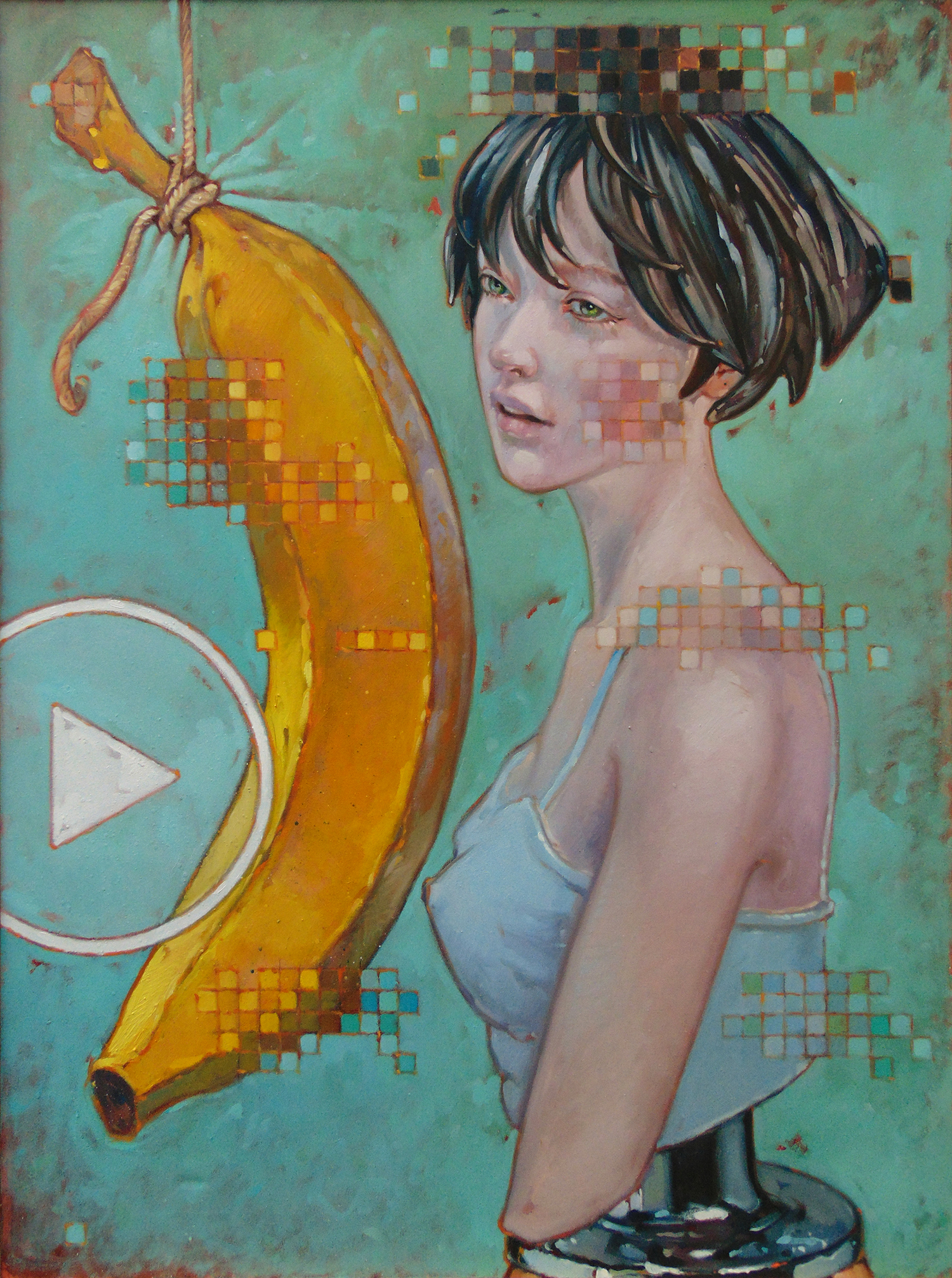
Il mistero della banana impiccata
- 2021
- 80 cm x 60 cm
- Oil on canvas
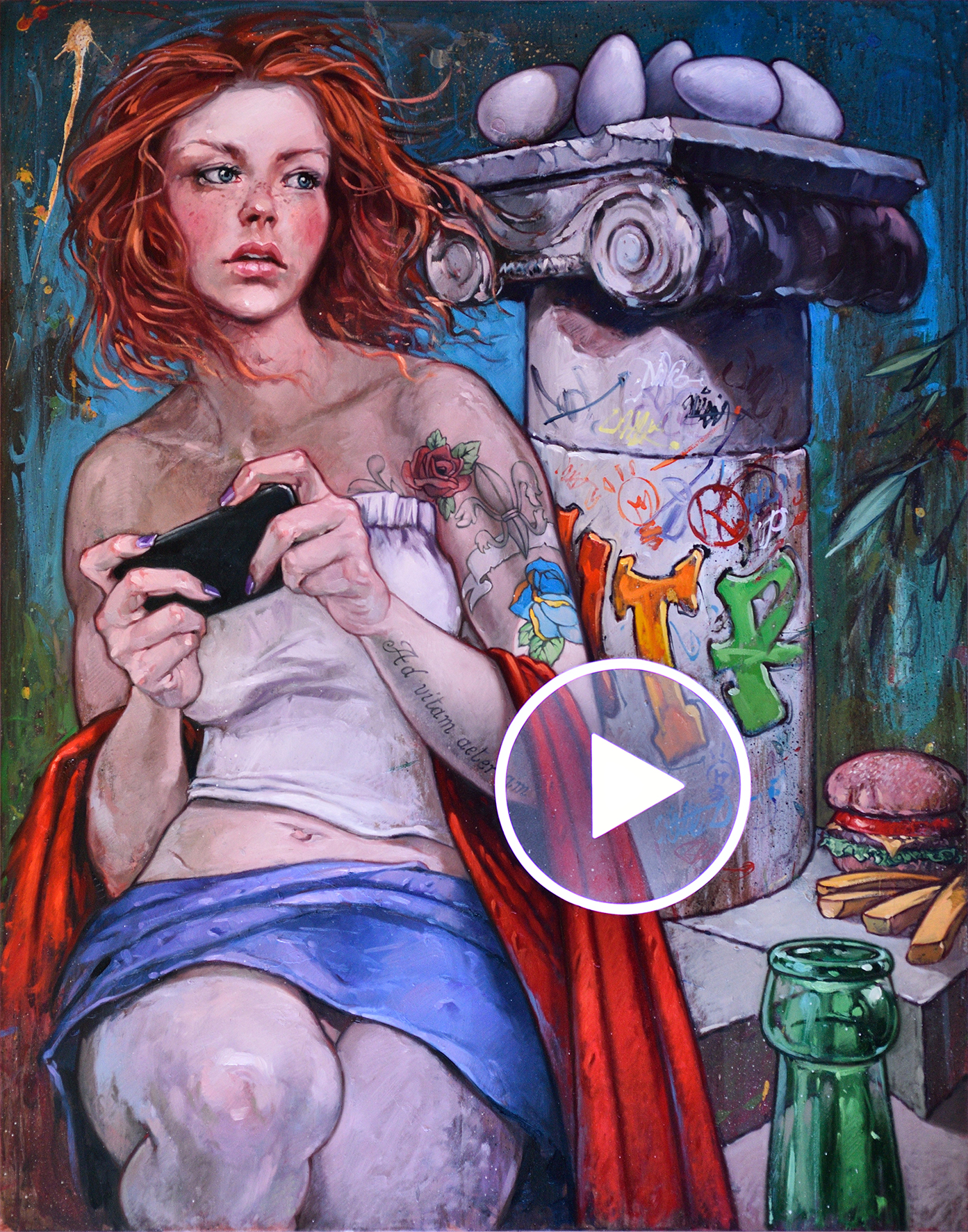
Without religion
- 2015
- 124,5 cm x 98 cm
- Mixed media on shaped board, plexiglass and RGB LED lamps
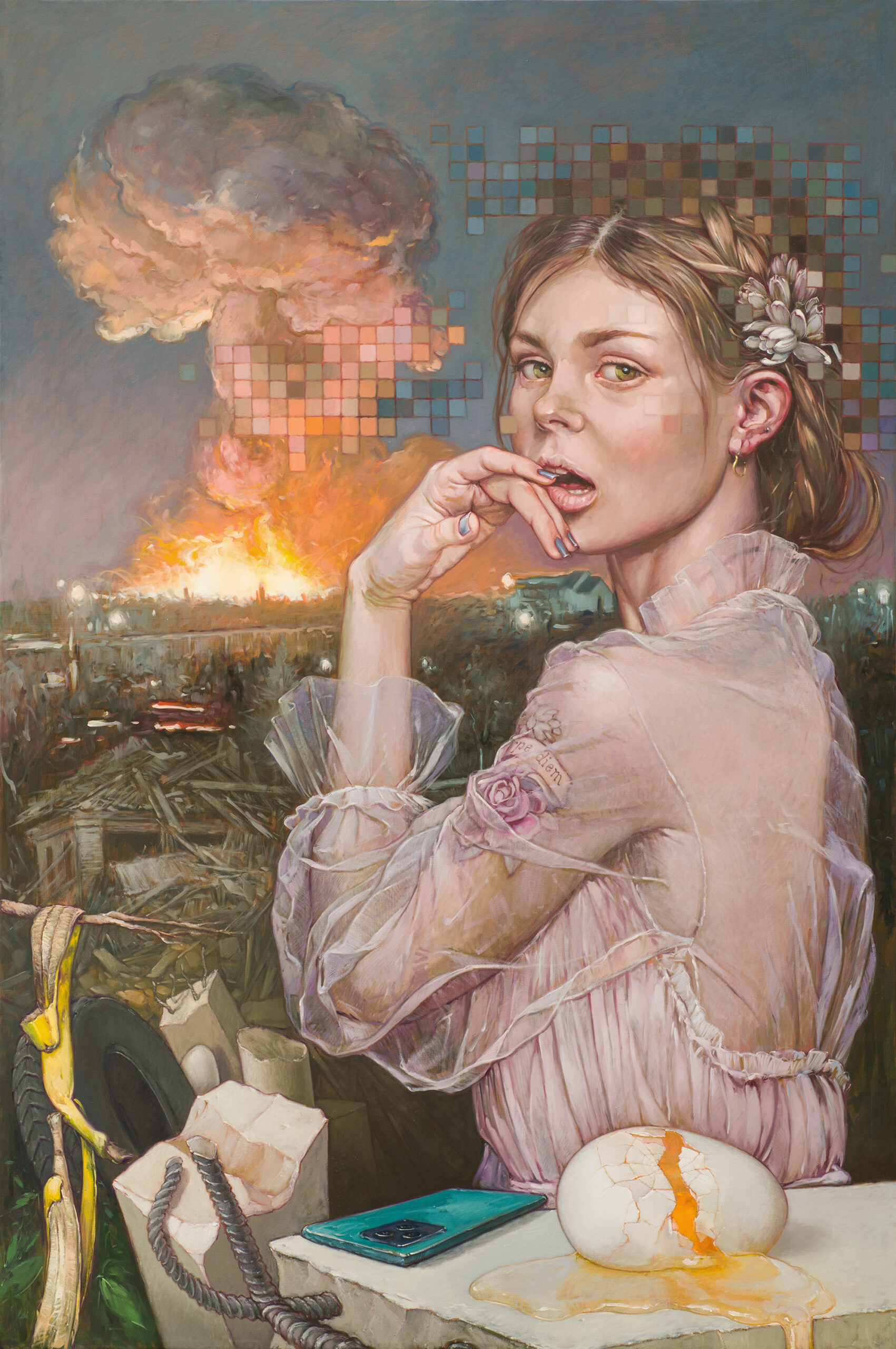
#la dama dei selfie
- 2023
- 150 cm x 100 cm
- Oil on canvas