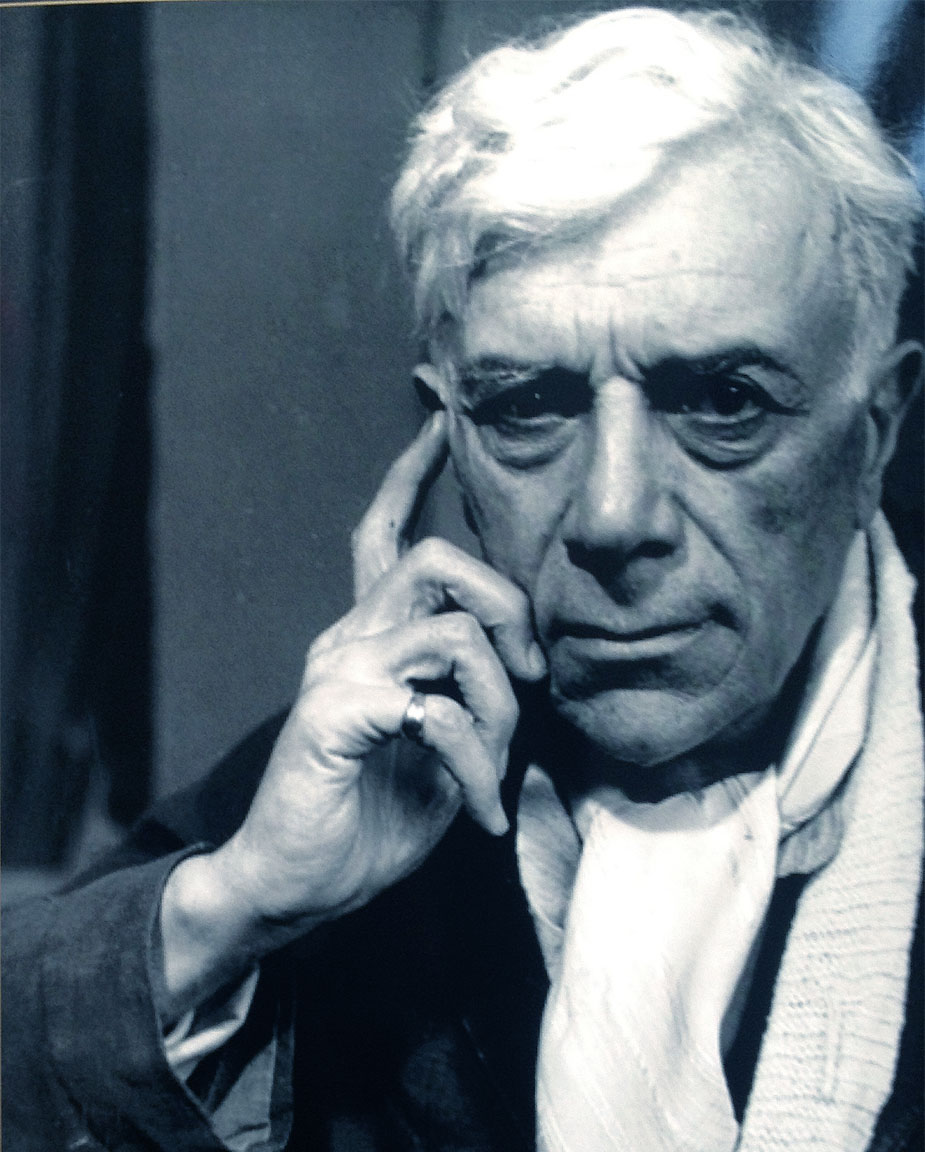
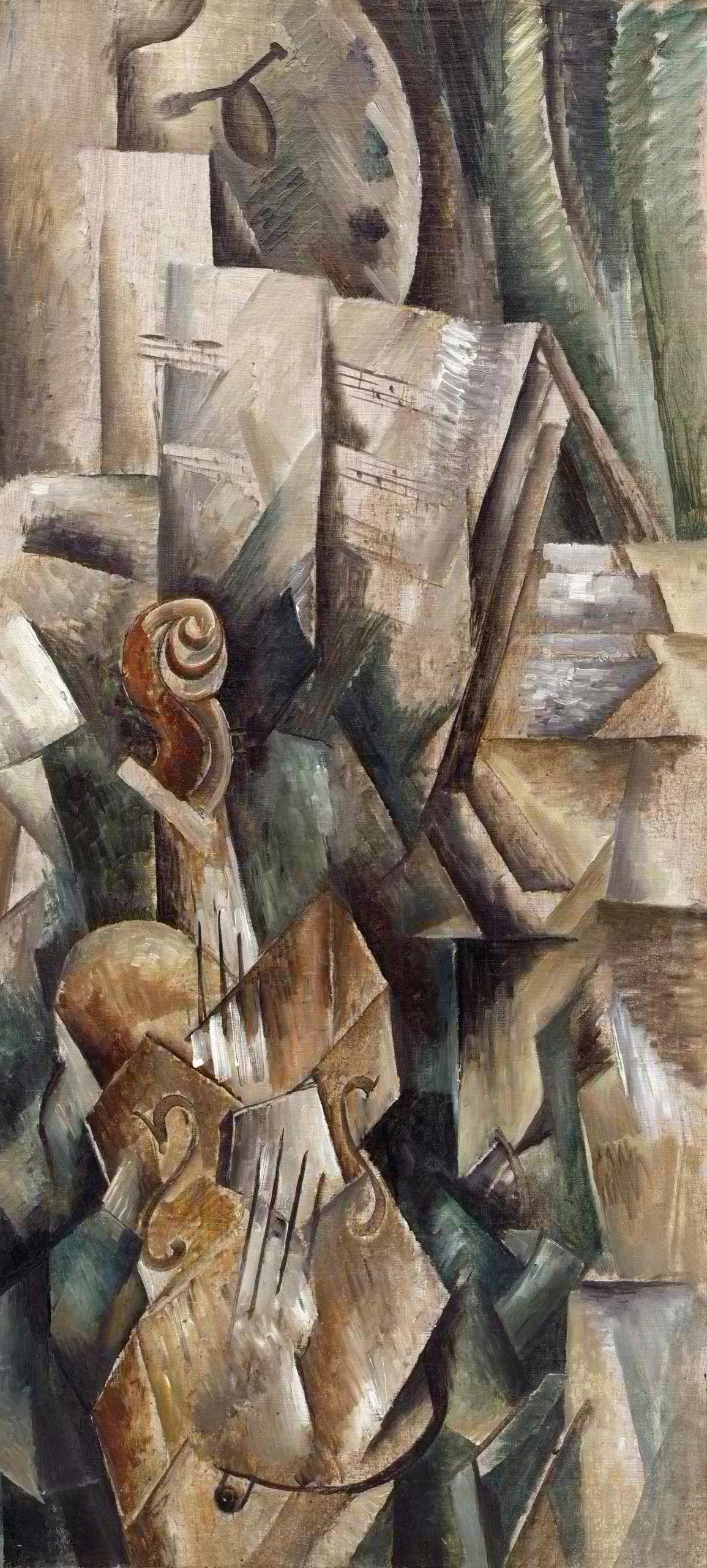
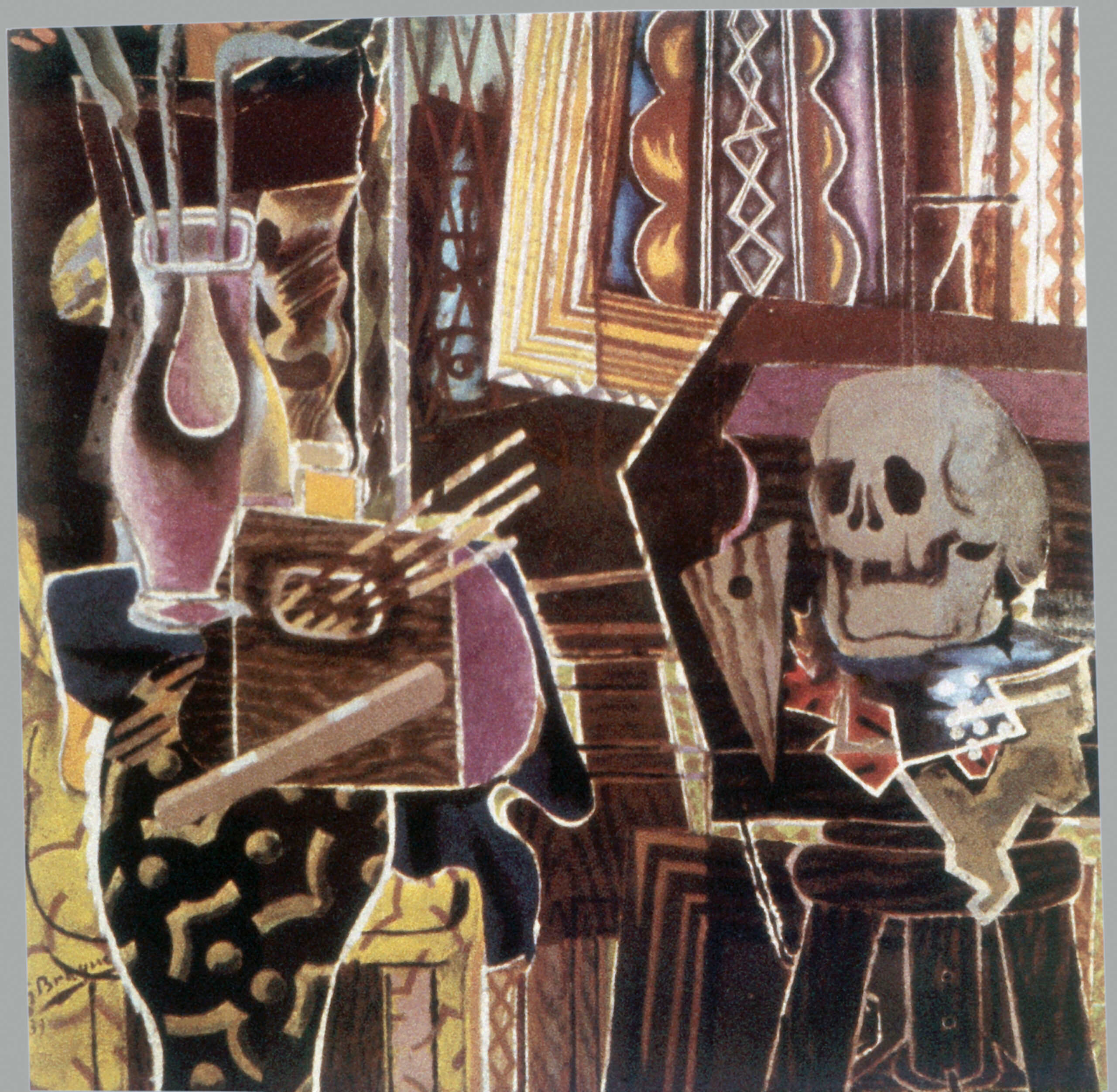
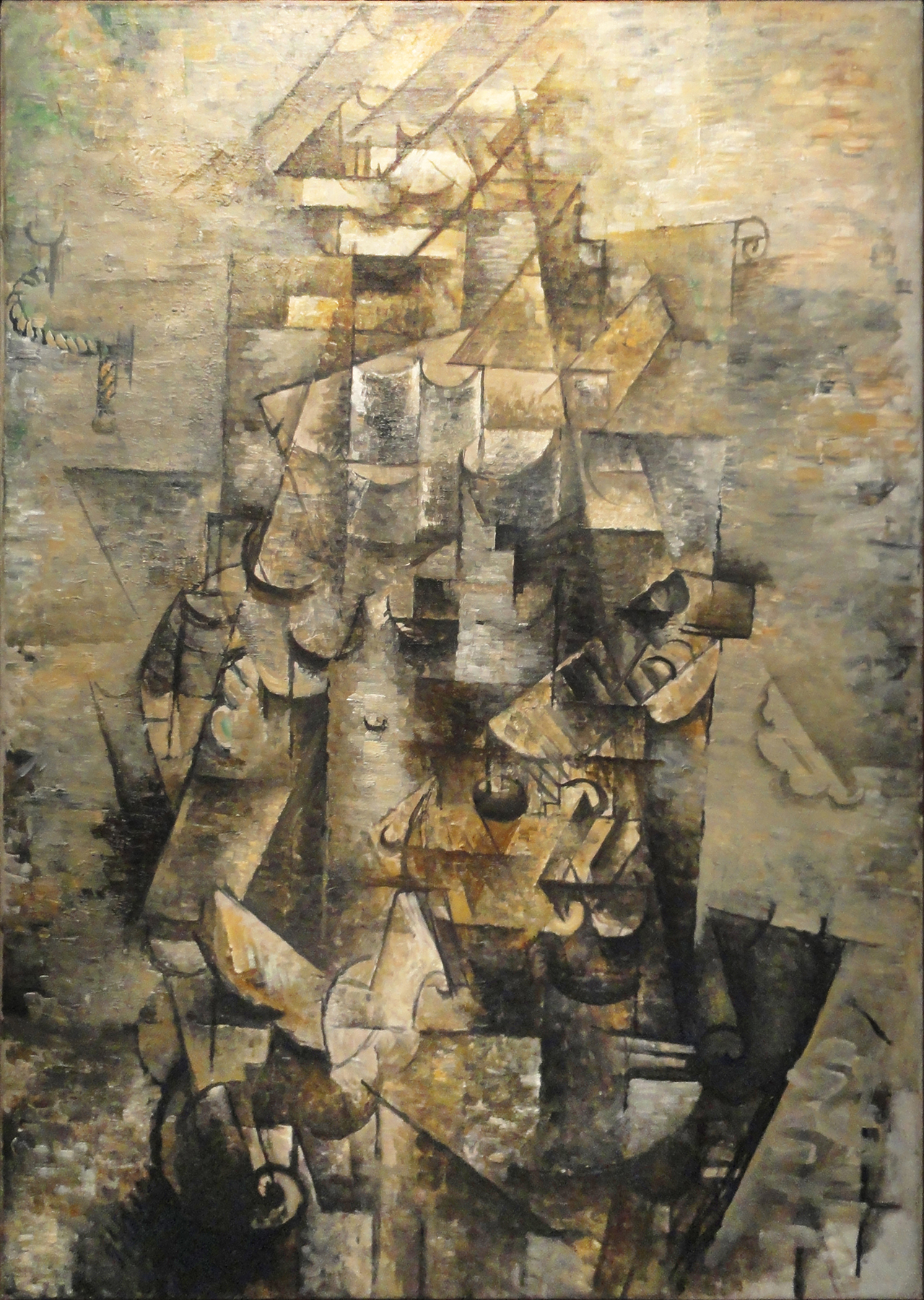
Georges Braque (1882–1963) was a renowned French painter and sculptor, best known as one of the founders of Cubism alongside Pablo Picasso. Born in Argenteuil and raised in Le Havre, Braque began his formal artistic training in the late 19th century. He studied at the Académie Humbert and later at the École des Beaux-Arts in Paris, initially working in a figurative style influenced by the Fauves, particularly Henri Matisse. His early work was characterized by bold colors and emotional intensity, akin to Fauvism, but this changed dramatically after his encounter with Paul Cézanne’s retrospective at the 1907 Salon d’Automne. It was at this exhibition that Braque met Picasso, a pivotal moment that shaped the course of modern art. Both artists were inspired by Cézanne’s exploration of form and space and became fascinated with African “primitive” art, which further influenced their work. This collaboration sparked the development of Cubism, a revolutionary movement that sought to break down subjects into geometric shapes and multiple perspectives. The relationship between Braque and Picasso was central to the movement, with both artists constantly pushing the boundaries of artistic expression. Braque’s early Cubist works focused on exploring color and form, but his style evolved to incorporate more abstract elements, particularly during the Analytical Cubism phase, which made it difficult for viewers to identify the subject matter without knowing the title. The years leading up to World War I were critical for the movement, with Braque and Picasso continuing their exploration of Cubism together. However, Braque’s artistic trajectory was interrupted by World War I, where he was injured and had to recuperate. Upon returning to France, he moved to Normandy and began painting landscapes again, shifting back to a more figurative approach. This marked the end of his intensive collaboration with Picasso, but Braque remained an influential figure in modern art. Braque’s contributions were recognized in later life, earning him the Premio Internazionale Feltrinelli for Arts in 1958. He continued to experiment with collage and sculpture, exploring new techniques throughout his career. Georges Braque passed away in 1963 in Paris and was buried in the seaside cemetery of Varengeville-sur-Mer in Normandy, a fitting location given his lifelong connection to the region. Braque’s legacy endures as one of the central figures in the evolution of modern art, particularly through his role in the development of Cubism, which transformed the way artists approached space, form, and perspective in the 20th century.