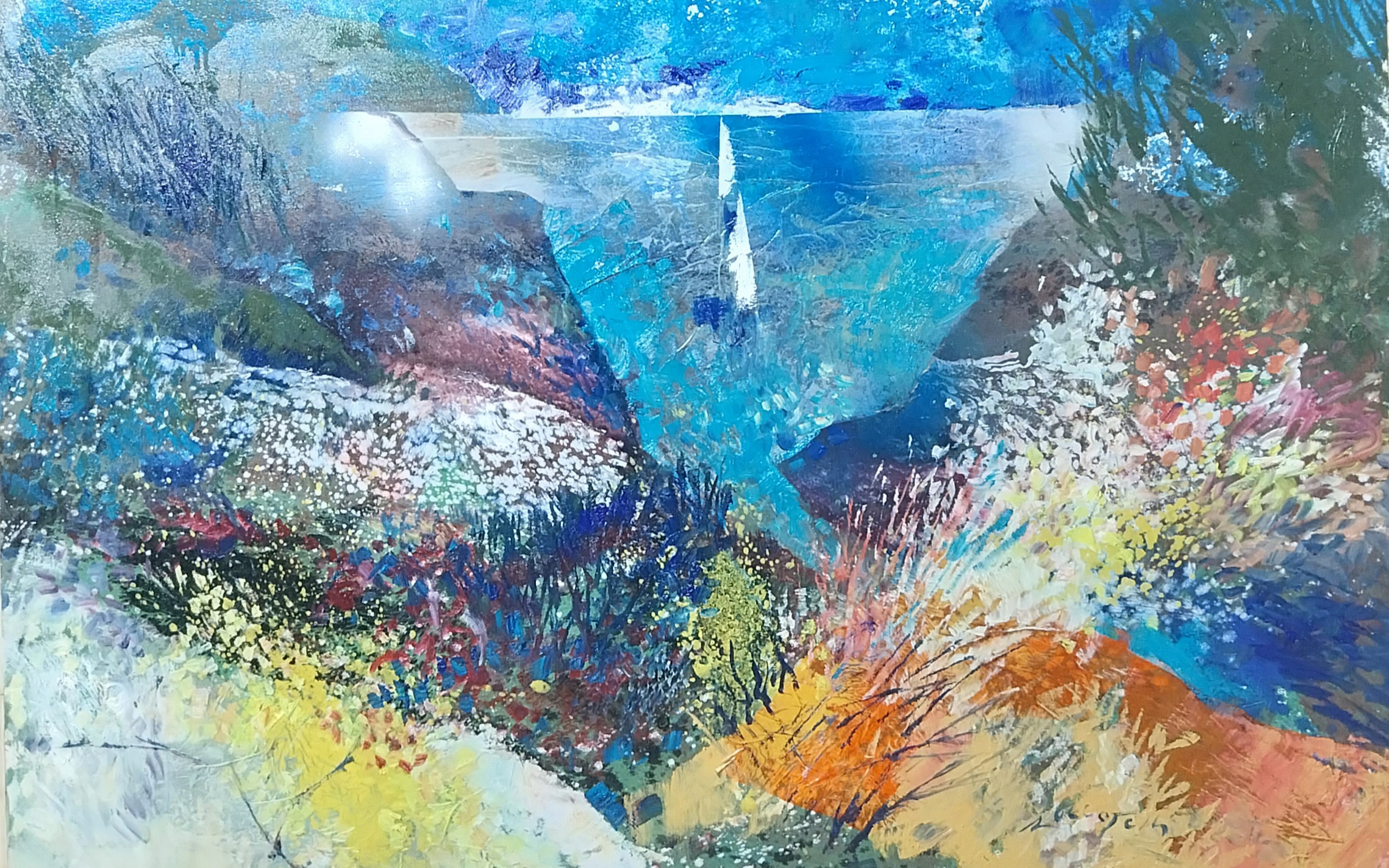
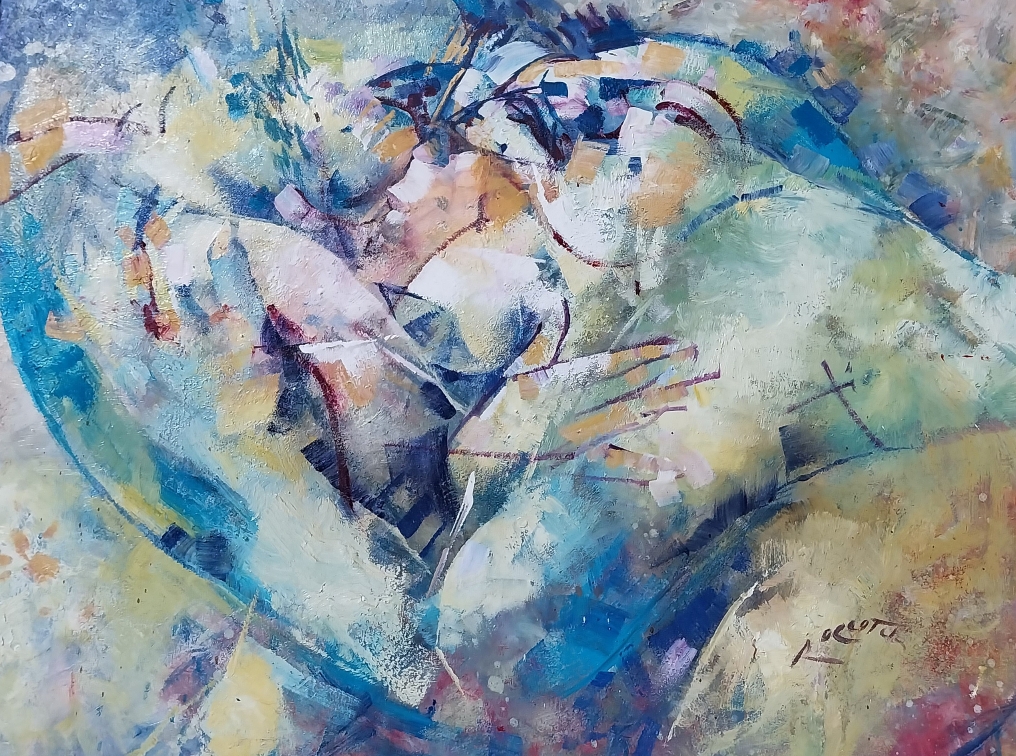
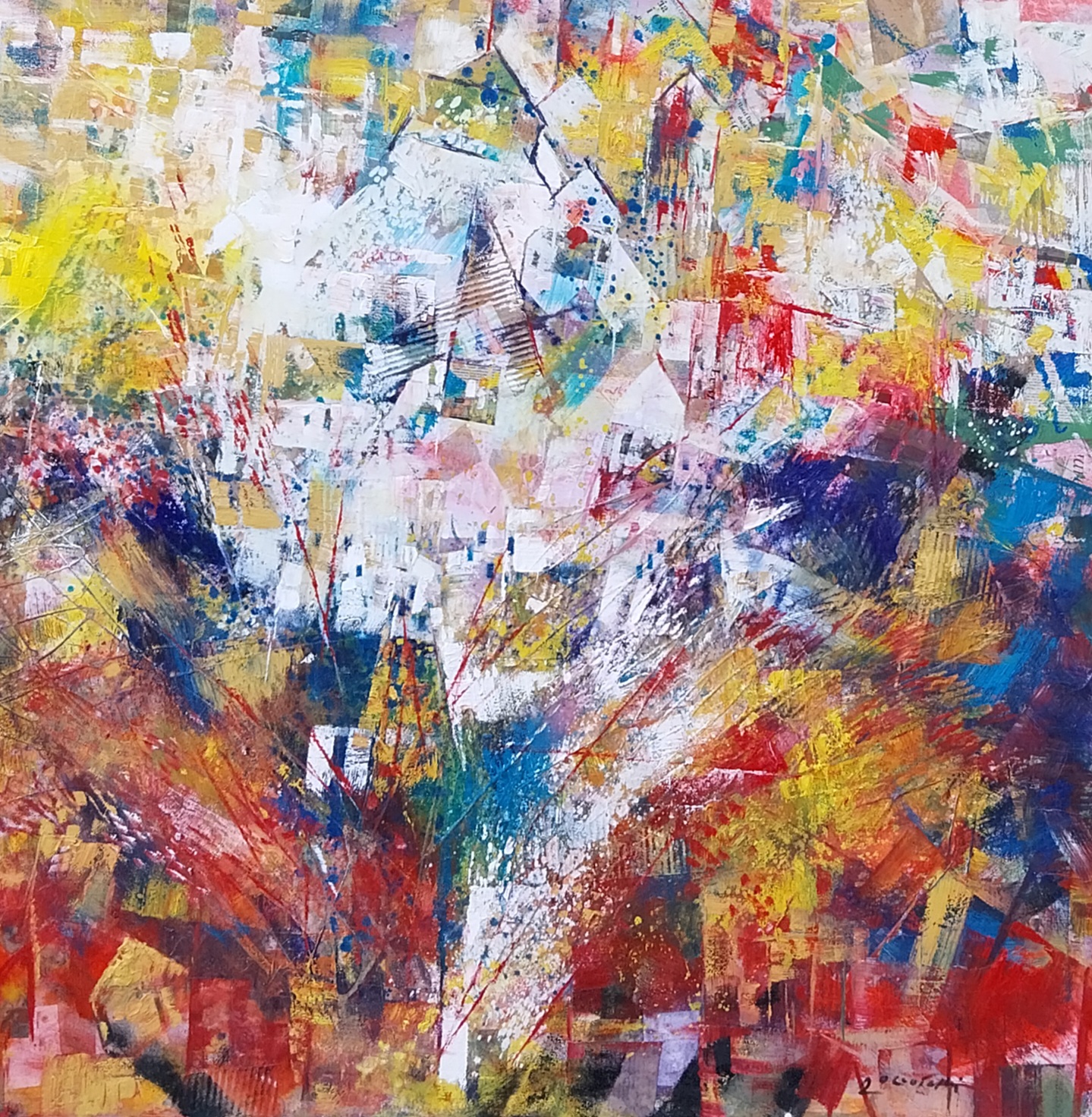
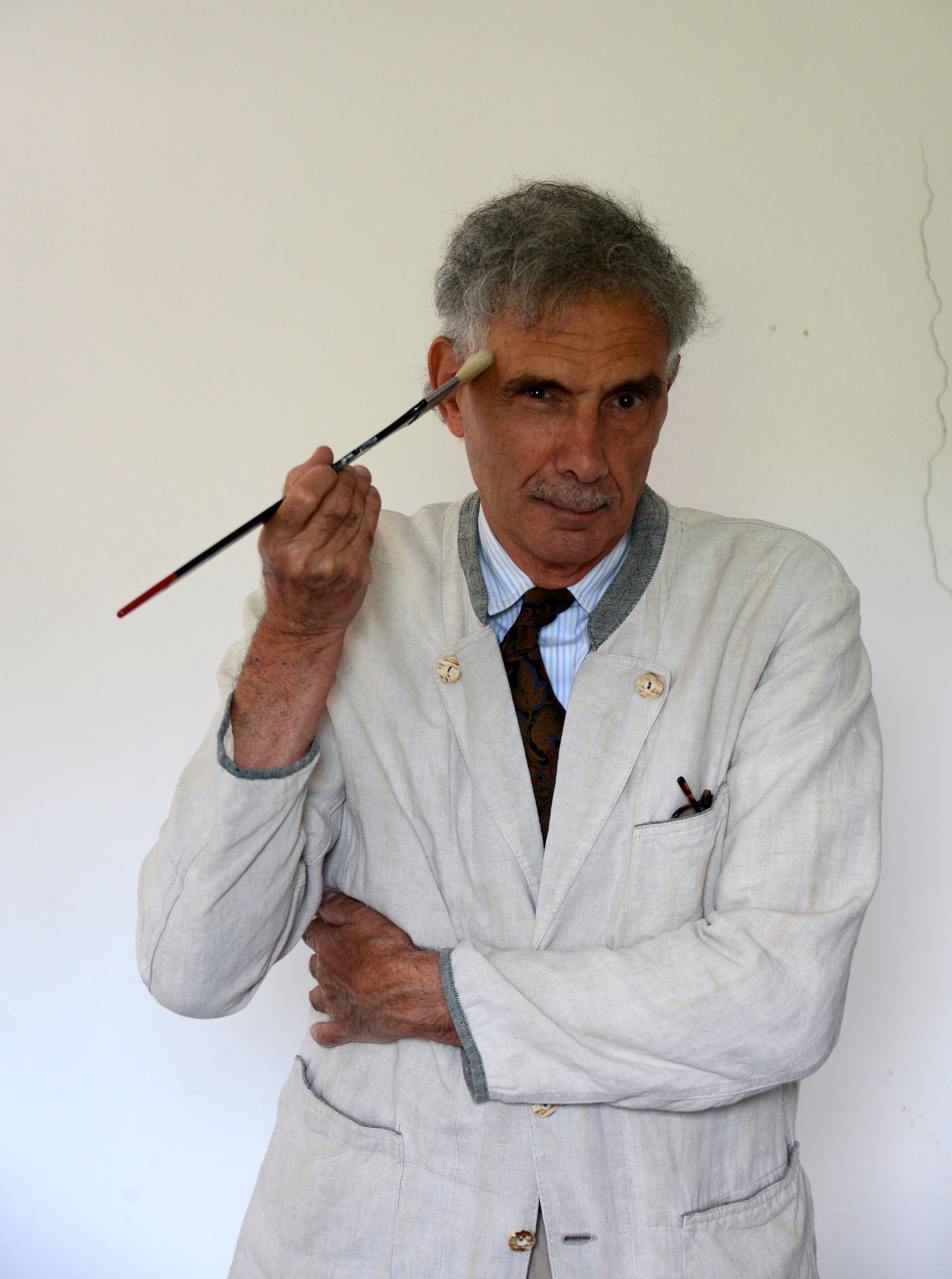
The theme of the embrace, which has come to characterize the most recent phase—emerging about a year ago—of Roccotelli’s artistic vision, seems to suggest that his anticipatory sensitivity, perhaps unconsciously sensing the forthcoming restrictions on close contact brought about by the health emergency, sought to counterbalance them through a pictorial message. This theme emerged unexpectedly from the painter’s palette when, against a background of abstract chromatic fields, faint silhouettes began to appear—bodies leaning toward one another, toward a kiss, an embrace. These gradually evolved into figures of increasingly refined naturalism, only to dissolve once again into the rarefied atmosphere of an indistinct haze, whose contours remain perceptible nonetheless. This bold navigation between forms of near-tangible physicality and abstractions sublimated into signs alluding to the human figure is a hallmark of Roccotelli’s expressive language—unconfined and uncategorizable. His is a practice shaped by a deep and personal freedom, which generates icons of his inner world in a constant search for both Man’s freedom and Beauty, understood as the essence and driving force of nature. And Beauty, as the very essence and force of nature, finds its ultimate expression in the impulse of one being toward another—sexual attraction that leads to union, and thus to the perpetuation of vital energy. To grasp and fix in line and color the sublime mystery of existence is a gift reserved for a rare few in the world of art. With the inauguration of the Roccotelli Art Gallery in October 2020, the artist chose to honor his hometown, Minervino Murge, offering back a vital part of his personal and creative journey. Like flowers returning to their roots, a hundred works—paintings, sculptures, and ceramics—now inhabit the medieval baronial castle from which Roccotelli once set out, decades ago. And it is there he chose to return, ensuring that his name would remain forever tied to that place. The realization of a lifelong dream. The collection is organized into thematic sections: “Abstraction,” “Landscape,” “Urbe,” “Mare,” and finally “Embrace”—a series where male and female bodies intertwine in the timeless gesture of the embrace. This act takes on even deeper meaning in the wake of the pandemic, when human contact became a rare and longed-for experience. Here, love and hope find their expression through form and color. Roccotelli divides his time between several studios: the one in Bari, another in Minervino, and a third in Rosa Marina, his summer retreat nestled among sand dunes and ancient olive trees—bent, yet still alive, just like him. Watching him paint is witnessing transformation itself: “See,” he says, “the color dries, it takes shape, it moves… a bit more yellow, it strengthens the red.” And so, the magic unfolds. Standing before his canvases, one can’t help but wonder: is the real world outside, or is it the one he creates within? Perhaps Roccotelli is not just an artist, but the subconscious of us all.