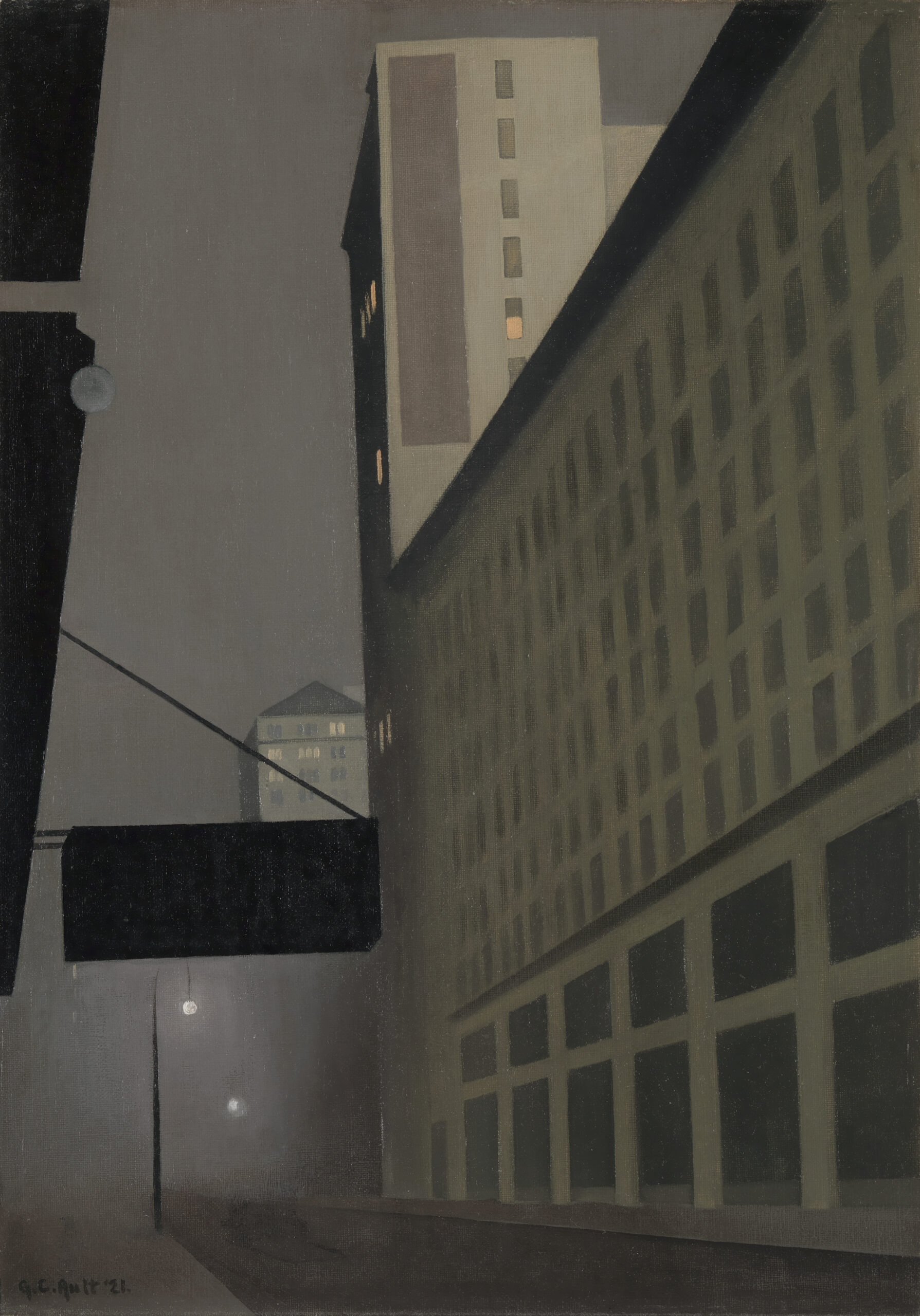
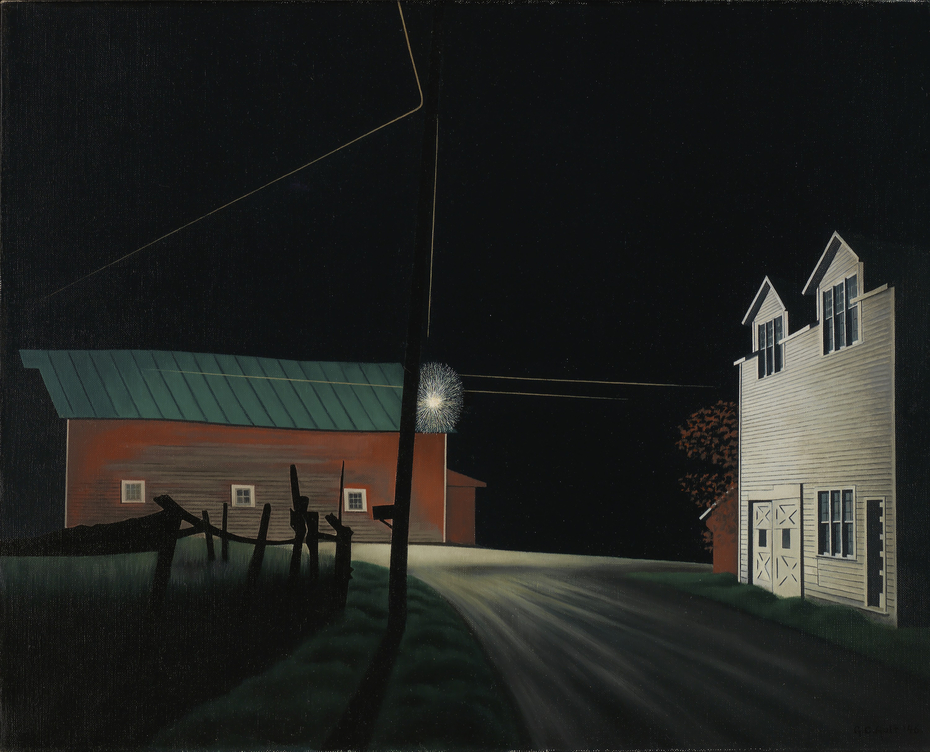
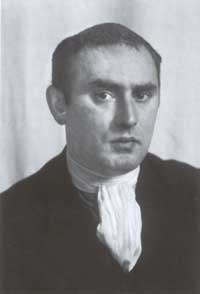
Ault was born in Cleveland, Ohio, but spent his youth in London, where he studied at the Slade School of Art and the St. John’s Wood School of Art. He returned to the United States in 1911, and for the rest of his life, he lived between New York and New Jersey. His personal life was marked by tragedy; he became an alcoholic in 1920 following the death of his mother in a psychiatric institution and the suicide of his three brothers. In 1937, Ault moved to Woodstock, hoping to leave his painful past behind. There, he created some of his best works, but struggled to sell them and became financially dependent on his wife. In 1948, Ault tragically took his own life by drowning. During his lifetime, his works were exhibited at prominent institutions such as the Whitney Museum of American Art and the Addison Gallery of American Art in Massachusetts, among others. Ault worked primarily in oil painting, watercolor, and drawing. He is associated with the precisionist movement, alongside artists like Charles Sheeler and Ralston Crawford, due to his stark depictions of architecture and urban landscapes. However, unlike some of his peers, Ault’s work did not fully embrace the idealistic or futuristic aspects of precisionism. He famously referred to skyscrapers as “the tomb of capitalism,” reflecting a more critical stance toward modernity. Ault is particularly remembered for his skill in representing light realistically, especially in his night scenes, which became one of his signature themes. His ability to capture the play of light in dark environments set him apart as an analytical painter.