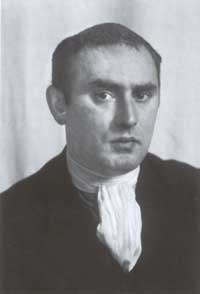
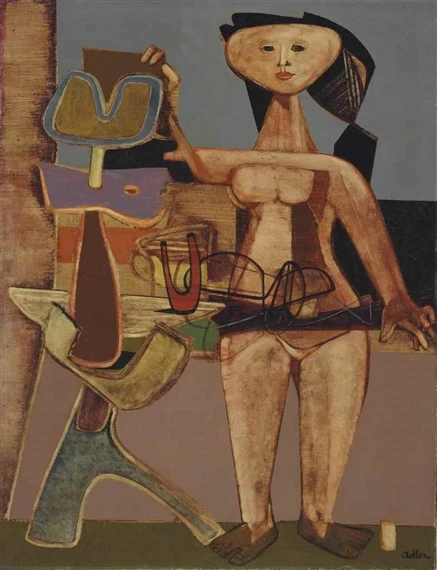
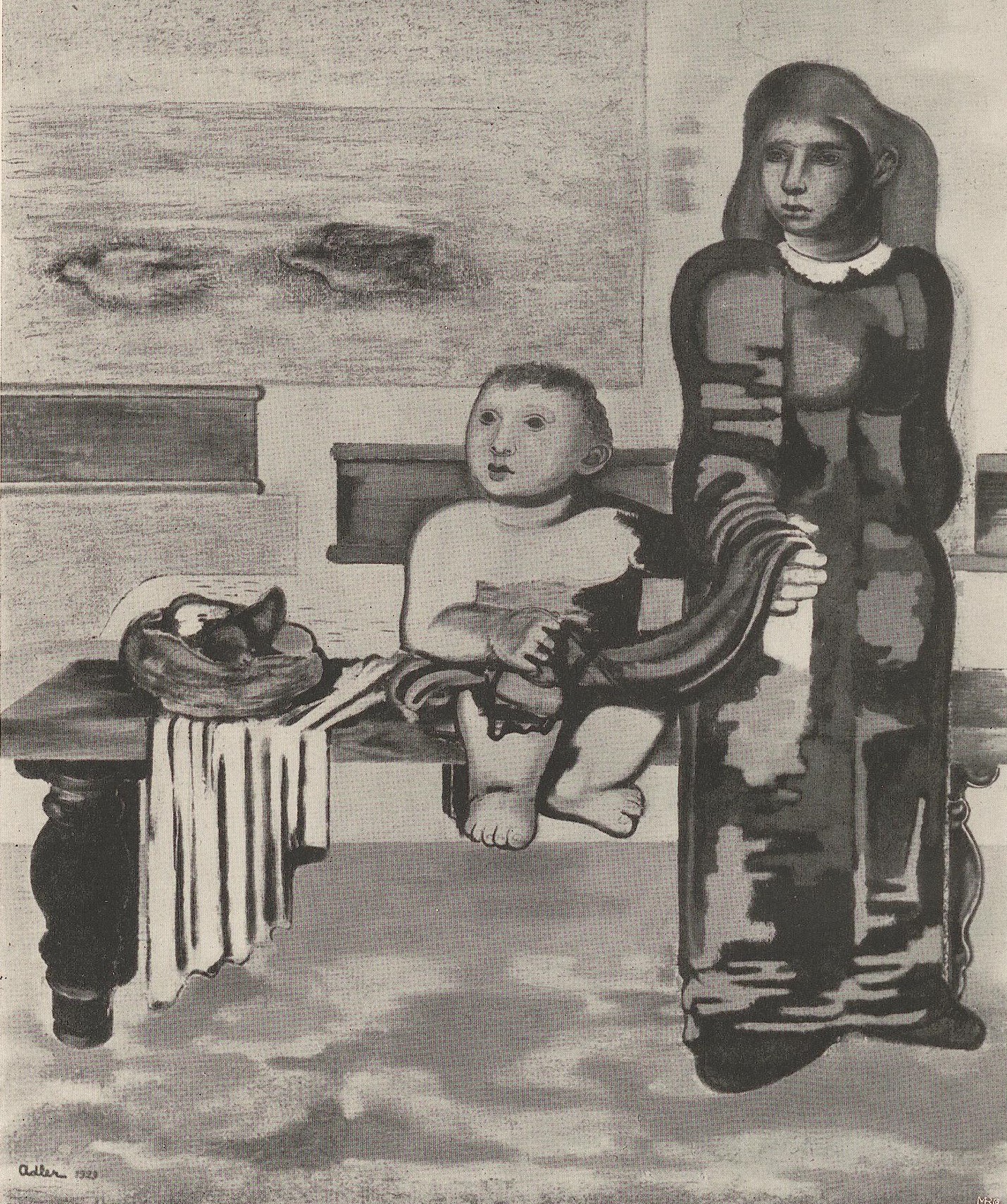
Jankiel Jakub Adler was born in 1895 in Łódź, Poland, the seventh of ten children. In 1912, he began his training as an engraver in Belgrade with his uncle, and two years later, he moved to Germany, where he lived with his sister in Barmen. Between 1918 and 1922, Adler moved frequently, living in Barmen, Łódź, Berlin, and Düsseldorf, and during this time, he became involved in avant-garde movements. He joined the Cologne Progressives group with Franz Seiwert and Otto Freundlich. Adler taught for several years at the Kunstakademie Düsseldorf, where he became acquainted with Paul Klee, whose work deeply influenced him. Between 1929 and 1930, he traveled to Spain, and in 1932, he was one of the signatories of a petition against the rise of Nazism. As both a Jew and an artist, Adler faced significant hostility from the Nazi regime, and his paintings were labeled “degenerate art” as early as 1933. In response, he moved to Paris and traveled extensively to Poland, Italy, Yugoslavia, Czechoslovakia, Romania, and the Soviet Union. Meanwhile, twenty-five of his works were featured in the infamous “Degenerate Art” exhibition in Munich, where many were destroyed. With the outbreak of World War II, Adler enlisted in the Polish army but was discharged two years later due to his poor health. He then moved to Scotland, and after a brief time in London, settled in Aldbourne, Wiltshire. There, he learned that none of his nine siblings had survived the Holocaust. Adler passed away in 1949 at the age of 53 and was buried in the Jewish cemetery in Bushey.