Frida Kahlo
Biography and criticism
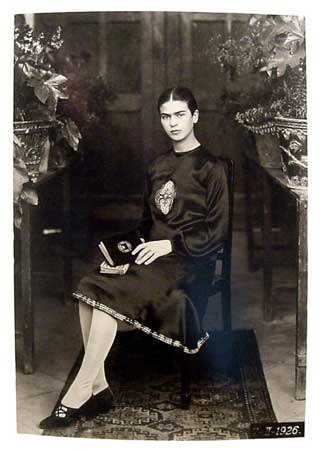
Frida Kahlo (1907–1954) was a Mexican artist whose distinctive, vibrant self-portraits and symbolic works have made her an iconic figure in both the art world and popular culture. Born on July 6, 1907, in Coyoacán, Mexico City, Frida’s life was marked by physical pain, emotional suffering, and a deep connection to her Mexican roots, all of which profoundly influenced her art. Frida’s early years were shaped by hardship. She contracted polio at the age of six, which left her with a permanent limp and limited mobility. Despite these challenges, she was a spirited and determined child, known for her fiery personality and her desire to break free from societal expectations for women. At the age of 18, her life was tragically altered when she was involved in a severe bus accident. She sustained multiple fractures, including a broken spine, pelvis, and leg, and was bedridden for months. During her recovery, she began to paint as a way of coping with the intense physical pain and isolation. Many of her early works were self-portraits, as she was confined to her bed and used a mirror to reflect her image. Kahlo’s artistic style is often described as “surreal” because of its dreamlike, symbolic qualities, though she herself rejected the label. Her paintings are deeply personal, frequently exploring themes of suffering, love, and identity. She often depicted her own pain, both physical and emotional, as well as the tumultuous relationship she had with her husband, fellow artist Diego Rivera. The couple’s marriage was passionate but marred by infidelities, and Frida’s works frequently reflected the complexity of their bond. Her works were also influenced by Mexican folk art, incorporating vivid colors, bold patterns, and symbolic representations of Mexican culture, nature, and traditions. Kahlo’s use of symbolism—such as representations of pain, death, and Mexican identity—allowed her to express her inner world in a way that was raw and intimate. Her famous self-portraits, such as *The Two Fridas* (1939), *Self-Portrait with Thorn Necklace and Hummingbird* (1940), and *The Broken Column* (1944), are reflections of her physical and emotional struggles, as well as her quest for self-understanding. In 1929, Frida married Diego Rivera, a prominent Mexican muralist, and the couple’s relationship became one of the most well-known in the art world. Their marriage was marked by a series of separations and reconciliations, including Diego’s affair with Frida’s younger sister, Cristina. Despite their personal difficulties, Rivera and Kahlo had a profound influence on each other’s work, and both were involved in left-wing politics and social activism. Kahlo became a symbol of feminist strength and resilience, as well as a defender of indigenous Mexican culture. Throughout her life, Kahlo suffered from chronic health problems, stemming from the injuries sustained in the bus accident, and her later years were plagued by additional surgeries. Despite her physical limitations, Frida continued to paint, often drawing on the pain she experienced to fuel her art. Her works became more widely recognized outside of Mexico after her first solo exhibition in New York in 1938, and she went on to exhibit in Paris and other major cities around the world. Frida’s life and art became an enduring source of inspiration for artists, feminists, and activists. She was unapologetically herself, challenging gender norms, exploring themes of sexuality and identity, and embracing her heritage. Her personal struggles and indomitable spirit have made her a symbol of resilience and defiance. Frida Kahlo died on July 13, 1954, at the age of 47, in her beloved home, La Casa Azul (The Blue House), in Coyoacán, Mexico. While she had achieved success in her lifetime, it was after her death that her fame grew to extraordinary proportions, and she became an enduring icon of both Mexican culture and the broader feminist movement. Today, Frida Kahlo’s legacy continues to inspire and captivate audiences worldwide, celebrated not only for her unique artistic vision but also for her courage in confronting life’s struggles through art.
Category of affiliation
- Painting
Artworks

El Abrazo del Universo
- 1949
- 29,5 cm x 23,5 cm
- Oil on canvas

Self-portrait with Thorn Necklace and Hummingbird
- 1940
- 47 cm x 61 cm
- Oil paint

The Wounded Deer
- 1946
- 22.4 cm × 30 cm
- Oil on masonite


