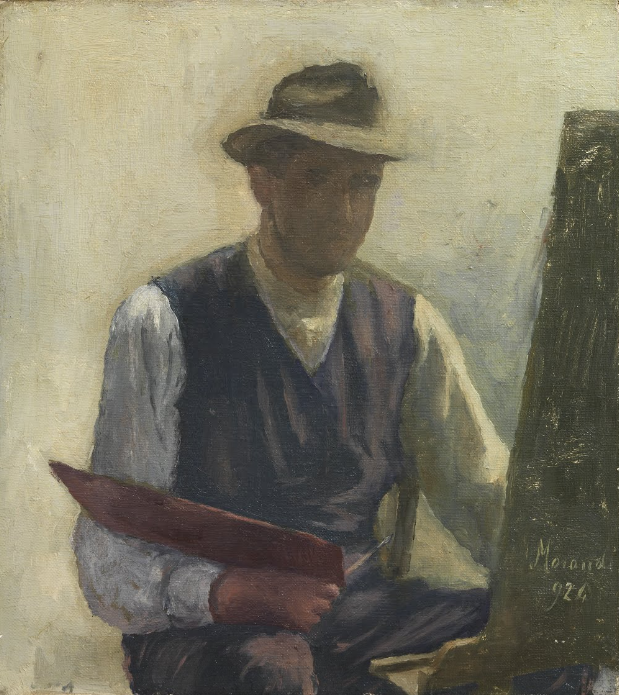
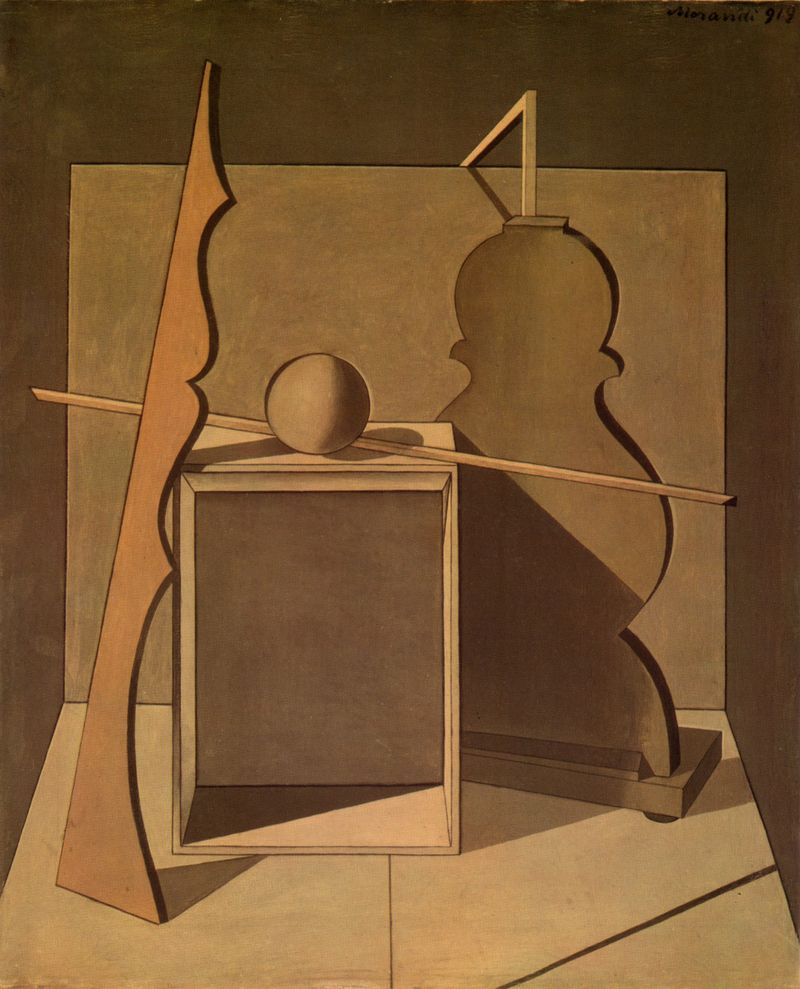
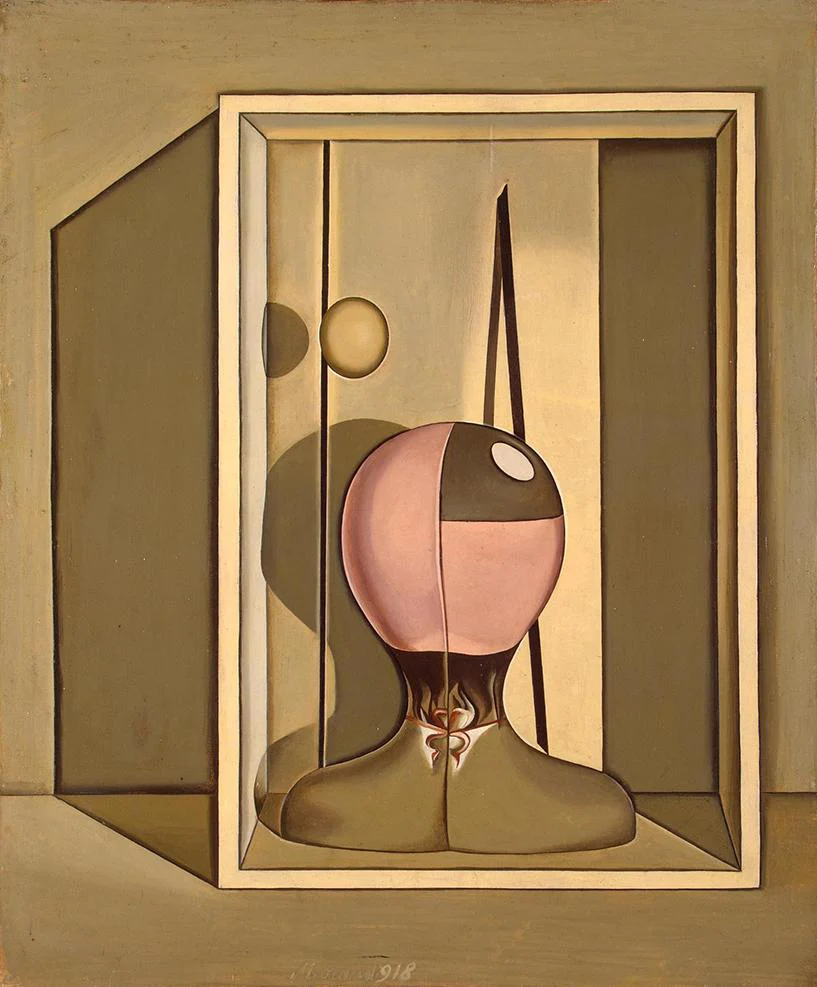
Giorgio Morandi, born in Bologna in 1890, was one of the most important Italian artists of the early 20th century. His academic training at the Accademia di Belle Arti in Bologna, although initially promising, was marked by disagreements with his professors, a sign of his growing desire to develop a personal artistic language. His early experiments were influenced by Futurism, but he soon abandoned this movement in favor of more reflective artistic currents, such as Cubism, Post-Impressionism (especially Cézanne), and Metaphysical painting, which helped him develop his own style. Morandi focused primarily on landscapes, still lifes, and flowers, subjects that define his most famous works. Morandi never sought fame, preferring a quiet life away from the spotlight, but despite this, he managed to establish himself in the international art scene. His work, centered on a meditative and analytical approach to painting, explored subjects through minimal variations in color and space. This approach allowed him to express a deep reflection on reality, despite his introverted and solitary nature. Throughout his career, Morandi formed connections with significant cultural and intellectual circles. He participated in important exhibitions and received praise from critics, particularly from figures like Roberto Longhi. Morandi experienced a period of significant artistic development in the years following the war when he moved to Grizzana, an Emilia-Romagna village that inspired many of his landscapes. It was here that he created some of his most celebrated works, which helped solidify his reputation. In 1948, after a long career, Morandi won the first prize at the Venice Biennale, an international recognition that marked the peak of his career. While he was highly admired for his unique style, the artist always remained far from the limelight, continuing to dedicate himself to painting until his death in 1964 in Bologna. His art, characterized by a rare ability to capture the essence of things with a sober and rigorous language, remains one of the highest achievements of 20th-century Italian painting.