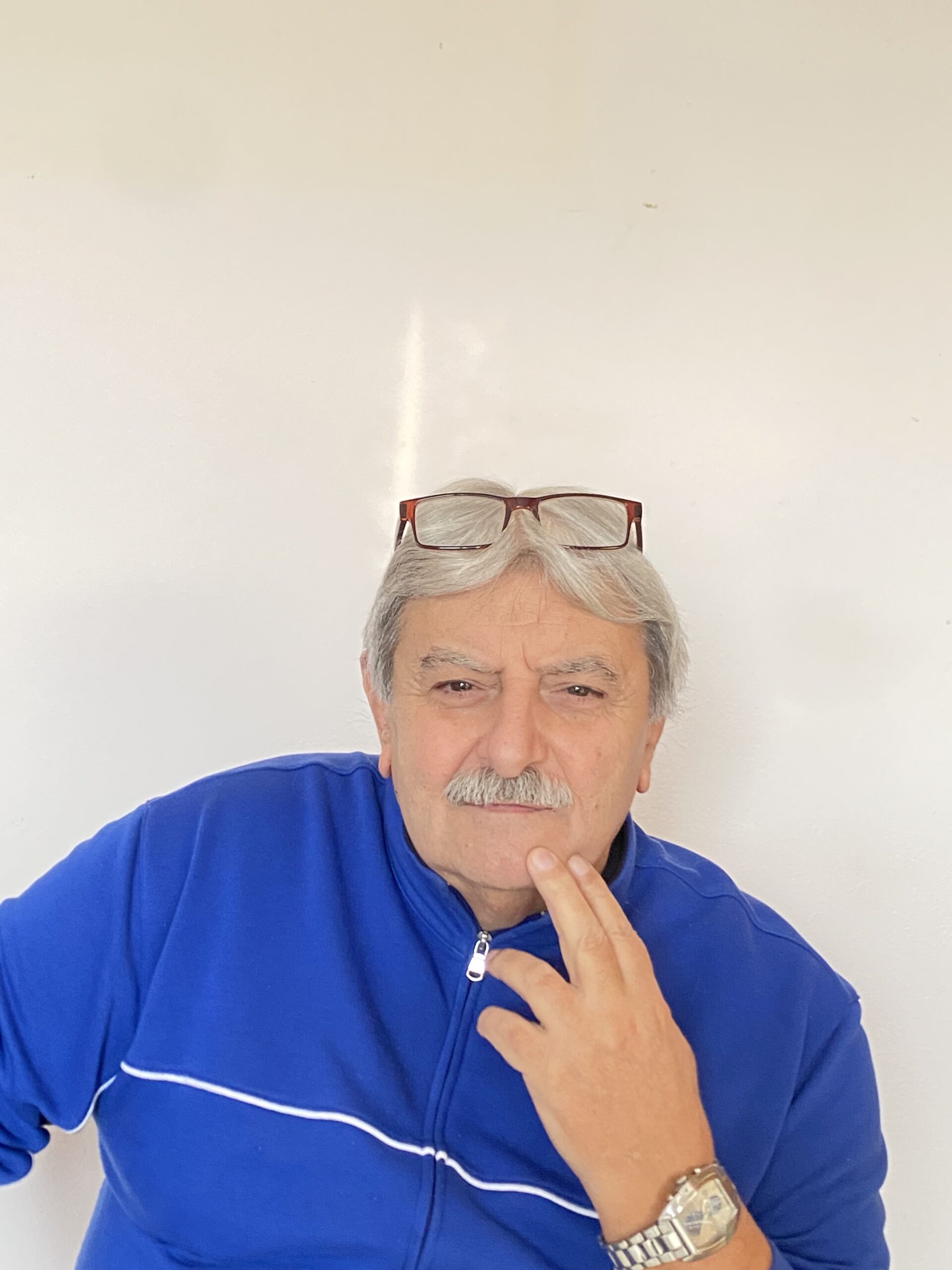
Ernesto Giuliano Armani
Biography and criticism
Born in 1898 in Malè, in the Val di Sole, to father Augusto, a forest engineer, the artist’s early years were marked by a childhood surrounded by nature. The family moved to Rovereto in 1908, and Ernesto enrolled in the Royal Elisabettina School, where the transition from rural life to the structured city life was difficult but eventually spurred his interest in art. His paternal grandfather, Basilio Armani, was a renowned landscape artist in the mid-19th century, known for his views of Rovereto, Trento, and other places. He had also written a drawing manual. The family’s artistic influence was strong, with Ernesto’s father also creating drawings and watercolors, especially of animals, to entertain him during periods of poor health. Ernesto’s formal training began with the guidance of Professor Comel, who taught freehand drawing and watercolor at the Royal School, where he excelled in watercolor techniques. When World War I broke out, Armani refused to flee Italy, believing that the region he had grown up in was his true homeland. He served in the military, spending time in Galicia, an area devastated by war, an experience that would shape his future art. After the war, he went to Vienna to study at the Academy of Fine Arts but had to cut his studies short when his hometown of Rovereto was severely damaged. He returned there, recording the destruction with powerful drawings and watercolors. In the early 1920s, he moved to Milan to study architecture at his father’s request, a field he initially found uninteresting but soon realized could enhance his artistic skills. He continued his work as a watercolorist, creating illustrations for other students’ theses. After completing his degree in 1922, he grew dissatisfied with the limited opportunities in Italy and moved to Berlin, where he had his first solo exhibition in 1923. Though the exhibition was well-received, and he briefly worked as a scenographer in the film industry, his time in Berlin was financially challenging due to hyperinflation. However, he gained valuable experience in the avant-garde film scene. In the mid-1920s, Armani returned to Italy, where he was invited to exhibit in various cities, achieving success in Milan, Brescia, and Trieste. His Trieste exhibition, in particular, was important for introducing him to portraiture, a genre that would become central to his later work. During this time, he also traveled to the Netherlands and Belgium, where he found great success, particularly with his depictions of Flemish horses and carts. In 1930, Armani returned to Rovereto and began to gain recognition locally, holding exhibitions in Trento and other cities. It was during this period that he met Antonietta Noriller, whom he married in 1932. They settled in Milan, where his work continued to thrive, particularly in the realm of portraits of children. In 1934, he published a book of his drawings titled *Il Bimbo nell’arte*, which was dedicated to Maria Pia of Savoy. By the late 1930s, Armani was traveling extensively for both work and inspiration, particularly to France, where he studied Gothic cathedrals. In 1937, he ventured to South America, first to Argentina, where he had a successful exhibition in Buenos Aires and was widely recognized for his portraiture. He also traveled to Brazil and Uruguay, continuing his exhibition tours and creating portraits. In 1938, he returned to Italy, where he became a father, and continued to work on various portrait commissions. As World War II began, Armani spent the early 1940s moving between Genoa and Trentino. He was briefly exempted from military service due to his work in a factory related to the war effort. By 1942, he focused on landscape painting, particularly the mountains of Trentino, finding inspiration in the local natural beauty. During the war, he continued to work and even managed to hold a successful exhibition in Milan in 1944, despite the challenges posed by the conflict. In the post-war years, after the collapse of the Fascist regime, Armani returned to exhibitions, showcasing works made during his time in Trentino. However, the years of war and isolation had a lasting impact on him, and he began to seek a more peaceful and secluded lifestyle. By the end of the 1940s, he was planning a retreat to an isolated house, a personal “hermitage,” away from the bustle of city life, as he looked to focus entirely on his artistic practice.
Category of affiliation
- Painting
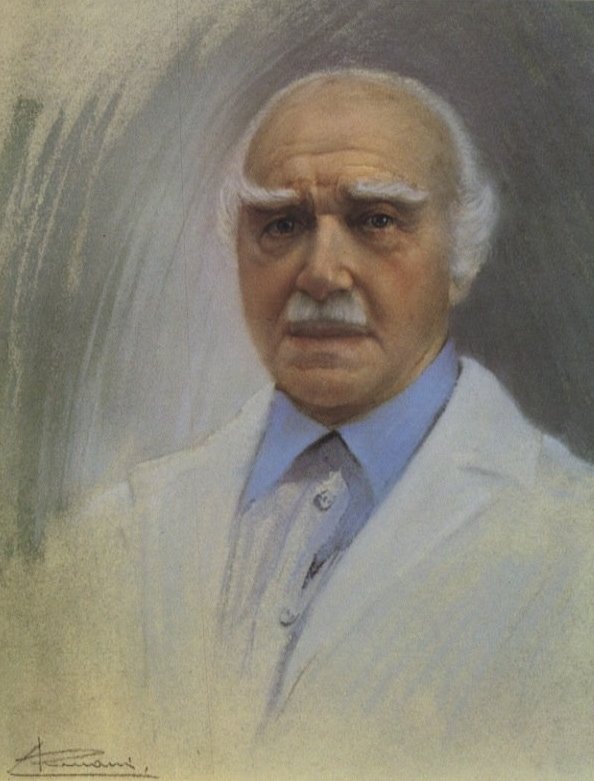
Artworks
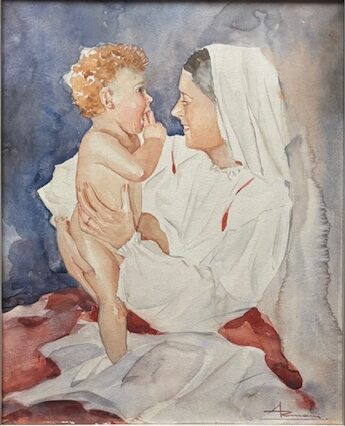
Tenerezze
- 50 cm x 40 cm
- Watercolor on paper