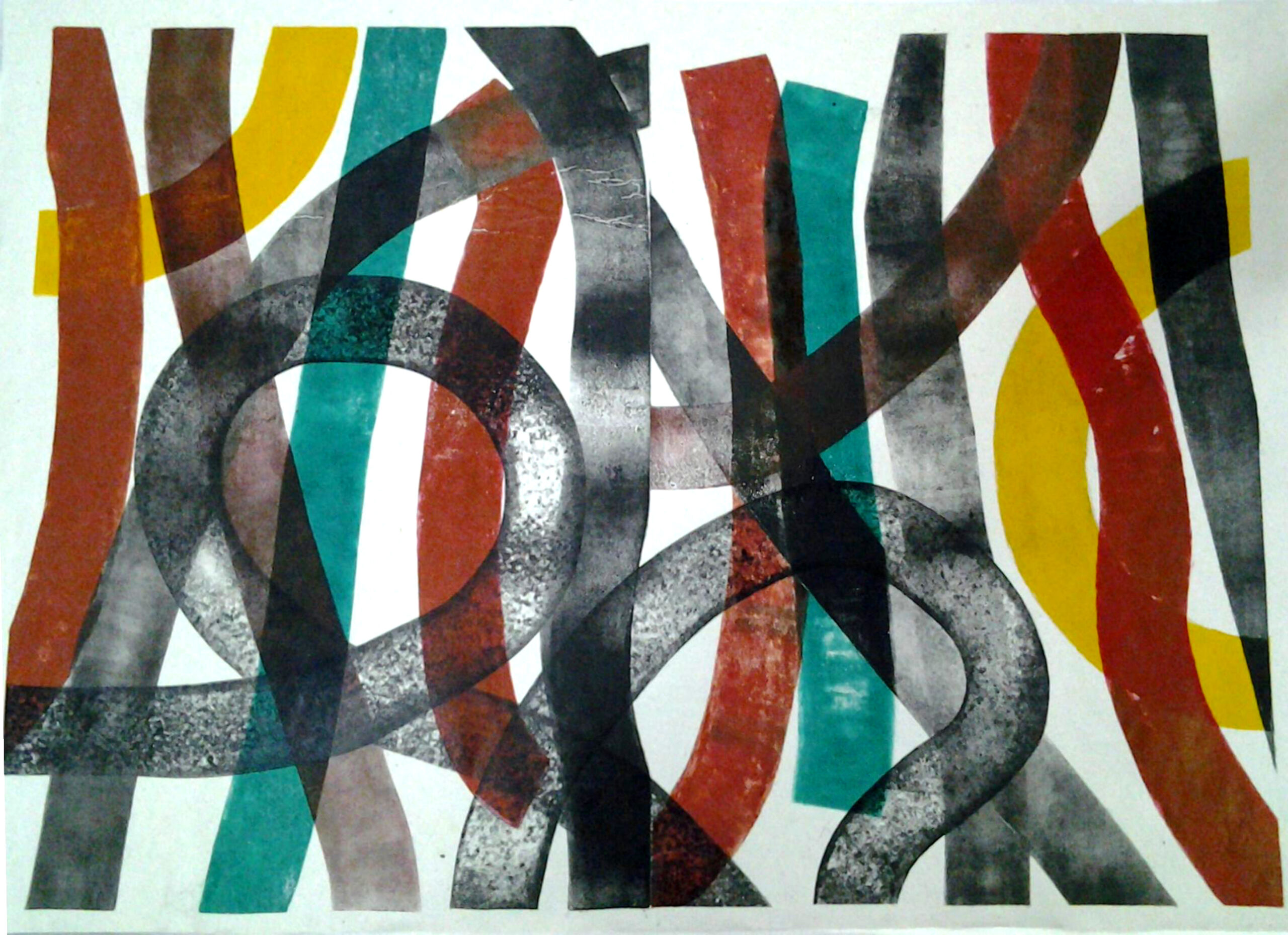
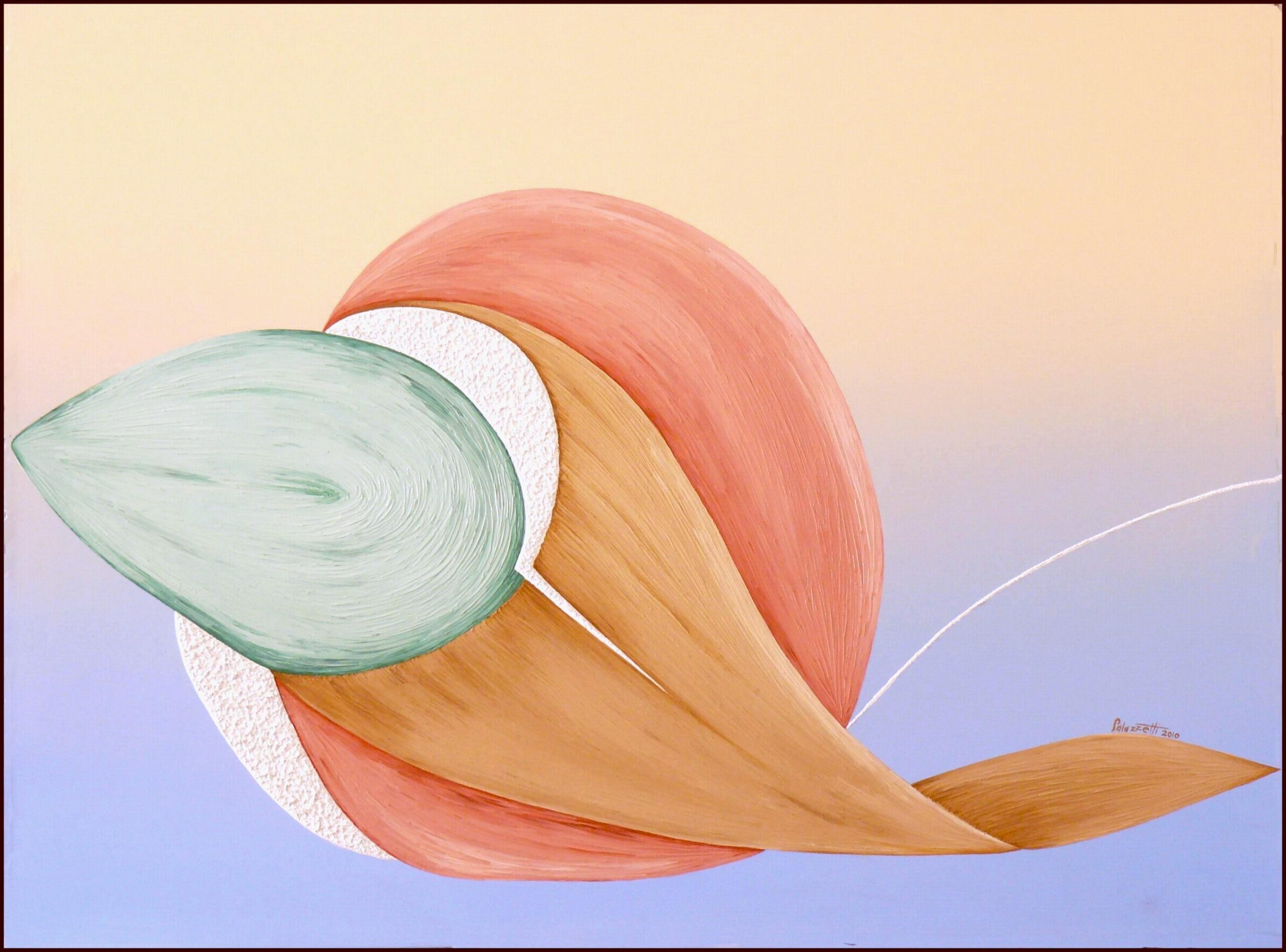
Beatrice Palazzetti was born in Viterbo and currently lives and works in Rome. A painter, printmaker, and sculptor, she began her artistic journey under the guidance of professors from the Academy of Fine Arts in Rome. At the “Free School of the Nude,” she studied printmaking, focusing particularly on woodcut techniques under the supervision of Prof. A. Kritsotaki. She attended the “N. Zabaglia” Art School in Rome, where she further explored painting techniques. Her exhibition career began in 1990 as part of an all-female collective, followed by solo exhibitions and participation in numerous events both in Italy and abroad (France, Spain, Portugal, Germany, Poland, Czech Republic, Bulgaria, Greece, Japan). Palazzetti has received multiple awards and prizes, including acquisitions of her works. Her artworks are held in various public and private collections in Italy and internationally. She is featured in prestigious catalogs and several art websites, and is listed in the printmakers’ archive of the Gabinetto delle Stampe Antiche e Moderne of the Municipality of Bagnacavallo. She is a member of the Associazione Nazionale Incisori Italiani in Vigonza (PD) and the Associazione Italiana Ex-Libris. Palazzetti has collaborated with musician C. Maresca on multimedia art events and with the publishing house Sovera, designing covers for several books. Since 2000, she has also publicly explored poetry and sculpture, working with various materials including stone, wood, metals, and plexiglass. Recently, she has also turned her attention to small bronze and silver castings. Beatrice Palazzetti’s art unfolds through a visual language that goes beyond representation, delving into the symbolic and the unconscious. Her surrealism is not an aesthetic device, but a deeply meditated experience—a bridge between the visible and the invisible. Each work is a threshold: through light, symmetry, and floating forms, she opens a universe where thought takes shape and matter becomes energy. Her compositions suggest a cosmic balance, a dance of elements—fish, flowers, branches—that echo inner states and the mystery of existence. Palazzetti transforms the pictorial gesture into a reflection on origins. Her woodcuts, in particular, stand out for their precision and their ability to render the inner landscape tangible, like a symbolic map pointing back to Genesis. With meticulous attention to detail and a perfect harmony between color and light, her work expresses a poetics of love and beauty. Each image is imbued with a sense of solemnity and vital tension, like a silent explosion that unveils the bond between consciousness and form. Beatrice Palazzetti does not merely depict the world—she regenerates it. She traces a path that is both aesthetic and spiritual, where art becomes an act of revelation.