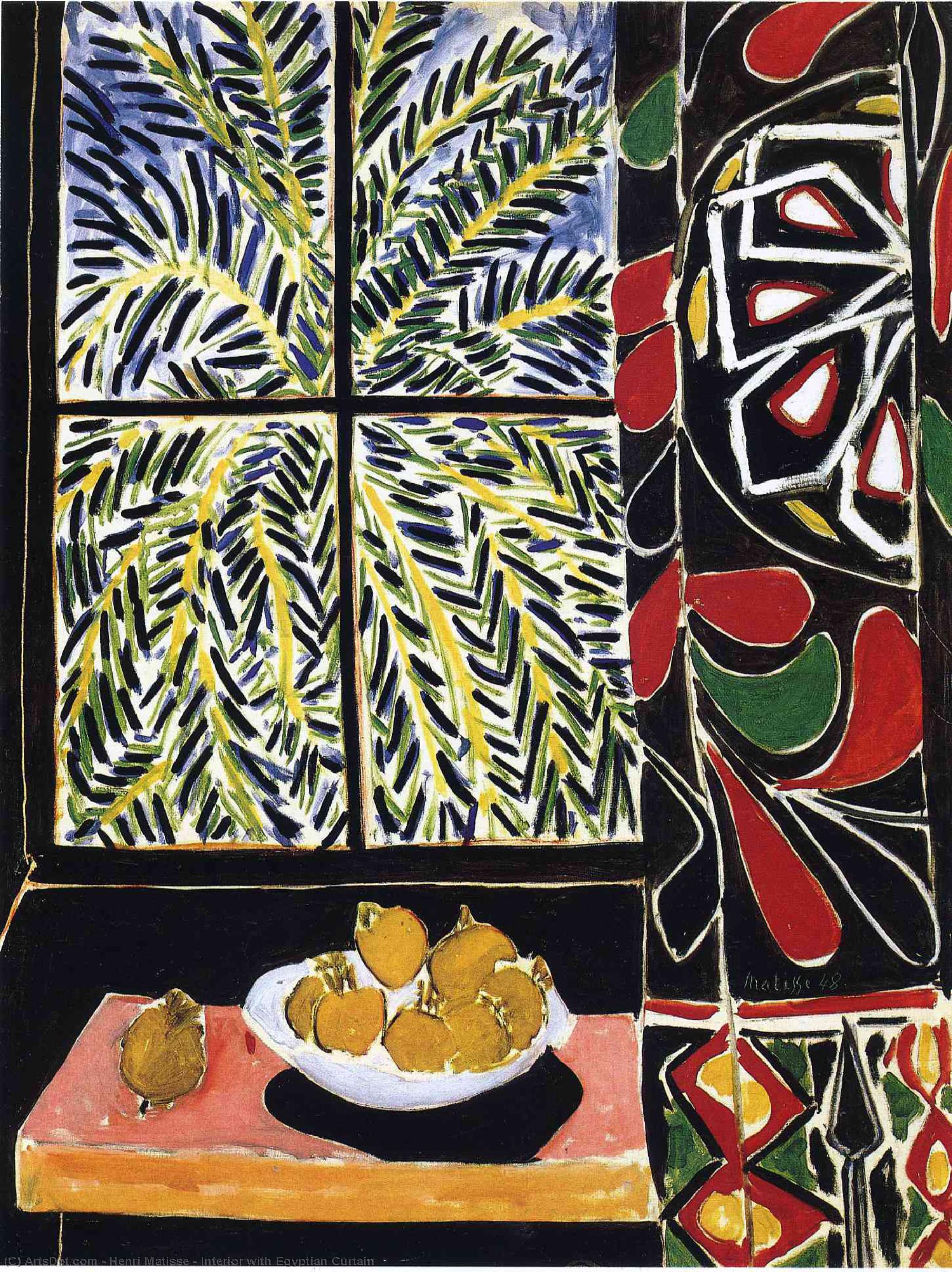
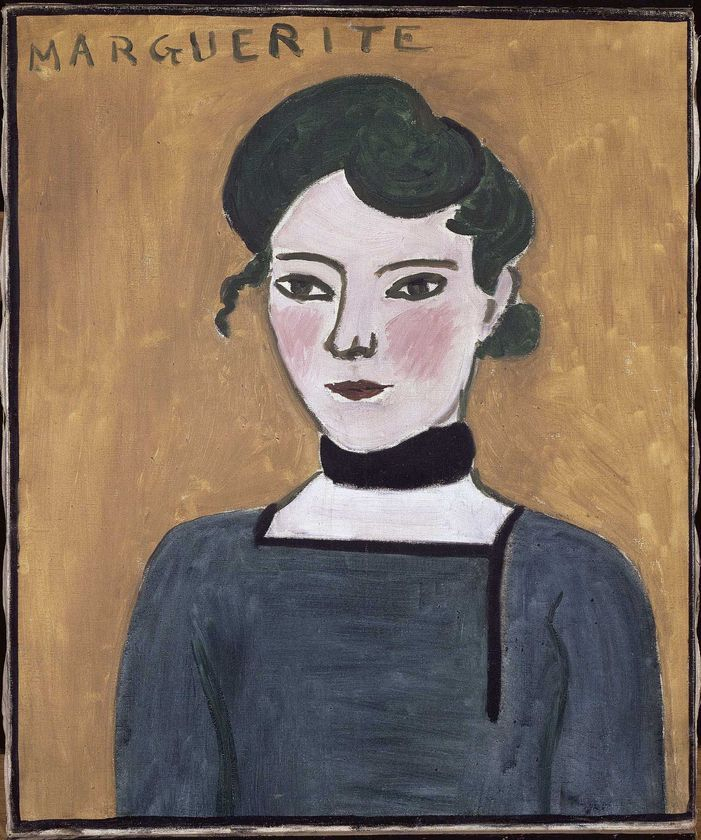
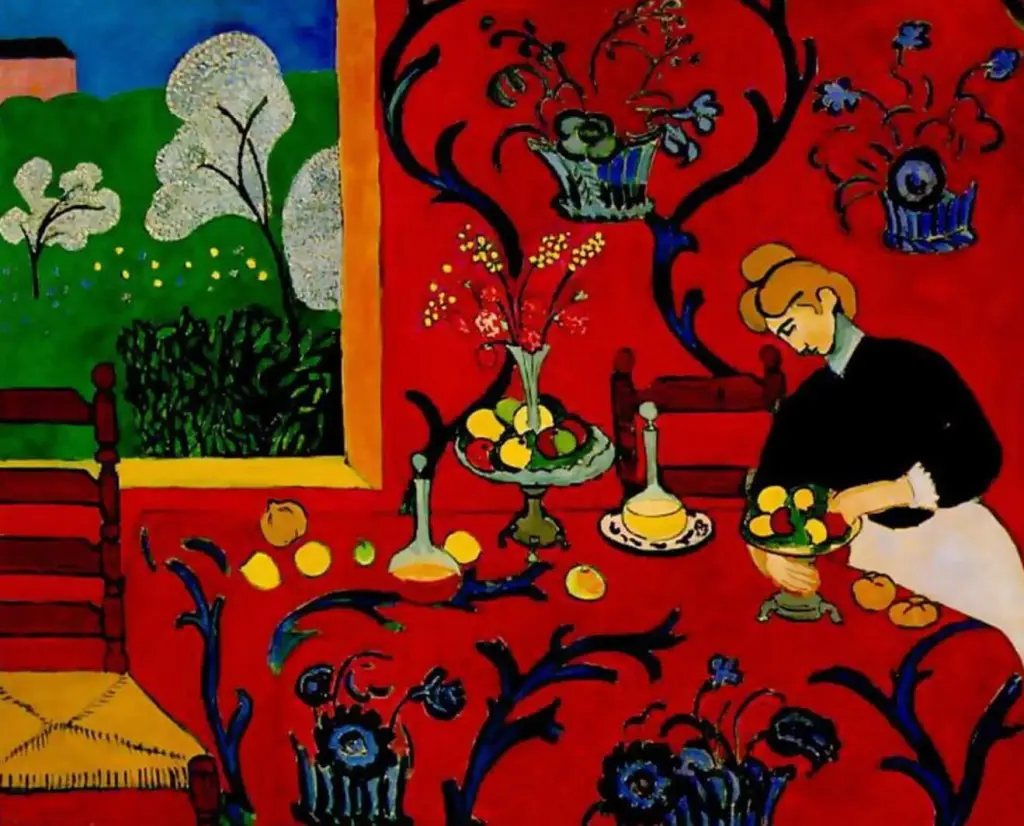
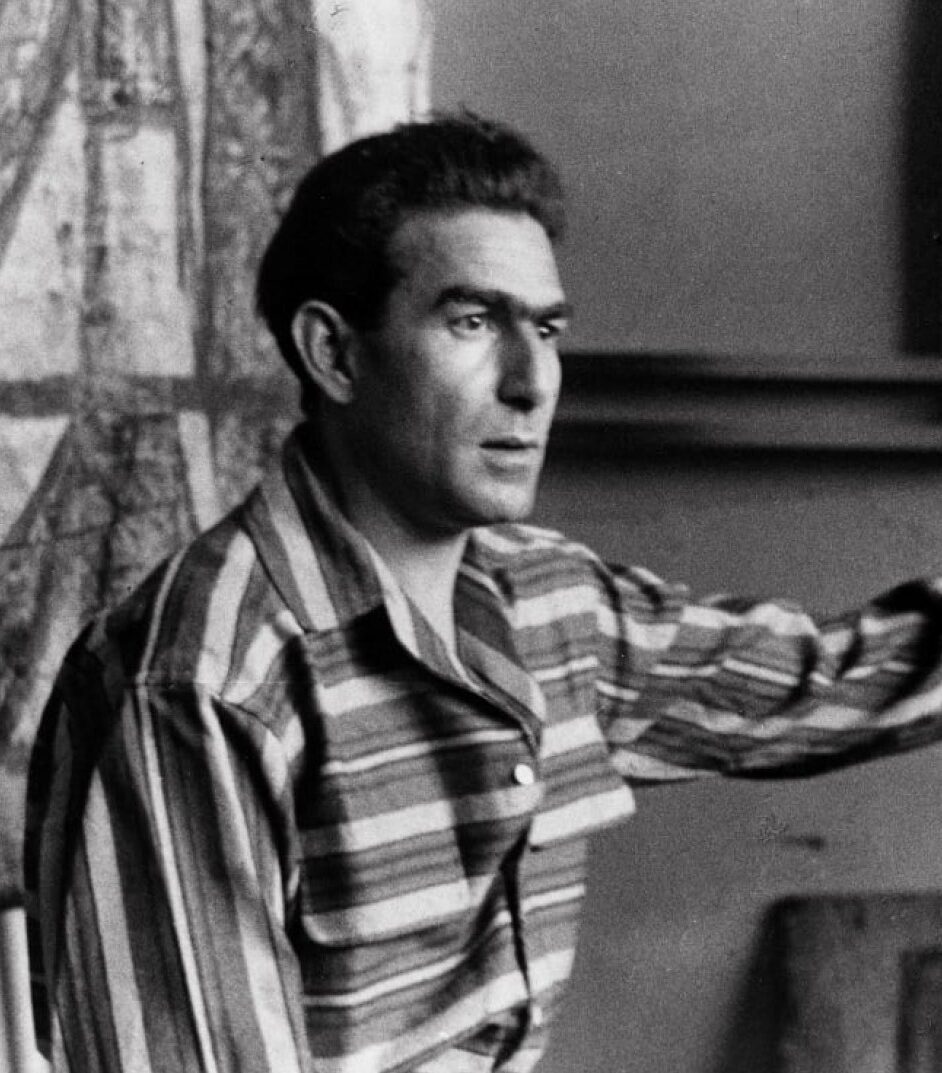
Henri Matisse (1869-1954) was a pivotal figure in the development of 20th-century art, particularly through his involvement with the Fauvist movement, of which he is considered the leading figure. His career unfolded during a period of economic and social transformation, marked by the second industrial revolution. This era, while characterized by progress, was also seen as a time of ideological crisis, giving rise to the artistic avant-garde. Matisse, alongside other artists, explored new expressive possibilities that moved away from classical models, emphasizing color and formal simplification. In the French context, Matisse’s work was part of two primary artistic directions, both of which were influenced by Paul Cézanne’s solutions: one focused on the deconstruction of space, which would later lead to Cubism, and the other on color experimentation, central to the Fauves. This movement, brief but intense (1905-1907), was defined by its bold and non-representational use of color, aiming to evoke emotions rather than depict reality realistically. The term “fauves” (wild beasts) was coined in a derogatory manner by a critic, highlighting the movement’s aggressive and vibrant approach to color. Matisse began his artistic career relatively late, after a period of studying law, and discovered painting during a convalescence in 1890. A student at the Académie Julian in Paris, he was influenced by the symbolist Gustave Moreau, who became his teacher, and later encountered artists like Cézanne, Gauguin, and Van Gogh, whose works pushed him to evolve his style. In 1905, Matisse painted his famous *Joy of Life* (La Joie de Vivre), an iconic example of his artistic vision, which broke away from tradition by using flat, vibrant colors. Over the years, Matisse solidified his role within the Fauvist group, but gradually distanced himself from it to explore new avenues of expression. During this time, he met the Russian patron Sergei Shchukin, who commissioned the works *The Dance* and *The Music*, both marked by an extreme simplification of form and a reduction of colors to pure, primary tones. After a debilitating illness that left him in a wheelchair, Matisse turned to gouache découpeé (cut-out collages), a new form of artistic creation. He also explored ceramics, tapestry design, and even architecture, as seen in his design for the Chapel of the Rosary in Vence. Despite early criticism and rejection, Matisse is now regarded as one of the leading figures in modern art. His ability to innovate, his use of color as a fundamental expressive tool, and his contribution to formal simplification left an indelible mark on the artistic landscape of the 20th century.