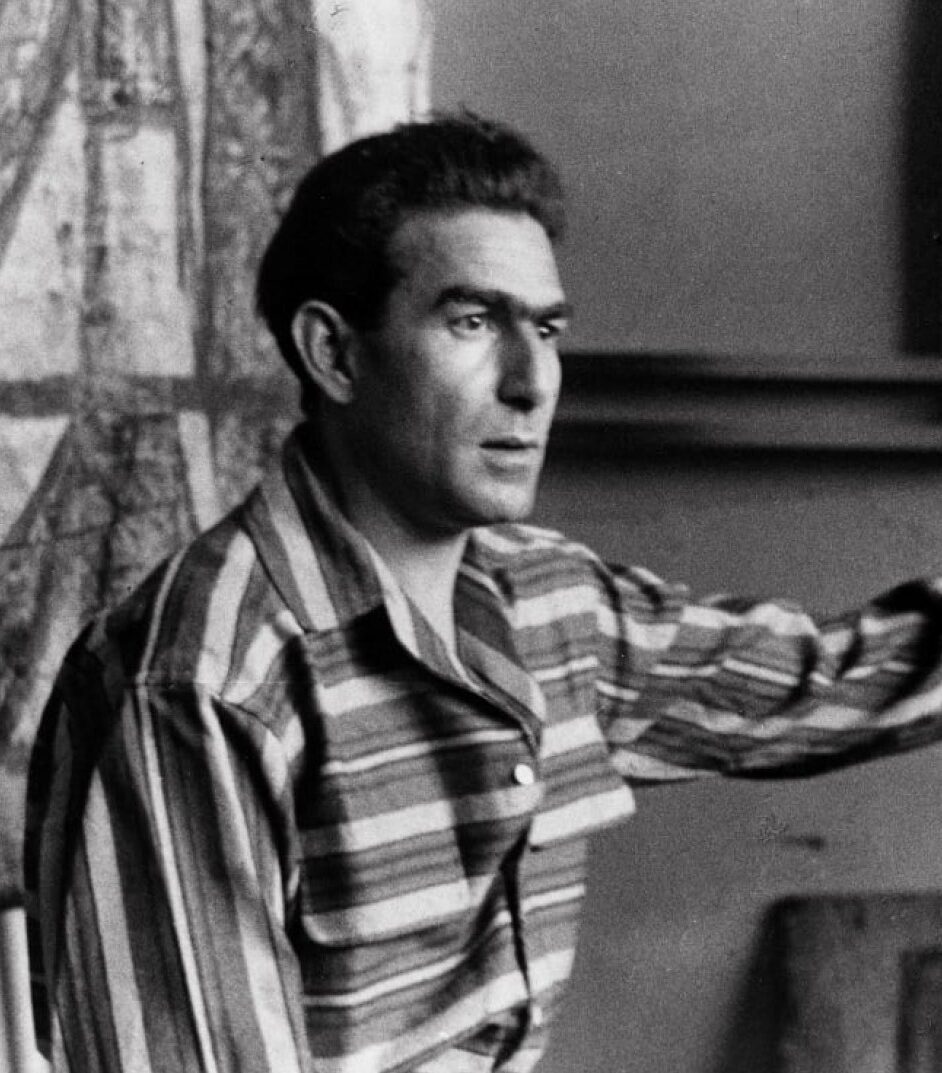
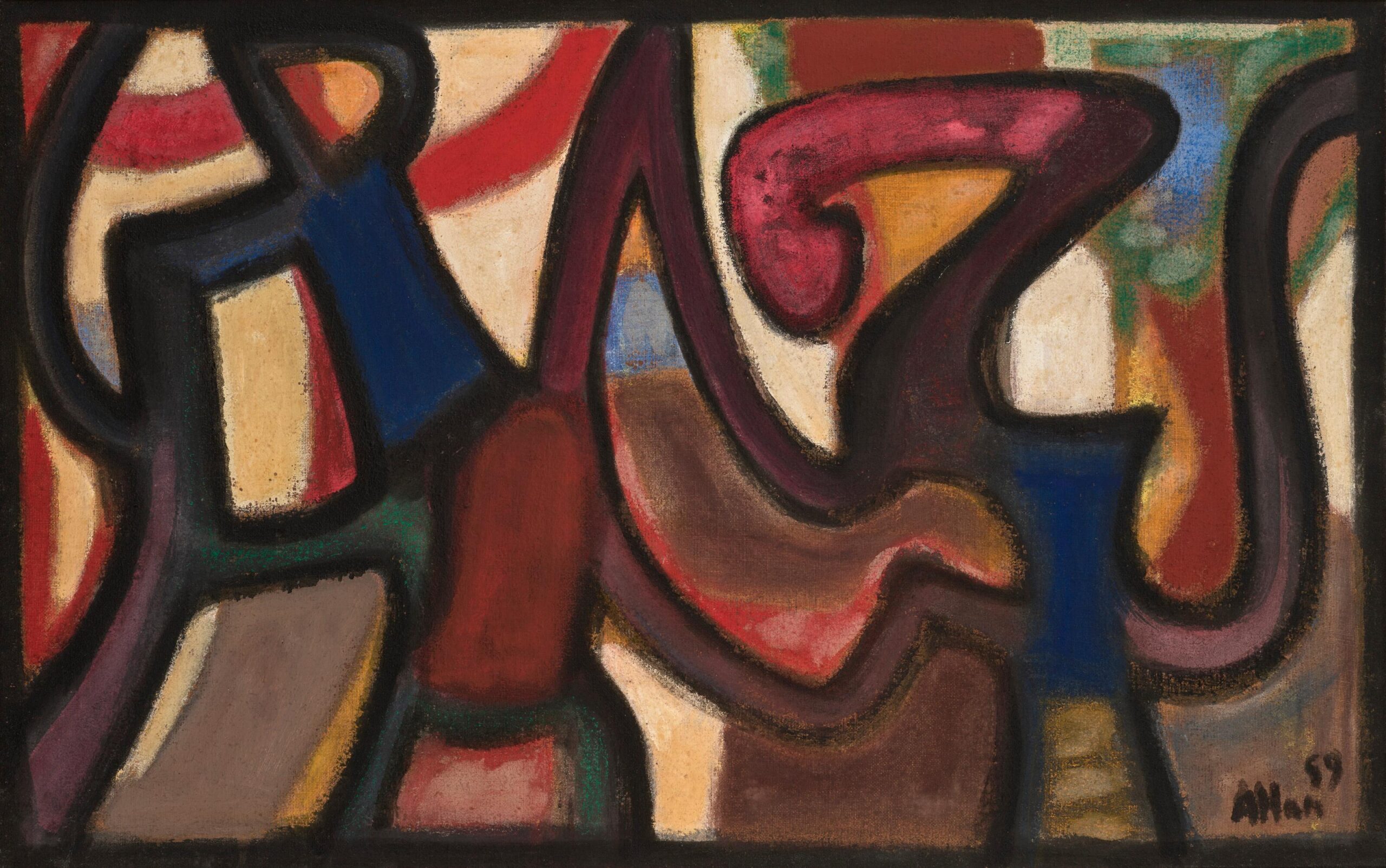
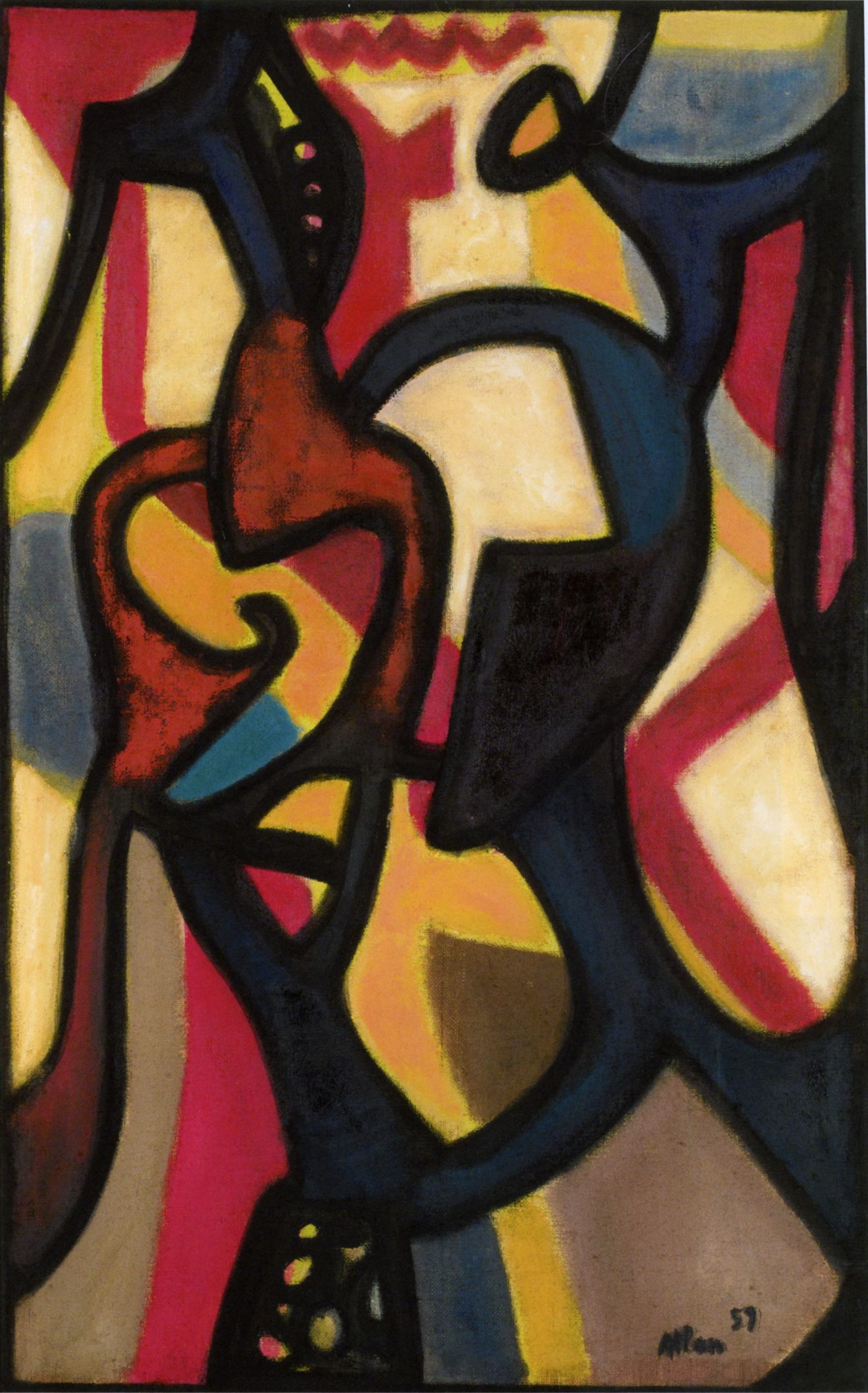
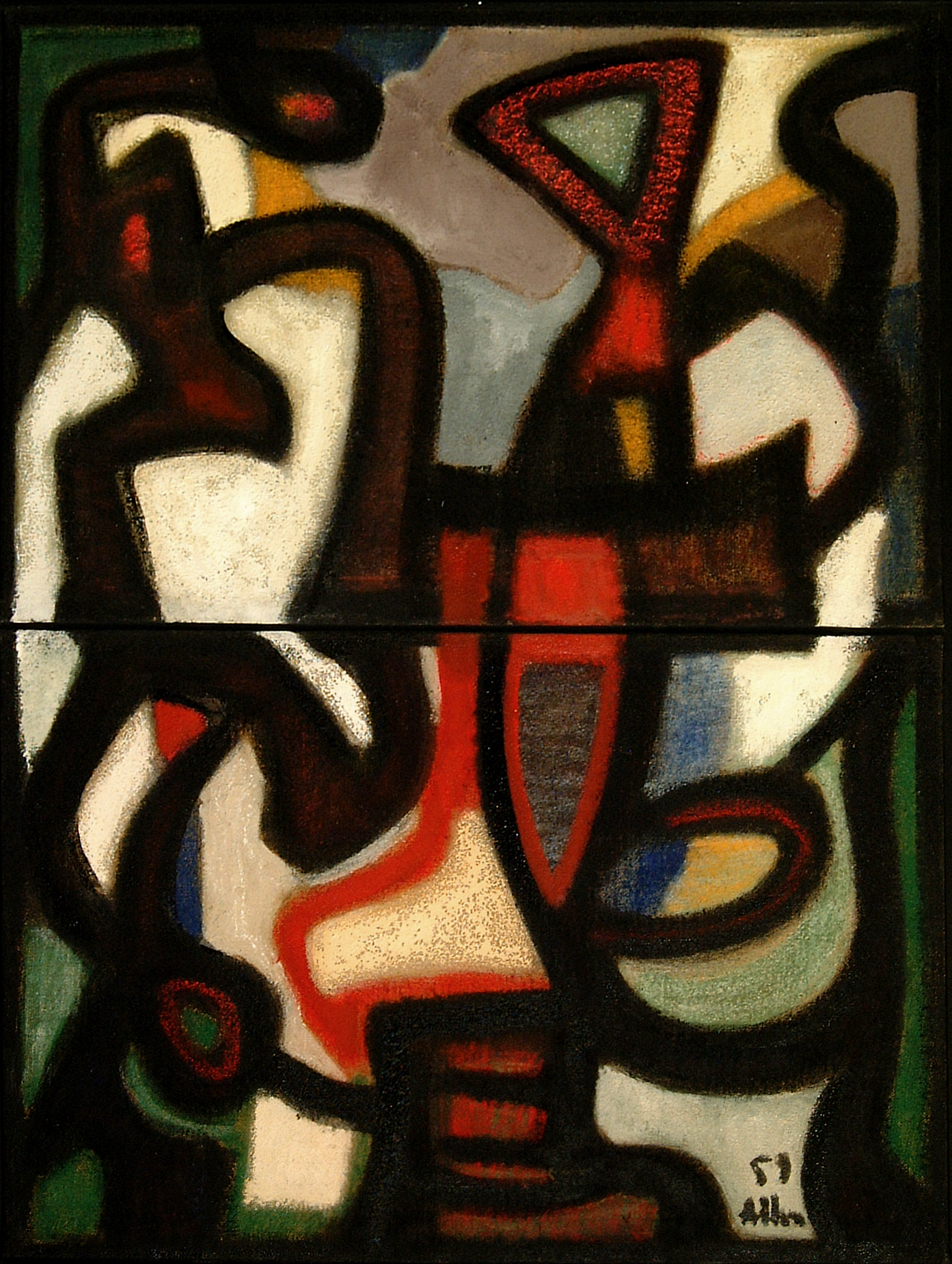
Jean Michel Atlan was born in Constantine, Algeria, in 1913 and moved to Paris in 1930 to study philosophy at the Sorbonne. While still young, he began writing surrealist poetry, which he illustrated with simple drawings. Over time, his interest shifted towards painting, and he became largely self-taught, adopting an expressionist style. During World War II, Atlan was arrested due to his Jewish heritage and his involvement in the French Resistance. After his release, he began to establish himself in the art world, participating in both group and solo exhibitions. It was around this time that he became connected with the Cobra group, a collective of artists who advocated for complete freedom in artistic expression, rejecting the constraints of surrealism. The group’s name, Cobra, was derived from the initials of the cities of Copenhagen, Brussels, and Amsterdam, where its members lived. Atlan’s involvement with Cobra greatly influenced his work, leading him to develop a personal artistic language that blended elements of expressionism and surrealism. His paintings became marked by abstract, gestural forms and symbolic references, often drawing on African and pre-Columbian art. The works featured dark lines and curving shapes, evoking the animal world and exploring deep, magical symbolism that resonated with the collective unconscious. In the 1950s, Atlan’s art gained international recognition, with exhibitions in France, England, Japan, and the United States. His paintings, with their emotional intensity and striking visual power, captivated both critics and audiences. Through his work, Atlan explored the human psyche, translating his insights into powerful symbolic forms. Jean Michel Atlan passed away in 1960, leaving a lasting impact on contemporary art. By the time of his death, he was regarded as an important figure in the “Nouvelle École de Paris,” a movement that was emerging in France and included some of the most significant artists of the 20th century.