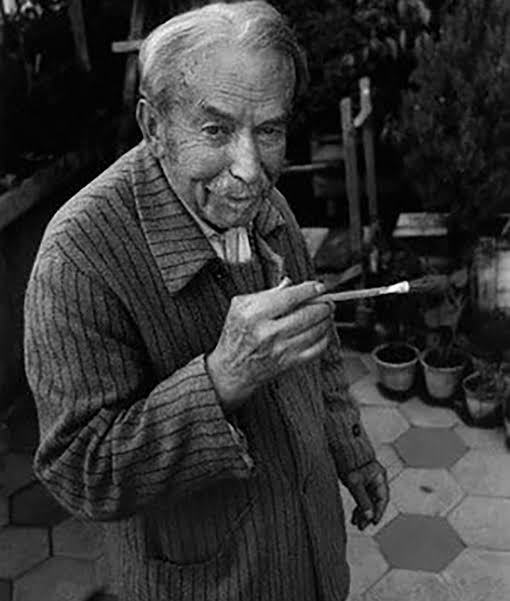
Giacomo Balla
Biography and criticism
Giacomo Balla was born in Turin on July 18, 1871, to Giovanni and Lucia Giannotti. He lost his father at the age of nine, but his mother devoted all her energy and resources to his education. From a young age, Balla showed an unusual artistic talent. Initially, he studied the violin, but soon abandoned it to focus on painting. After completing his secondary education, he enrolled at the Accademia Albertina in Turin, where he studied perspective, anatomy, and geometry. During this time, he also attended classes with the famous anthropologist and criminologist Cesare Lombroso. Balla made his debut in 1891 at the *Società Promotrice di Belle Arti*, a prestigious art society frequented by Turin’s aristocracy and upper bourgeoisie. It was here that he met the writer Edmondo De Amicis and the young artist Giuseppe Pellizza da Volpedo, who would later become one of the leaders of Italian divisionism. In Turin, Balla was strongly influenced by veristic painting, which was characterized by a strong ethical and social commitment—an important feature of the city’s culture at the turn of the century. In 1895, he left his hometown for good and moved to Rome with his mother, where he would live for the rest of his life. In the capital, Balla became a pioneer of divisionism and quickly attracted followers, including Umberto Boccioni, Gino Severini, and Mario Sironi. It was in this period that he created some of his early masterpieces, such as *La Pazza* (1905), which retained a veristic focus on social themes. In 1903, he participated in the V Venice Biennale, marking the start of many subsequent exhibitions. In 1905, he married Elisa Marucci, and their first daughter, Luce, later became a futurist artist as well. A turning point in Balla’s career came in 1909 with the publication of the *Manifesto of Futurism* by Filippo Tommaso Marinetti, which called for an artistic and literary avant-garde to overcome the stagnating culture of Italy. The manifesto’s core principle was to forget the past and look toward the future, celebrating speed, modernity, and dynamism. Although Balla was already a master of divisionism, he enthusiastically joined the Futurist movement. In 1910, just a year after the publication of the first Futurist manifesto, Balla signed the *Manifesto of Futurist Painting*, along with Boccioni, Russolo, Severini, and Carrà. In 1912, Balla’s work *Lampada ad arco* (1911) was included in the catalog of the Futurist exhibition held at the Galerie Bernheim-Jeune in Paris. During this period, Balla produced some of his most famous works, including *Bambina che corre sul balcone* and *Dinamismo di un cane al guinzaglio* (1912), which reflected his fascination with movement and speed—central themes of Futurism. In 1915, Balla and Fortunato Depero signed the *Manifesto of the Futurist Reconstruction of the Universe*, which proposed a total art that combined painting, sculpture, music, and architecture, rejecting any ties to past traditions. These years were a peak in Balla’s career, and he became one of the central figures of the Futurist movement. After the death of Umberto Boccioni in 1916, Balla became the undisputed leader of Futurism and began signing his works with the pseudonym “Futurballa.” In 1921, he painted the decorations for the *Bal TicTac*, a popular cabaret in Rome known for its jazz music. In the following years, Balla aligned himself with Fascism, becoming the official artist of the regime. In 1926, he created a statuette of Mussolini, which was presented to the dictator. In 1925, Balla participated in the Exposition of Decorative Arts in Paris with Depero and Enrico Prampolini. In 1929, he signed the *Manifesto of Aeropainting*, marking his final act of adherence to Futurism. However, in the 1930s, Balla began to distance himself from the movement, believing that “pure painting” could be rediscovered in realism. From then on, his works became more figurative, signaling a break with his earlier avant-garde explorations. Giacomo Balla passed away on March 1, 1958, in Rome, leaving a significant legacy in the history of modern art.
Category of affiliation
- Painting
Artworks
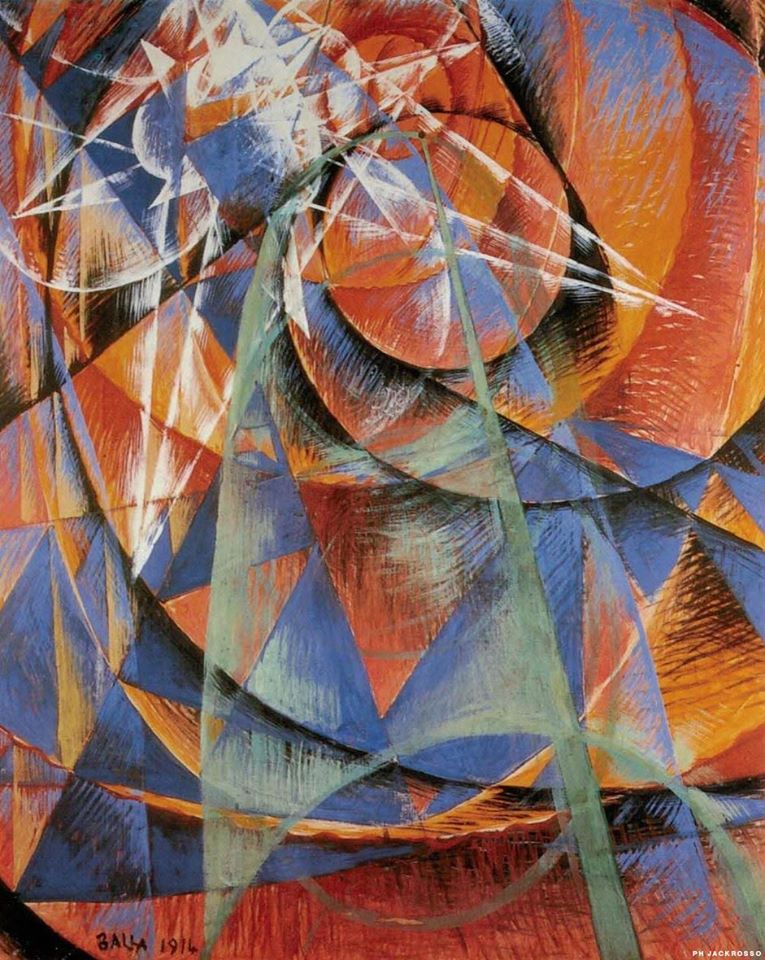
Mercurio passa davanti il Sole
- 1914
- 61 cm × 50,5 cm
- Oil on knurled paper
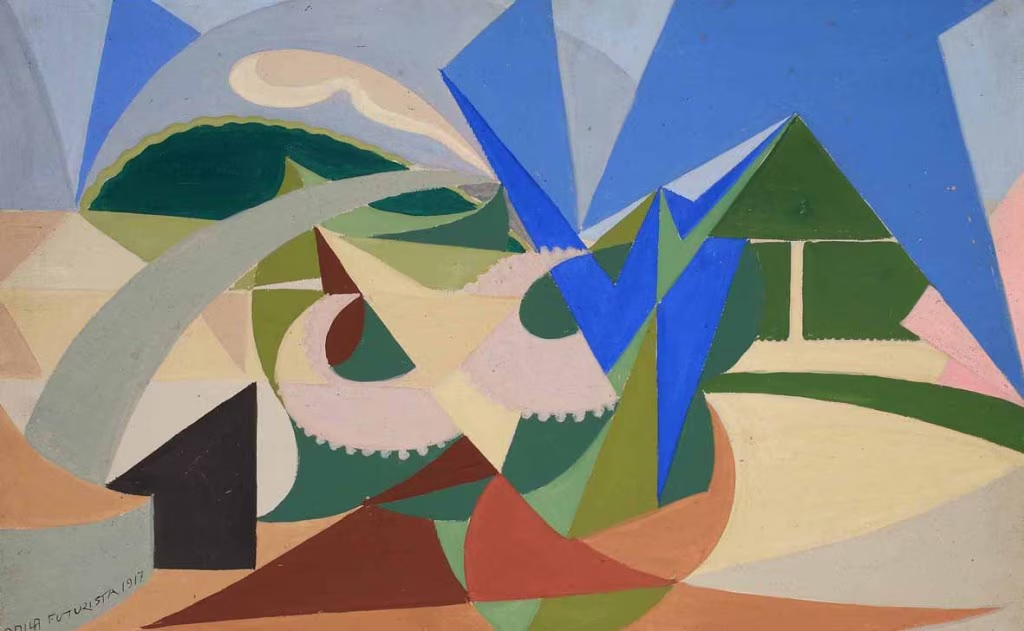
Forze di paesaggio + giardino
- 1917
- 55 cm x 77,5 cm
- Oil on canvas
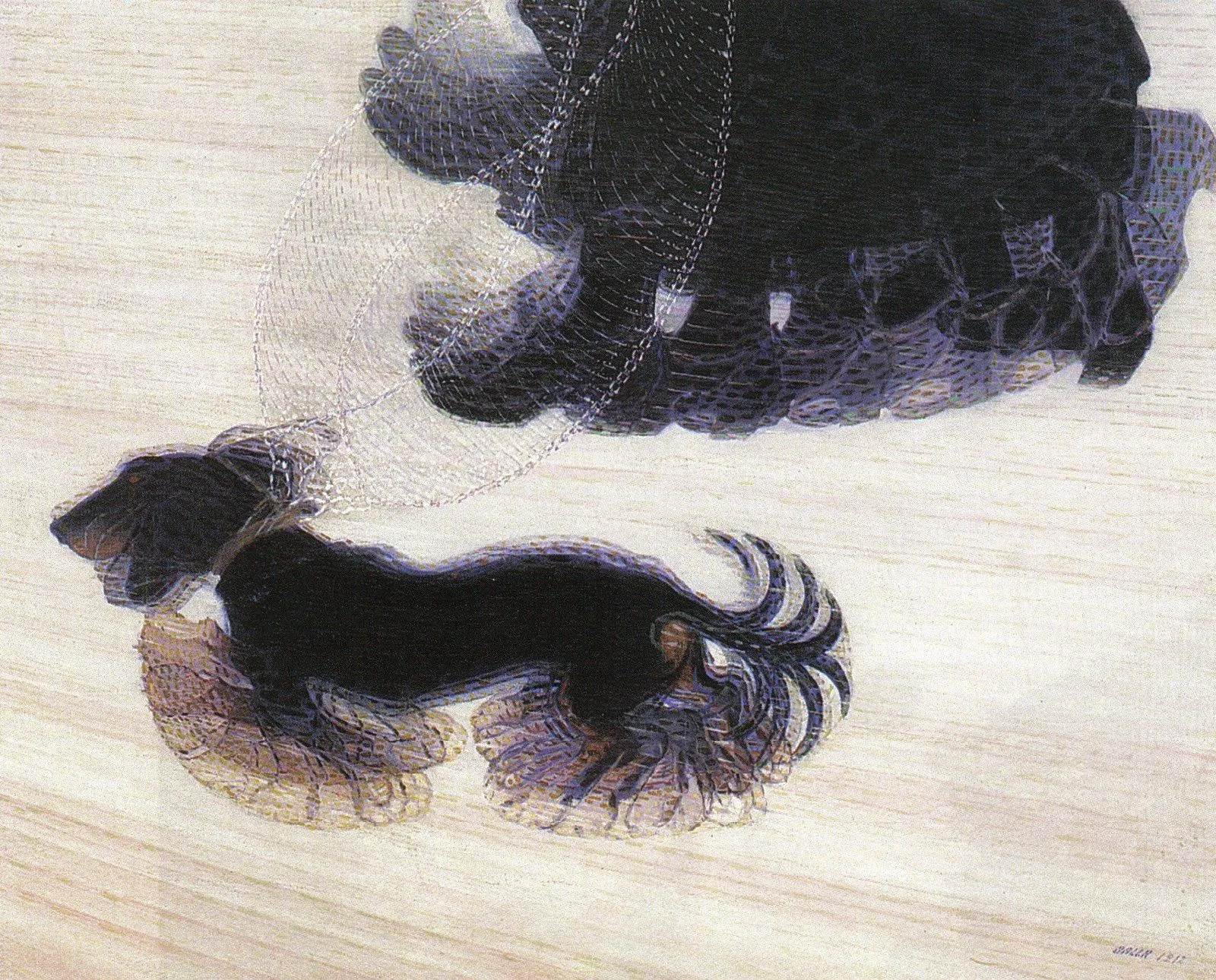
Dinamismo di un cane al guinzaglio
- 1912
- 90,8 cm × 110 cm
- Oil on canvas