Tancredi Parmeggiani
Biography and criticism
Tancredi was born on September 25, 1927, in Feltre, Italy, to Paolo and Francesca Zallot. He spent his early years in Bologna with his younger siblings, Romano and Silvia, before returning to Feltre after the early death of his father and his mother’s illness. The family was supported by his cousin, Ettore Pietriboni, a lawyer, who took charge of Tancredi and Romano’s education at the Salesian institute in Belluno, while Silvia was sent to a convent school in Venice. Tancredi initially attended a classical high school but struggled academically, leading the Salesians to guide him towards an artistic education, allowing him to pursue his passion for drawing, a practice he had been interested in from an early age. His style was marked by a continuous line, quick and without hesitation, which would later be associated with artists like Picasso, Modigliani, Matisse, and Cocteau. At the age of 19, Tancredi moved to Venice to study at the Academy of Fine Arts, where he trained under painter Armando Pizzinato, entering into the world of modernist artists like Guido Cadorin, Virgilio Guidi, and Emilio Vedova. It was in Venice that Tancredi deepened his ties with Vedova, whom he had first met during the Resistance. In 1947, Tancredi embarked on an adventurous journey across Northern Italy and France to Paris. However, as a minor and without valid documents, he was stopped in Lyon and forced to return home. After his return, he engaged with the local artistic and intellectual circles in Feltre and even participated in a film production. In 1948, after reaching the legal age, Tancredi claimed his inheritance and held his first group exhibition in Feltre. That same year, he visited the Venice Biennale, marking the first direct encounter with the historical avant-garde, which had a profound influence on him. Tancredi’s first solo exhibition took place in 1949 at the Sandri Gallery in Venice. At that time, his work still reflected the influences of primitivism, Vincent van Gogh, and a distinctive use of material and bold lines. Over time, his style began evolving, moving towards a more abstract approach. Tancredi spent some time in Rome, sharing an apartment with Milton Gendel and later staying with the painter Paul Dieu. There, he encountered artists like Piero Dorazio and Achille Perilli, joining the Forma group, which focused on abstract art. In 1952, after a brief stay in Rome, Tancredi moved to Venice and began collaborating with Peggy Guggenheim, who was instrumental in promoting his work. Guggenheim provided him with studio space and facilitated his exhibition in major galleries and museums across Italy and the United States, including the Museum of Modern Art in New York. The early 1950s saw Tancredi further solidifying his abstract style, influenced by both the Italian and international art scenes. He explored geometric abstraction and dynamic compositions, sometimes using thick paint and vibrant colors. In 1954, his works were shown in major exhibitions in Paris, Venice, and Florence, receiving recognition and accolades. However, his personal life was marked by turbulence, including a relationship with Peggy Guggenheim’s daughter, Pegeen Vail, which ended acrimoniously by the mid-1950s. Tancredi’s work continued to evolve, incorporating gestural abstraction and experimenting with various artistic styles. In the late 1950s and early 1960s, his art shifted toward more personal, emotionally charged expressions. His time in Paris, especially during the Algerian War, led him to create works that reflected the turmoil of the time. He collaborated with surrealists and became involved in political movements, protesting against the injustices of the time, such as the trial of Nelson Mandela. His works during this period included rapid, intricate markings that conveyed deep psychological and emotional states. Despite the recognition of his work, Tancredi’s personal life became increasingly difficult. His mental health deteriorated, leading to hospitalizations and a growing sense of alienation. His final years were marked by existential struggles, and by the fall of 1964, Tancredi’s mental state had worsened to the point that he took his own life on October 1, 1964, at the age of 37. His death was discovered in the waters of the Tiber River near Ponte Sisto in Rome, marking a tragic end to a promising and turbulent artistic journey.
Category of affiliation
- Painting

Artworks
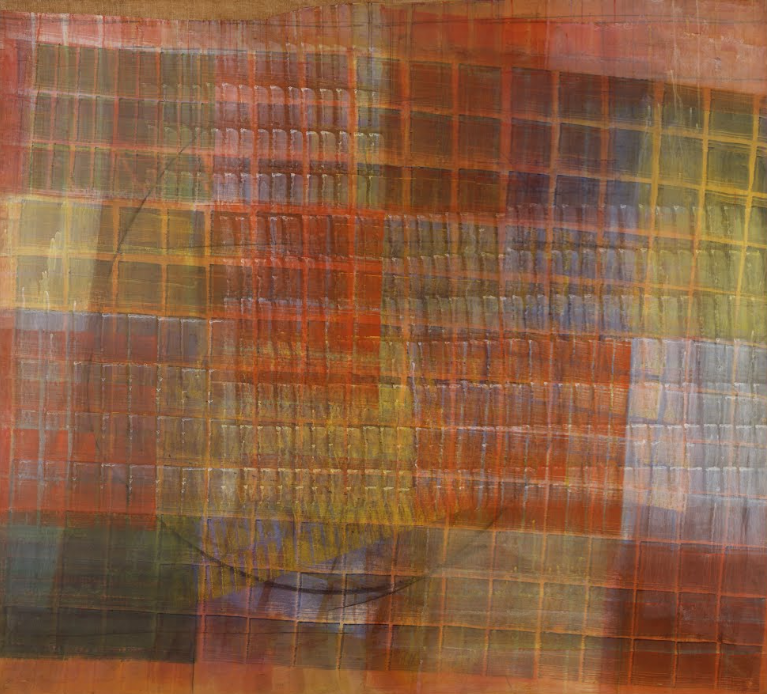
A proposito di Venezia
- 1958
- 102 cm x 202,8 cm
- Tempera on canvas paper
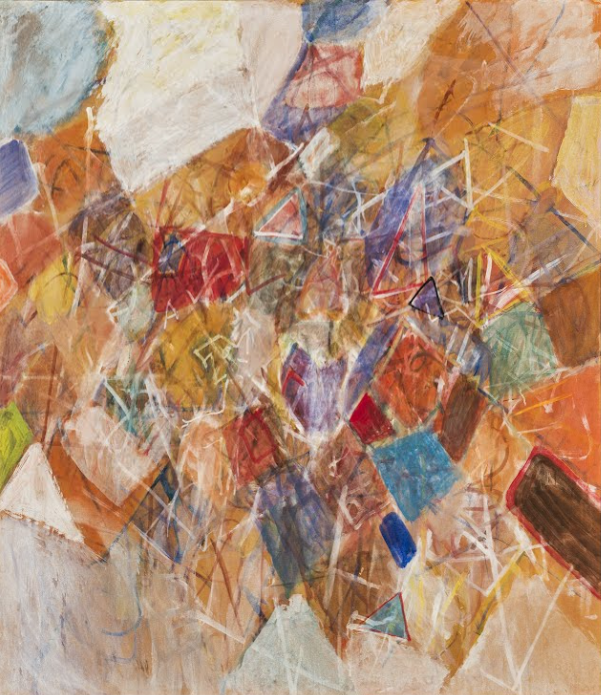
Composizione
- 1960
- 135 cm x 117 cm
- Tempera on canvas
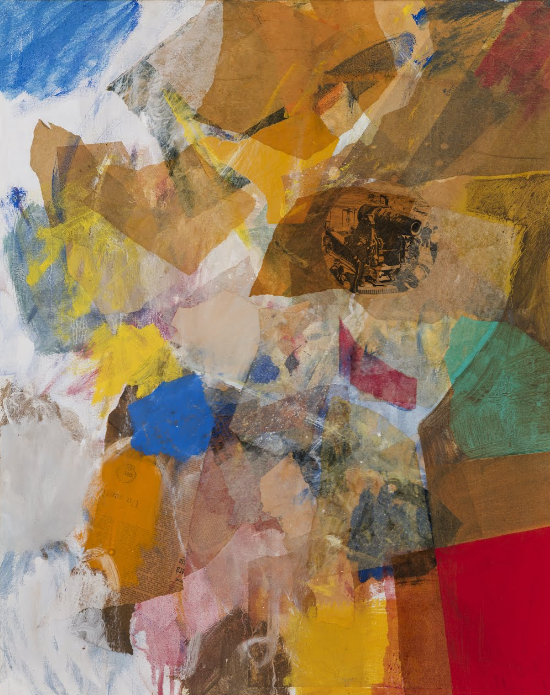
Cari dolci ricordi del buon tempo andato. La grande Berta
- 1961
- 93 cm x 73 cm
- Collage and tempera on paper