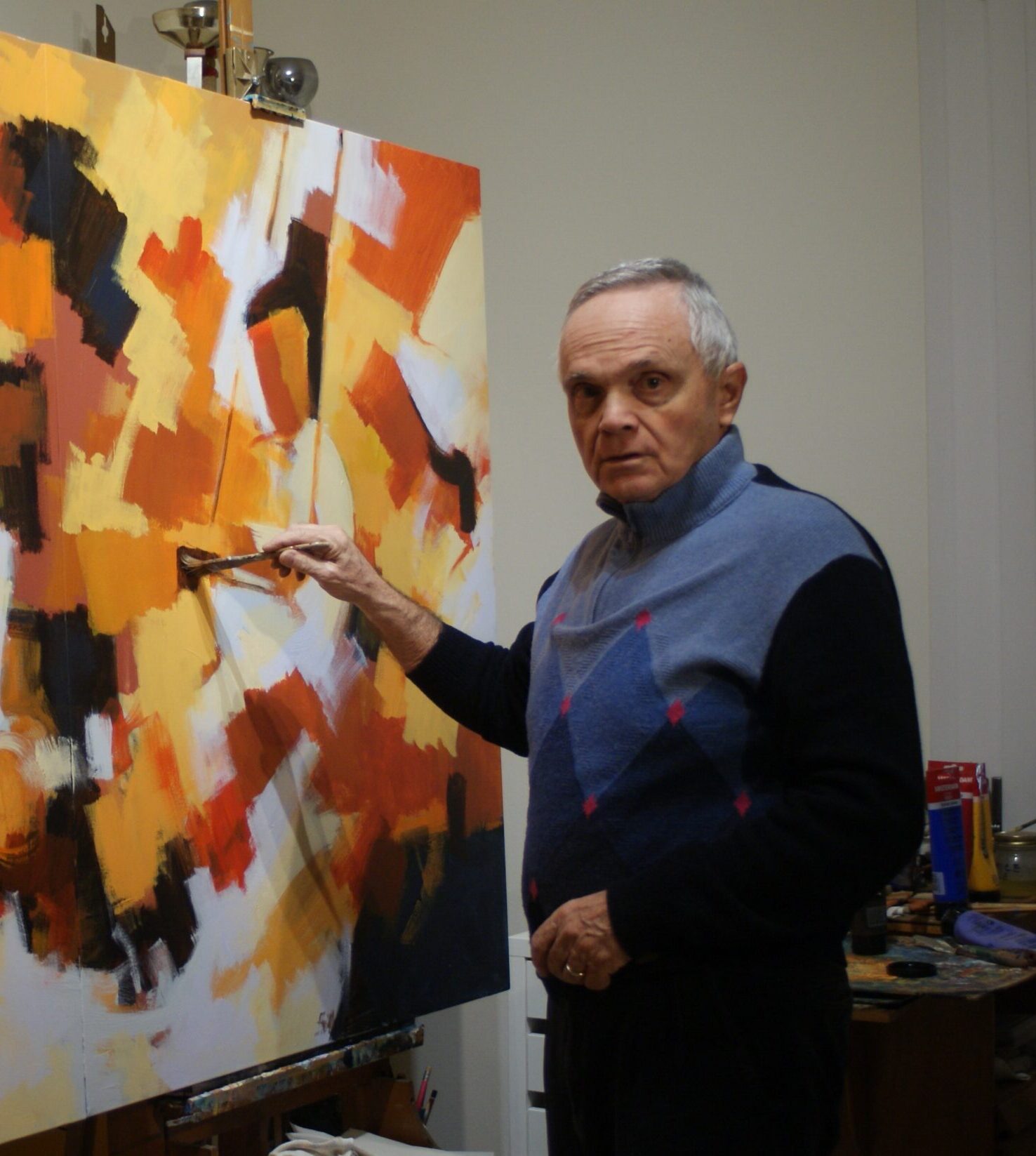
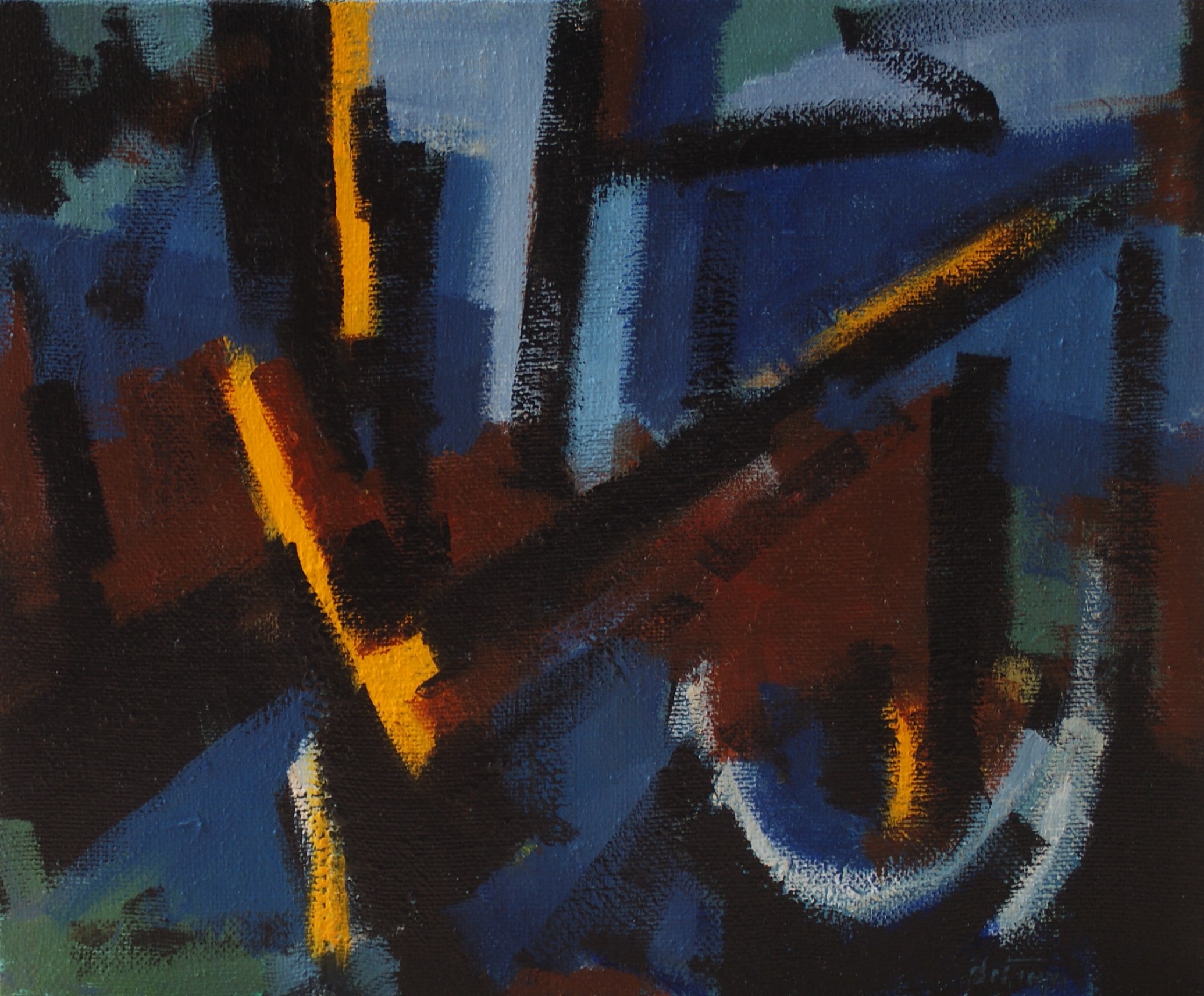
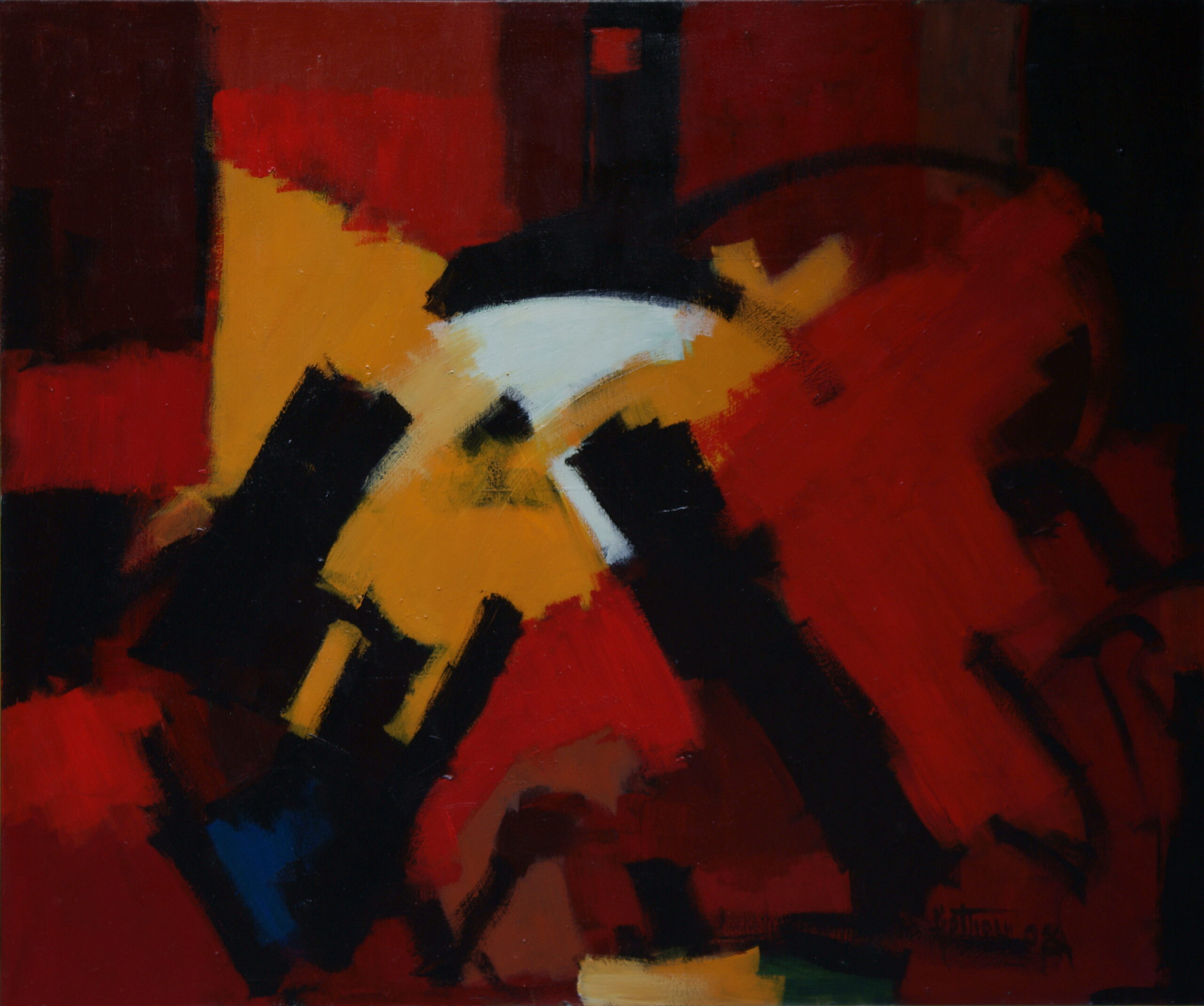
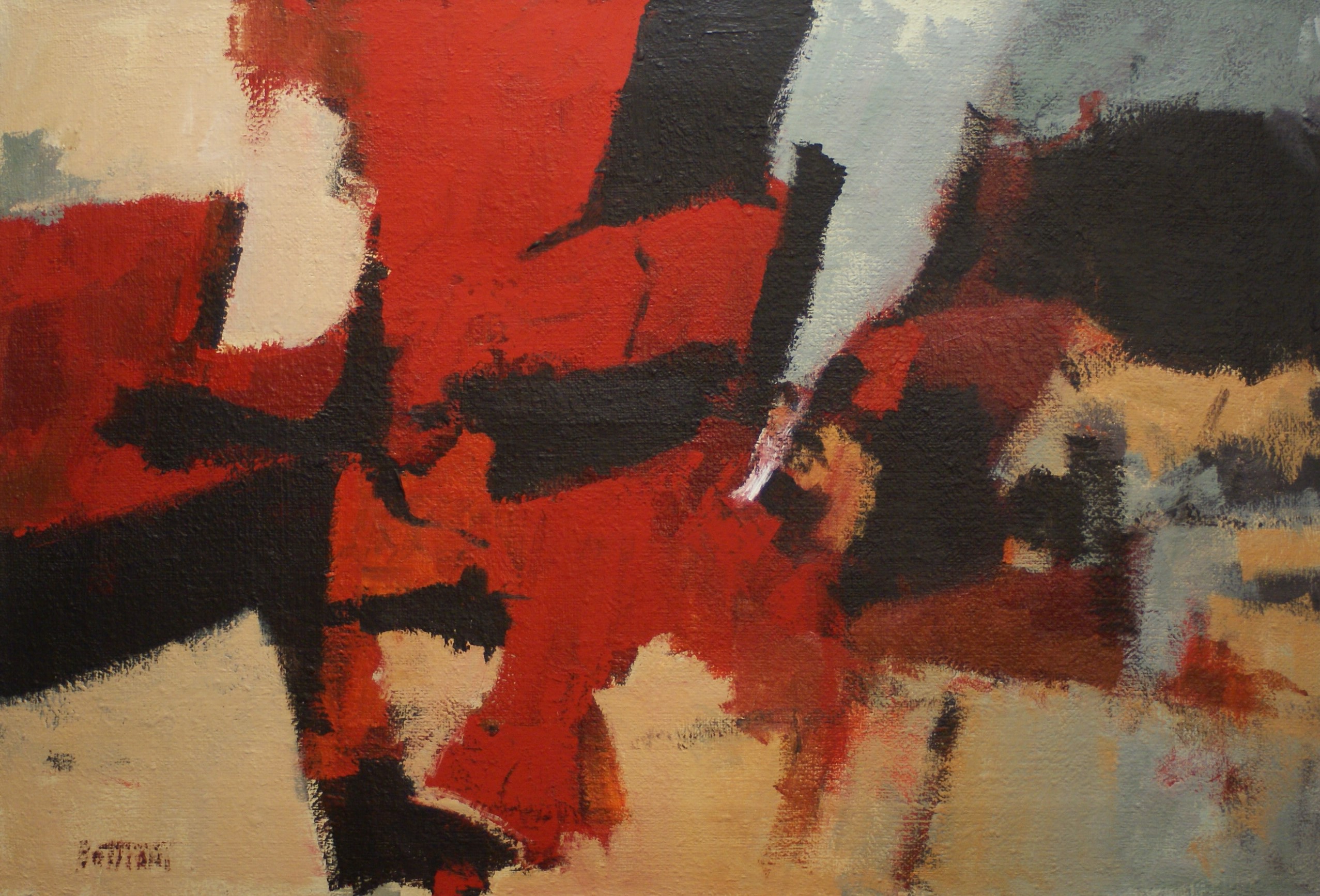
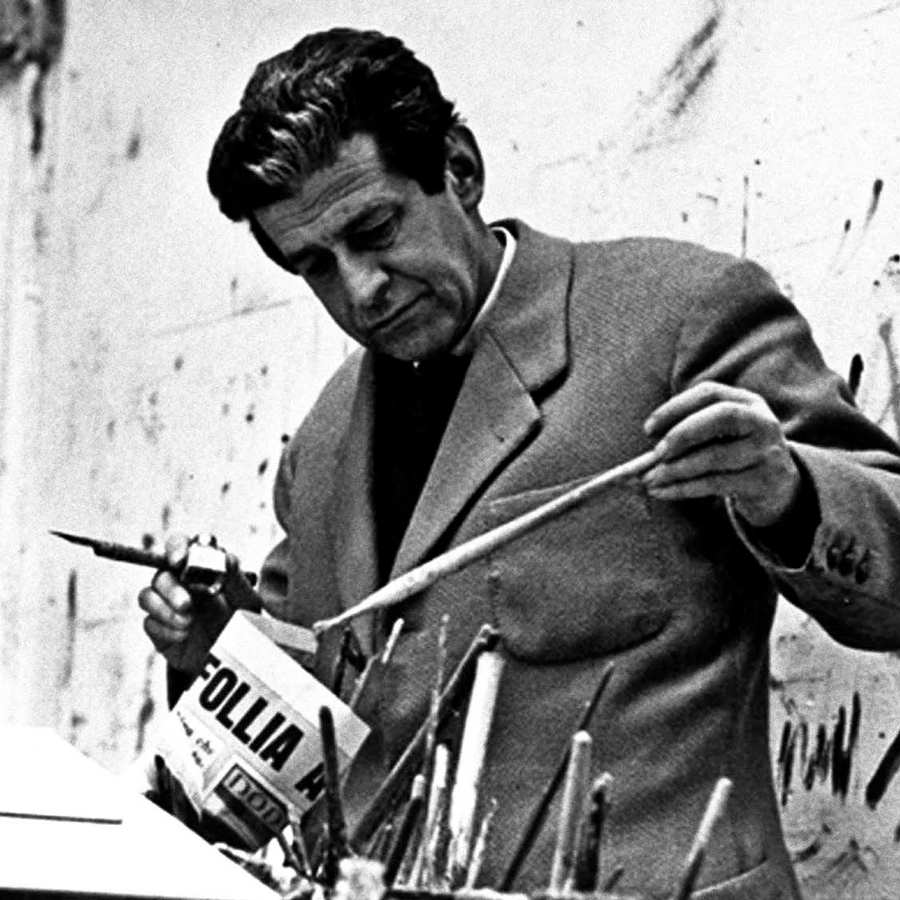
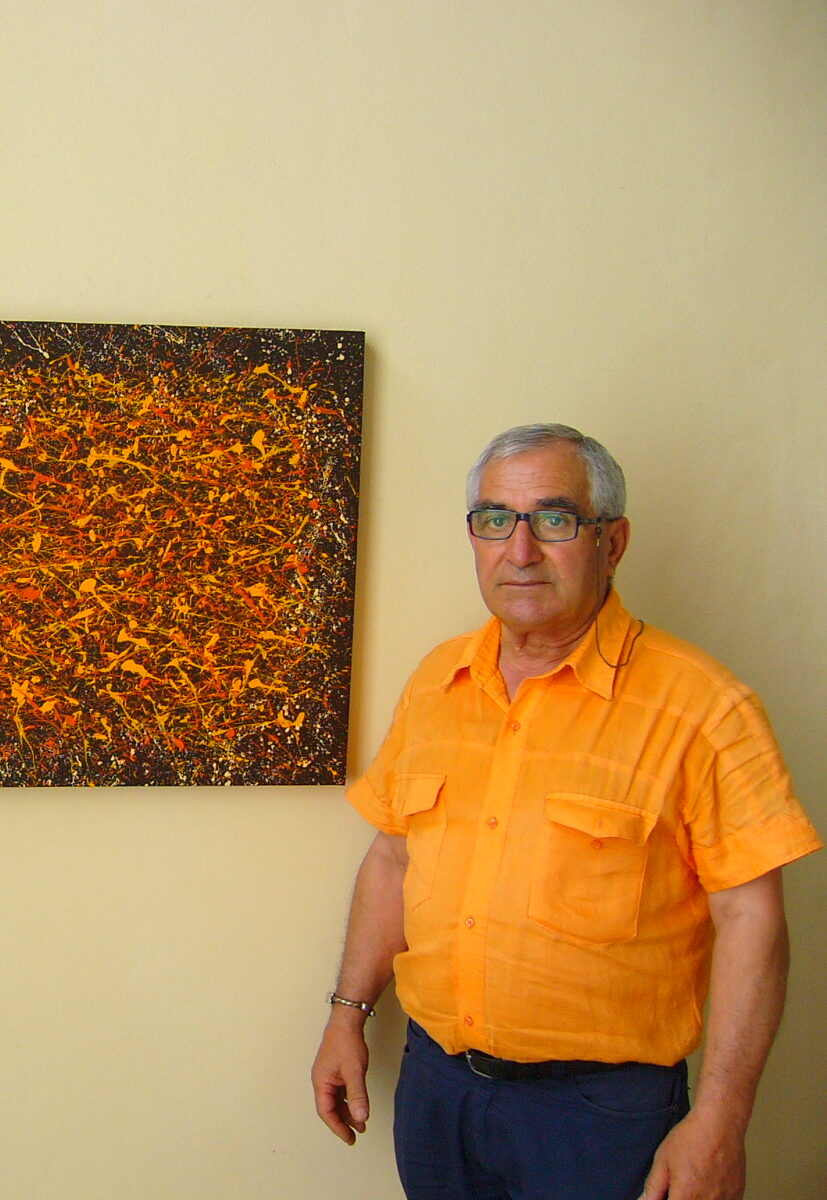
Paolo Bottioni was born in Parma, where he currently lives and works in his studio at via Preti 9. He spent a long time working in the studio of Maestro Alfredo Chiapponi and graduated from the Dams program in Bologna. Throughout his career, he has participated in numerous group exhibitions and has held many solo shows. He has exhibited in various galleries and in several locations, including Parma, Bologna, Florence, Monticano (Siena), Venice, San Polo d’Enza (Reggio Emilia), Felino (Parma), Piacenza, London, Gubbio, and Mantua. He has participated in numerous national and international competitions, receiving many awards and recognitions. In 2006, in Piacenza, he held a major retrospective showcasing his last twenty years of artistic work (1985-2005), marking his transition to a more abstract and informal style of painting. Since then, many other solo and group exhibitions have further consolidated his current informal approach. Writers and critics who have commented on his work include: Giulio Panzani (journalist and art critic, Florence), Aldo Onorati (writer and essayist, Florence), Pierangelo Fabrini (university professor and essayist), Marina Dorigo (critic and essayist), Paola Maggiorelli (architect and critic), Valeria Castrucci (art critic), Antonio Bodria (essayist and musicologist), Marzio dall’Acqua (essayist and former president of the Academy of Fine Arts of Parma), Stefania Provinciali (critic), Luciano Carini (critic and essayist), Anna Mavilla (critic and essayist), Manuela Bartolotti (art critic and historian), and many other prominent figures. Paolo Bottioni’s work evolves through two key phases that reflect his exploration of abstraction and reality, as well as impression and expression. Initially, his art maintains a closer connection to the natural world, where the subject, though altered by the artist’s sensitivity, still retains strong ties to reality. These early works evoke urban landscapes or atmospheres that, while not strictly realistic, communicate a tangible sense of place, blending the imaginary and symbolic. Over time, Bottioni’s work shifts towards a more abstract language, where the subject becomes less recognizable, and the focus moves to the composition and structure of the painting. The relationship with color deepens, with the materiality of the paint playing a central role in creating order and complexity within the work. In the first phase, the paint’s texture varies from thick and layered to light and airy, achieving a balance between strength and delicacy. In the second phase, color becomes more intense and pure, creating an explosive vibrancy that is dynamic and visually striking. The large color fields in Bottioni’s works interact freely but according to a precise compositional logic, creating a complex texture that balances chaos and order. The use of bold contours and black interruptions segments the colors, adding a structural depth that enhances the visual impact. These elements are not random but are carefully planned, contributing to the overall energy and emotive power of the paintings. Bottioni’s evolution reflects a shift from figuration to a focus on color and form, resulting in works that engage the viewer emotionally. Rather than relying on recognizable images, his paintings communicate through their visual impact, inviting a deeper dialogue with the viewer.