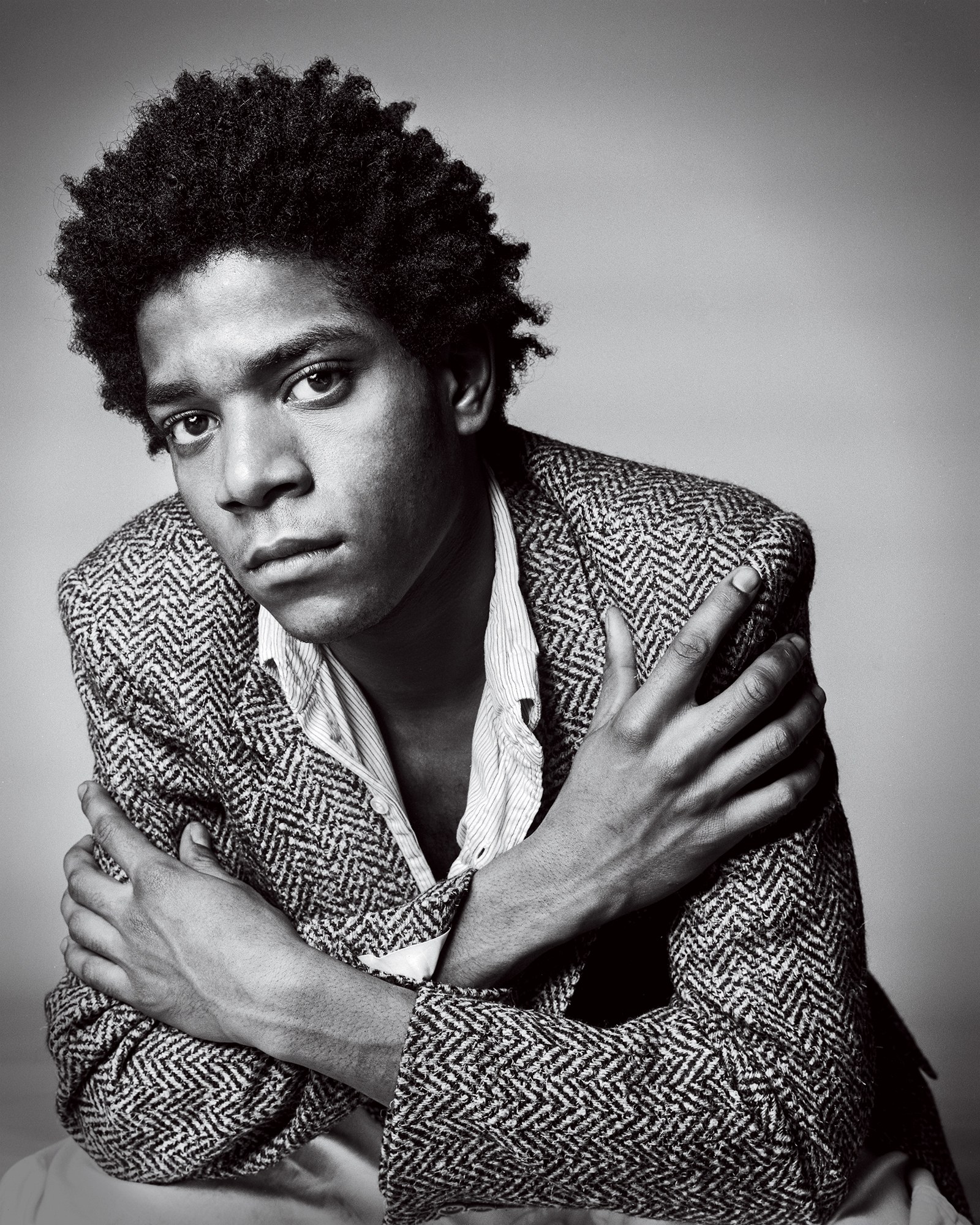
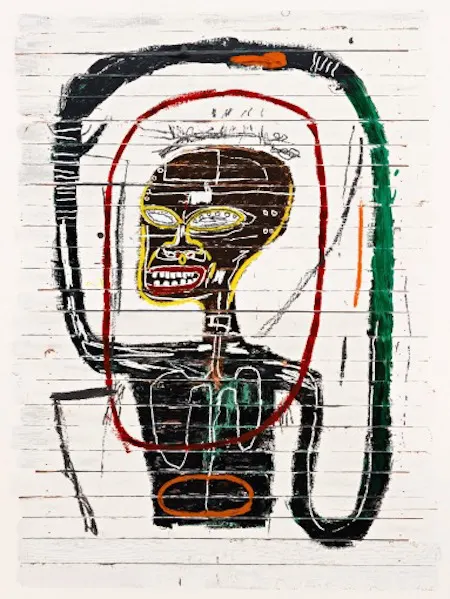
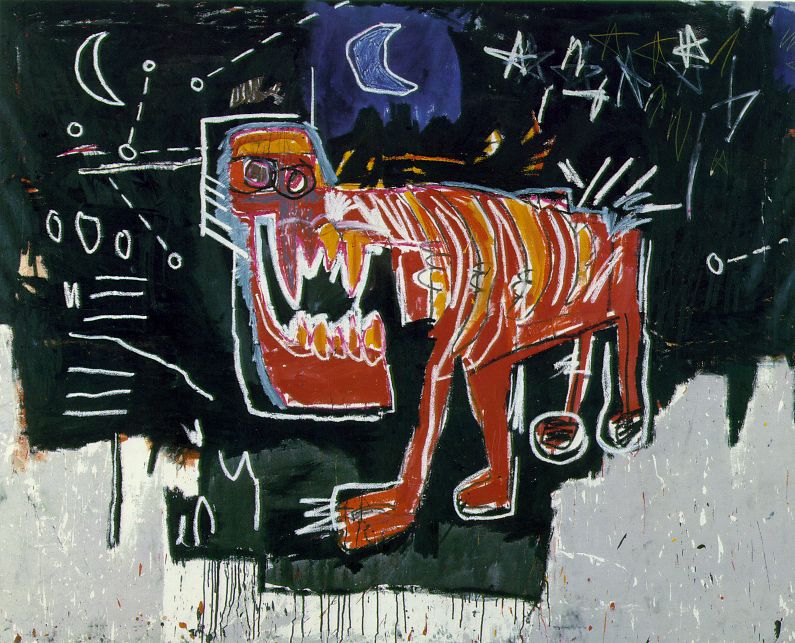
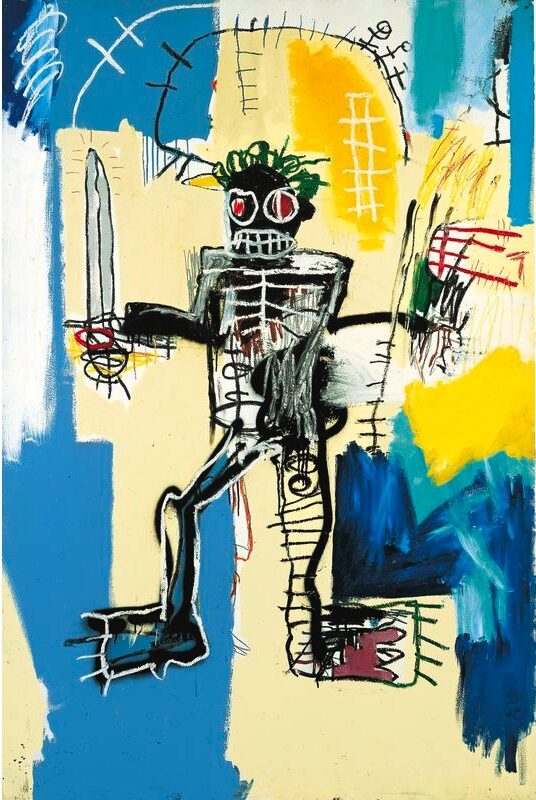
Jean-Michel Basquiat (New York, 1960–1988) was one of the most important figures in the art scene of the 1980s, known for his involvement in graffiti art and neo-expressionism. His brief but impactful career took his street art from the walls of New York to gallery spaces, a transition similar to that of artists like Keith Haring. Basquiat was born in Brooklyn to a Haitian father and a Puerto Rican mother. From a young age, he showed a strong talent for art, supported by his mother’s passion for the arts, who took him to museums and encouraged his drawing. However, his adolescence was tumultuous, marked by his parents’ divorce and the mental health issues of his mother. At 15, after a conflict with his father, Basquiat ran away from home and was arrested. He was later enrolled in an alternative school, where he met graffiti artist Al Diaz, and together they formed the duo “SAMO,” a name that gained popularity through their street art in the city. By 1978, SAMO became well-known in the Soho area, drawing the attention of media and art enthusiasts. After splitting from Diaz in 1980, Basquiat continued to use the tag, eventually changing it to “SAMO© IS DEAD.” That same year, he met his idol, Andy Warhol, and began a personal and professional relationship with him. Basquiat quickly became a central figure in New York’s art scene, frequenting clubs and making connections with various artists and celebrities, including Madonna. In 1981, he sold his first painting and had his first solo exhibition, which received mixed reactions, but his retrospective in 1982 in New York solidified his success. In the following years, Basquiat’s work soared in value, attracting collectors and gallery owners. However, his personal life began to unravel due to drug addiction and behavioral issues. The death of Warhol in 1987 was a devastating blow, and Basquiat attempted to detox, but failed. In 1988, he tragically died from a heroin overdose at the age of 27. His artistic legacy, rich with social and political meaning, continues to influence contemporary art, symbolizing the urgency of expression, a critique of societal systems, and the quest for a new cultural identity.