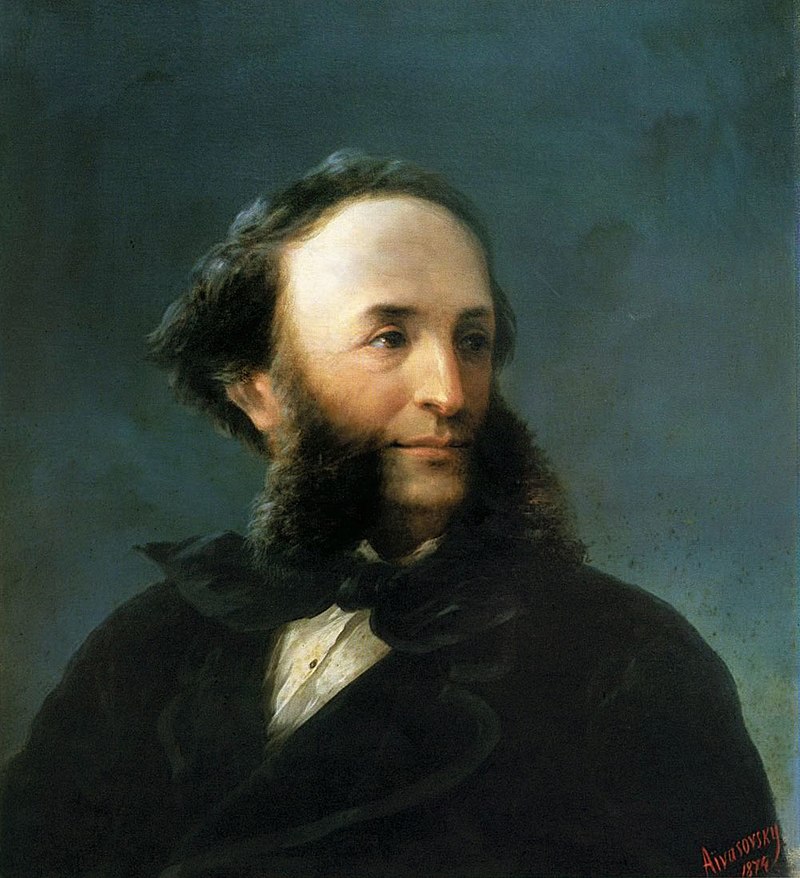
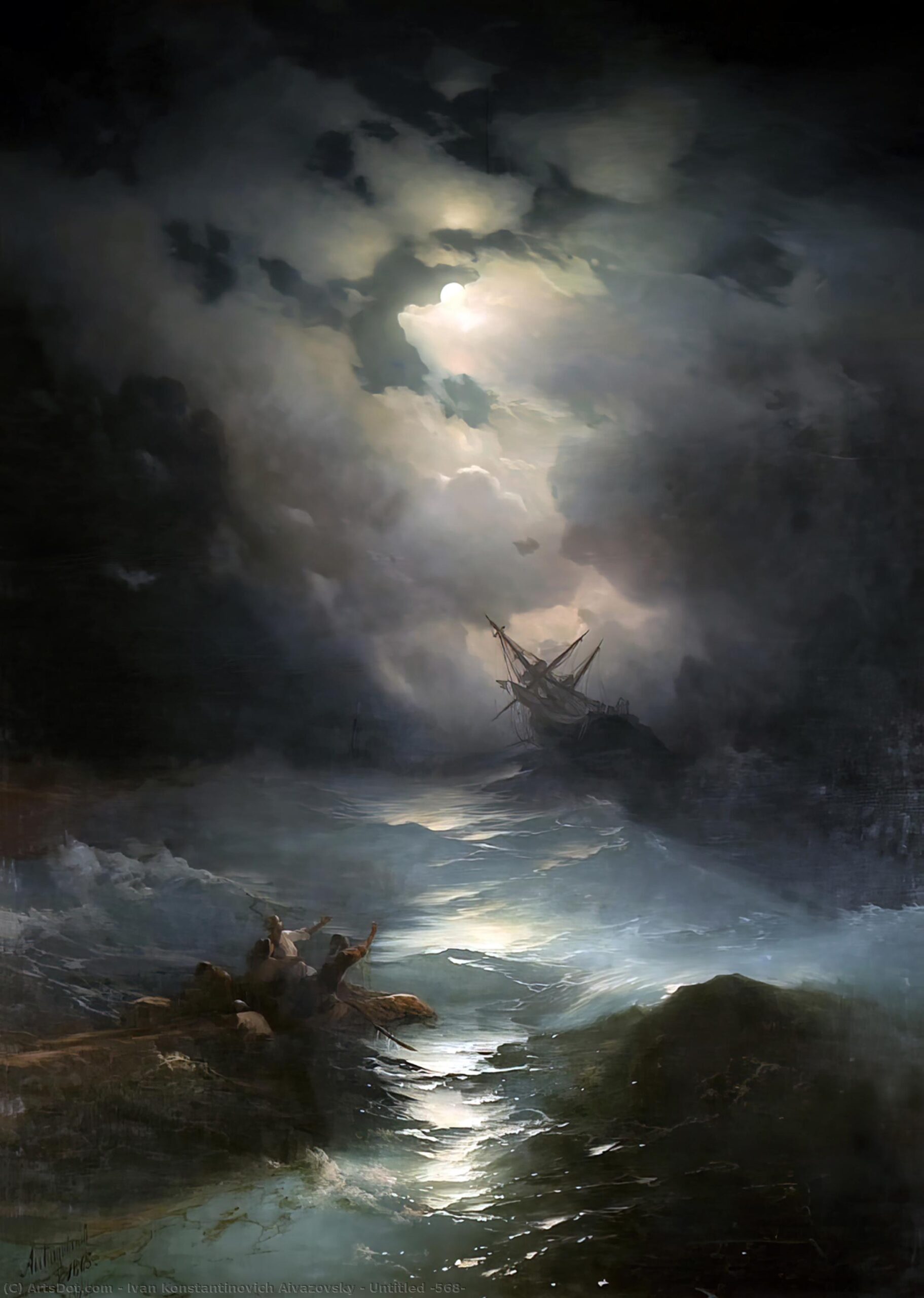
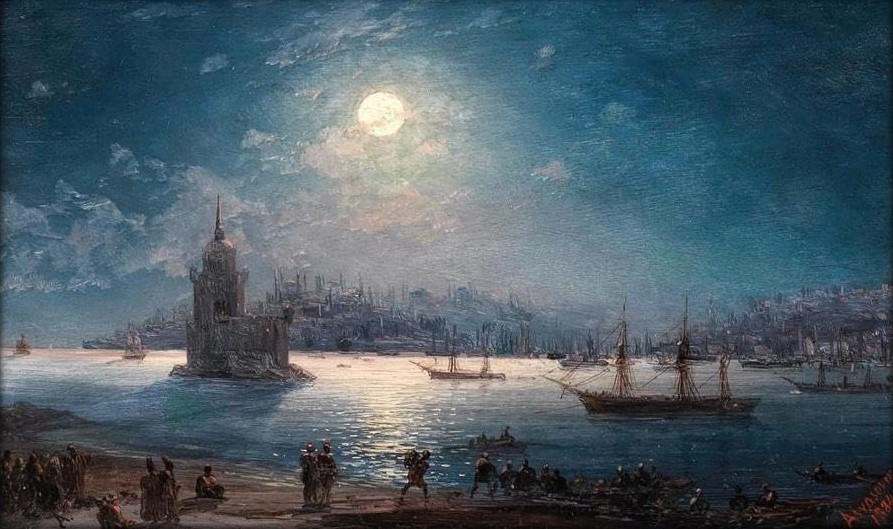
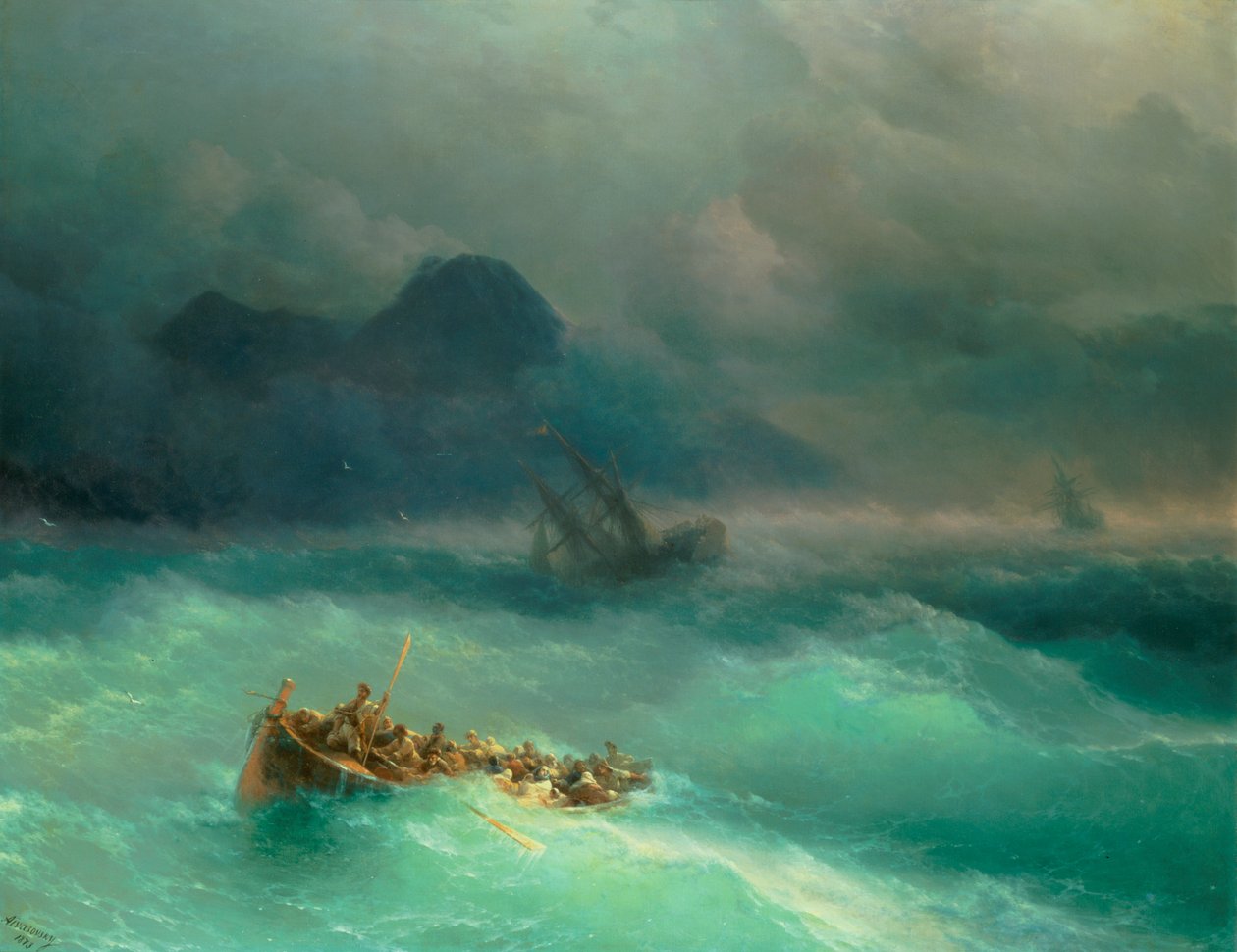
**Ivan Konstantinovich Aivazovsky: A Biographical Summary** Ivan Aivazovsky (1817–1900) was a renowned Russian-Ukrainian artist, particularly famous for his evocative marine paintings. Born into an Armenian family in Feodosiya, a Black Sea port city with diverse cultural influences, Aivazovsky faced early economic hardships after his father’s business declined. Despite this, he showed early promise in art, music, and languages, and began working in local coffee shops, where his drawings attracted the attention of city leaders. These connections allowed him to pursue formal education at the Russian Academy of Arts in St. Petersburg, where he studied landscape painting under Maxim Vorobyov. A pivotal moment in Aivazovsky’s career occurred in 1836, when he joined the Russian Baltic Sea fleet, which sparked his lifelong fascination with marine subjects. His work impressed the Russian Academy, earning him the prestigious First Gold Medal in 1837. This award allowed him to study abroad, and he spent several years in his native Crimea before heading to Rome in 1840, where he developed a distinctive romantic and abstract style of seascapes. His work was well-received, including praise from the famous English painter J.M.W. Turner. Throughout the 1840s, Aivazovsky traveled across Europe, winning medals and acclaim for his skillful marine depictions. He exhibited in Paris, Amsterdam, and other European cities, and in 1857, he was awarded the French Legion of Honor. During this period, his technique evolved to emphasize emotional intensity and light, particularly in works inspired by Venice, the Bay of Naples, and other coastal scenes. In 1845, Aivazovsky returned to St. Petersburg, where he became an Academician and was appointed official painter for the Russian Navy. His maritime paintings often depicted naval battles and ship life, such as his dramatic representations of the 1853 Battle of Sinop during the Crimean War. His close relationship with the Russian Navy allowed him to sail frequently, capturing the essence of the sea in both calm and stormy scenes. Aivazovsky’s travels continued well into his later years, with significant journeys to the Caucasus, Egypt (where he painted the opening of the Suez Canal), and the United States, where he famously visited Niagara Falls in 1892. His late works became increasingly abstract, with pieces like *Amidst the Waves* (1898) offering a modern, experiential portrayal of the sea. Though a prolific artist, Aivazovsky remained deeply connected to Feodosiya, where he established an art school, a museum, and contributed to local infrastructure. His work was integral to the cultural life of the region, and his legacy lives on through the Aivazovsky Art Gallery in Feodosiya. Aivazovsky passed away in Feodosiya in 1900, just shy of his 83rd birthday, leaving behind an enduring legacy as one of the greatest marine painters of the 19th century. His ability to convey the emotional power of the sea, coupled with his technical mastery and deep connection to his roots, has solidified his place in art history.