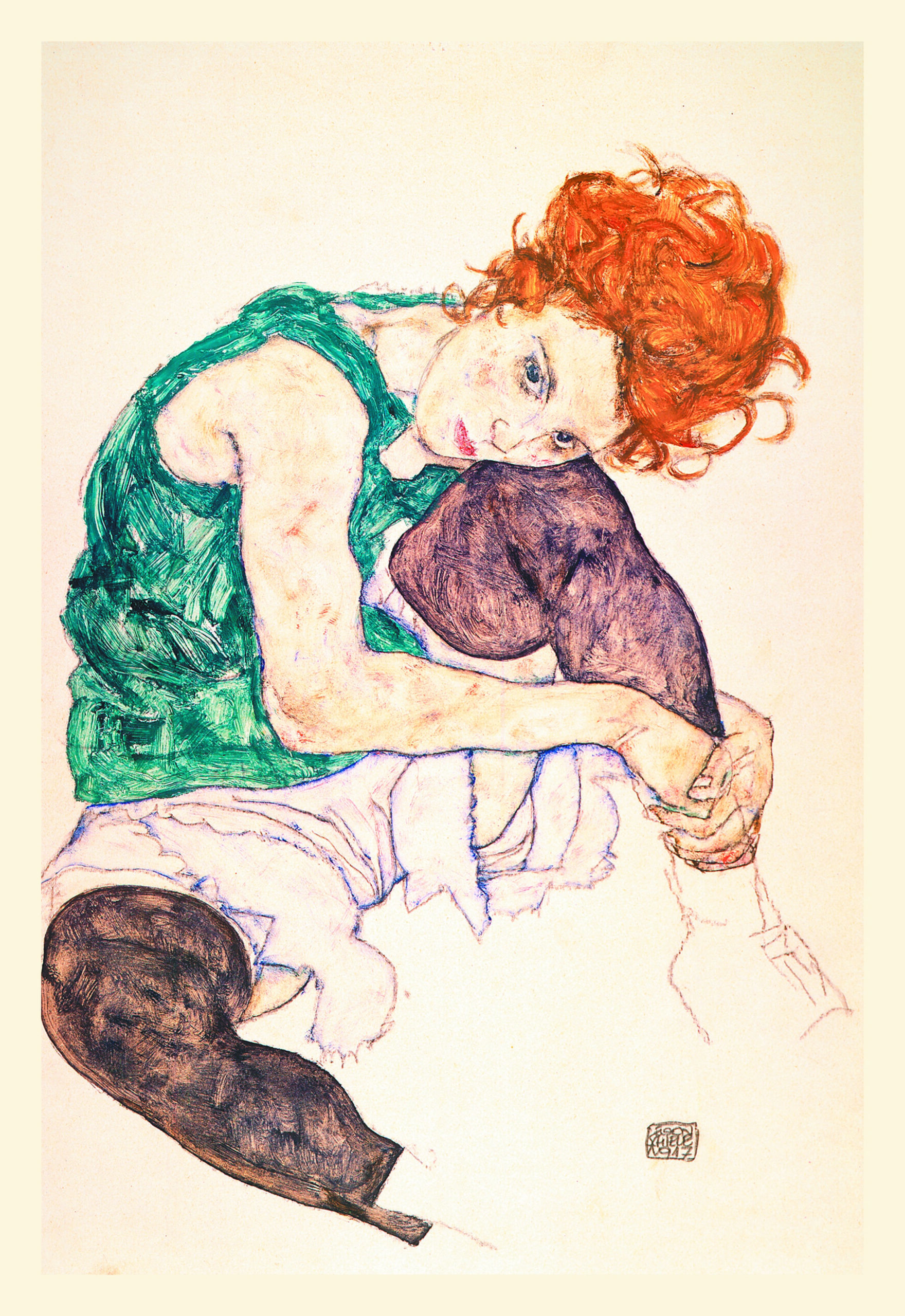
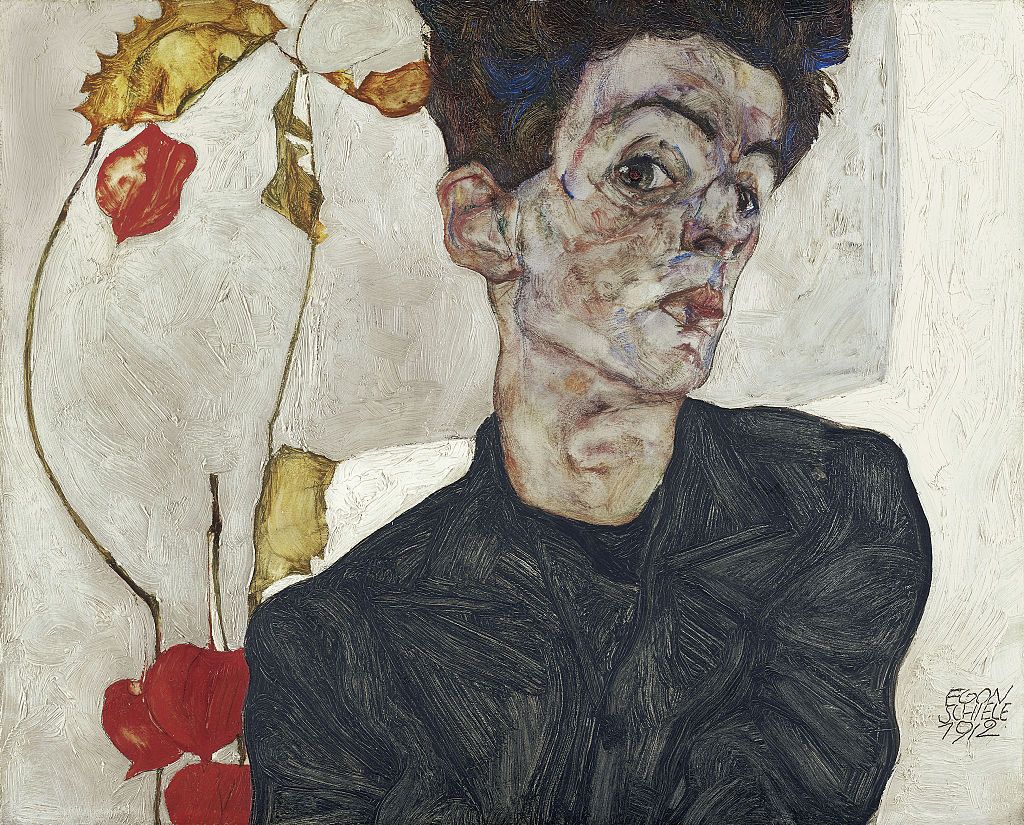
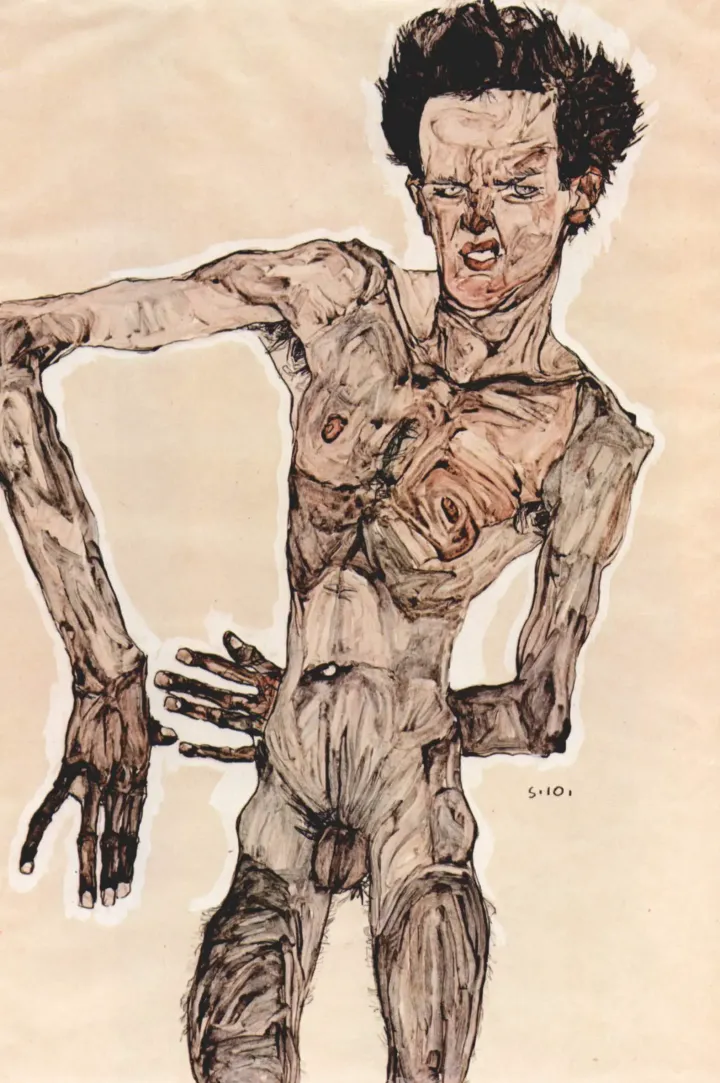
In 1906, Schiele enrolled at the Academy of Fine Arts in Vienna, but he soon sought inspiration outside of the institution, frequenting cafés and social spaces for artists. In one of these places, he met Gustav Klimt in 1907, a pivotal encounter for his artistic development. The two artists bonded over their shared interest in depicting the nude body and male sexuality. Klimt supported Schiele by purchasing his drawings, providing him with models, and introducing him to wealthy patrons. Sexuality became a central theme in Schiele’s work, combined with a focus on solitude and existential anxiety. His provocative and often controversial pieces were too shocking for his contemporaries and were frequently criticized. In 1909, Schiele exhibited four works at the Kunstschau and, after leaving the Academy, he founded the Neukunstgruppe movement, declaring that an artist must create his own artistic foundation, free from the weight of tradition. Schiele was particularly fascinated by female figures, especially those of young girls, and he even invited his sister Gerti to model for him. His works, which often depicted nude or semi-nude girls, led to accusations of corrupting minors and kidnapping. Although he was convicted only for displaying his “pornographic” works, Schiele spent some time in prison. Despite the controversies, Schiele regained his position in the art scene, thanks to Klimt’s support. However, in 1918, the Spanish flu reached Vienna. His wife, Edith, who was six months pregnant, contracted the illness and died. Schiele, who had painted her several times during her suffering, also succumbed to the flu on October 31, 1918, at the age of 28. Egon was infected and three days later, on October 31, he also died at the age of 28.