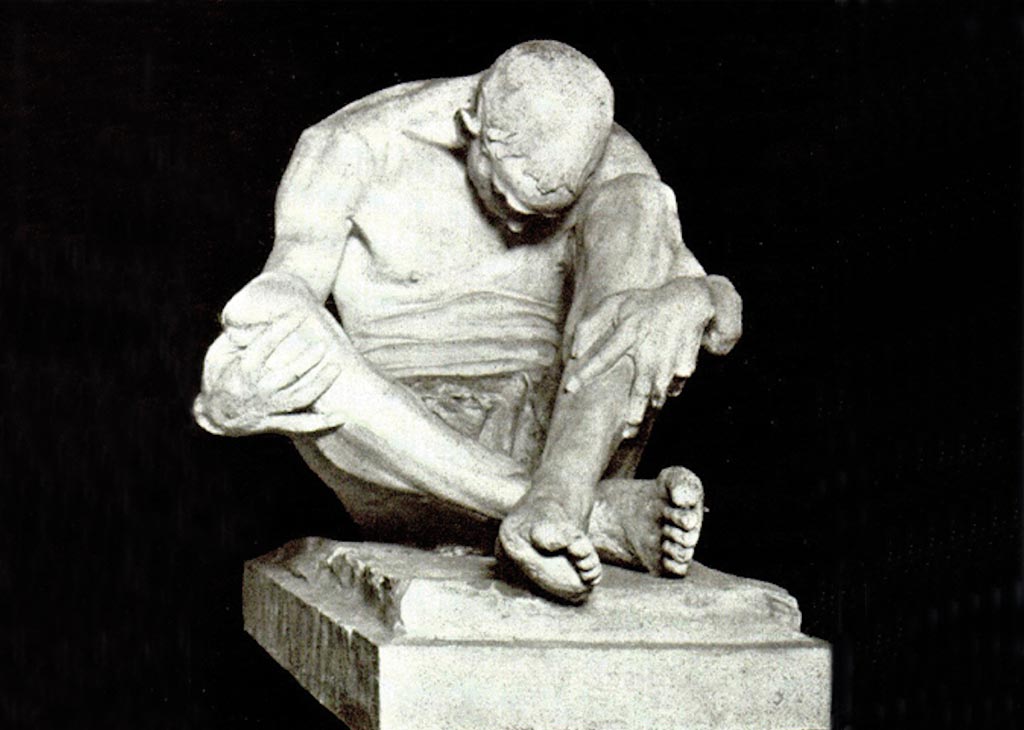
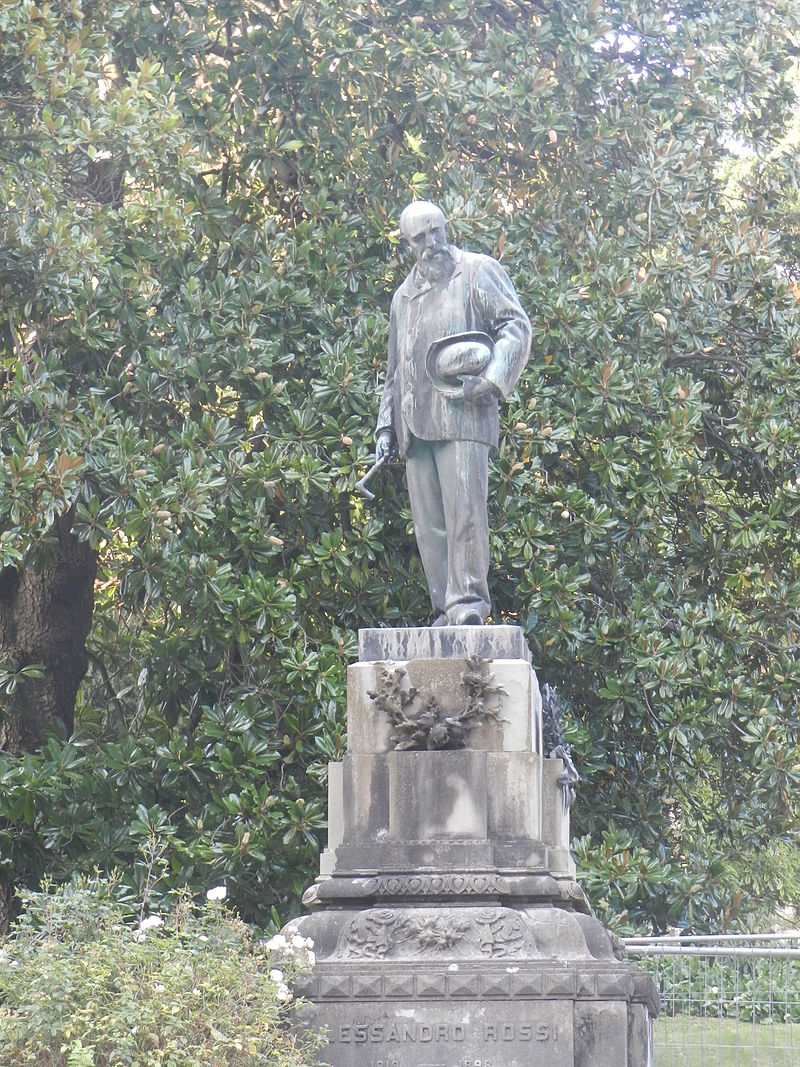
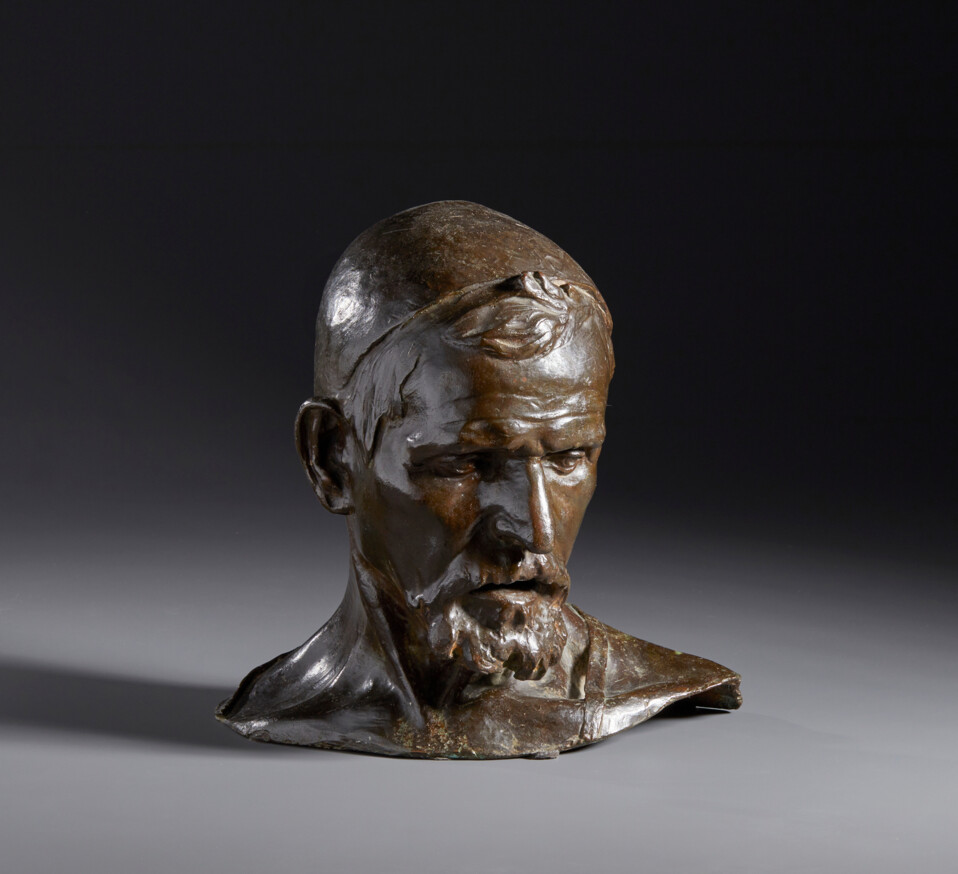
Achille Alberti (1869-1943) was an Italian artist known for his versatility in both sculpture and painting. He studied art at the Brera Academy, where he later became a professor. Alongside fellow students such as Magni and Ripamonti, he created numerous sculptures for the Monumental Cemetery of Milan. Throughout his career, Alberti gained international recognition for his sculptural works, often addressing social themes. In addition to his sculpture, he expressed his passion through painting, focusing on landscapes, still lifes, and portraits. In 1930, he held a major exhibition in Milan, showcasing a collection of sculptures in plaster, marble, and bronze, as well as around thirty previously unknown paintings. Alberti won several prestigious awards, including two prizes at the 1891 Triennale in Milan for his bronze sculpture *Ignavia*, inspired by Dantean themes. This work was later exhibited in Vienna and is now housed in Busto Arsizio. In 1892, his bas-relief *Le Odi di Pindaro* was shown in Munich, and in 1900, he participated in the Exposition Universelle in Paris. His works consistently garnered admiration and recognition, earning him prizes at both Italian and European exhibitions. Among his public commissions, Alberti is known for a bas-relief he created for the façade of Milan’s Cathedral, based on a neogothic design by Giuseppe Brentano. He also contributed large sculptures to the façade of the Milan Stock Exchange building, completed in 1901, which showcase his eclectic artistic sensibility. In 1930, a retrospective exhibition of his work was held at the Galleria Pesaro in Milan, further solidifying his reputation as a key figure in Italian art. Alberti passed away in 1943 in Camnago, near Milan. Many of his sculptures are part of the Ca’ Granda’s cataloged collection and remain objects of admiration today.