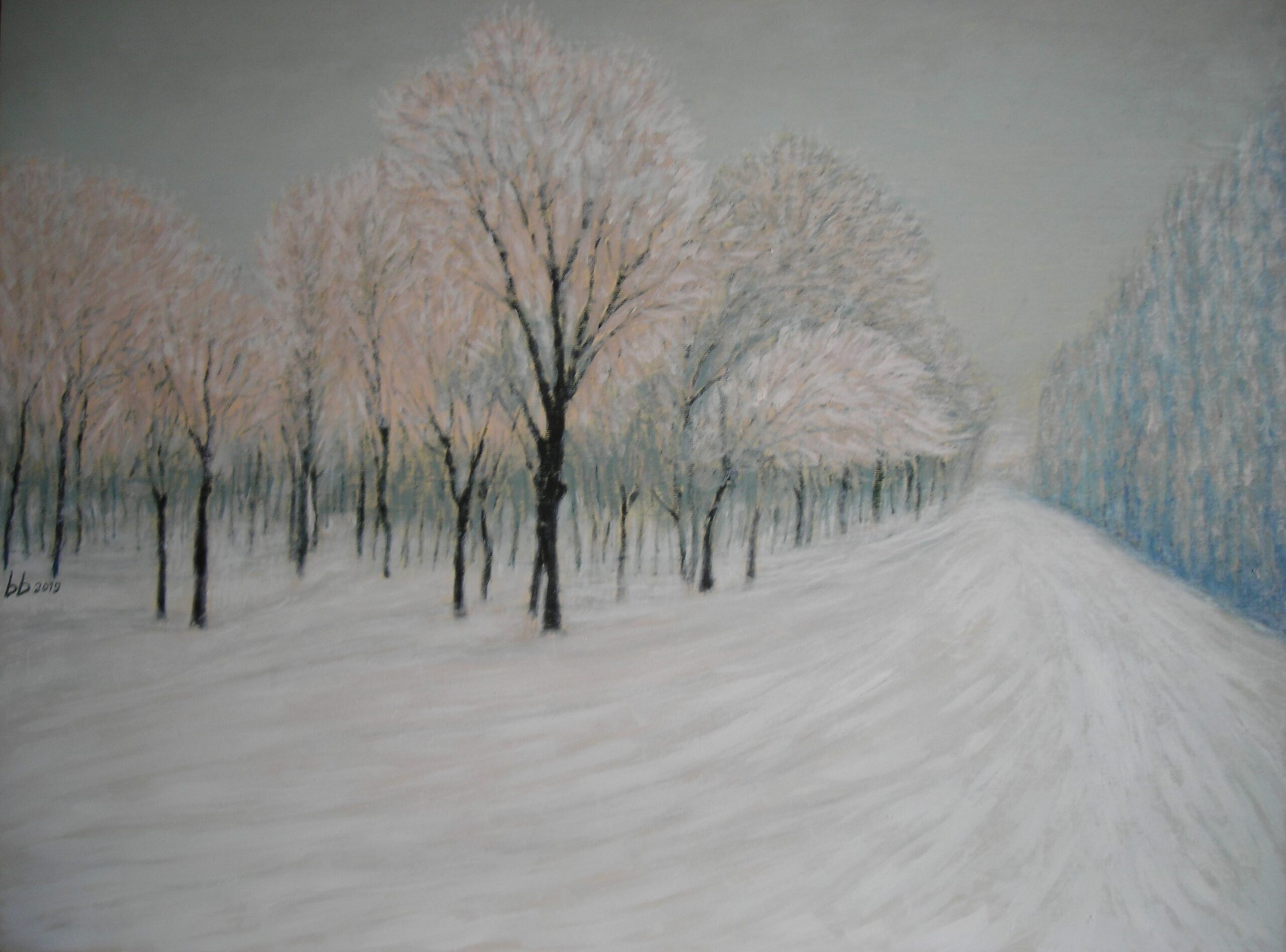
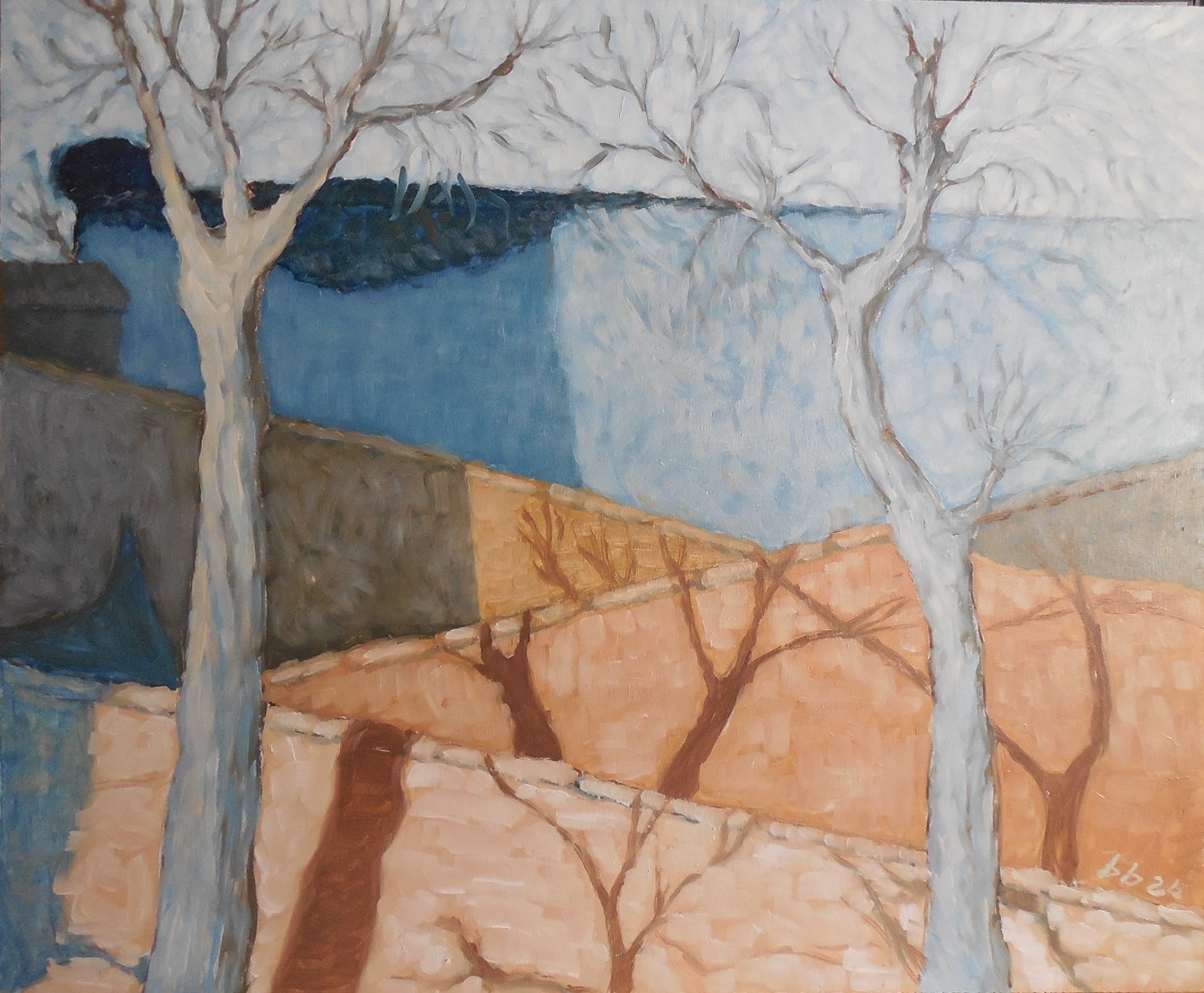
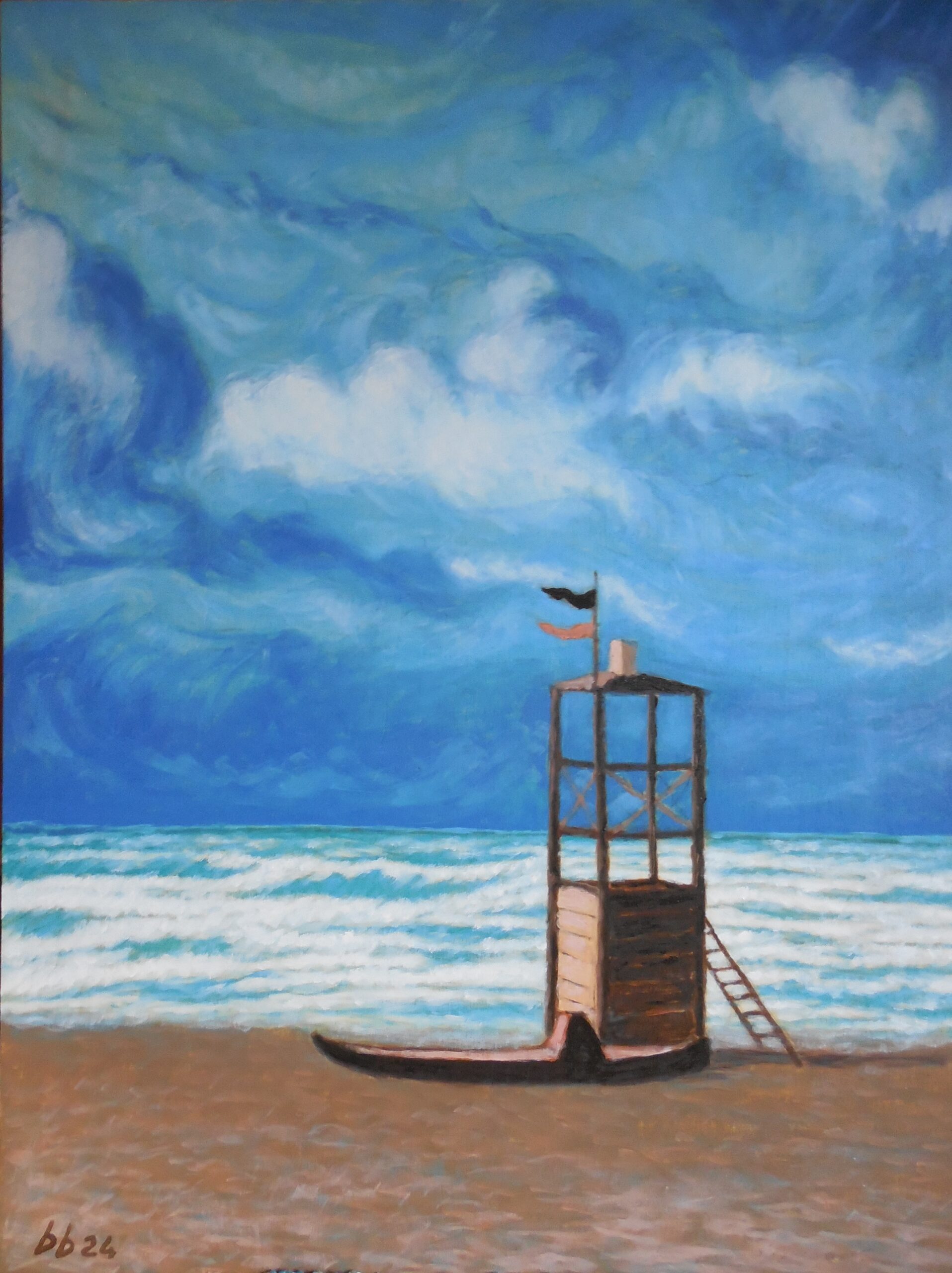
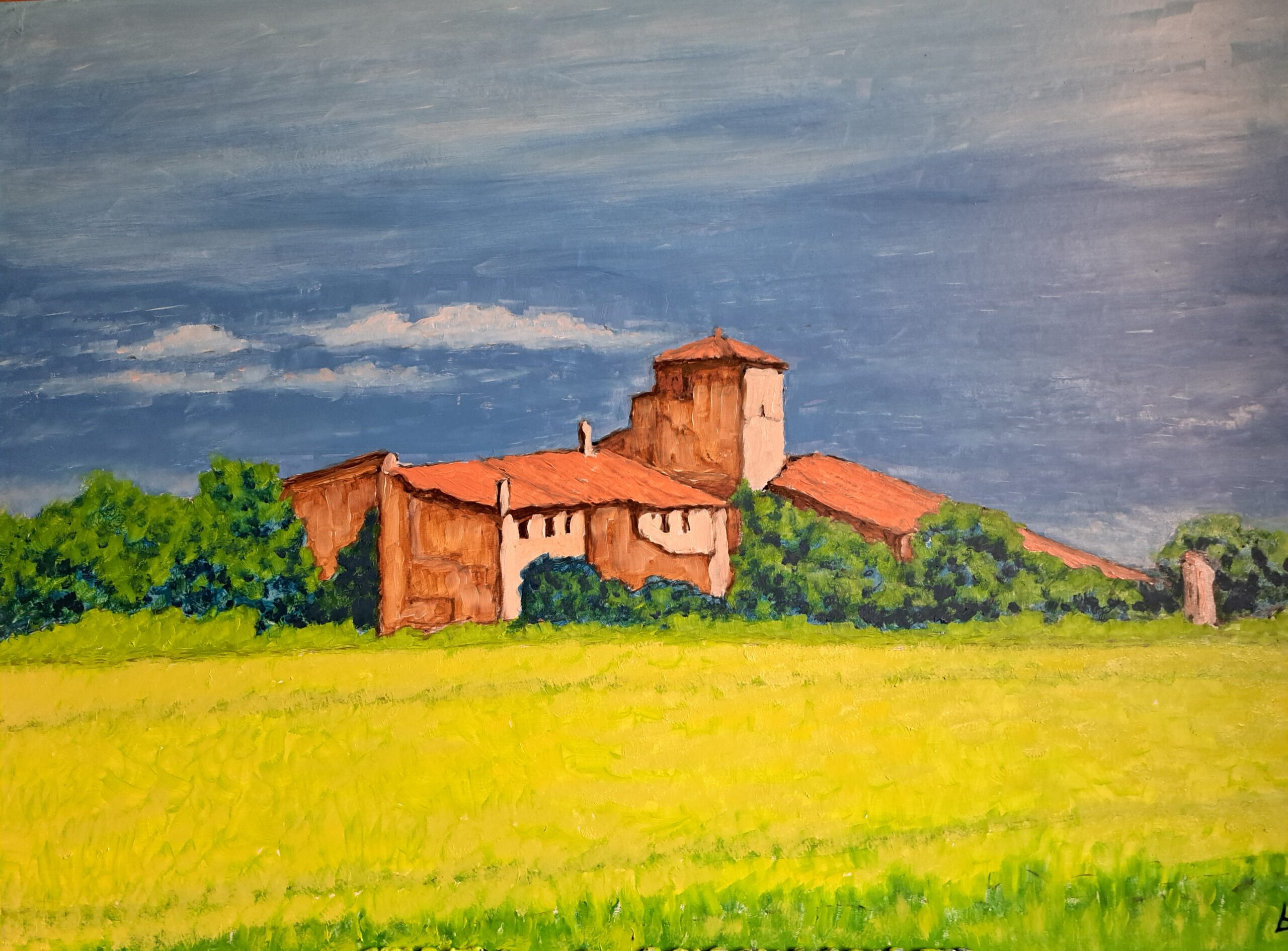
Bruno Beltrami, born in Mantova on May 5, 1943, was educated in the art of painting alongside his brother Nerio by their father Edoardo, who was also a painter. At the age of 16, he participated in the provincial selections of the ENAL, and for two years his works were sent to national exhibitions. Due to his introverted nature and work commitments, he distanced himself for a long time from exhibition activities, although he never completely abandoned painting. In fact, he resumed it vigorously with a rich production in recent decades, of which this exhibition offers an interesting snapshot. It leads us to follow the themes and suggestions captured by the lyrical gaze of Bruno Beltrami. The title itself, Poetics of Landscape, sets the program for a journey in which the objectivity of what is represented must be read through the eye of a painter-poet. The artwork Figura nella luce was chosen as the centerpiece of the exhibition because it encapsulates many of the stylistic and conceptual hallmarks of the artist. The female nude, central to the composition, acts as a bridge between precise figuration and atmospheric dissolution. Her form, traced with a single, unbroken line executed with remarkable confidence, reveals an image long matured in the artist’s imagination. Simultaneously, the delicately translucent tones of her body blend seamlessly with the landscape, evoking a spring sky awash in pinks and blues, and creating a dreamlike, suspended dimension. She appears almost like a mythical or symbolic being—more than a figure, she embodies deeper meaning, echoing Auerbach’s idea of the “more perfect form”: a presence that maintains its individuality while pointing beyond itself. The artist’s gaze, understood here through a feminine lens, is reflected in the figure—“pupilla” in both the anatomical and Latin sense (meaning “doll” or “young girl”)—who, like the viewer, contemplates the landscape. Through her, the viewer is invited to see the entire scene transfigured into chromatic poetry. This interplay between human presence and environment is a recurring theme in Beltrami’s work. At times, the figure seems to precede and generate the surrounding world, as in Una voce nel deserto or Ultimo spettacolo. At other times, it serves as the symbolic culmination of the landscape itself, as seen in Il vuoto nella mente or Inverno. The dialogue between painting and poetry—encapsulated in the Latin maxim ut pictura poesis (“as is painting, so is poetry”)—is particularly evident in Beltrami’s approach. In works like Poesia (2018), he revives the Arcadian ideal of natural beauty, but infuses it with the familiar hues of Virgilian landscapes: fog, water reflections, and misty veils, all perfectly suited to his palette. Technical mastery is apparent in Sul lago d’autunno, with its skillful color harmonies, and in Il banco di nebbia, where the humid air seems almost tactile. Emotional contrast defines other works such as Maliconia, with its quiet grays matching the title’s tone, and Aria di tempesta, where restrained tension pulses through the mirrored movement of waves and clouds.