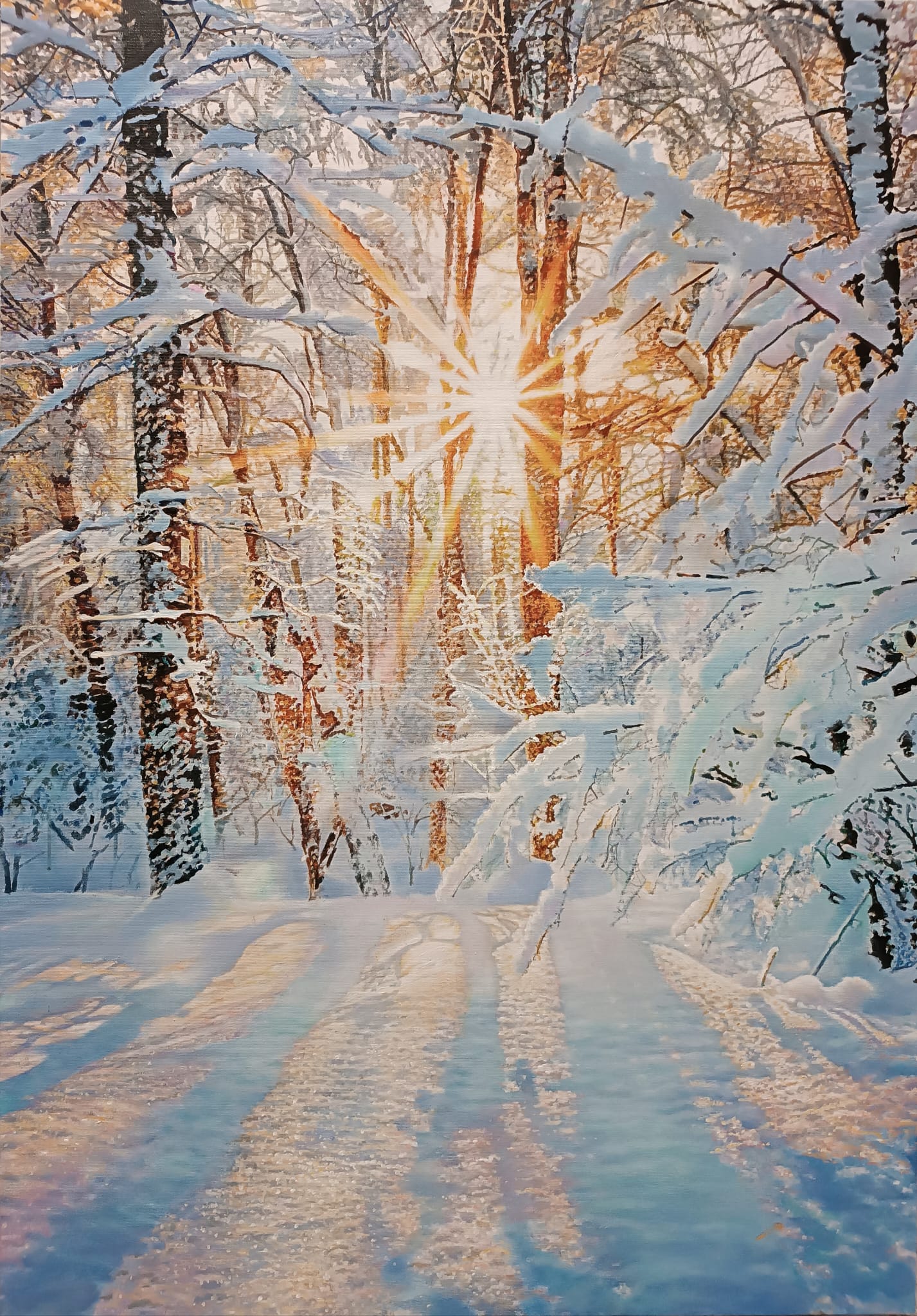
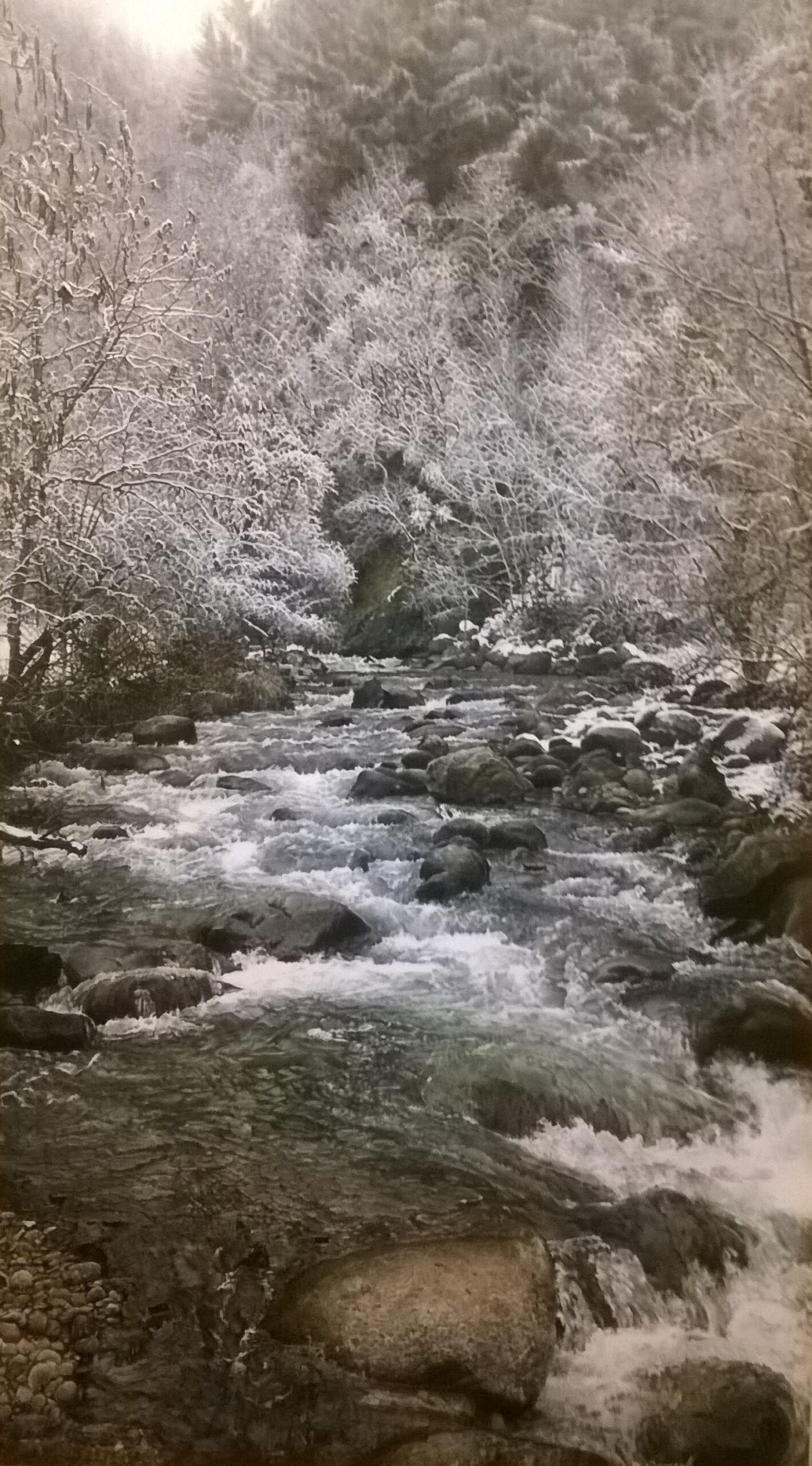
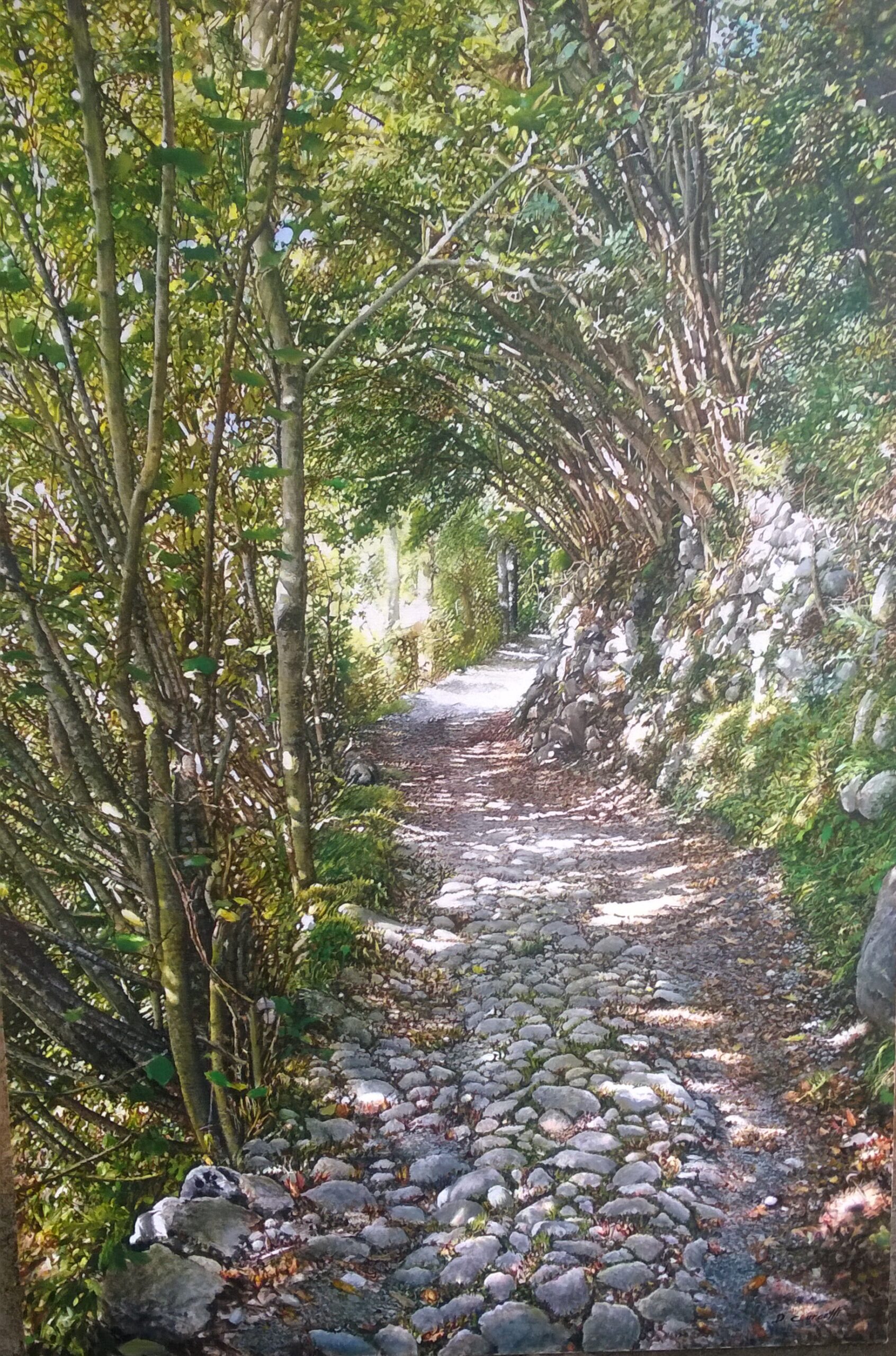
Born in Brescia in 1964, I was about six years old when I found myself in front of a fountain. I picked up a little goldfish and, with an almost impulsive gesture, I pulled it out of the water and placed it on the ground. Its fate, unbeknownst to me, was already sealed. After a while, it stopped showing any signs of life, so I hurriedly made my way home. Besides having to face my own conscience, troubled by what had just happened, I also felt the piercing looks of passersby. It was incredible how those glances seemed filled with reproach. I thought to myself, “How do they know I just killed a goldfish?!” Finally, once I got home and was alone in my little room, without even realizing it, I felt a kind of indignation for what I had done. I experienced firsthand what it meant to be confronted by “sin.” And with the innocent mind of a child, I thought, “From now on, I will try to do only good and seek only beauty.” Danilo Curcelli seems to belong to that rare lineage of artists capable of transforming a seemingly insignificant childhood experience into a lifelong reflection. That instinctive, naive, and fatal gesture—the act of pulling a tiny creature out of the water and then helplessly witnessing its fate—becomes a foundational moment for the artist: a reversed baptism, a first encounter with the tragic dimension of existence. But from that sorrow, a promise is born—and from that promise, Curcelli’s entire artistic vision unfolds: to seek goodness, and to pursue beauty. It is no coincidence, then, that Curcelli chooses to become a guardian of a silent, untouched nature, where the human figure is absent—not by oversight, but by deliberate choice. His landscapes—snow-covered, misty, springlike—appear as meditative visions, places where the soul can find shelter, but also question itself. There is no trace of romantic idealization, nor aesthetic indulgence for its own sake. On the contrary, every branch, every glimmer of light between the trees, every invisible trace in the snow seems to carry with it a question: what have we lost on our path toward progress? Curcelli views nature as a living entity—not something to be conquered or interpreted, but something to be listened to. His painting becomes an ethical act, an attempt to mend the original rift between man and the natural world. And in this tension, made up of technical precision and spiritual surrender, one can almost sense a desire for atonement, a sort of inner dialogue between childhood and adulthood, between guilt and redemption. In an era where nature is often reduced to decorative background or consumable resource, Curcelli’s work invites us to a different kind of attention: silent, humble, almost sacred. And perhaps this is his most profound gift—to make us feel, once again, part of a fragile and mysterious order, where beauty is not ornament, but necessity.