Mimmo Rotella
Biography and criticism
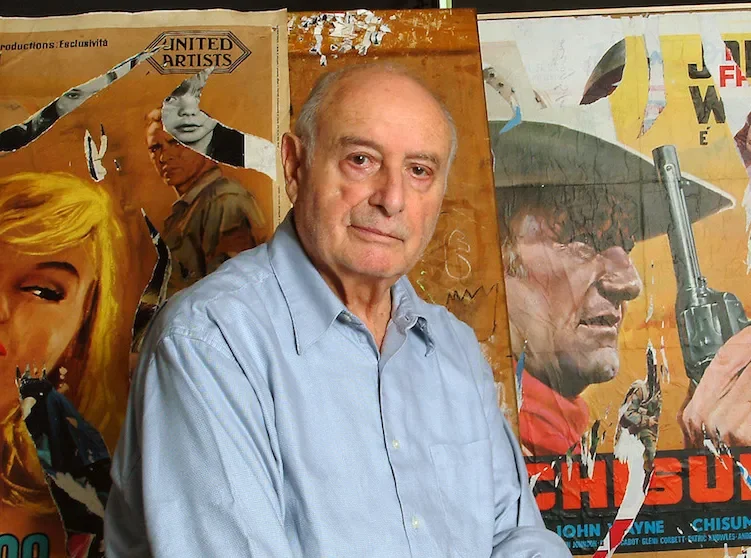
Mimmo Rotella, born in Catanzaro in 1918, was one of the leading Italian artists in the Nouveau Réalisme movement that emerged in the 1960s. To understand his art, it’s important to look at the artistic landscape of the 1950s, a decade marked by a complex reception of progress. While some, like Francis Bacon and Lucian Freud, responded negatively to it, focusing on distorted human figures as a reflection of despair after World War II, others embraced it. In contrast, the Nouveau Réalisme artists saw the potential for creative experimentation through modern progress, particularly through their focus on everyday objects. These artists were inspired by the consumer society and the ways products were marketed, using techniques like advertising posters to engage their audience. Unlike earlier art movements, they sought to involve the viewer directly in the creative process. Piero Manzoni, a key figure in Italian art at the time, was known for his provocations, including the famous “Merda d’artista” cans. His work, along with that of other avant-garde movements such as the American New Dada, emphasized the use of ordinary objects in art, a concept that had also been explored by French artist Marcel Duchamp with his ready-mades. Rotella joined the Nouveau Réalisme movement in 1961, led by critic Paul Restany, alongside artists like Yves Klein, Arman, Daniel Spoerri, Jean Tinguely, and later César, Niki de Saint-Phalle, and Christo. This group shared a desire to reclaim the real world through their art, bringing a new wave of ideas to the global contemporary art scene. Rotella’s early life included enrollment at the Academy of Fine Arts in Naples, and after serving in the army during World War II, he moved to Rome in 1945, where he became involved with the Italian avant-garde scene. By the early 1950s, Rotella was gaining recognition, and his first solo show in 1951 marked the beginning of his growing fame. After a year in the United States, where he created a significant mural for the University of Kansas City, he returned to Italy and began experimenting with a new technique: décollage. This involved tearing down posters from city walls and further tearing them apart in the studio, creating a form of art that was both a commentary on the world of advertising and a unique artistic approach. As his décollages gained recognition, Rotella’s work was shown in major cities like Zurich, London, New York, and Tokyo. His association with Nouveau Réalisme expanded his international presence, particularly in France, where he participated in the Nice Festival and later moved to Paris in 1964. There, he developed the Mec-Art technique, which involved projecting photographic negatives onto canvas. His art continued to evolve, and in 1965, he created the *Artypo* series, a fusion of art and typography. Rotella’s encounters with major figures in contemporary art, such as Andy Warhol during a visit to New York in 1967, further influenced his work. Warhol’s manipulation of images and mass culture resonated with Rotella, who continued to explore these themes in his own way. Throughout the 1970s, Rotella’s fame grew with exhibitions in Venice, Milan, and Paris, and he began to experiment with new series such as *blanks* and portraits of cinema and fashion figures. The 1980s marked a period of international exhibitions, including a notable show at the Victoria and Albert Museum in London and participation in the Havana Biennale. During this time, Rotella’s personal life also flourished, as he married Inna Agarounova in 1988, and they had a daughter in 1993. He continued to exhibit his work globally, including shows in Paris, New York, and Los Angeles. In 2001, the Mimmo Rotella Foundation was established, and in 2002, he participated in the Venice Biennale. Despite numerous accolades, including two honorary degrees and several prestigious awards, Rotella continued to experiment with new techniques, culminating in his *Nuove icone* series. He passed away in 2006, leaving behind a vast body of work displayed worldwide. In 2018, to mark the centenary of his birth, Italy honored him with exhibitions in Catanzaro and Rome, where over 160 of his works were displayed, showcasing the breadth of his artistic legacy.
Category of affiliation
- Painting
Artworks
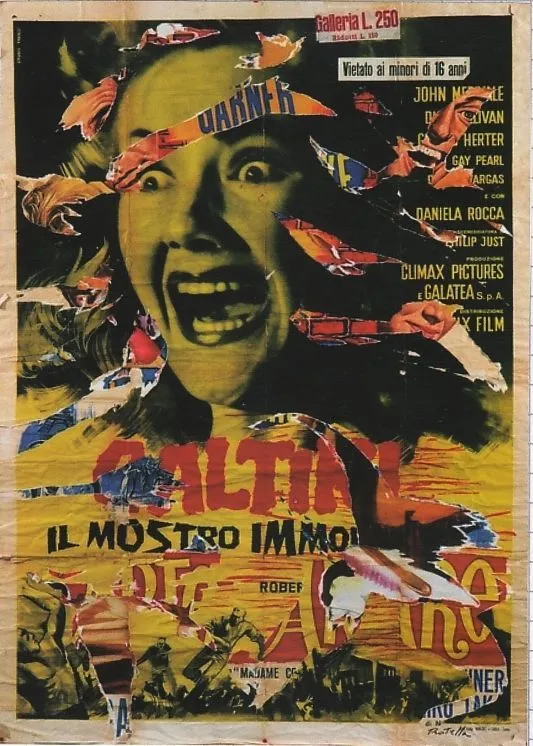
La paura
- 2004
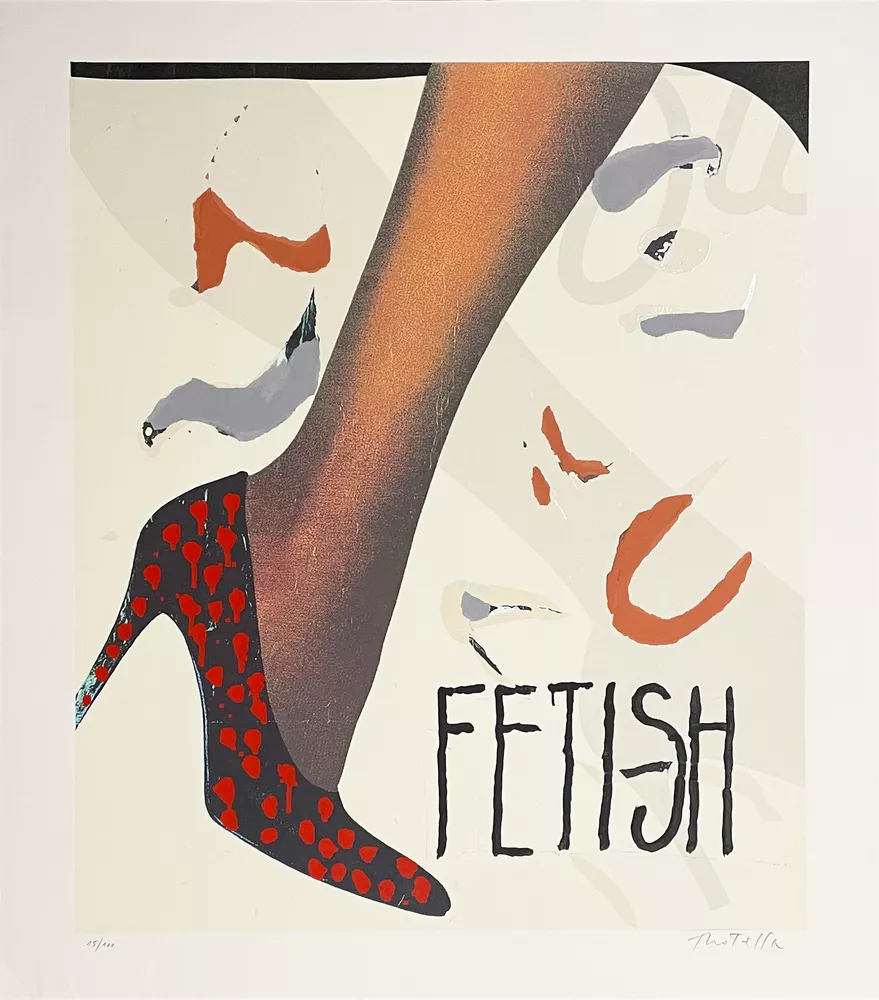
Fetish
- 1999
- 82 cm × 72 cm
- Mixed media colour serigraph and collage with paper and vinyl paint
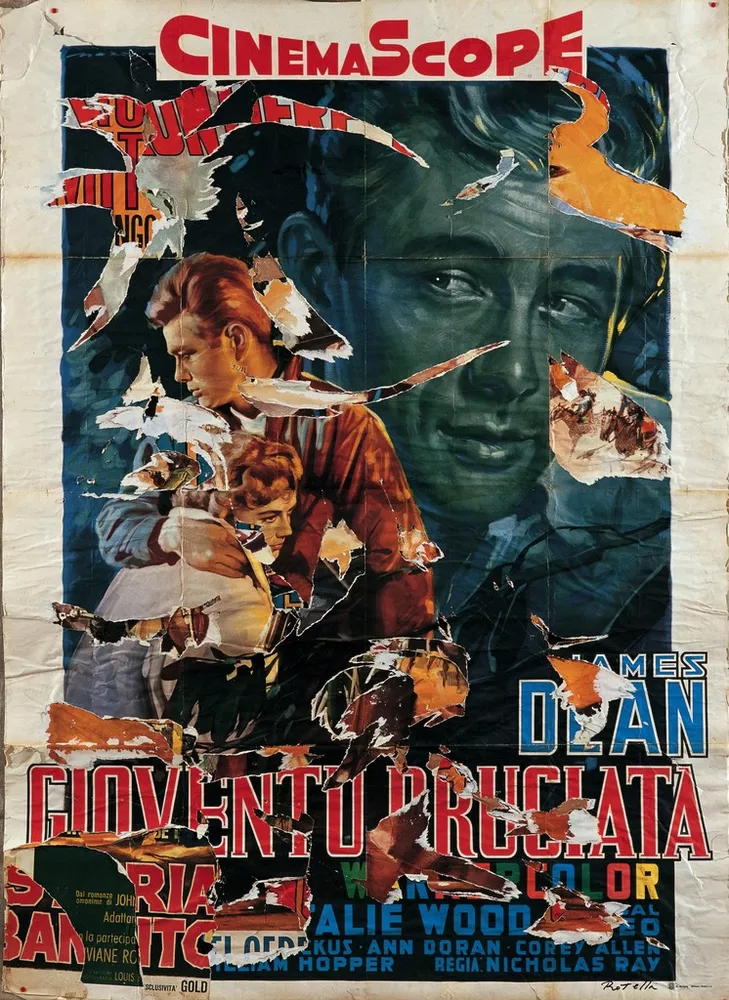
Gioventù bruciata
- 2004
- 195.5 cm × 140.5 cm