Francesco Biondo
Biography and criticism
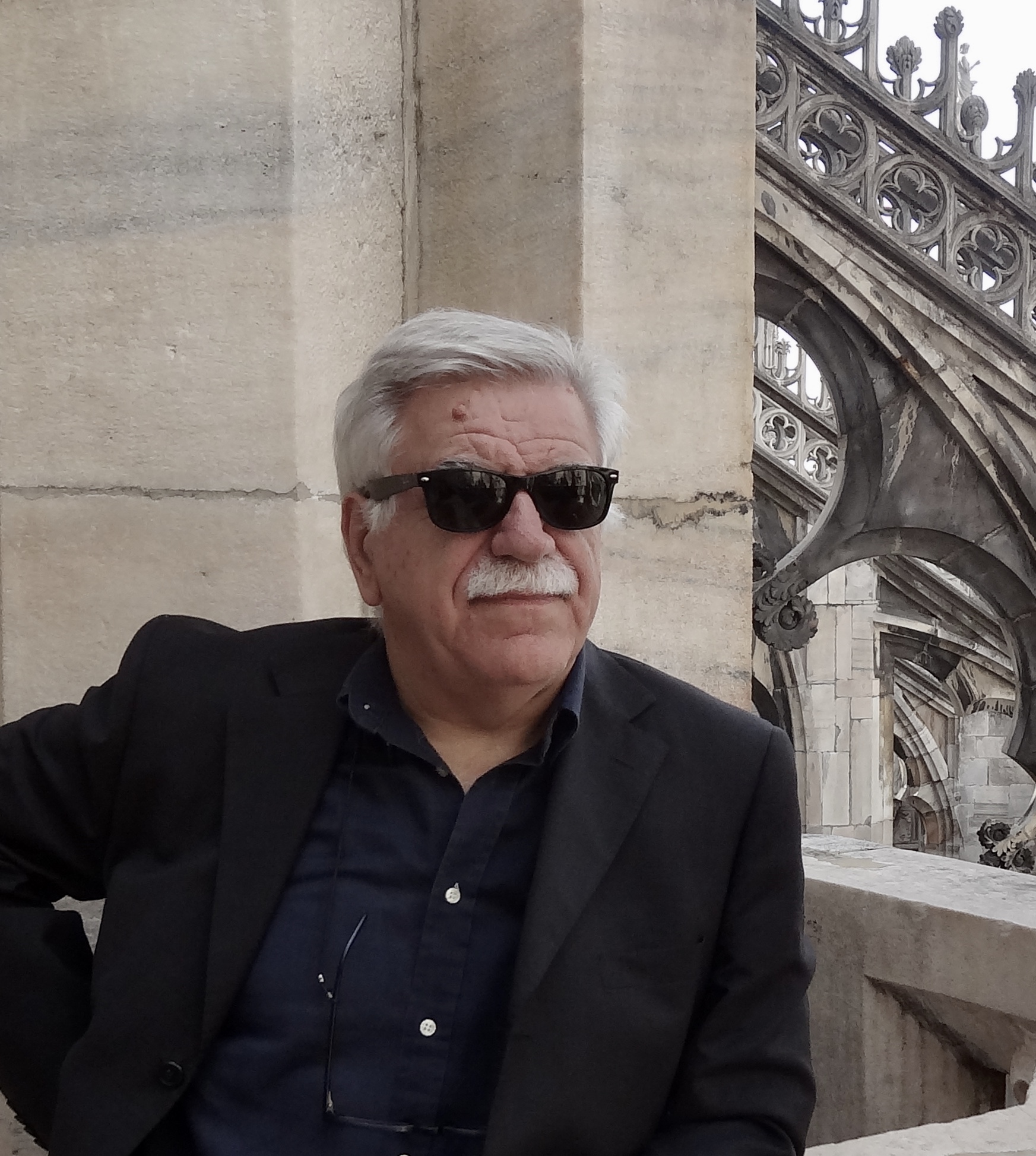
Francesco Biondo, January 18, 1958, Gangi (PA) Graduated in Architecture in Palermo, he attended the Domus Academy in Milan. A designer and artist, he participates in exhibitions in Italy and abroad. From 1986 to 1992, he ran art workshops at the Juvenile Detention Center in Milan (polymeric sculptures and stage objects were exhibited in 1993 at the Grand Palais in Paris). From 1993 to 2000, he held painting workshops at the CEP (Cultural Education Centers) of the Municipality of Milan. In the second half of the 1990s, he organized artistic events and exhibitions in Milan, including: – The Utopia of the Archvarnish (with the presentation by Oreste Del Buono) – The Ten Days of a Dreamer – Reflecting on the Social Function of Art: Regarding the War in the Balkans Since 2014, he has been a member of Art Marginem Concept Room. Since 2014, he has been part of the ART MARGINEM association in Milan and participates in various projects, including “Porphyreos Kardia: 30 artists for Expo” and “Migranza, Welcome, Meeting of Cultures.” Since 2016, he has been working on his personal project “The Painted History,” where works, along with their dates, mark events/temporal fragments. As exercises of collective memory. The culture of fragments, cutting, and space-time glimpses as existential cores has always characterized his creative poetics. His works are always conceived as representations of fragments of universes—universes that are somewhat fluid, often inhabited by mysterious and uncertain presences. Fragments ‘represented’ taken from predominantly internal universes (but certainly influenced by external prefigurations). Fragments ‘found’ (along fields, beaches, and other places of abandonment). Fragments ‘reconstructed’ (as exercises of memory). The exhibition goal is to make the eye travel between the fragments, searching for connections or simple allusions. Traces of time, memory, history “…to hybridize the perceptive event…” Even with a stylistic analysis, one can grasp interferences and contaminations. The interest, in fact, is directed towards stylistic hybrids. Francesco Biondo’s works present themselves as a powerful act of rediscovery and reappropriation of the past, an attempt to collect the fragments of a collective memory that seems to slip away over time. His work is rooted in an aesthetic expression grounded in abstract expressionism, but it also stands out for its strong materiality. The use of materials such as wood and other recovered objects, charged with history and signs of abandonment, adds a deep symbolic character to his painting. Abandonment is one of the recurring themes in his works, not only as a physical condition but as an existential reflection on the alienation of man in the contemporary context. In Biondo, the objects are not mere materials of recovery, but symbols of a forgotten past that asks to be heard and reclaimed. His art is not limited to a mere visual representation; it becomes a process of re-signification, where each element, each fragment placed on the canvas, assumes a deeper meaning related to memory and identity. Biondo’s works are not merely a confrontation with artistic tradition, but an intense dialogue between the pictorial surface and the intrusion of objects. The abstract expressionism that informs his practice merges with the introduction of materials that break the visual harmony, inviting the viewer into a tactile and sensory perception, in addition to a visual one. In this way, Biondo’s art is not only a visual exploration but an experience that also involves the body, evoking memories, stories, and fragments of past lives. The artistic gesture thus becomes an act of resilience, where the fragments of abandoned objects find new life, like a symbolic rebirth. In a sense, this search for memory can be seen as parallel to Greek mythology, where narrative and recollection are tools for regaining a sense of belonging and identity. Similarly, Biondo’s art invites the viewer to rediscover a sense of origin and connection to the world, suggesting that, just like in mythology, memory and history are never fixed but continuously evolving and reinterpreted. Biondo’s work is not only an invitation to reflect on the past but a call to recover the sense of “being in the world” through the transformative power of memory and visual narration. Each of his works is a fragment of a story that does not merely look back, but seeks to build a new meaning in the present.
Category of affiliation
- Painting
Technique
Painting
Quotations
The highest market valuation achieved with a painting is €4000
Critiques received from
Vaezem, Judge, Victèm, Accame, Pedrazzini, D’Aquino Mineo, Bolzoni, Panzarella, Gheraldini, Walch

Artworks
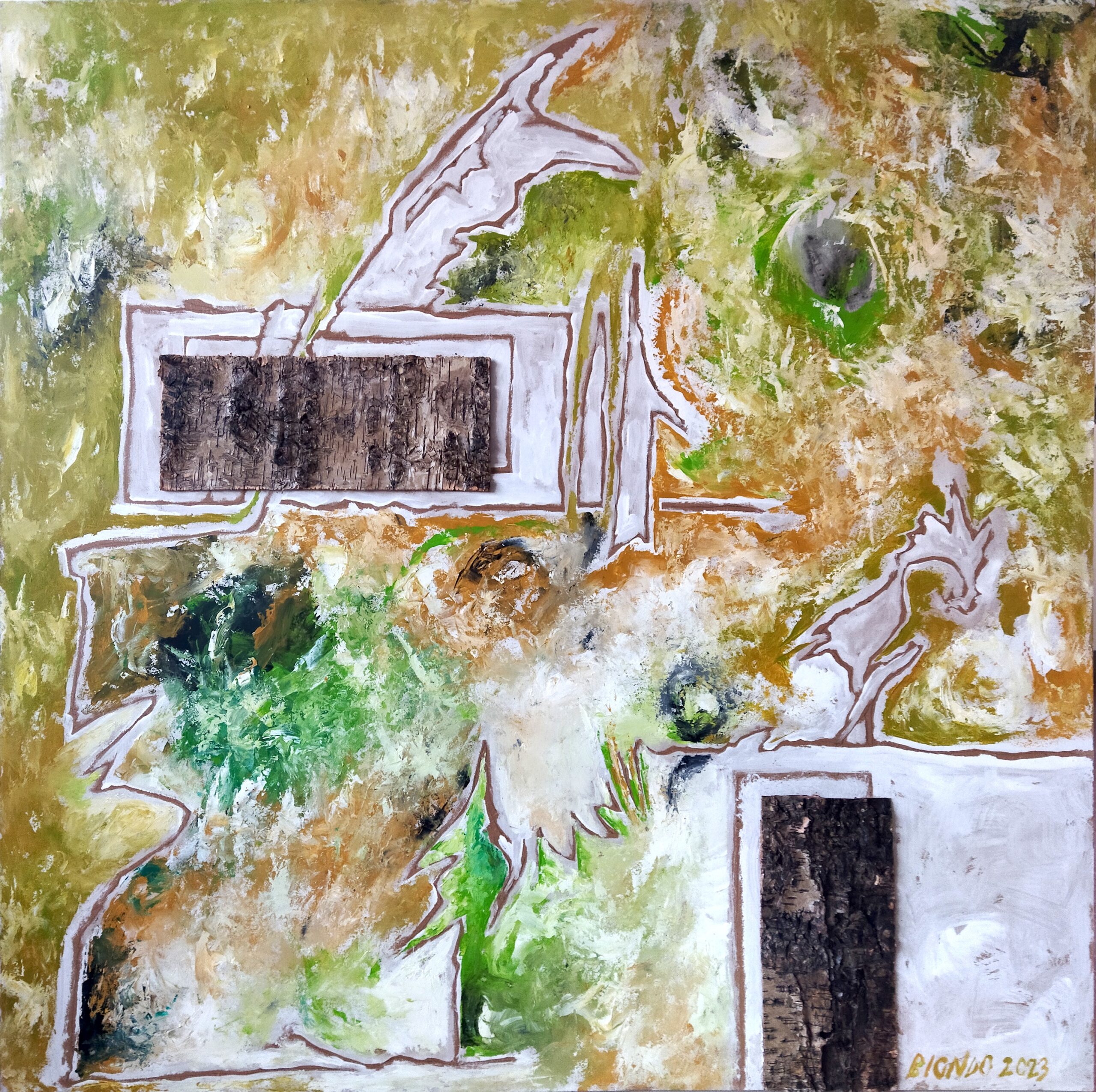
Le voci dell’anima
- 2023
- 100 cm x 100 cm
- Acrylic and birch bark on mdf
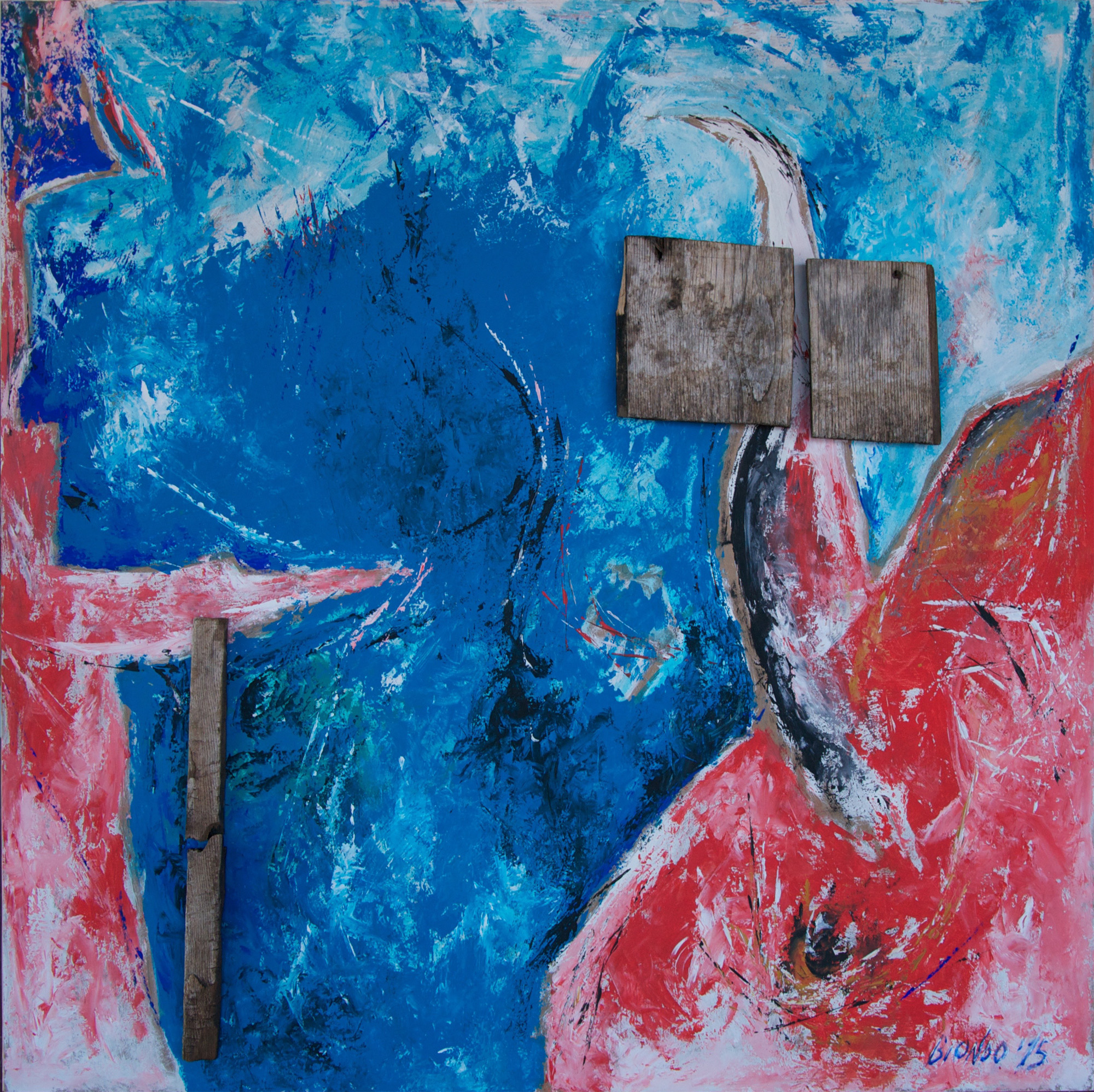
Kromotipie, dai lignei reperti (4)
- 2015
- 100 cm x 100 cm
- Acrylic and wood on mdf
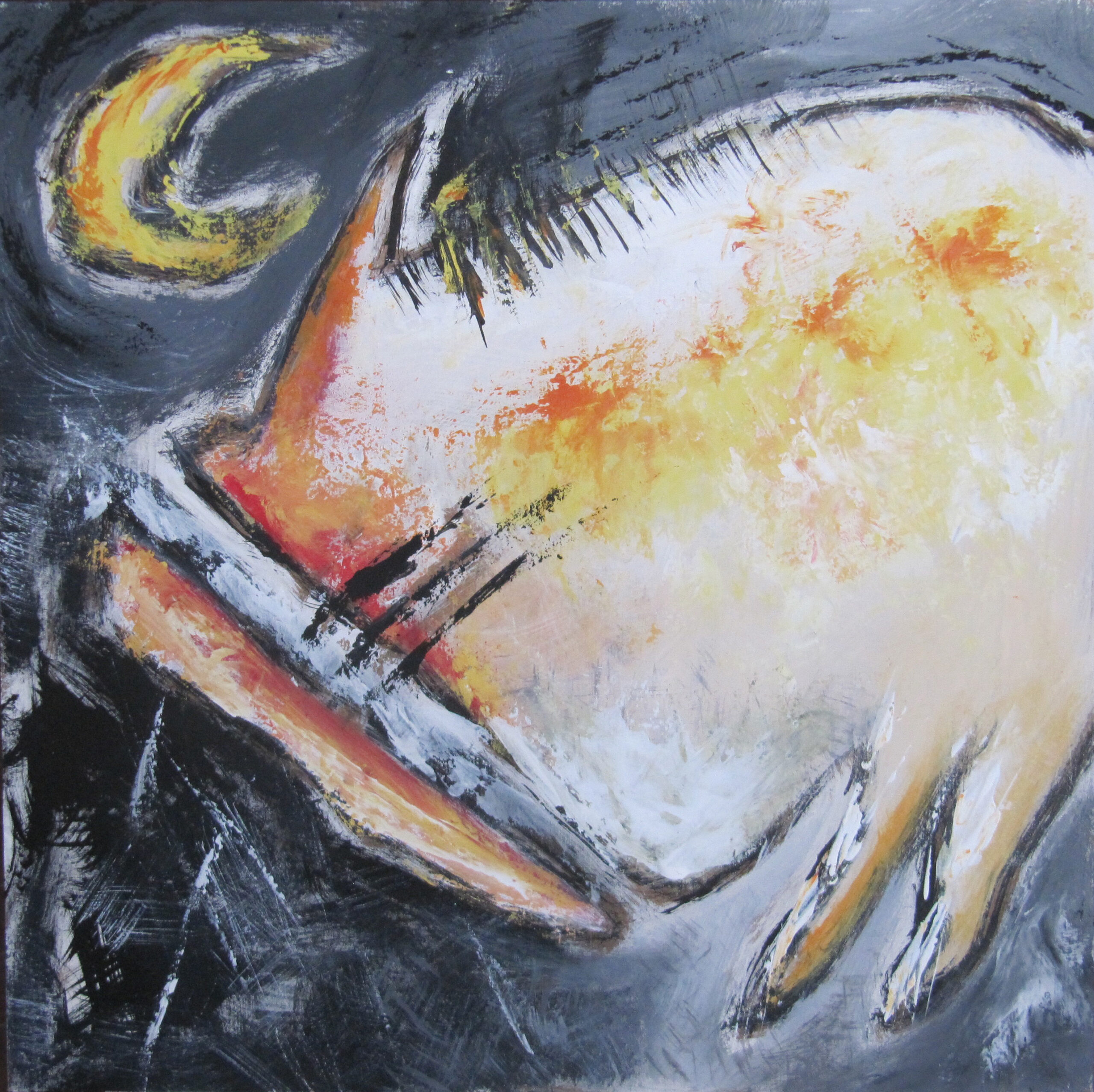
Noblesse Creature
- 2014
- 50 cm x 50 cm
- Acrylic on mdf