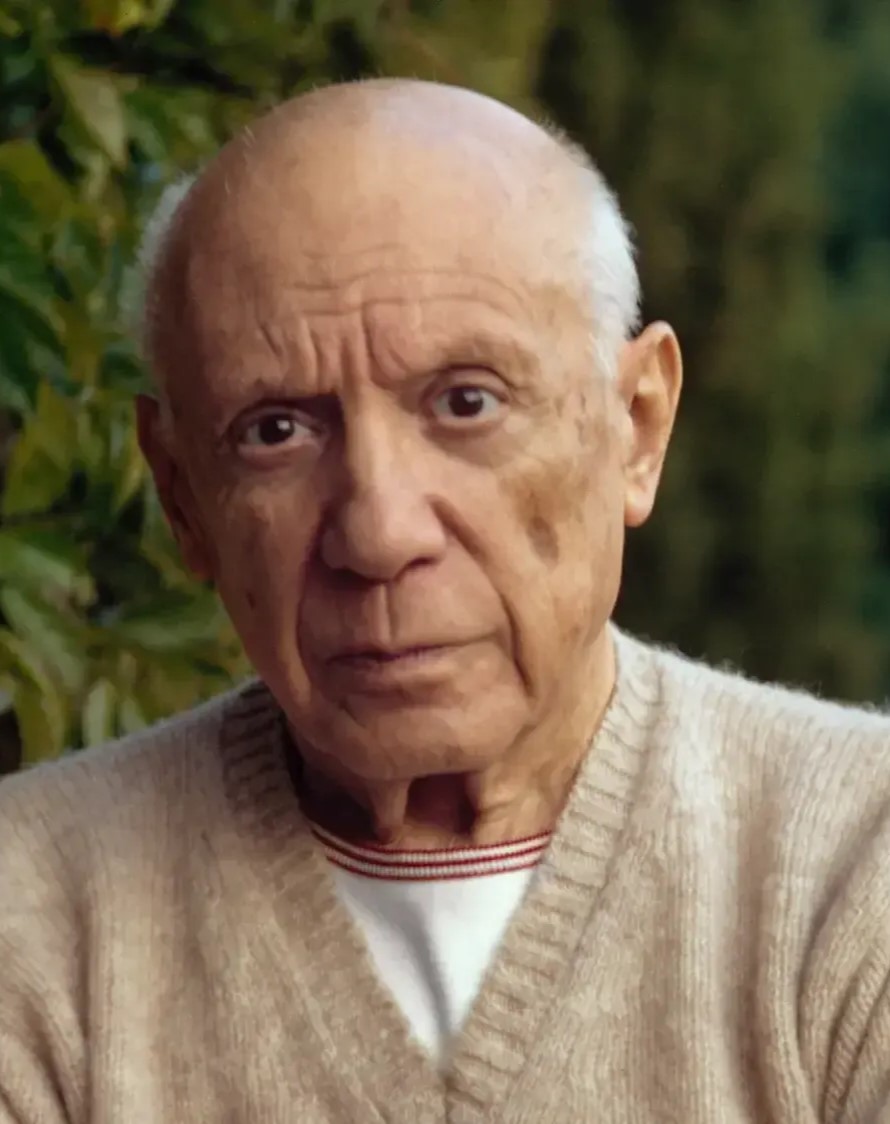
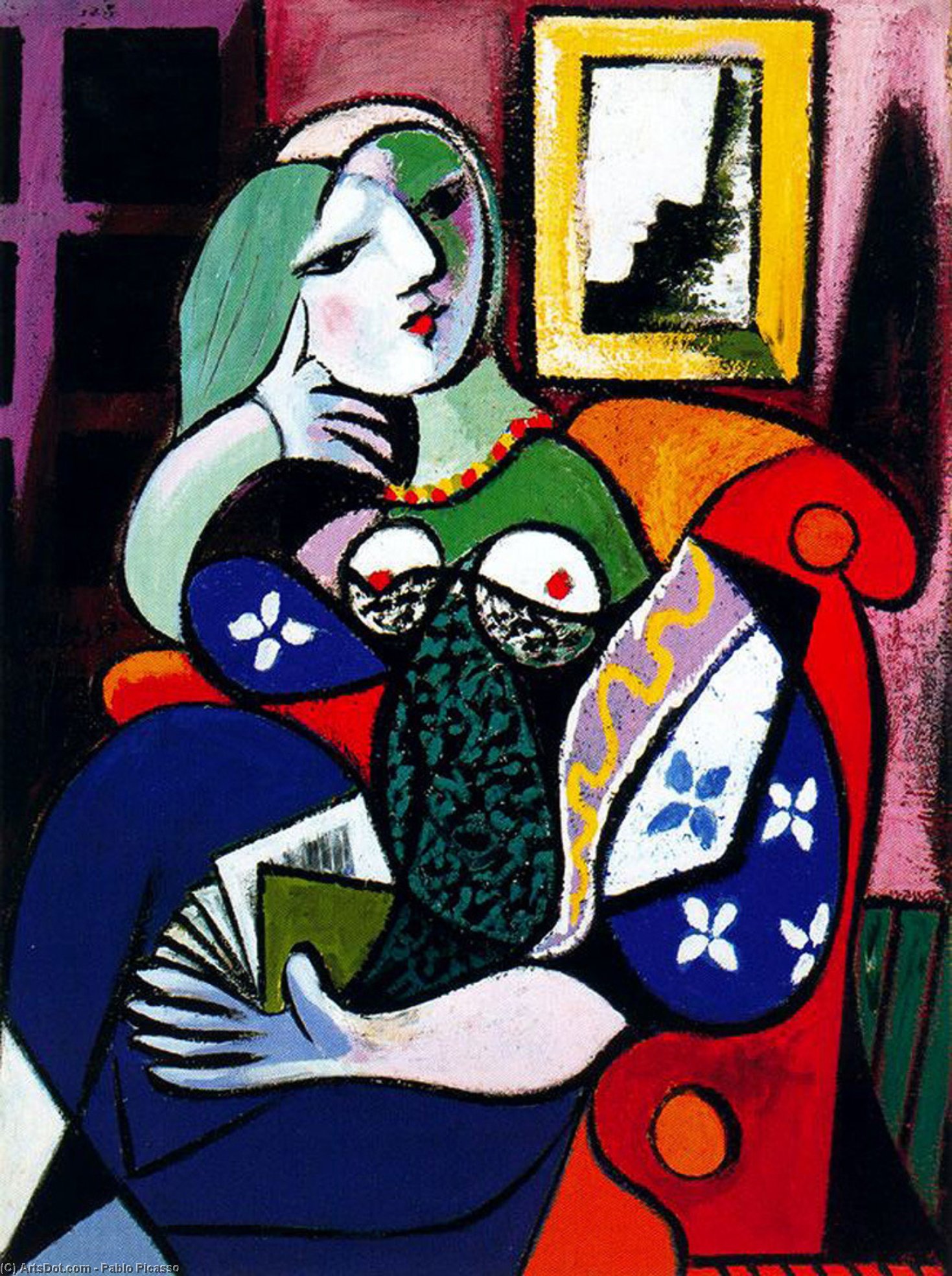
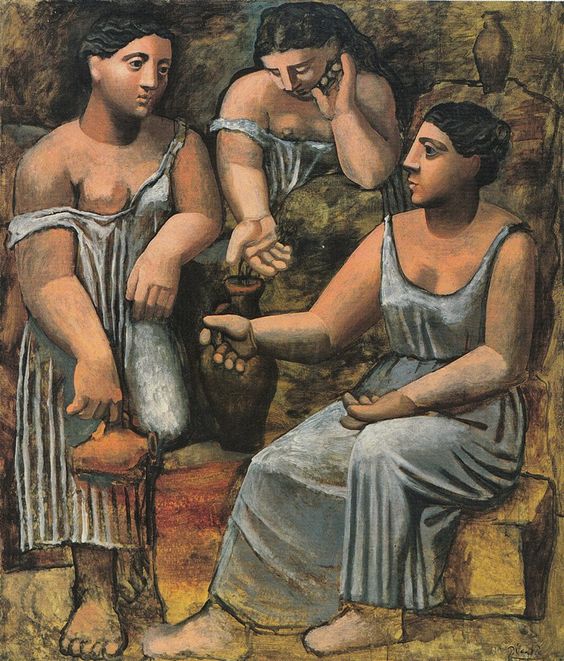
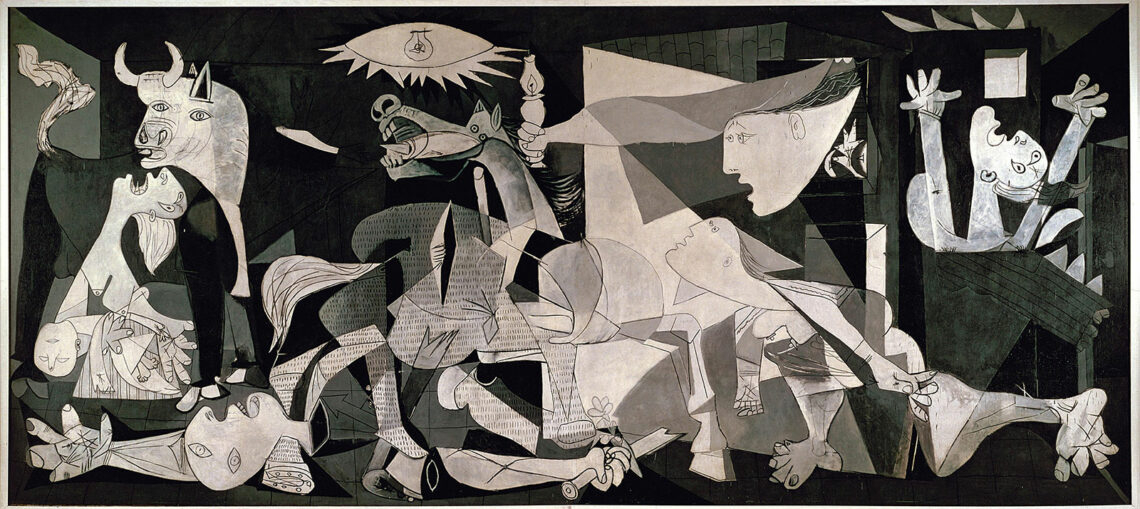
Pablo Picasso was born on October 25, 1881, in Málaga, Spain, into a family of artists. His father, José Ruiz Blasco, a painter and drawing teacher, was his first artistic mentor. At the age of just 7, Picasso began drawing and demonstrated an extraordinary talent. He moved with his family to Barcelona, where he continued his education at the Academy of Fine Arts, and later to Madrid, further refining his technique. In 1900, Picasso moved to Paris, where he came into contact with the artistic scene of the French capital and the new avant-garde movements. It was during this period that he began his *Blue Period*, characterized by melancholic tones and themes of loneliness and poverty. He later transitioned to his *Rose Period*, which was brighter and featured more vital figures such as circus performers and acrobats. In 1907, Picasso created *Les Demoiselles d’Avignon*, a work that marks the beginning of Cubism, a movement that would revolutionize 20th-century art. Along with Georges Braque, Picasso developed Cubism, an approach that breaks down forms into geometries and represents subjects from multiple viewpoints simultaneously. During the 1920s, Picasso went through various stylistic phases, exploring Surrealism and other influences. His work became increasingly tied to his personal life, influenced by his relationships with women such as Olga Khokhlova and Marie-Thérèse Walter. The Spanish Civil War, in particular, inspired him to create *Guernica* (1937), one of his most famous and powerful paintings, a symbol against the violence of war. In the years following World War II, Picasso continued to innovate, exploring sculpture, ceramics, and new forms of painting. His artistic output never slowed, and in the 1950s and 1960s, he produced a wide range of works spanning painting, ceramics, and more, always maintaining a connection to his Spanish roots and themes of war, peace, and mythology. Picasso died on April 8, 1973, in Mougins, France, at the age of 91. His legacy is monumental: he transformed painting and modern art, profoundly influencing 20th-century culture and leaving an indelible mark on the history of art.