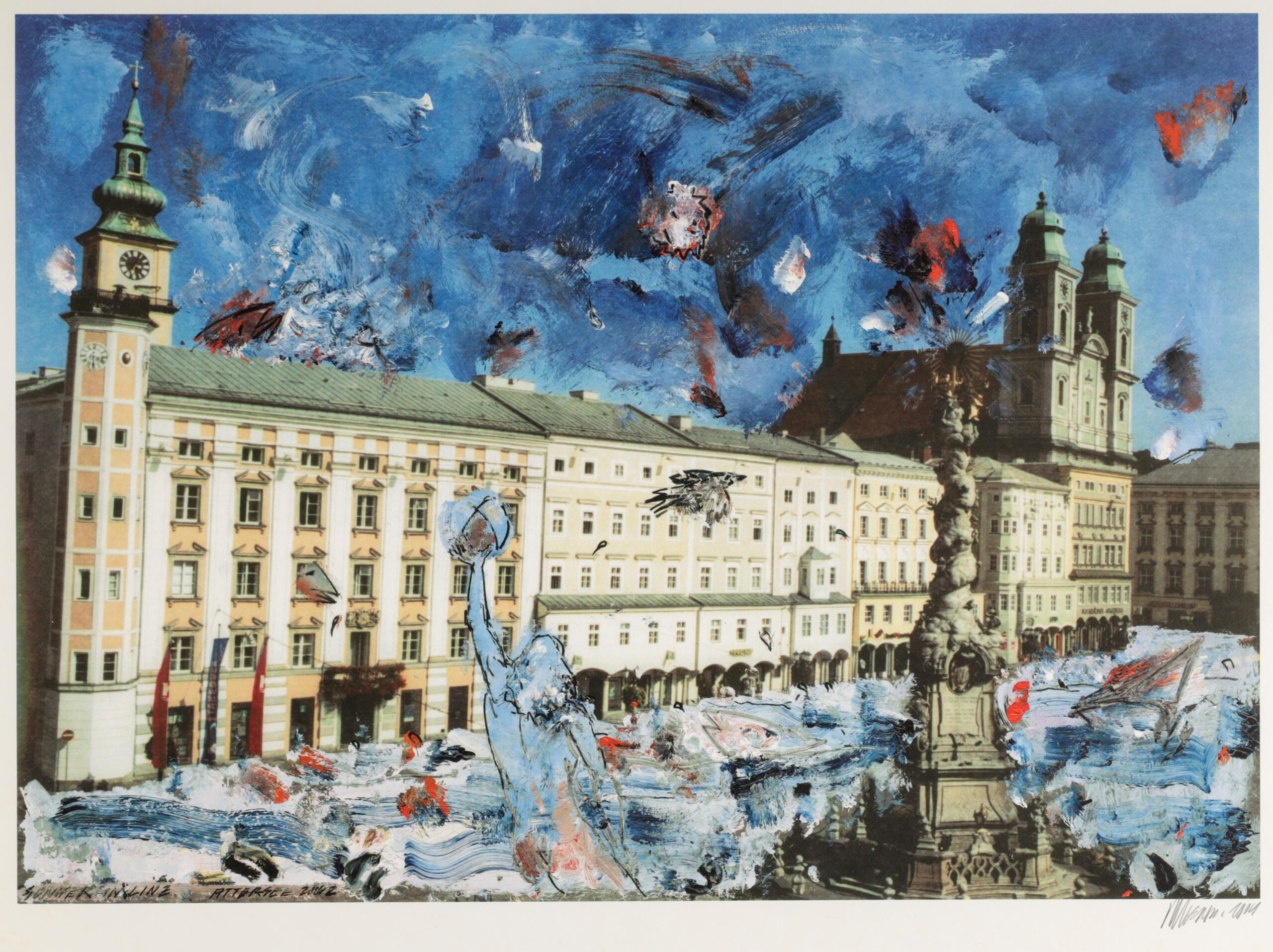
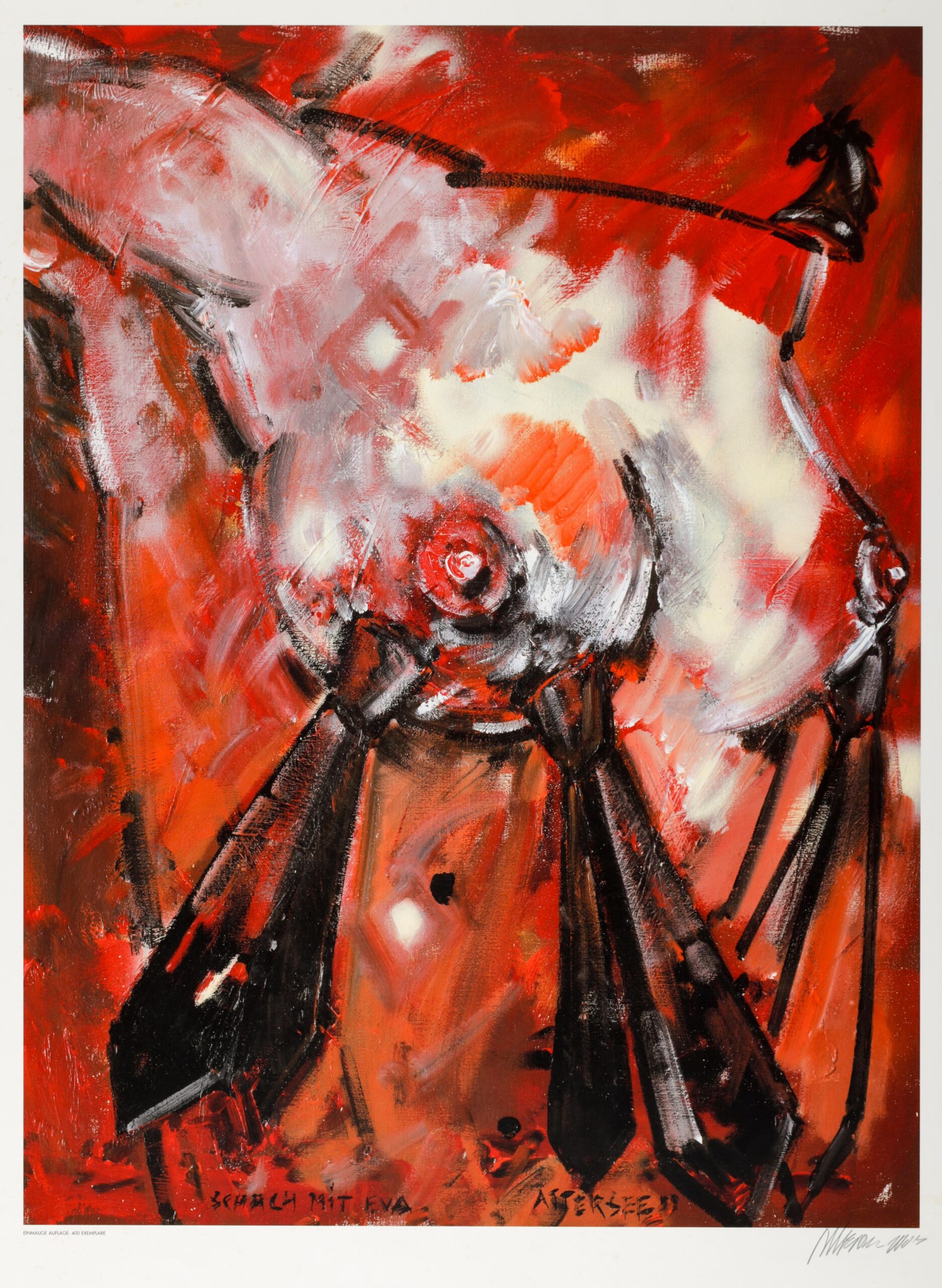
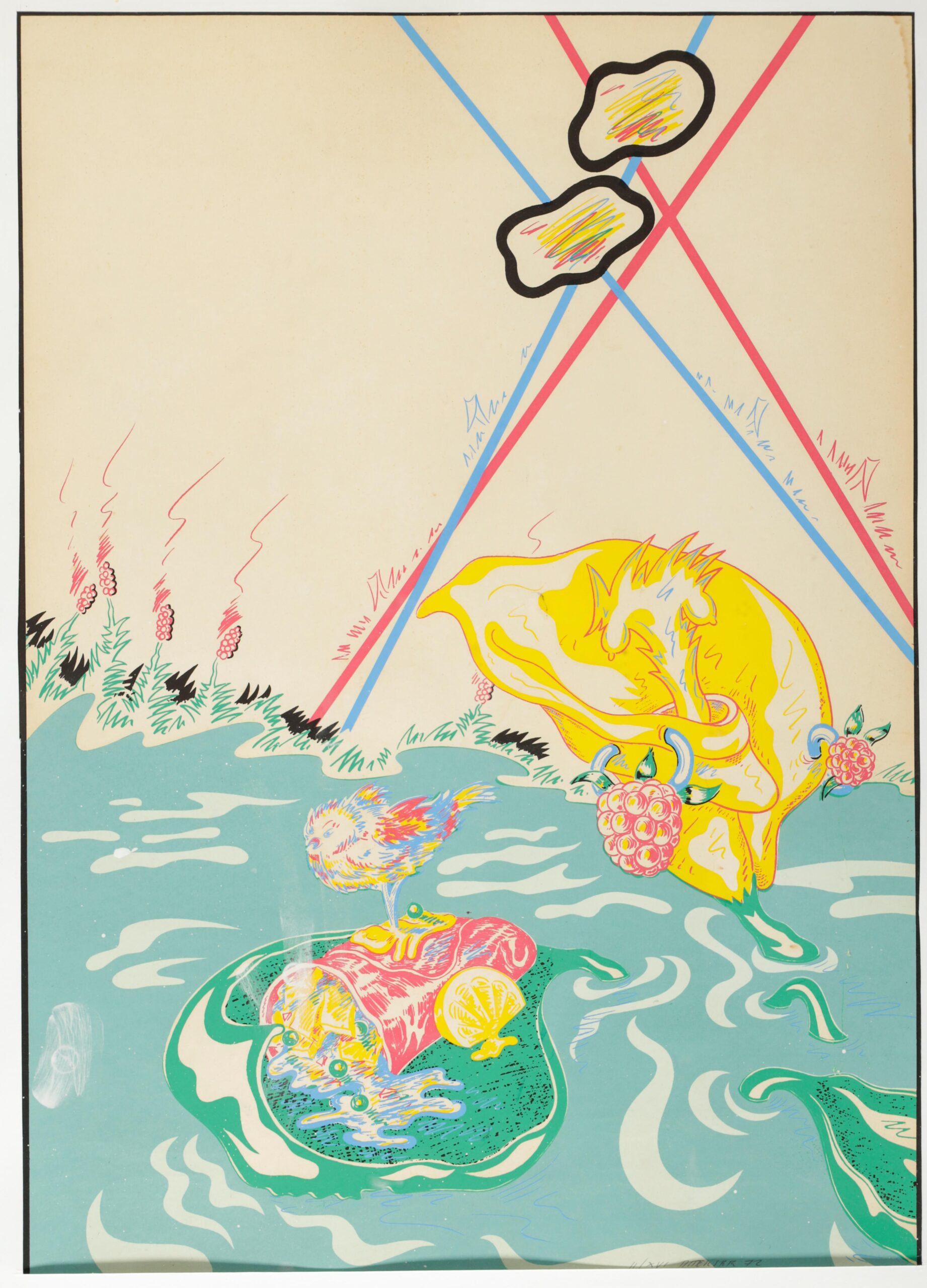
Christian Ludwig Attersee, born in 1944, is an Austrian artist known for his contributions to European Pop Art and his distinctive approach to painting, performance, and object art. He moved to Austria as a child and was initially drawn to opera singing, but a significant hearing loss led him to shift his focus to the arts. Attersee studied stage architecture at the Academy of Applied Arts in Vienna, later pursuing painting under Eduard Bäumer. In the early 1960s, he developed his first notable works, including “Weather Pictures” and “Rainbow Anomalies.” Attersee became involved in the Viennese Actionism movement, collaborating with artists like Günter Brus, Hermann Nitsch, and Gerhard Rühm. His “object inventions,” blending eroticism and everyday life, earned him recognition in the European Pop Art scene. After moving to Berlin in 1965, Attersee began to use the stage name “Christian Ludwig Attersee” and soon established himself internationally. He explored new forms of total art and became known for his symbolic, colorful, and dynamic style, often incorporating text and framing elements within his paintings. His works, especially those focused on sexuality and nature, gained attention at various exhibitions, including the Venice Biennale in 1984. In addition to his painting career, Attersee contributed to design, including Vienna’s first champagne ball in 1986 and a large glass mosaic in 1986. He also created notable public art, such as the “Wealth of the Earth” mosaic in the Federal Geological Institute in 2007 and a large installation on Vienna’s Ringturm in 2006. Attersee was a professor at the University of Applied Arts Vienna, where he led the master class for experimental design from 1990 to 2009. His work has been widely exhibited in major institutions, such as the Stedelijk Museum in Amsterdam and the Essl Museum in Klosterneuburg, with notable retrospectives throughout his career. He received numerous awards for his artistic achievements, including the Austrian Art Prize for Fine Arts (1983), the Grand Austrian State Prize for Fine Arts (1998), and the Austrian Cross of Honour for Science and Art (2005), among others. Attersee remains a significant figure in contemporary Austrian art.