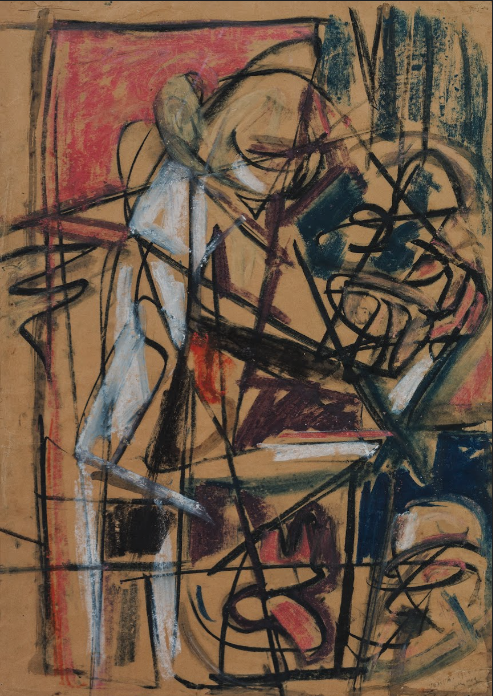
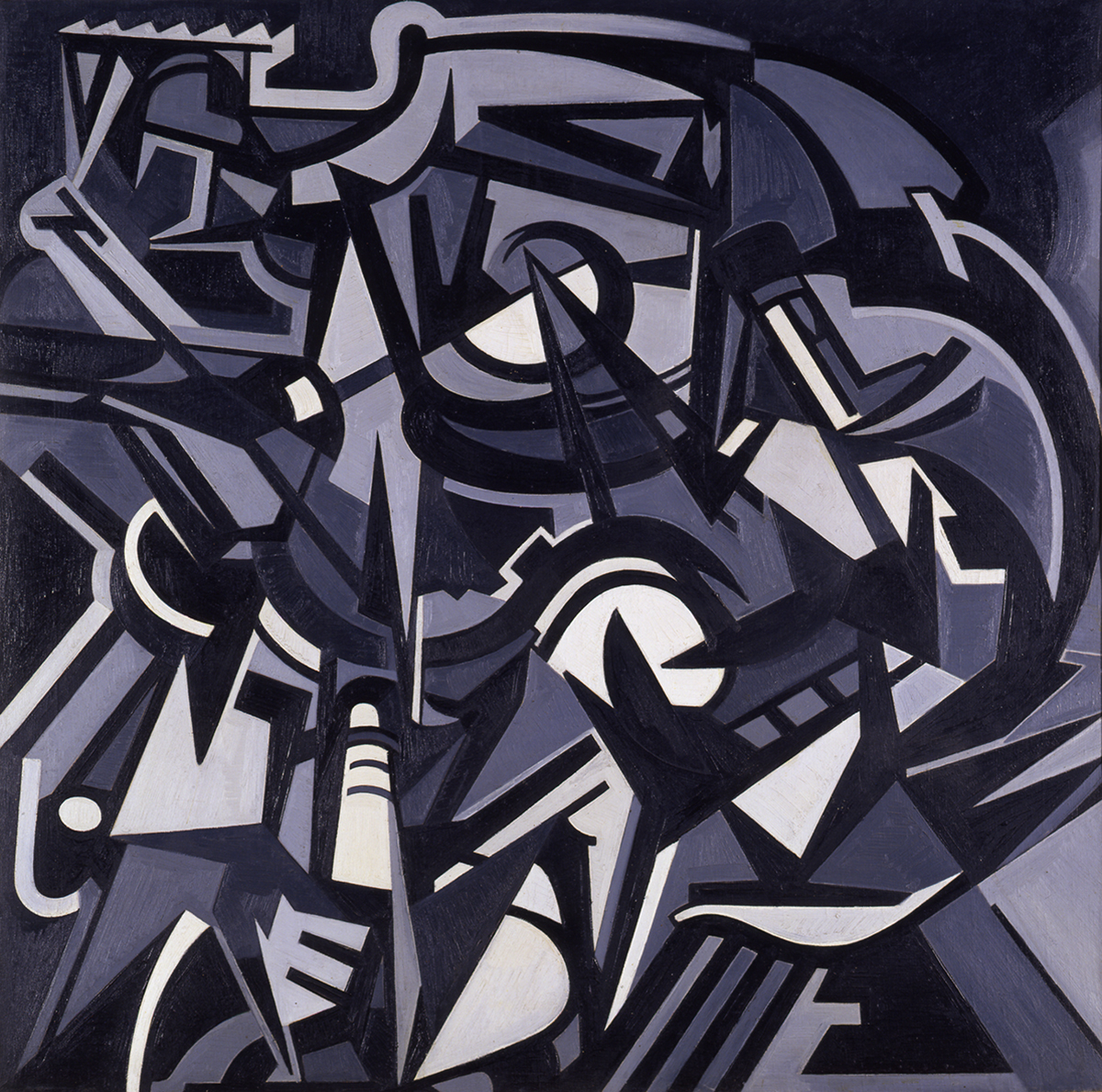
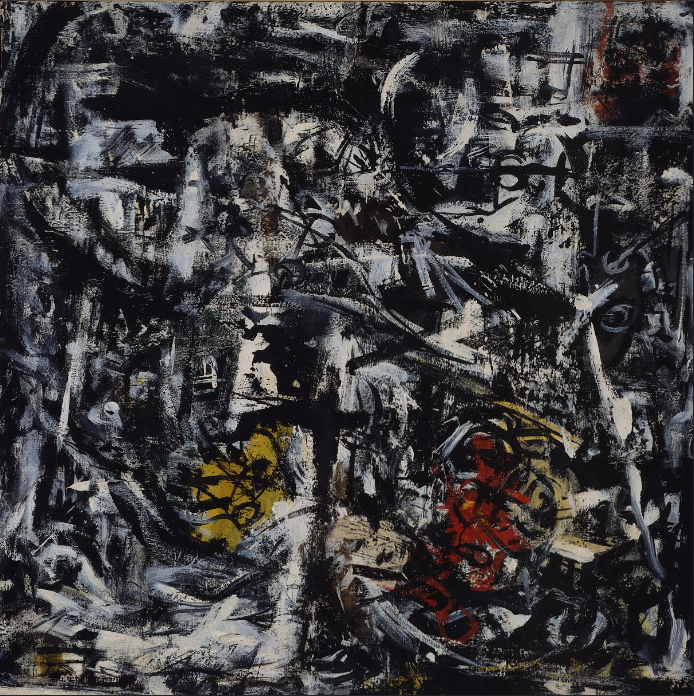
Emilio Vedova, born in Venice in 1919, was one of the most significant artists of the informal movement, which is known for its non-figurative language focused on gestural painting, materiality, and marks. His works were explosive, with contrasting brushstrokes aimed not only at expressing personal discomfort but also reflecting on collective social and political issues. This political commitment was evident not just in his paintings but also in his active participation in the Italian Resistance during World War II, where he was involved in various political and social struggles. His rebellious and politically charged spirit was masterfully expressed in large cycles of paintings, often with evocative titles. Vedova, often referred to as the “Italian brother of Jackson Pollock,” was ahead of his time, anticipating certain artistic trends that would later become central to younger generations. His curiosity about the expressive potential of materials led him to experiment with different artistic languages, such as serigraphy and lithography. Throughout his life, Vedova traveled extensively to places like Tokyo, New York, Mexico, and Latin America, drawing inspiration for his artistic exploration. Raised in a family of artisans, Vedova began working at a young age to support himself and buy materials for his art. At the age of 17, he moved to Rome, where he painted architectural perspectives and self-portraits. Returning to Venice, he studied in Florence and became immersed in local artistic circles. In 1940, he was granted a studio at Palazzo Carminati by the Bevilacqua La Masa Foundation, which allowed him to focus more on his art. His early works, such as his depictions of Venetian architecture, already showed signs of his rhythmic, repetitive approach to marks and lines. In 1942, Vedova moved to Milan, where he became part of the Corrente movement, which played a crucial role in preparing Italian artists for the post-war artistic renewal. During the war, he joined the Italian Resistance, and after the war, he returned to Venice, where he frequented the L’Angelo restaurant, a gathering place for intellectuals and artists, including art collector Peggy Guggenheim, who later bought some of his works. In 1946, he co-founded the *Fronte Nuovo delle Arti* with artists like Renato Birolli, Ennio Morlotti, and Armando Pizzinato, aiming to introduce the latest European artistic influences into Italy. His first solo exhibition abroad was in 1951 in New York, where he showcased works characterized by bold black geometries. In the following years, Vedova participated in several international art initiatives, including the first edition of Documenta in Kassel in 1955, marking the start of his recognition abroad. In 1968, during the student protests, Vedova actively participated in the demonstrations and was invited to hold “counter-courses” at the Accademia di Belle Arti in Venice. His social and political engagement was also evident in 1974 when he led a campaign to save Venice’s *Magazzini del Sale*, which were threatened with conversion into public swimming pools. His commitment to the city also extended to teaching, as he taught at the Accademia di Belle Arti in Venice from 1975 to 1986. In 1980, Vedova was invited to Mexico City for a retrospective exhibition, a trip that influenced his painting, leading to the creation of the *Plurimi binari* cycle. The 1980s saw major exhibitions dedicated to Vedova both in Italy and abroad, solidifying his reputation as a leading artist. In 1993, the Accademia dei Lincei awarded him the Feltrinelli Prize for painting, and in 1997, he received the Golden Lion for Lifetime Achievement at the Venice Biennale. Vedova passed away in 2006, shortly after the death of his wife.