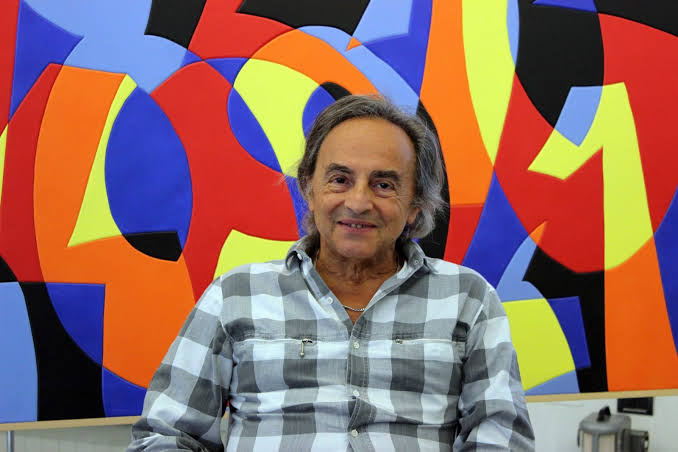
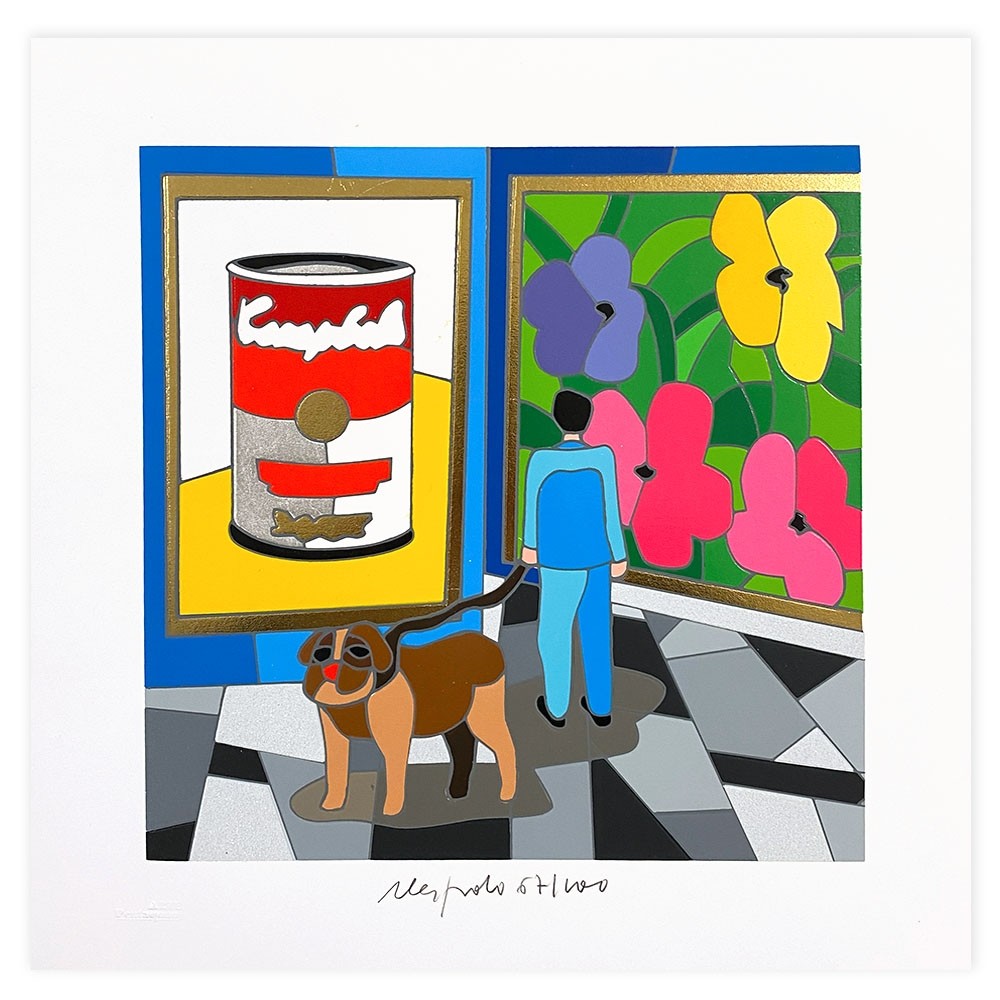
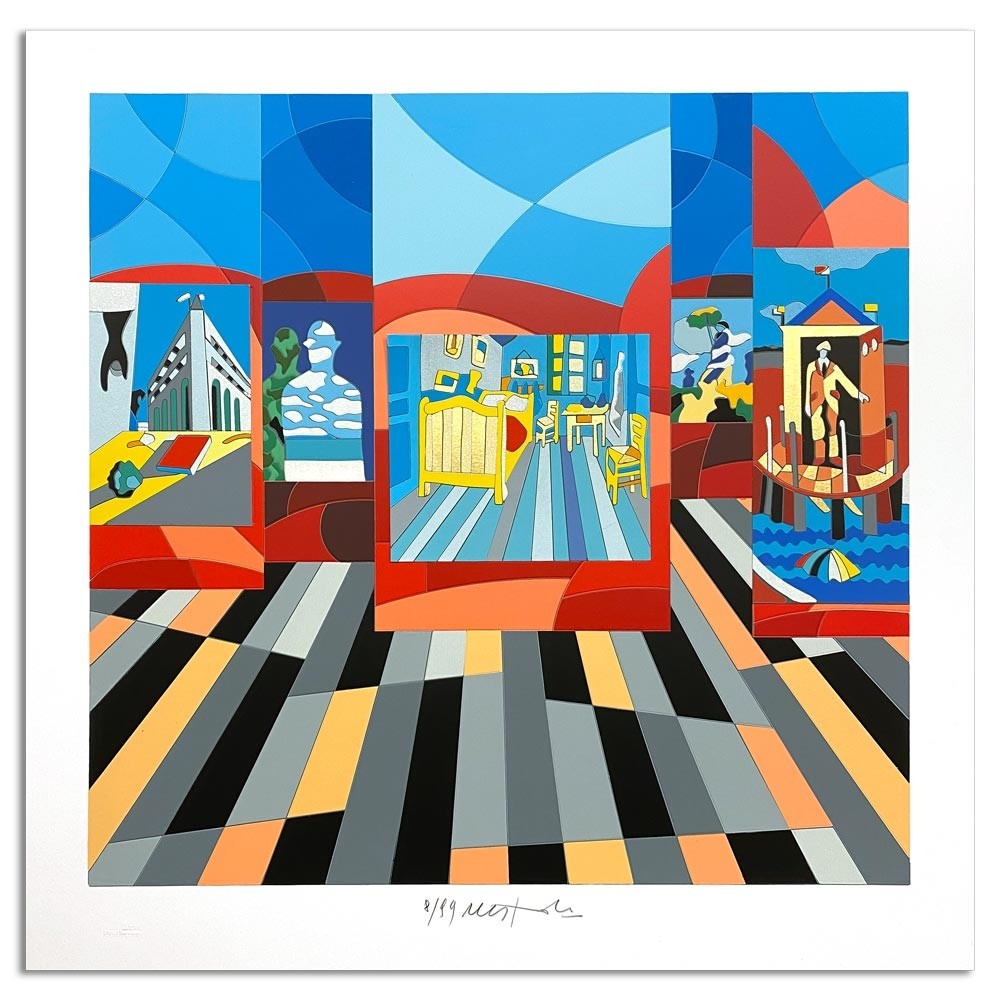
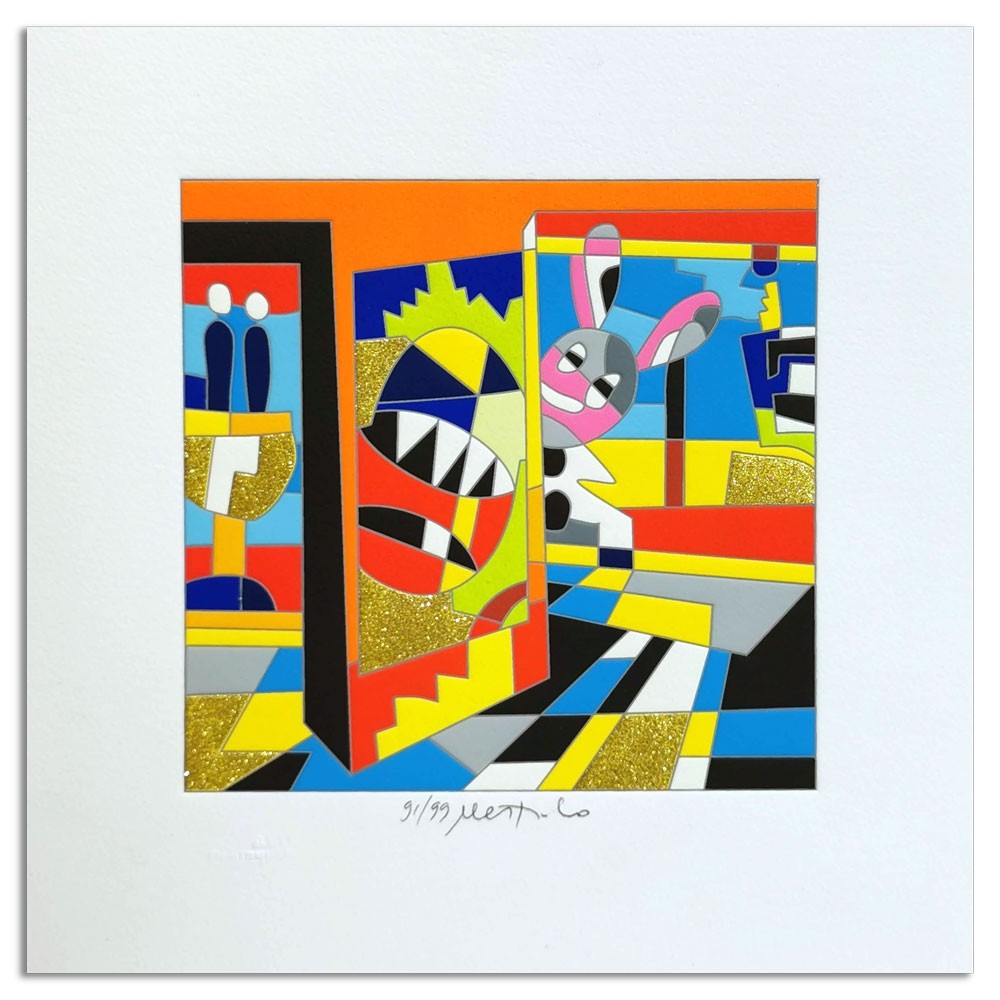
Ugo Nespolo was born in Mosso Santa Maria, in the province of Biella, into a middle-class family. He graduated from the Albertina Academy of Fine Arts in Turin and later earned a degree in Modern Literature at the University of Turin. Nespolo began his artistic career in the 1960s, influenced by Pop Art, Conceptualism, and the Poor Art movement, becoming part of the avant-garde scene in Italy. His early works were shown in galleries such as Galleria Il Punto in Turin and Galleria Schwarz in Milan. Nespolo’s art is characterized by a distinctive playful, ironic, and transgressive style. He often incorporated a sense of fun and humor, which became a hallmark of his work. In the 1970s, he expanded his creative expression into experimental cinema, featuring friends and artists like Lucio Fontana, Enrico Baj, and Michelangelo Pistoletto. At the same time, he began experimenting with unconventional materials, such as alabaster, ebony, mother-of-pearl, ivory, porcelain, and silver, using techniques like embroidery and inlay. One of his notable works from this period was “The Tree of Hats,” which later became a mass-produced decorative item. The 1980s marked the peak of Nespolo’s “American period,” where he spent part of the year in the United States. Influenced by the urban landscape of New York—its streets, storefronts, skyscrapers, and hamburger stands—these became central themes in his paintings. He also began collecting vintage items like gas pumps, jukeboxes, and commercial signs. During this time, he also ventured into applied arts, creating posters, scenography, and video idents, including work for the 1986 Rai Calendar and the opera *Turandot* at the Teatro dell’Opera in Rome. In 1986, a major retrospective was held in Genoa to celebrate his 20 years of artistic activity, and in 1990, another important retrospective was dedicated to him in Milan at Palazzo Reale. Throughout the 1990s, Nespolo continued his artistic endeavors with significant collaborations, including a Campari ad campaign, set designs and costumes for the *Don Chisciotte* opera, and a ceramics exhibition at the Faenza International Ceramic Biennale. He also participated in exhibitions worldwide, such as in Japan and the United States, and worked on several monumental works, including the 1998 monument “Lavorare, Lavorare, Lavorare, preferisco il rumore del mare” in San Benedetto del Tronto. In the early 2000s, Nespolo became involved in public art projects, including the integration of contemporary art into the new metro stations in Turin. His works were displayed in various prestigious venues, including the Hong Kong Cultural Centre and the National Museum of Cinema in Turin. Nespolo’s artistic practice combines the knowledge of Renaissance art with contemporary influences, creating playful, eclectic compositions that defy traditional rules of perspective and composition. His works, including silkscreens and unique pieces, are a fusion of diverse elements, allowing viewers to explore multiple references across time and space. Nespolo is recognized globally, with his works maintaining strong and stable market value.