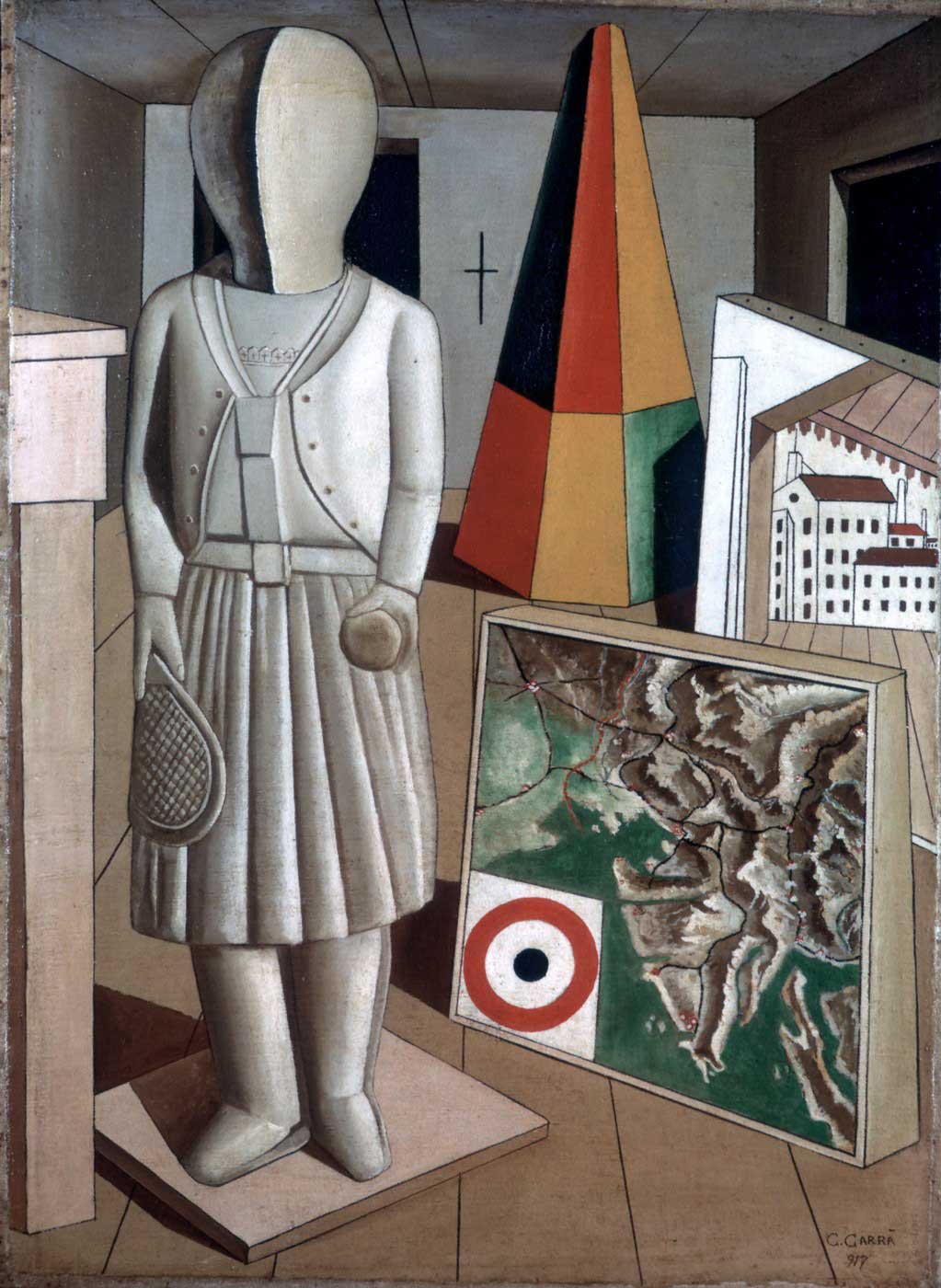
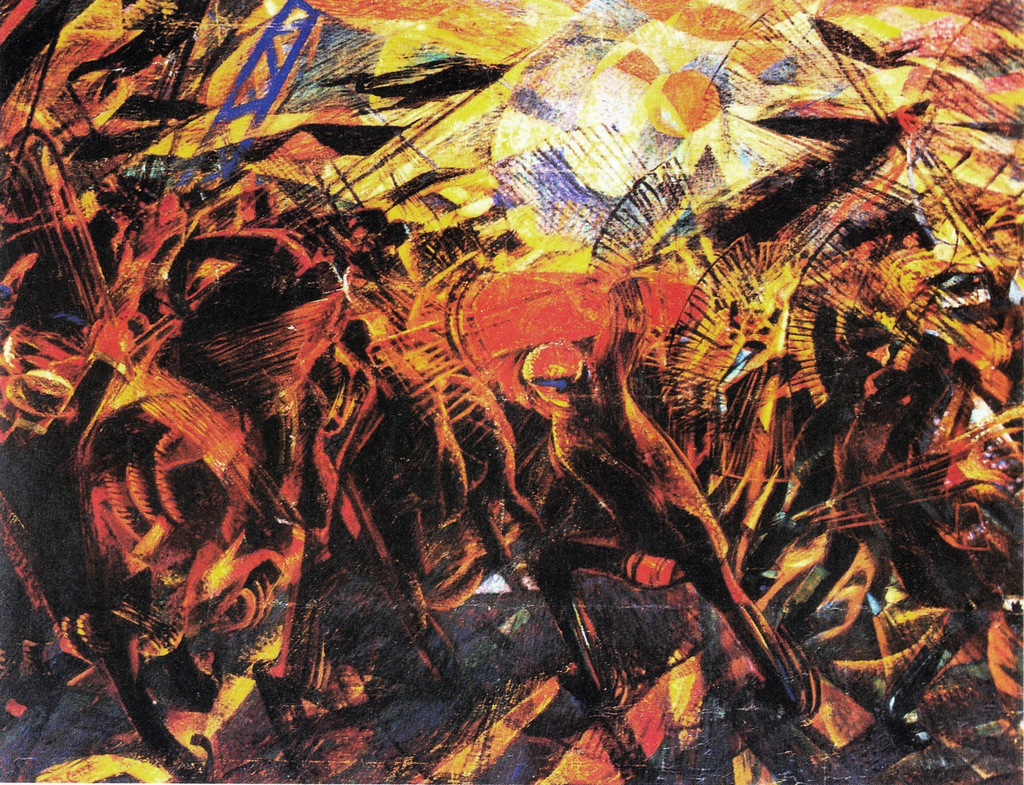
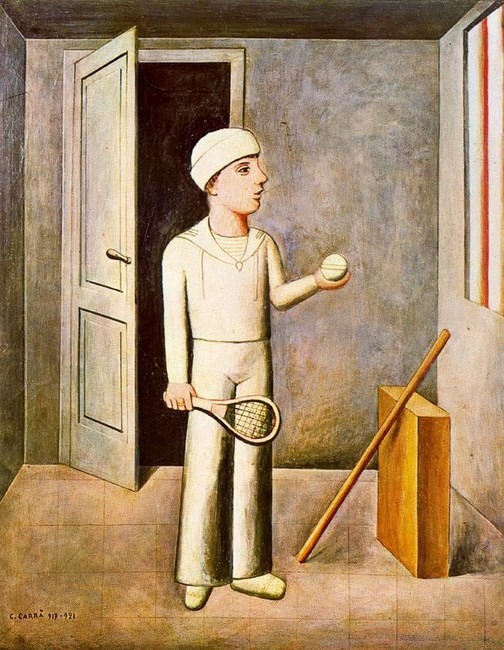
Carlo Carrà (1881–1966) was a central figure in early 20th-century Italian art. Although he initially joined Futurism and later the Metaphysical movement, he never fully aligned himself with any one group, maintaining a personal and distinctive artistic language. He was influenced by Tuscan masters such as Giotto and Paolo Uccello. After moving to Milan as a young man, he had access to the city’s museums, which deepened his artistic education. His many trips to Paris, the artistic capital of the time, led him to interact with Cubists and Parisian intellectuals. In addition to painting, Carrà was also an art critic, contributing to magazines like *Lacerba*, *L’Ambrosiano*, and *Valori Plastici*. From 1939 to 1951, he taught at the Brera Academy of Fine Arts. In Futurism, Carrà found a balance between plastic and dynamic elements, often incorporating Cubist influences. In his Metaphysical phase, he developed a distinctive style that set him apart from De Chirico and Morandi. Throughout his career, his work remained innovative while maintaining a strong sense of individuality. Born in Quargnento (AL) in 1881, Carrà discovered his passion for art during an illness that confined him to bed. He moved to Milan in 1895, where, despite difficult circumstances, he was able to study works by Italian masters at the city’s museums. In 1909, he enrolled at the Brera Academy, where he developed a divisionist approach to painting and befriended artist Umberto Boccioni. In 1910, he joined Futurism, collaborating with Marinetti and Boccioni on a manifesto to renew Italian art. During his stays in Paris (1911–1914), Carrà encountered Cubism and formed relationships with prominent artists and intellectuals of the time. By 1914, he began creating his first “Metaphysical” works after meeting artists like De Chirico, De Pisis, and Savinio during the war. After the war, Carrà went through a period of crisis and reflection, leading him to a more pared-down style that anticipated the language he developed around 1921. He spent time in Forte dei Marmi, where he drew inspiration from the coastal landscapes, refining his artistic approach. Carrà continued to write art criticism, becoming one of the main advocates for modern art. He passed away in Milan in 1966, leaving behind an important legacy in both Italian and international art.