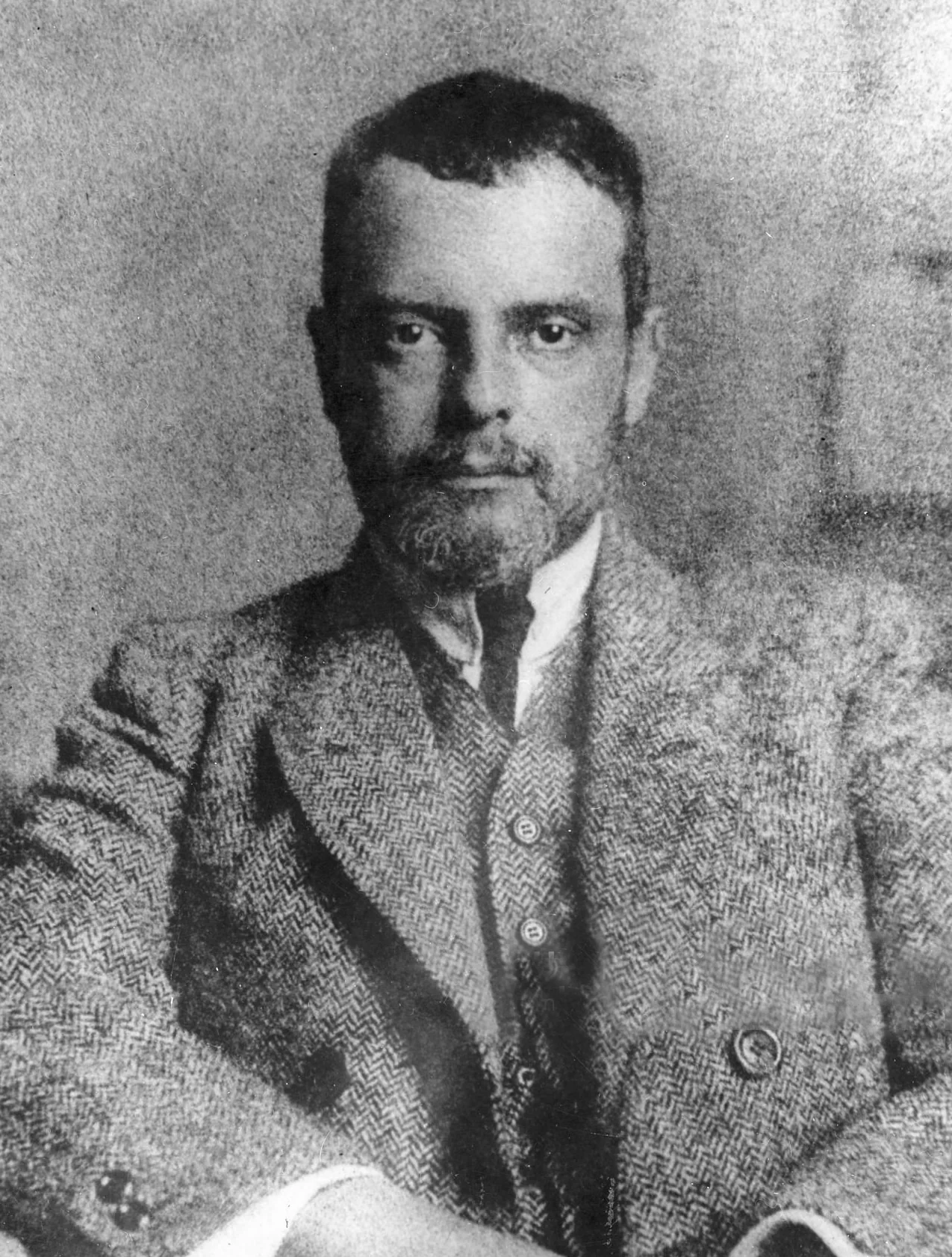
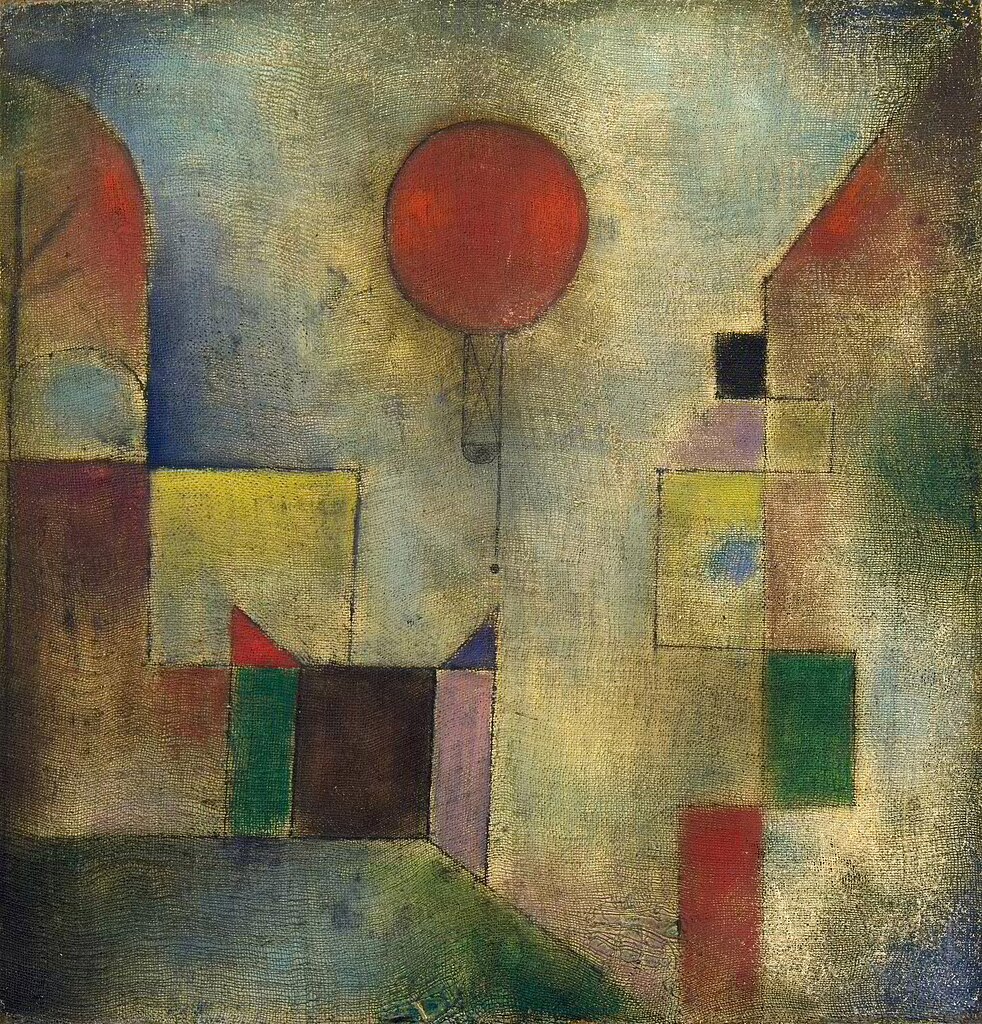
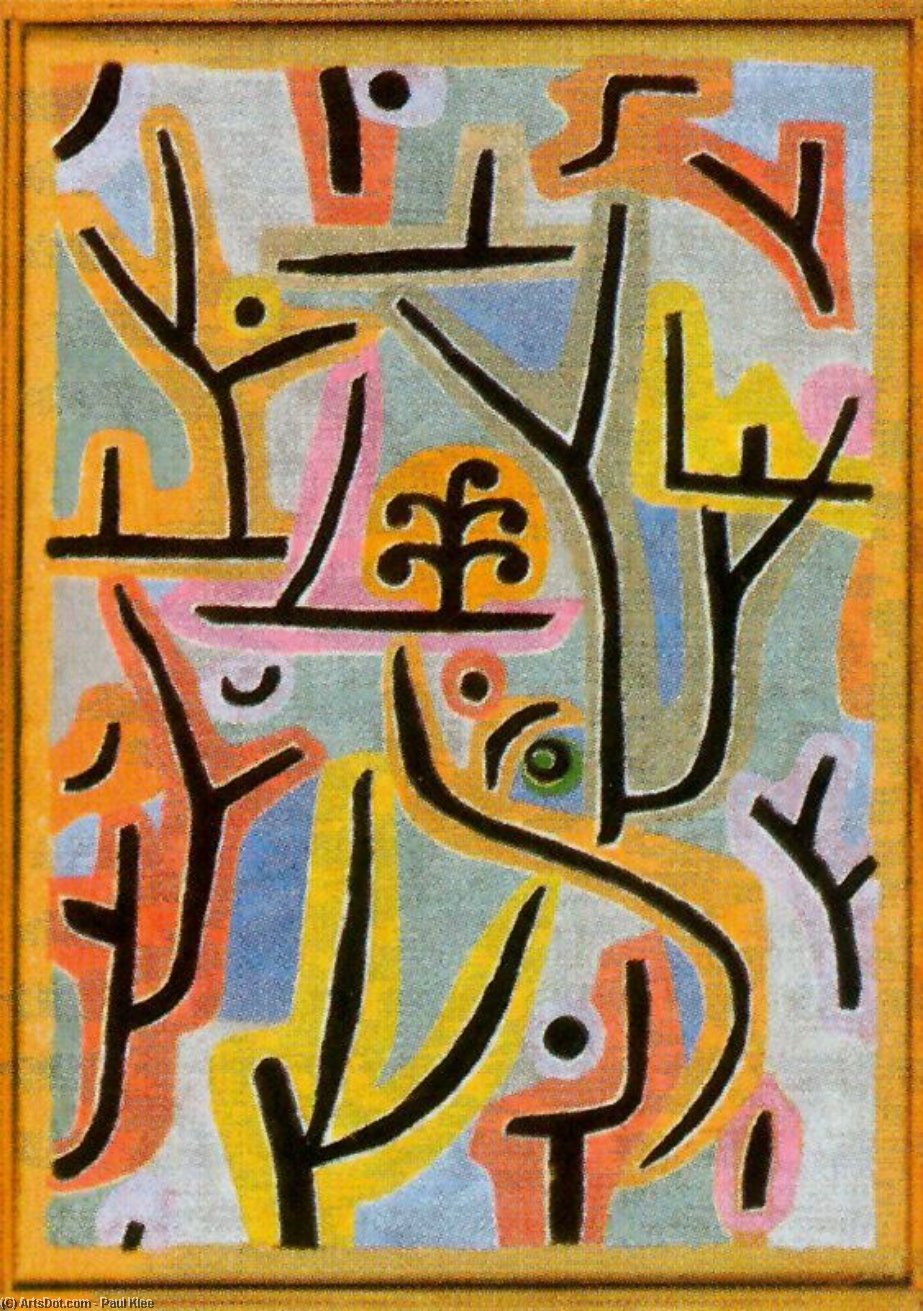
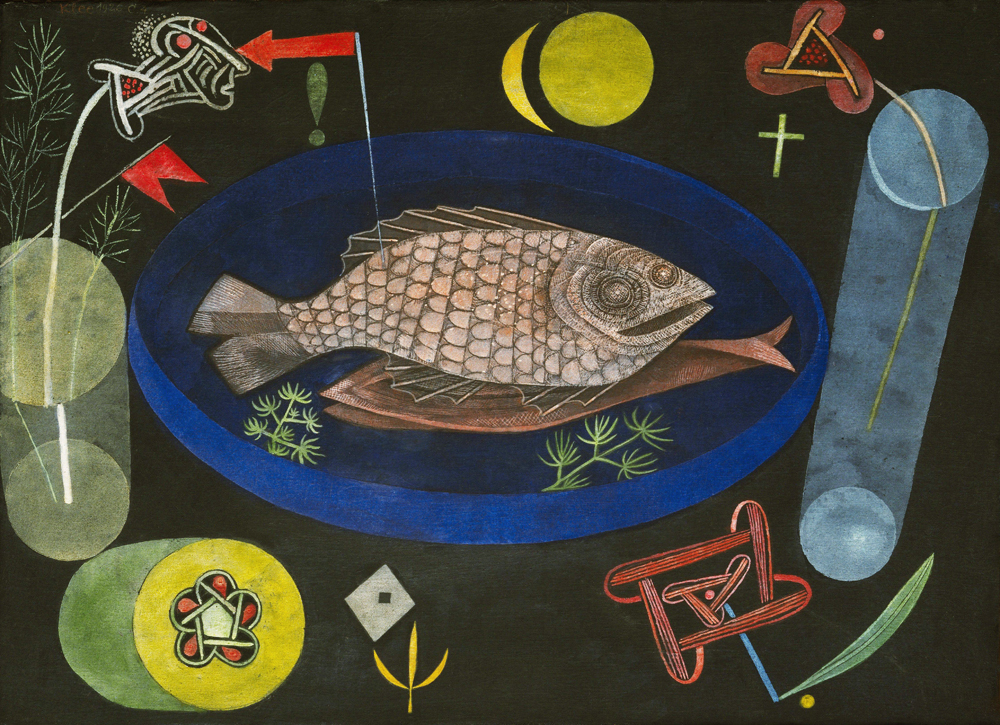
Paul Klee, born on December 18, 1879, in Münchenbuchsee, Switzerland, was one of the leading figures of abstract art in the early 20th century. Raised in a family where music was central, Klee developed a deep connection to the arts, especially music and drawing. His father, Hans, was a music professor, and his mother, Ida, a singer. This musical influence shaped his artwork, with Klee viewing his paintings as musical compositions. From a young age, he was also interested in poetry and played the violin, eventually becoming a member of the Bern Symphony Orchestra. In 1899, Klee’s family moved to Munich, where he initially explored various artistic disciplines but later decided to attend the Academy of Fine Arts. Though he was initially rejected due to his lack of skills in figure drawing, he attended a private drawing school, focusing on the use of line and printmaking. During his academic years, Klee encountered the Jugendstil movement and the artist Franz von Stuck, who encouraged him to visit Italy. After a short stay in Italy, Klee returned to self-study, also taking evening courses in anatomy and figure drawing. Between 1903 and 1905, Klee created a series of etchings titled *Inventions*, featuring a mix of real and fantastical, grotesque imagery. These works attracted attention at the Munich Secession exhibition. In 1906, he married Caroline Stumpf, a pianist, and they had a son, Felix. Klee devoted significant time and energy to his son’s health, which affected his artistic output during this period. From 1908 to 1911, Klee was influenced by Vincent van Gogh and Paul Cézanne, whose landscapes inspired his own works painted outdoors. In 1911, Klee joined the group *Der Blaue Reiter* (The Blue Rider) alongside artists such as Kandinsky, August Macke, and Franz Marc, and participated in their second exhibition. In 1914, Klee traveled to Tunisia with Macke and Louis Moilliet, which marked a pivotal moment in his use of color, incorporating warm, bright tones from the landscapes of North Africa. During World War I, Klee was drafted into the army in 1916. Despite the war, he continued to paint prolifically. After the war, he returned to Switzerland and, in 1920, was invited by Walter Gropius to teach at the Bauhaus in Weimar, where he reconnected with Kandinsky. Klee’s teaching approach blended scientific discipline with the poetic nature of painting, earning him a dedicated following among his students, although he maintained a certain emotional detachment from the role. In 1924, the Bauhaus moved to Dessau, but Klee began to take more frequent leaves to travel and paint. In 1931, he left the Bauhaus and took a teaching position at the Düsseldorf Academy, but after the rise of the Nazi regime in 1933, he was dismissed due to the regime’s opposition to his work. He returned to Switzerland, where his paintings grew darker, reflecting the atmosphere of war and political tension. Despite being labeled a “degenerate artist” by the Nazis, Klee continued to exhibit successfully in Europe and the United States. In his final years, Klee’s health deteriorated due to progressive scleroderma, which led him to seek treatment in clinics near Locarno. He passed away on June 29, 1940, just months after losing his father. Klee’s artistic legacy remains a fundamental part of modern art history, particularly in the fields of abstraction and visual experimentation.