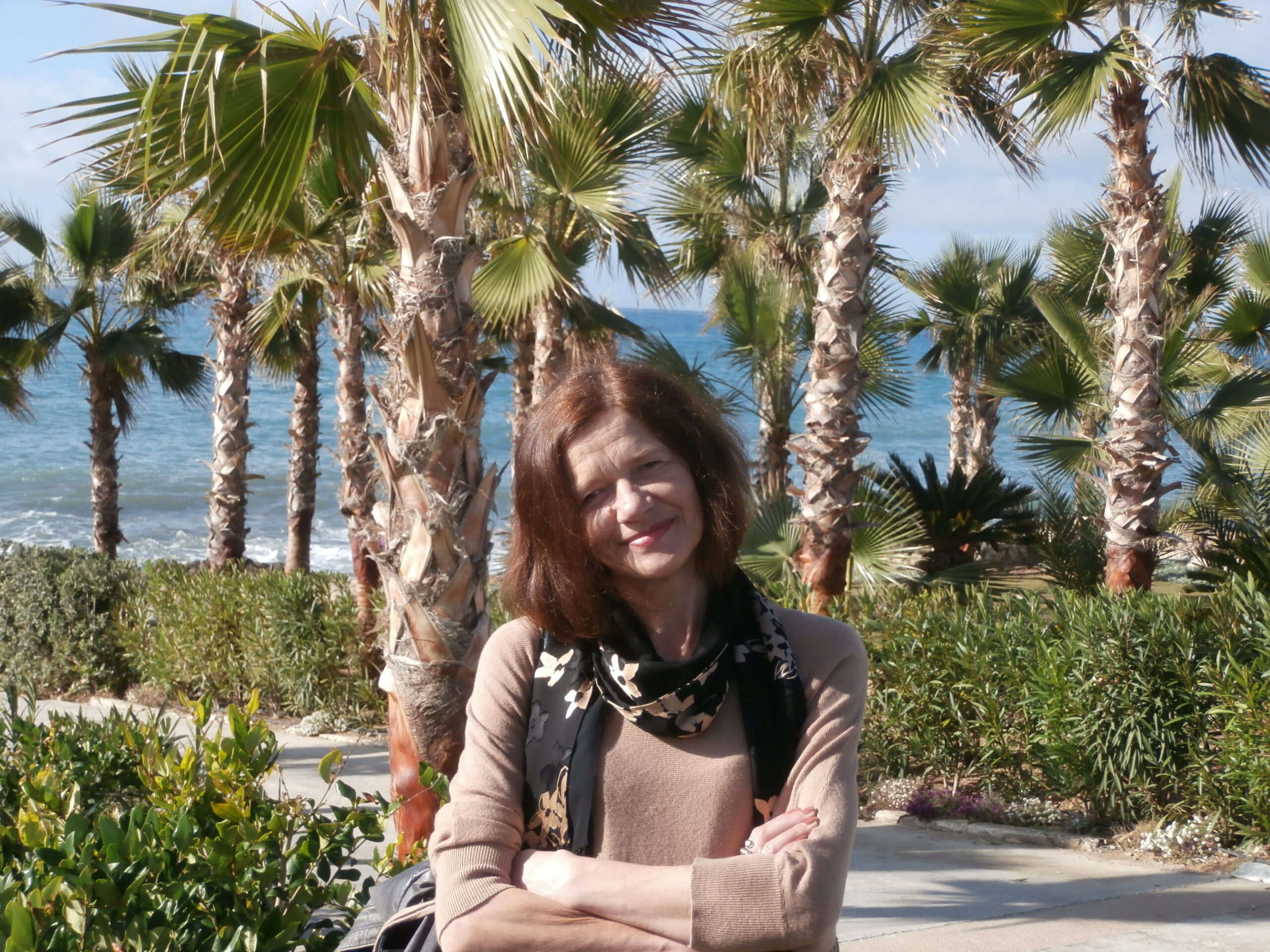
Ombretta Del Monte
Biography and criticism
Ombretta Del Monte, painter, writer, art curator. A multifaceted and eclectic artist, her motto is: “My life is a creative mission!”. In addition to her passion for painting, she also has a love for writing. She has long collaborated with various journals, including reviewing artists’ work. In 2021, she published “I Sassi della Memoria” (The Stones of Memory) and in 2022, she presented the book “Diario d’artista” (Artist’s Diary) at the Rome Book Fair, which was later presented in several Italian cities and at the Press Room for the Fallen of Nassirya in the Senate of the Republic. She has exhibited at the 2013 Venice Biennale, at the Diocesan Museum of Mantua, at the Casa del Cinema in Rome, at the Angelica Gallery in Rome, at the Palace of Arts in Naples, at the Le Dame Gallery in London, at the Ducal Palace in Genoa, at Palazzo Petrignani in Amelia, at the Dostoevsky Museum in St. Petersburg, at the East Museum in Maykop (Russian Federation), at the Russian Science and Culture Center in Rome, at the Timeless Gallery in Taormina, at the Bahrain Embassy in Rome, as well as in Belgium, Poland, and Uzbekistan, being the only Italian artist in Uzbekistan. She is the creator and organizer of painting exhibitions, intercultural literary projects, and visual arts events. She moderates and presents various cultural events in prestigious institutional venues in Rome, such as the Capitol and the Senate of the Republic. She has received several awards and recognitions from institutional and academic entities. She collaborates with various Film, Fashion, and Entertainment festivals. The works of Ombretta Del Monte present a profound and multifaceted reflection, engaging with the major psychological theories of the 20th century, particularly those of Freud and Jung. While Freud tended to see a vice hidden behind every virtue, Jung sought to find virtue beyond any vice. Her paintings, often characterized by a predominance of black or bold colors like red, might easily be interpreted as expressions of vice or inner tensions. However, the artist transcends this superficial reading. She does not merely represent an image as it is but goes beyond, striving to convey a virtue that coexists with the vice. This coexistence emerges with strength in some of her most successful works, where a single frame tells a complex, meaningful story. Ombretta Del Monte’s art can be seen as a journey—a path that the artist embarks upon, but one that also invites the observer to follow. It is a journey in which one can get lost and find oneself again, not without a certain sense of unease. In this sense, each painting becomes a frame, a small fragment of a larger narrative, leaving space for imagination and reflection. It is as if the artist is suggesting that the story is never fully told, and that it is up to us, the viewers, to imagine it and give it meaning. From this perspective, the observer is not merely facing a painting that speaks for itself but must actively participate in the communication. As Oscar Wilde wrote, every portrait painted with passion is, in the end, a self-portrait of the artist. In other words, one should not focus only on Ombretta Del Monte’s technical skill but also on the relationship between the artist and the work, a connection that reveals much more than simple appearance. Her figures, while sometimes resembling real models, are never a faithful reflection of reality. Rather, they are reinterpretations—a kind of “revelation” that challenges the purity of objective representation. The “cuts” or “breaks” in her compositions seem to defy traditional figurative painting, playing with the figure and the context, revealing a freedom that is not aimless but part of a broader search for meaning. This search, which intertwines form and content, unfolds along a thread that connects the artist to a rich historical tradition but refuses to be trapped by it. Ombretta Del Monte’s painting is part of an evolving path, where the past is never denied but reinterpreted, reworked, and brought back to life in new forms. In this sense, art is not only about technique but also about emotional and intellectual language that constantly renews itself with each era while still bearing the legacy of previous experiences. Her works, especially those in black and white, seem to evoke something deeper, something archetypal, as though the artist is able to draw from a collective memory that stretches back to the dawn of time. In this, she is reminiscent of great masters of the past, such as Michelangelo or Masaccio, who, looking at their past, renewed painting through their own vision. Within this framework, Ombretta Del Monte’s painting seems to respond to a broader question, echoed by critics like Gérard Reguir (Jean Clair), who emphasize the need for art that goes beyond mere protest and seeks harmony. Harmony, indeed, is central to her works. Even when her subjects appear in disjointed or provocative poses, such as in a painting of a woman sitting with her legs exposed, her dress and arms in the middle of the composition, there is a compositional balance that stands out. This balance is never static; rather, it is dynamic, as if each element were intentionally placed to stimulate not only the observer’s reflection but also their imagination. The fantasy, in this case, is not just the artist’s own, but one that is actively triggered in the viewer, engaging them in a visual and conceptual game. Ultimately, Ombretta Del Monte’s works speak of an art that is not limited to technical mastery but that concerns emotion and ideas. Painting is no longer just about representing what we see, but about expressing what we feel, what is invisible but lives within everything. This is what makes her work so compelling—it invites the observer to see not only with their eyes but with their heart and mind. Another significant aspect of her career is the fact that Ombretta has also been a model. This experience allowed her to view the art world from two perspectives: that of the creator and that of the created. This dual role has enriched her ability to convey emotions through line and color, making her paintings not just aesthetic representations but true acts of personal and universal expression. In this way, her art becomes a powerful tool of communication, capable of expressing both the intimacy of the human experience and the beauty inherent in the world. In today’s context, where we are often surrounded by ugliness and the frenzy of daily life, Ombretta Del Monte’s art offers a breath of fresh air—a space of beauty that is not only aesthetic but also emotional and intellectual. Beauty, in this case, is not a luxury but a necessity. It is something that helps us view the world through different eyes, rediscovering the wonder in simple things, like eating well, dressing carefully, or setting a beautiful table. Ombretta’s works, much like those of the great masters of the past, continue to speak of a world that, despite its difficulties, refuses to abandon the idea of imagining a better future through beauty and culture.
Category of affiliation
- Painting
Quotations
The highest market valuation achieved is €2500
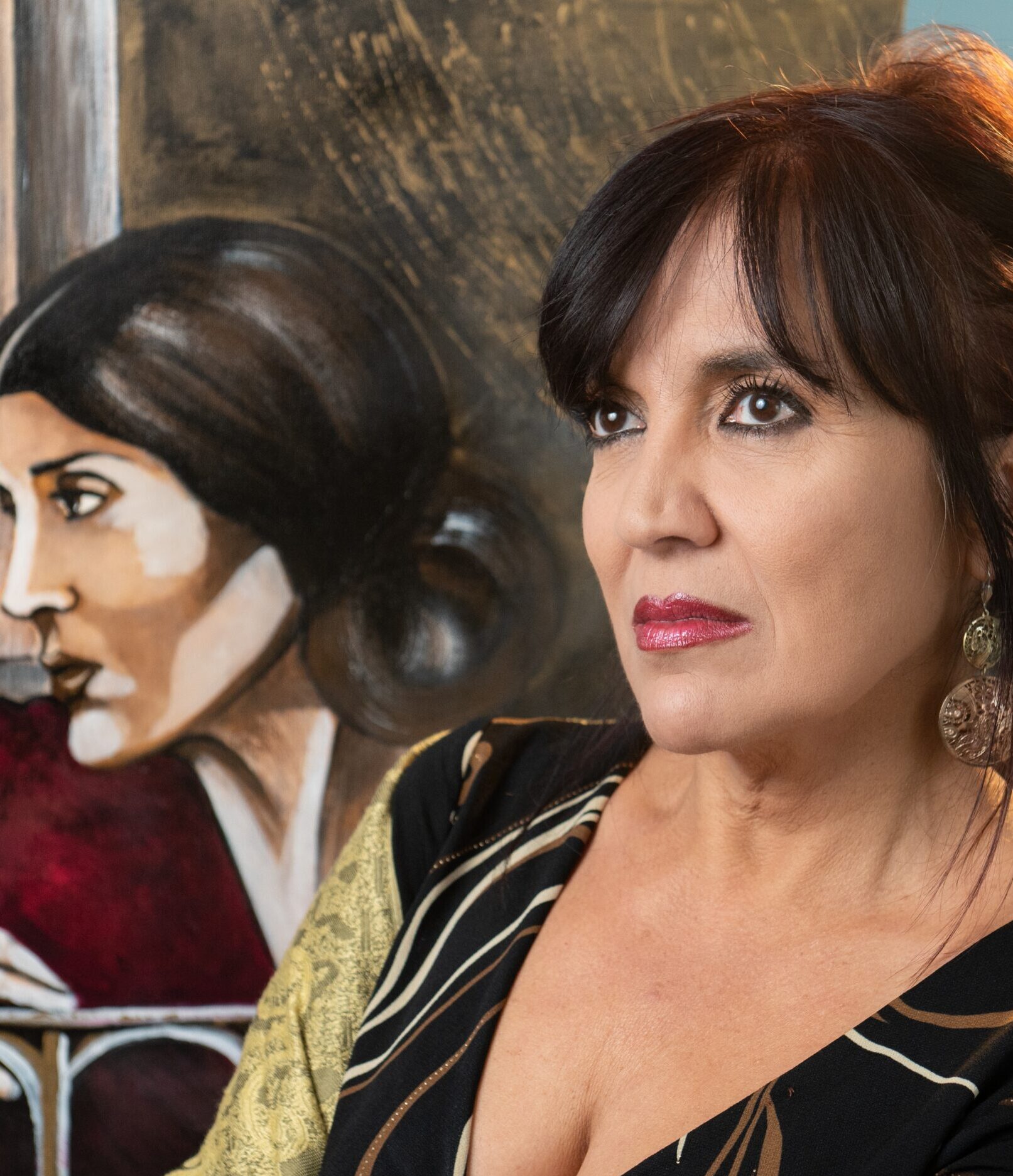
Artworks
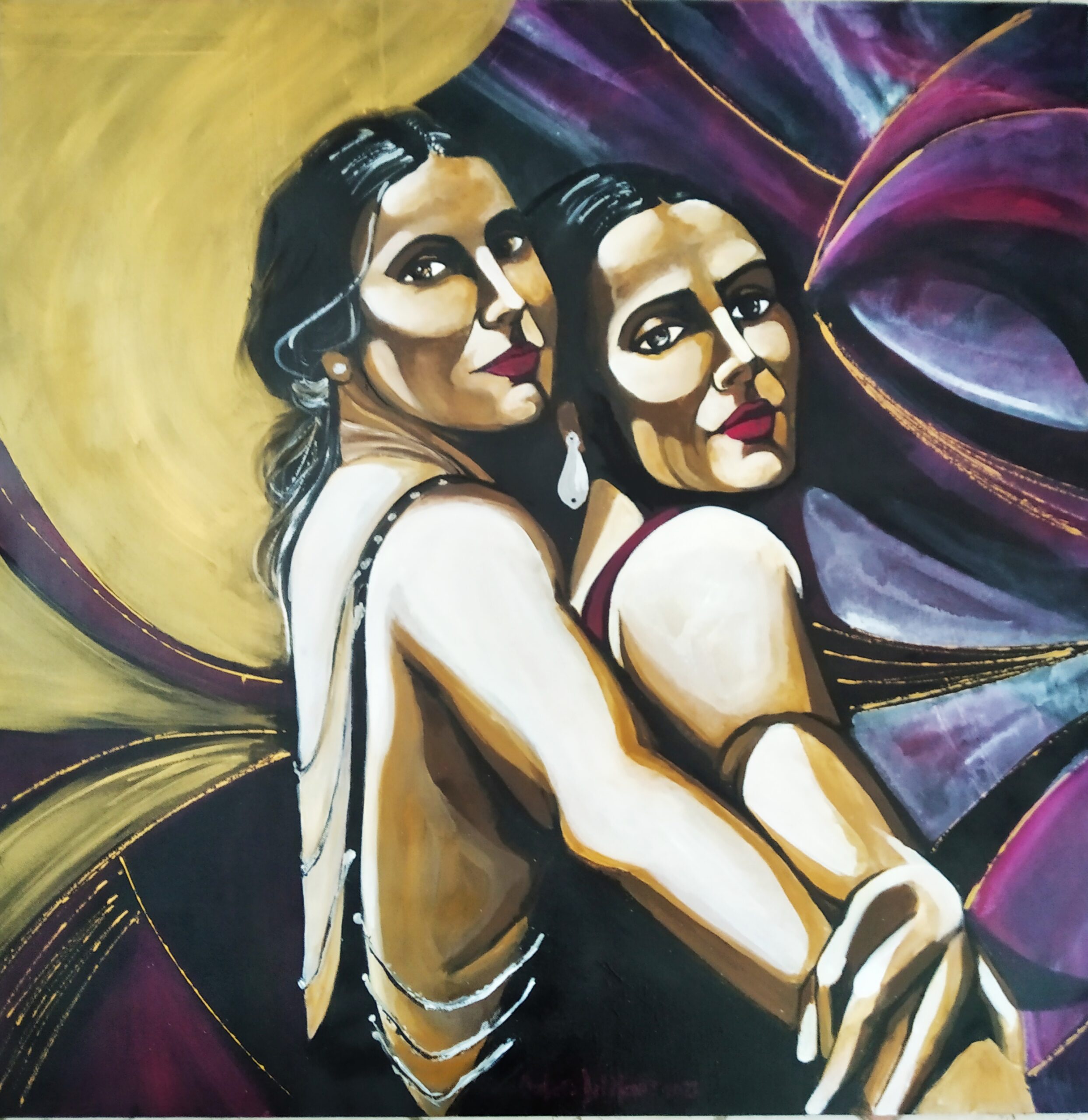
Danzo con te
- 2022
- 80 cm x 80 cm
- Acrylic on canvas
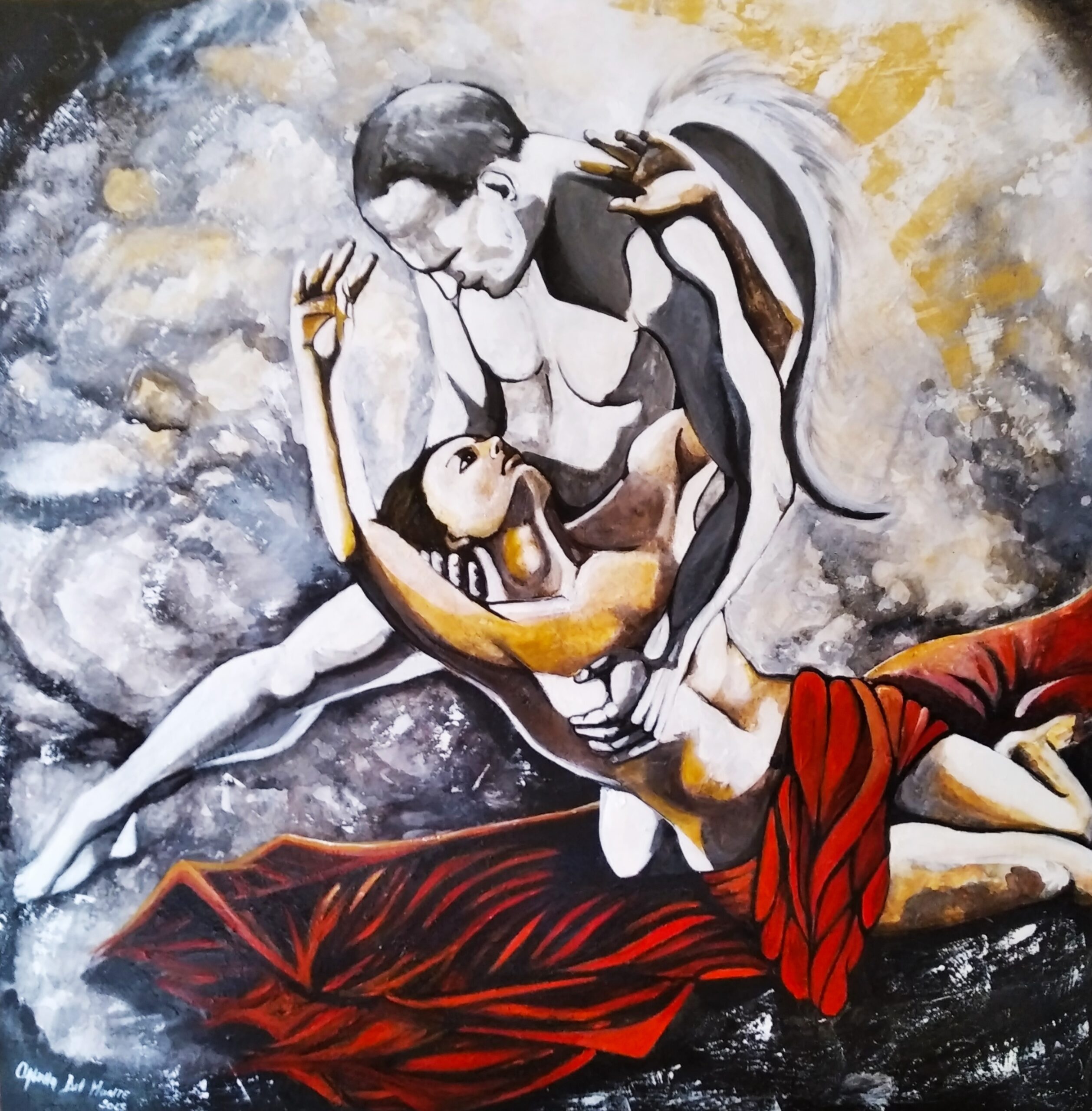
L’abbraccio dell’angelo
- 2023
- 100 cm x 100 cm
- Acrylic on canvas
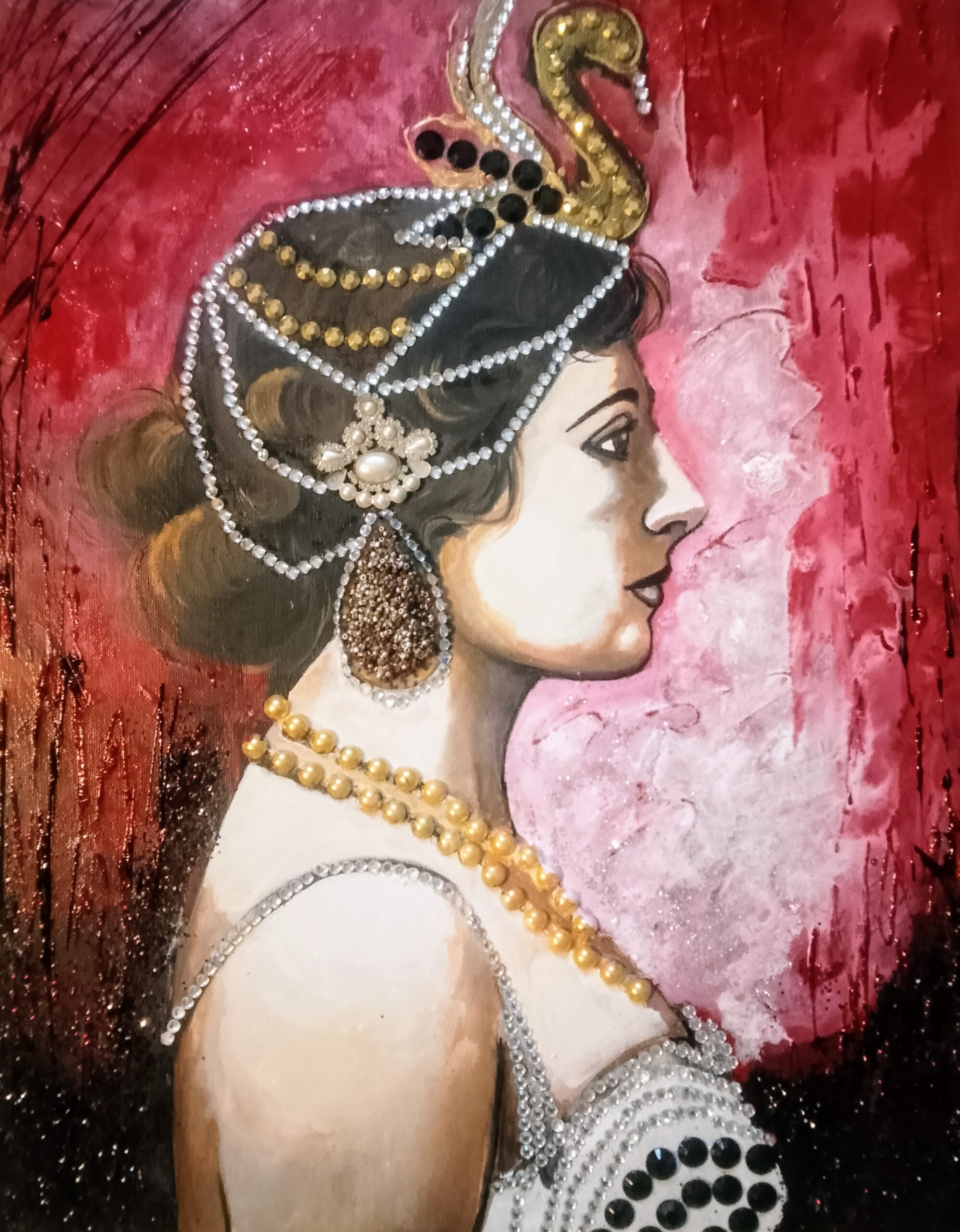
Mata Hari
- 2024
- 40 cm x 50 cm
- Applied arts