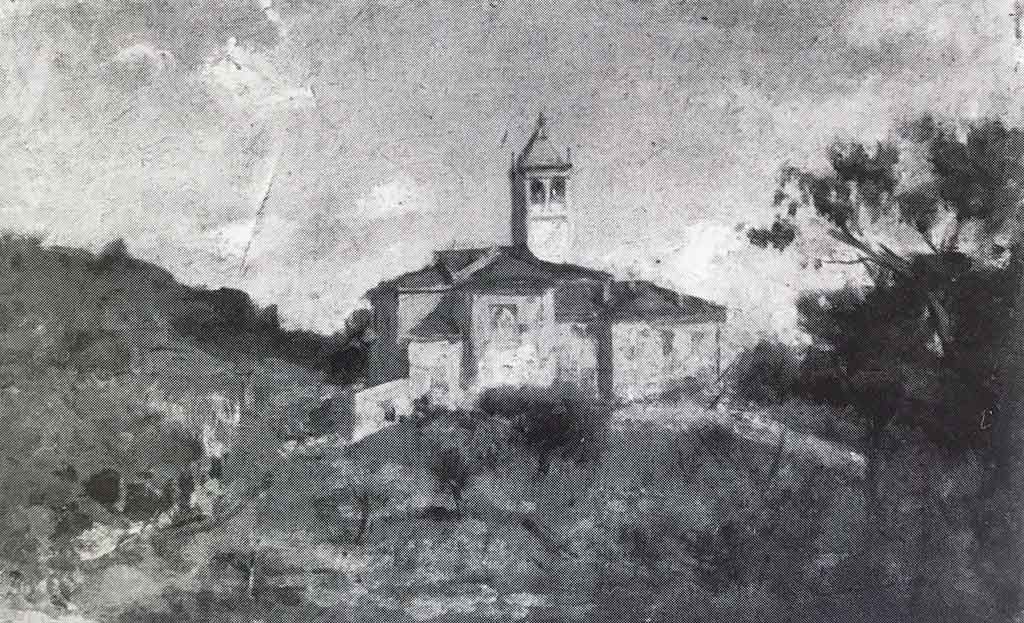
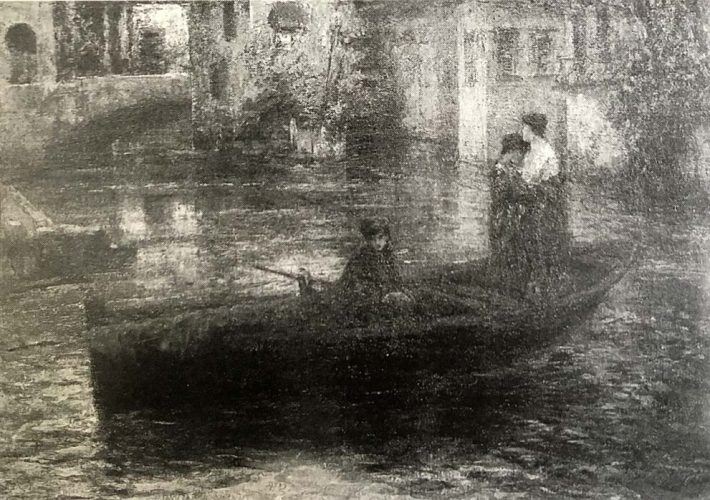
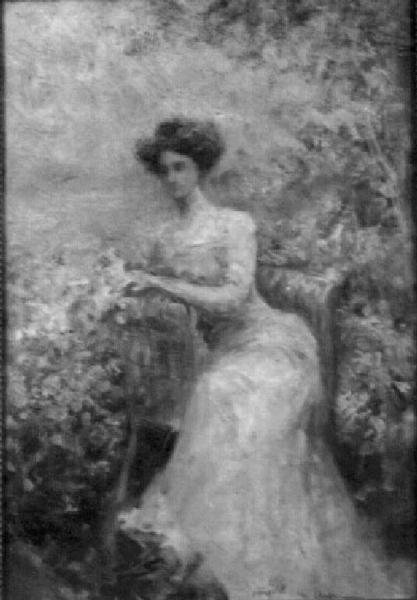
Carlo Arpini, born in Ancona in 1866 and passing away in Monza in 1922, initially pursued commercial studies before turning to painting, attending the Accademia di Brera in Milan. After settling in Monza, he became an avid traveler, spending time both in Italy and abroad. Arpini specialized in landscape painting, creating views of the Lombard plains and marine scenes rich in light effects. He debuted at the 1885 Brera Exhibition, beginning an active exhibition career mainly in Milan and Turin. While his primary focus remained landscapes, he also explored genre subjects and became involved in social themes. His works, while firmly grounded in realism and the depiction of nature, also carry a symbolic dimension, with a poetic and melancholic tone that pervades many of his landscapes. Arpini’s fascination with the passage of time and atmospheric changes is evident in his work. For example, in 1892, he exhibited two landscapes in Turin, “Crepuscolo” and “Impressione,” which highlight the significance of temporal variations. In these pieces, the artist demonstrates great attention to light and color changes that accompany the seasons. His brushwork, often blurred and loosely defined, allows color to emerge as the main protagonist, emphasizing the emotional and symbolic aspects of the landscape. Throughout his career, Arpini revisits these themes, as seen in his 1898 exhibition in Turin, where he presented “Poesia dei monti,” a landscape with almost literary symbolism. This symbolic and poetic undercurrent becomes increasingly apparent in his later works, such as in the 1906 exhibition where he showed pieces like “Tristi ricordi” and a painting titled with a line from Dante’s *Inferno*, evoking Virgil’s description of Lake Garda. In addition to his focus on landscapes, Arpini also addressed social issues, depicting the struggles of the marginalized and the working class. Works such as “I reietti” (1894) and “Il figlio della colpa” (1897) highlight the social difficulties and conflicts of the time. His brushwork in these pieces becomes dynamic and expressive, as seen in “I nostri operai vanno a lavoro,” which captures the cold atmosphere of a Lombard winter morning. Arpini continued to exhibit his works until 1919, participating in numerous shows and showcasing his artistic evolution, which spanned both landscape painting and social commentary. His career left a significant mark on the Italian artistic scene of his time.