Salvador Dalí
Biography and criticism
Salvador Dalí was born on May 11, 1904, in Figueres, a small town in Catalonia, Spain. From a young age, Dalí showed an extraordinary aptitude for art, fueled both by a vivid imagination and a significant family influence. His father, a notary with authoritarian tendencies, was one of the first to encourage him to pursue an artistic path, though Dalí’s approach to art would be anything but traditional. His mother, on the other hand, who passed away when Salvador was just 16, was a central figure in his life and emotional development. Dalí often depicted her in his work, such as in the famous *Portrait of My Mother*. Dalí attended the Royal Academy of Fine Arts of San Fernando in Madrid, where he met some of the most important figures in the cultural scene of the time. It was during these years that the young Salvador began to develop his unique style, blending academic influences with surrealist experimentation. During his time in Madrid, Dalí became passionate about Futurism, Cubism, and especially Dadaism, but it was with his encounter with Surrealism that his art truly took its recognizable form. His membership in the Surrealist group, led by André Breton, marked the beginning of his international career. His eccentric personality, often amplified by a series of provocative behaviors, made him a controversial yet fascinating figure, both in the art world and in popular culture. In 1929, Dalí began producing the works that would make him world-famous. His painting style, characterized by dreamlike imagery, distortions of reality, and an obsessive attention to detail, conveyed a distorted perception of the world that both fascinated and disoriented audiences. One of the most emblematic works from this period is *The Persistence of Memory* (1931), with its famous “melting clocks,” which became a symbol of the elusive nature of time, a central theme in his reflections. His ability to make the unreal and unconscious visible was one of his greatest innovations, and it remains a hallmark of his work. Dalí was not just a painter; he was a public figure in his own right. His face became a mask embodying eccentricity and genius, with his pointed mustache, flamboyant clothing, and theatrical behavior. His relationship with his muse and wife, Gala Éluard, was another crucial element of his life and art. Gala, who had a tumultuous past as a poet and the companion of Paul Éluard, became for Dalí both a lover and an artistic inspiration. Gala appeared in many of his most famous works, and their complex relationship is a constant theme in many of Dalí’s iconic paintings. Dalí’s art also expanded into other expressive forms. He worked in cinema, collaborating with Luis Buñuel on the film *Un chien andalou* (1929), which remains a landmark of surrealist cinema. However, Dalí also distinguished himself in design, sculpture, illustration, and even photography, bringing his dreamlike and bizarre world into these varied artistic realms. His ability to blur the boundaries between different disciplines and apply his vision across multiple contexts was another sign of his genius. During the 1930s, Dalí’s life took a more complex turn. His membership in the Surrealist movement became increasingly ambiguous, partly due to his desire to push beyond the limits imposed by Breton’s group, but also because of a growing disillusionment with the revolutionary social principles espoused by Surrealism. His artistic vision moved closer to an individualistic, psychoanalytical exploration of the unconscious, themes that would be central in his later work. Despite tensions with the Surrealists, Dalí never stopped identifying as a Surrealist, though his evolutionary path led him to develop a more personal language. In the 1940s, Dalí moved to the United States, where he lived for a long period. During this time, his art underwent a shift, influenced by American culture and the Second World War. Works like *The Sacrament of the Last Supper* and a series of religious paintings from the 1940s reflect this new direction. After the war, Dalí increasingly focused on the search for a “mystical” dimension through his art. In the 1960s and ’70s, Dalí became more involved in various projects related to popular culture and advertising, further cementing his status as a global icon. His provocative attitude, along with his interest in occultism and religion, continued to stir controversy and provoke discussions. Salvador Dalí passed away on January 23, 1989, in Figueres, his hometown. His death marked the end of an era for modern art, but his artistic and cultural legacy remains vibrant. Today, the Dalí Museum in Figueres, which opened in 1974, houses an extensive collection of his works, and his influence on art, culture, and fashion is as prominent as ever. His bold vision and uncompromising approach made him one of the greatest geniuses of the 20th century, capable of revolutionizing the perception of art and challenging conventions in ways that continue to inspire and provoke reflection.
Category of affiliation
- Painting
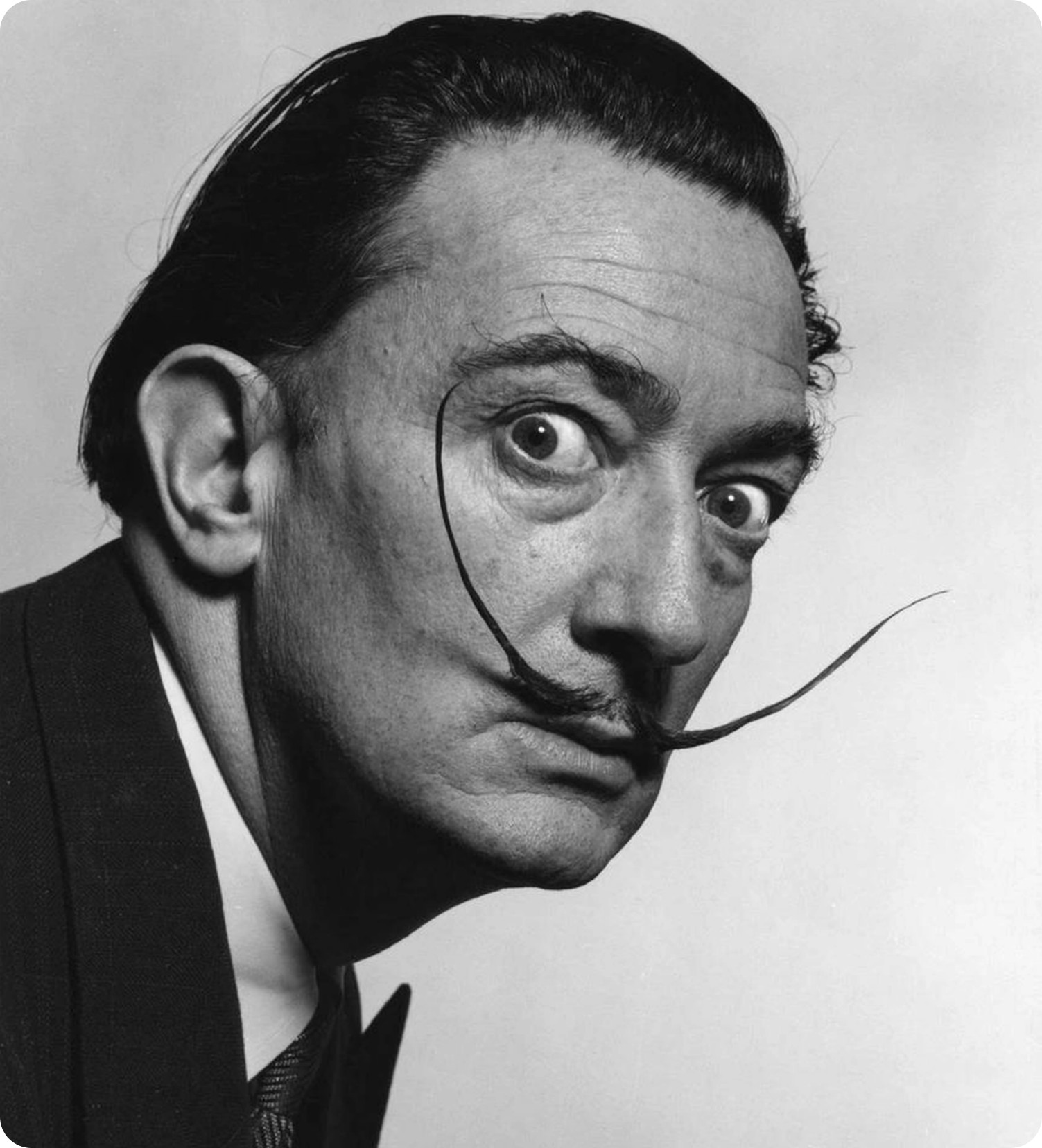
Artworks
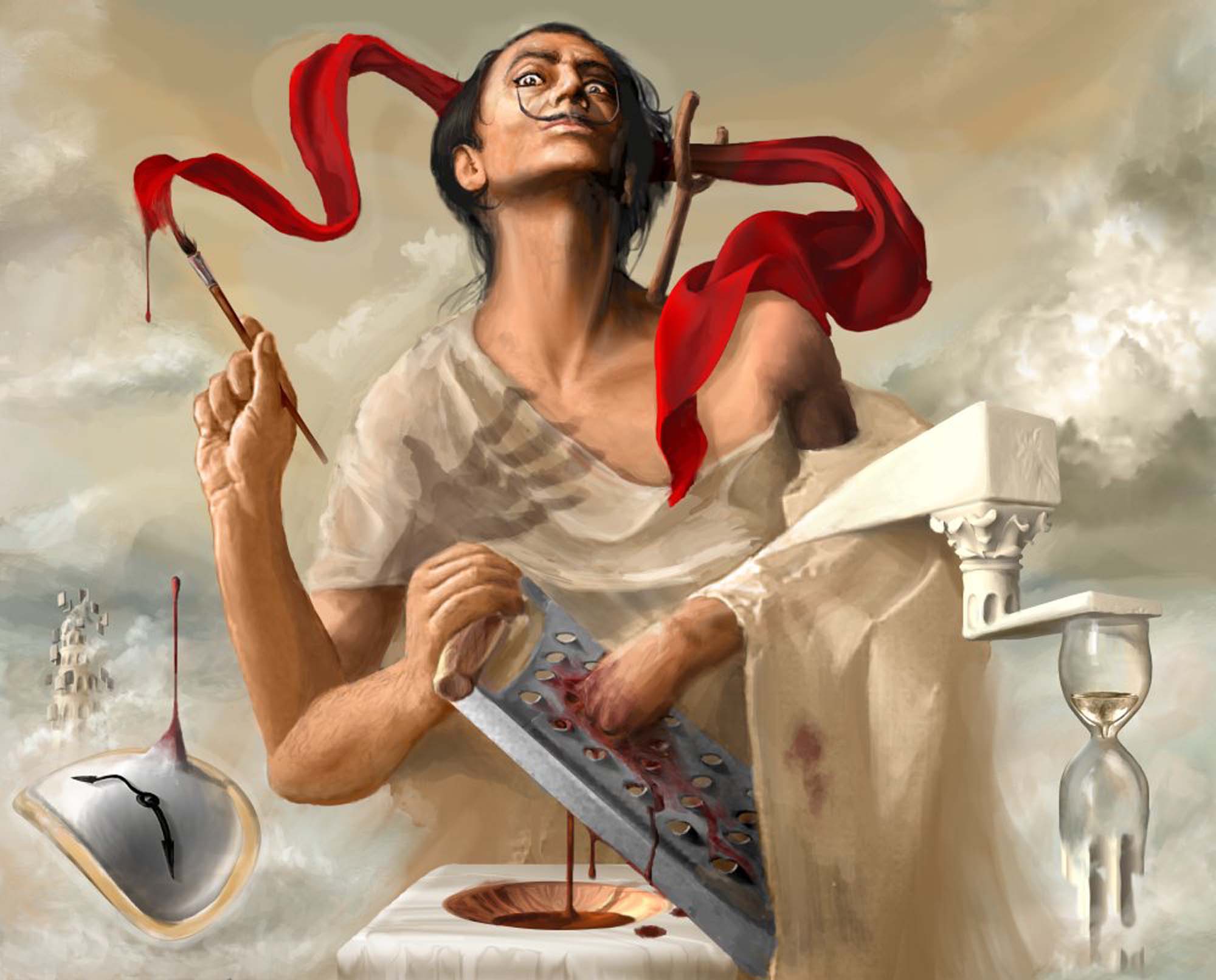
Self-portrait
- Oil on canvas
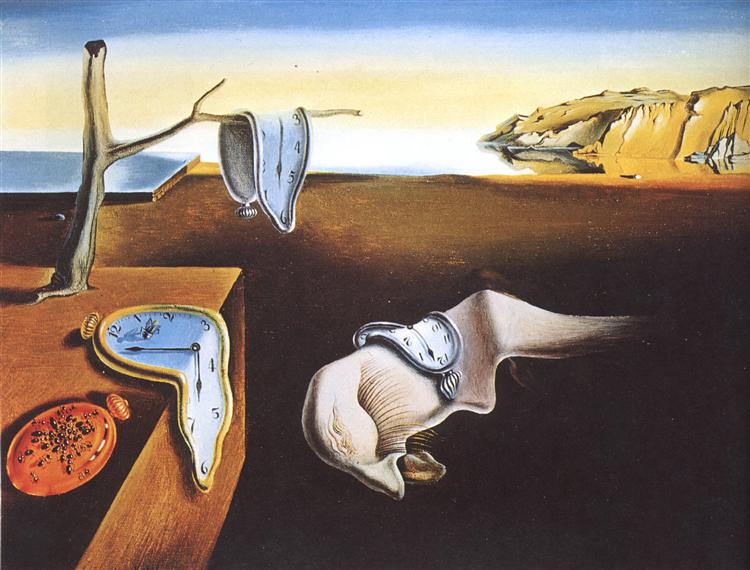
La Persistenza della Memoria
- 1931
- 24 cm x 33 cm
- Oil on canvas
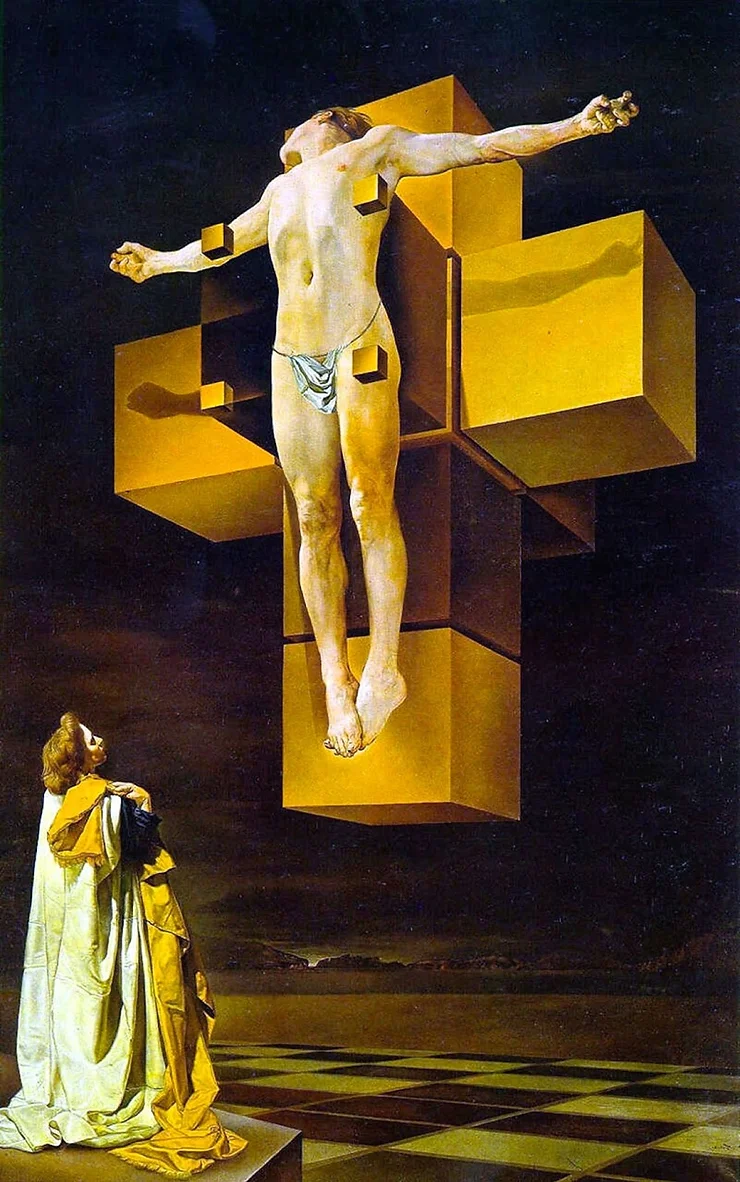
Corpus hypercubus
- 1954
- 194,4 cm x 123,9 cm
- Oil on canvas


