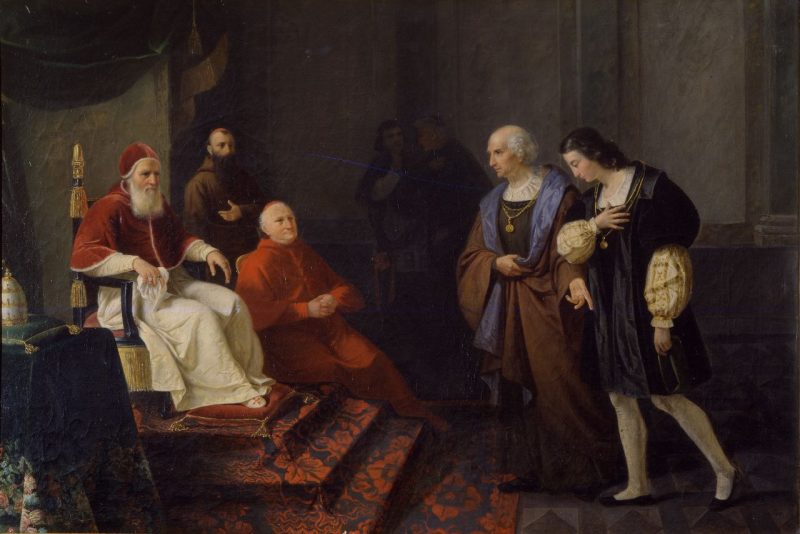
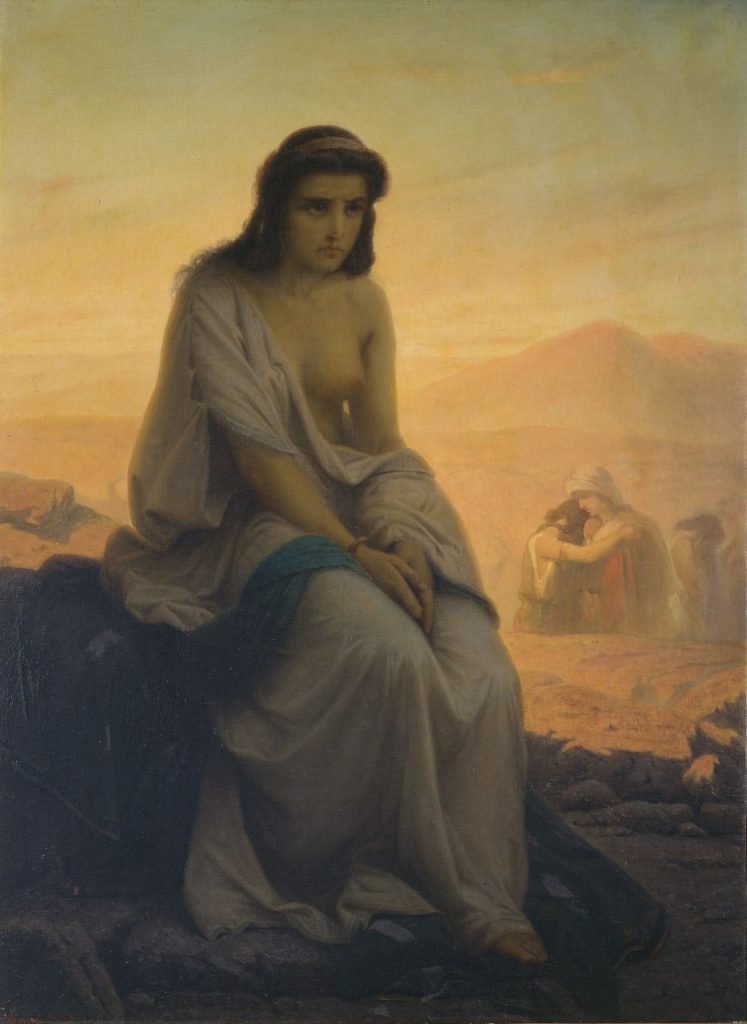
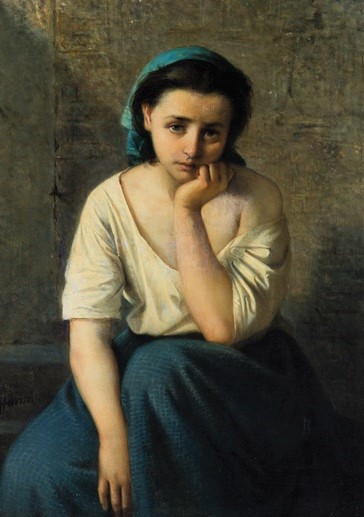
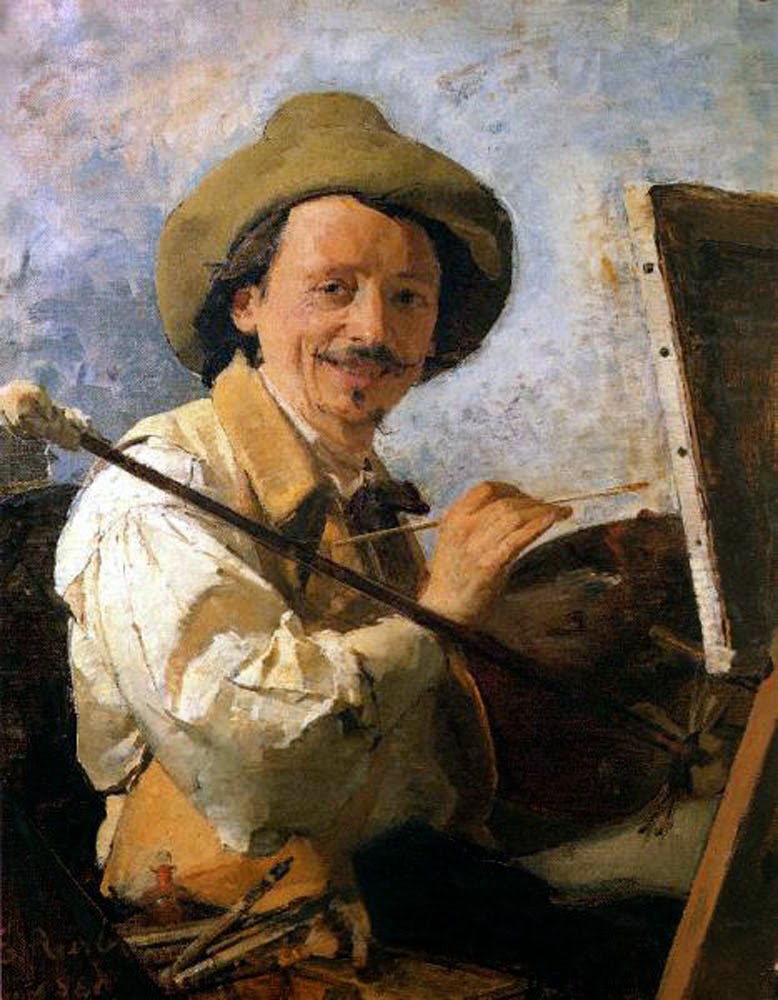
Ignazio Affanni was born in 1828 in Borgo San Donnino (now Fidenza) and died in 1889. He received a classicist education at the Academy of Parma, deeply influenced by the great Emiliano school tradition. Between 1848 and 1849, he participated in the Italian War of Independence, enlisting as a Bersagliere (a soldier in Italy’s light infantry). Affanni made his debut in 1853 with two works, Pregare Iddio per i vivi e per i morti and La Vedova (Fidenza, Municipality), which were academically executed genre scenes. His 1859 painting Bramante presents Raphael to Pope Julius II (Parma, National Gallery), however, demonstrated his ability to combine historical themes with the academic style rooted in Emilia. This work earned him a scholarship to study in Florence. In Florence, Affanni expanded his repertoire to include historical Romantic themes, with works like La partenza del garibaldino (1861, Florence, Galleria d’Arte Moderna di Palazzo Pitti), La figlia di Jeffe piange il sacrificio (1862, Parma, National Gallery), and Rebecca che guarda il monile donatole (1863, Parma, National Gallery). These paintings reflect his engagement with the emotional and dramatic elements of Romanticism. Although he increasingly explored historical and narrative themes, Affanni also continued to produce genre paintings, such as Un rifiuto (1863, Parma, Municipality) and Il primo pensiero d’amore (1864, Salsomaggiore, Municipality). In 1864, commissioned by the Italian government, he completed the painting Girolamo Savonarola in prison refuses to sign the confession extracted through torture (Parma, National Gallery), alongside The Expulsion of the Medici from Florence (1864, Fidenza, Civic Art Gallery). These works reflected his struggle to break free from rigid academic conventions, though they still demonstrated his technical skill. Later in his career, Affanni’s work began to show influences from Lombard models, as seen in the elegant composition of Donna allo specchio (1869, Piacenza, Museo Civico). The later years of his life saw a resurgence of genre works, including La venditrice di polli (The Chicken Seller), La giocatrice del lotto (The Lotto Player), La preghiera (The Prayer, exhibited in Parma in 1870), Il menestrello e la sua donna (The Minstrel and His Woman, exhibited in Florence in 1872), Un mesto pensiero alla patria (A Sad Thought for the Homeland, exhibited in Milan in 1872), Dolore e conforto (Pain and Comfort, exhibited in Milan in 1876), and Un concerto musicale del secolo XIV (A 14th Century Musical Concert, exhibited in Naples in 1877).