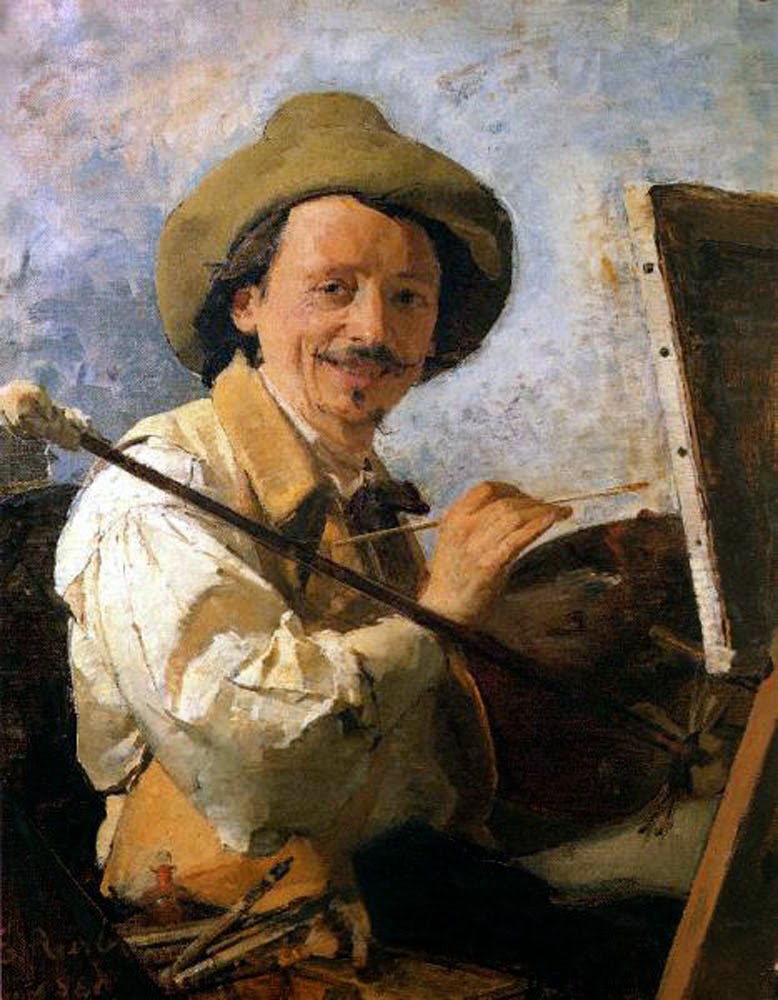
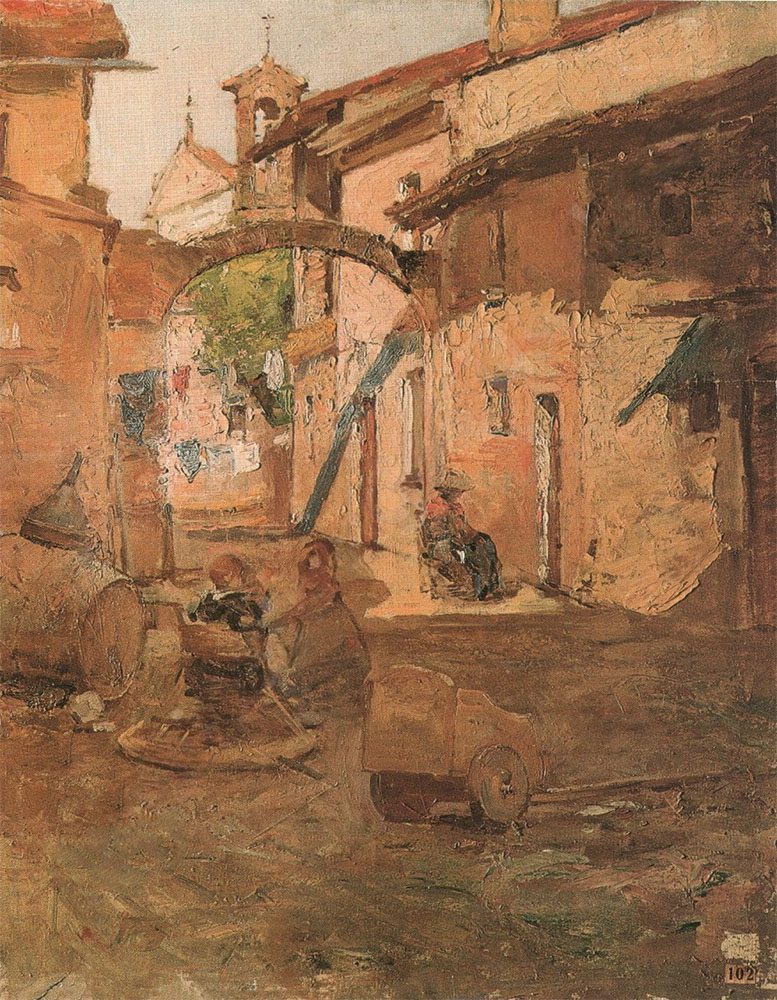
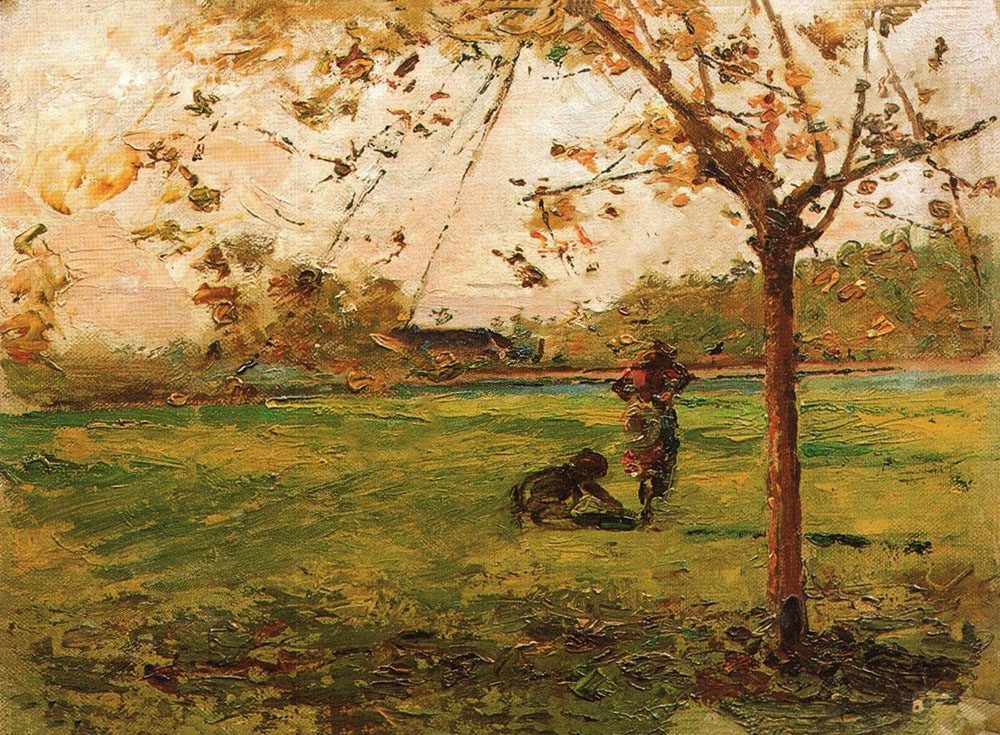
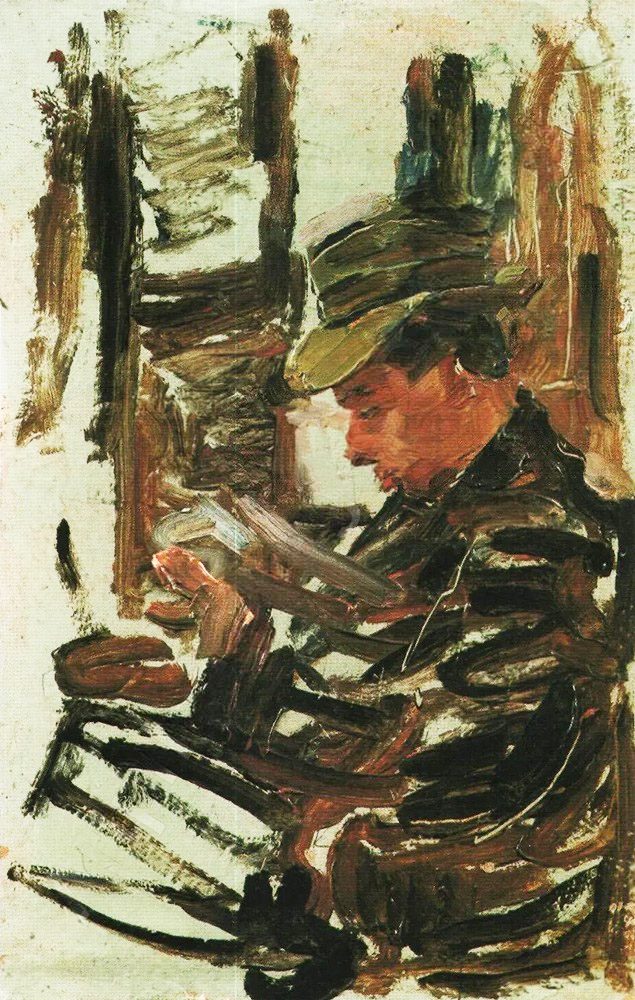
Ezechiele Acerbi (Pavia, 1850 – 1920) was born into a humble family and was the grandson of the Pavia painter Pasquale Massacra. Showing an early aptitude for drawing and painting, he began attending the Civic School of Painting in Pavia at the age of sixteen. There, he studied under Giacomo Trécourt, the director of the institution, and became one of his favored students. During his academic years, Acerbi won several prizes, particularly for historical and genre paintings. In the early 1880s, Acerbi moved to Milan, where he earned a living by teaching painting to the children of aristocratic families. He also painted small portraits and scenes on fans, catering to the demands of the market. After this brief Milanese period, he returned to Pavia in 1888. It was during this time that his artistic style matured: his work began to break free from the academic influences of Trécourt, and he increasingly focused on intimate urban and rural landscapes of the Pavia region. Color, applied with intensity and speed, became a key element of his style, both constructively and illustratively. It played a central role in his ability to communicate quickly and vividly, enriching both his figures and his landscapes. Despite ongoing financial difficulties, which forced him to take on various jobs such as portraitist, itinerant photographer, and illustrator, Acerbi continued to paint with passion and dedication throughout his life. He regularly exhibited his works in Pavia, Milan, and Turin, and several of his paintings are preserved in the Civic Museums of Pavia. He died in Pavia in 1920.