Mario Pierri
Biography and criticism
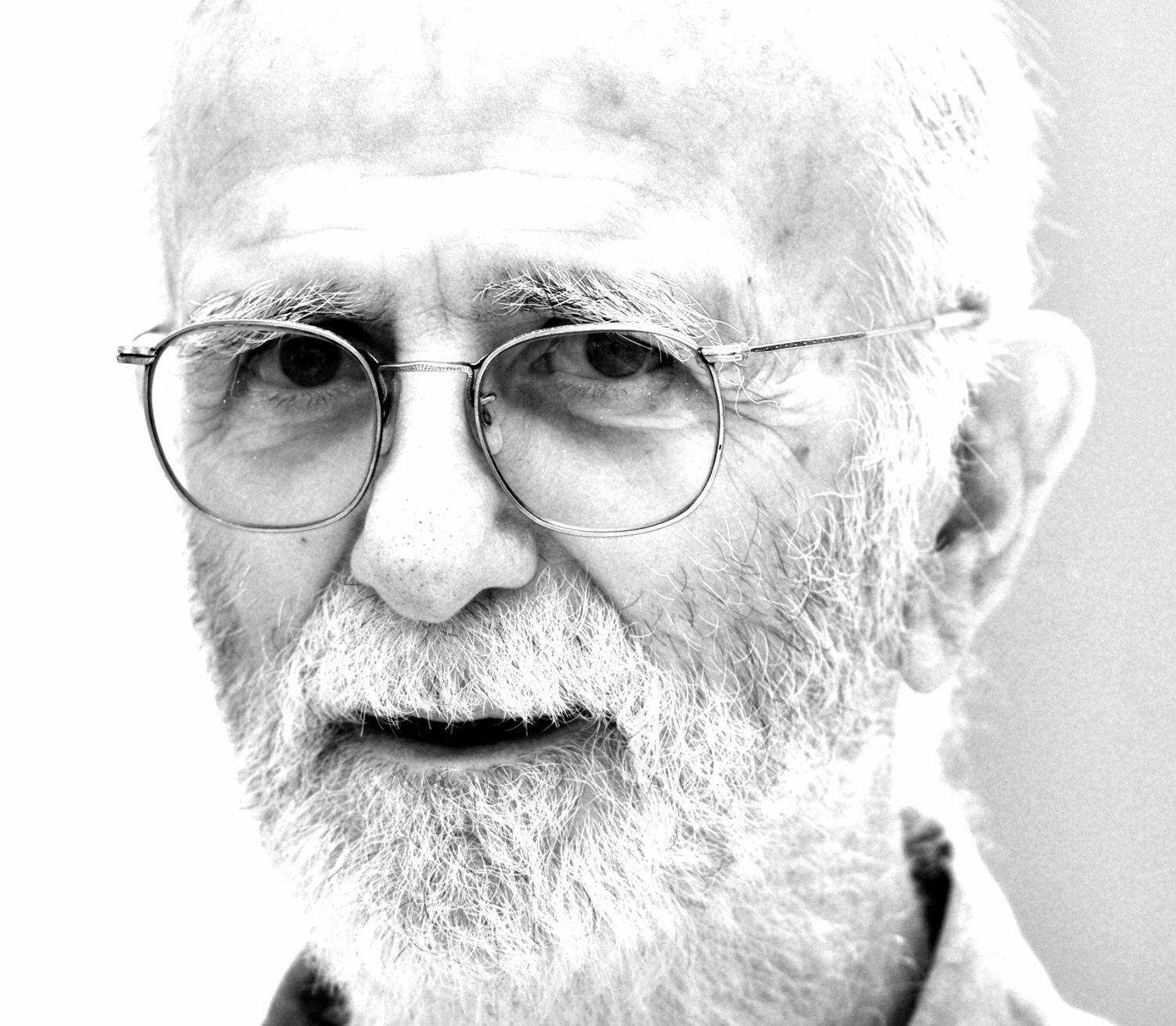
Mario Pierri (Taranto, March 3, 1936 – Taranto, December 10, 2017) Son of the renowned poet-surgeon Michele Pierri, Mario Pierri grew up in a family environment that positively encouraged the development of the arts, surrounded by prominent artists and intellectuals. Some of his most significant encounters include Carlo Betocchi, Piero Mandrillo, Giacinto Spagnoletti, Alfredo Calabrese (sculptor), Angelo Pierri (painter and his father’s brother), and later, the Milanese poet Alda Merini. His first works date back to the 1950s, and in 1965, he held his first solo exhibition at the Galleria Taras of the E.P.T. in Taranto, presented by the critic Piero Mandrillo. That same year, he participated in the Second Biennale of Contemporary Italian Engraving at the Galleria Taras in Taranto and in the National Exhibition of Painting for Lawyers and Prosecutors in Bari, where he received the Lion of Bari’s gold medal. In 1966, he was invited to the First National Fair of Figurative Arts in Bari, marking another important step in his artistic journey. Since then, he participated in numerous group and solo exhibitions in both painting and graphic arts. In 1987, invited by the Municipality of Milan, Pierri exhibited a broad selection of graphic works at the Galleria di Palazzo Sormani, with a presentation by the critic and poet Enzo Fabiani. On this occasion, Fabiani wrote: “For Mario Pierri, making art is a non-violent, non-ideologically adulterated search, a search for aesthetic and poetic truth that manifests in the vivid reflections of nature, in the movements of bodies, and in the invisible silence that only authentic artists are able to express.” This silence, according to Fabiani, evokes the contemplative atmosphere of Masaccio’s frescoes. Pierri’s father, Michele Pierri, keenly observed during the 1987 Milan exhibition: “In Mario’s recent graphics, I see a fundamental point that highlights his artistic validity: the figurative informality in him, even when employed, enriches itself with details that betray the utility or aesthetic beauty without ever falling into a superficial or commercial interpretation.” This judgment extends to the entirety of Mario’s artistic path, which carefully navigates between provincial tradition and the pitfalls of Informal art. Critic Giacinto Spagnoletti highlighted Pierri’s “earthy” yet deeply cultural approach, noting that he succeeded in merging his art with the land of his origins: “Mario Pierri knows that reality has changed, but he speaks of it with a dramatic humility, which translates into a visual poetry that springs from the depths of the earth and history.” Painter and critic Elio Santarella emphasized how Pierri found inspiration in silence and introspection: “His production is full of dreamlike references, memories that evoke the past and the dramas of reality.” Alda Merini, on the occasion of the Milan exhibition, remarked with psychological depth: “Mario Pierri is a man of absolute pluralisms, a cultivator of measured nostalgias. His art, made of opposing figures of ice and passion, tells the story of the South, with its olive trees, distances, and clamors.” In 1989, Pierri presented his solo graphic exhibition “The Validity of Nature” in Crispiano (TA), curated by the “C. Natale” Civic Library. Alfredo Calabrese, sculptor and scholar, noted how the artist lived in isolation, yet dedicated himself to his art with a commitment that linked him to the tradition of past artists, while living in a southern context that seemed to imprison him. Critic Alberto Altamura, speaking about Pierri’s works, highlighted how his art is imbued with melancholy and a search for truth and beauty in the everyday details: “His works do not impoverish reality but suggest fragments of truth and mystery that surround us.” In September 1990, Pierri held a solo exhibition of graphics and paintings at the “Capece” gallery in Maglie (LE), where the painter Nicola Cesari commented on how Pierri’s art is capable of synthesizing the artistic experiences of our century, without ever being a mere re-presentation. In 1995, with the solo exhibition “Symbiosis” in Crispiano, Pierri presented a series of works that reflected the maturity of the artist, as noted by Alberto Altamura, who introduced him. In these works, the dialogue between man and nature became the central theme of his artistic inquiry. After a long absence due to professional commitments, Pierri returned in December 2013 with a solo exhibition at the Galleria Comunale of the Castello Aragonese in Taranto, titled “Revisitations of the Galeso River.” The title of the exhibition, as Pierri himself explained, was a tribute to the beauty of Taranto and its territory, as well as a call for the defense of the environment. Professor Cosimo Damiano Fonseca, a member of the Accademia dei Lincei, observed with admiration how the artist, while immersing himself in classicism, used modern artistic tools. Throughout every phase of his career, Mario Pierri demonstrated a profound search for truth, beauty, and poetry through his artistic dedication, blending tradition and modernity in an always original and sensitive interpretation of reality. The painting of Mario Pierri is a profound and vibrant reflection on the transformations in contemporary art, yet it also pays homage to the tradition that shaped him. Talking about his work inevitably means engaging with the concept of “transitional art,” a term that perfectly describes his ability to traverse and reinterpret various phases of the pictorial language, with an approach that is always respectful of history but never merely aesthetic. Pierri positions himself within a group of artists who, despite living in a time of rapid change and uncertainty, seek to construct a language that is both personal and universal, capable of engaging with the challenges of the present without losing touch with cultural roots. His approach to painting is anything but superficial. In an era of great artistic ferment, where many artists are swept up in the trends of the moment, Pierri remains anchored in an art that arises from deep reflection, from a gesture carefully considered. He does not seek novelty for the sake of novelty, but is instead driven by an inner urgency to express a feeling, a thought, an emotion that cannot be conveyed through conventional language. His painting is not a mere act of representation, but a genuine search for truth and meaning. What stands out most in Pierri’s work is his almost primordial approach to painting. His works, often characterized by bold strokes and forms that reflect a sense of essentialism, seem to evoke an ancestral dimension, a return to origins. However, this does not mean that Pierri is confined to an aesthetic primitivism; rather, his art is rooted in a past that continues to live in the present, reworked and reinterpreted with a modern sensibility. The expressive power of his canvases and engravings lies precisely in this ability to blend the “old” and the “new,” to bring tradition and modernity into dialogue, without forcing the encounter but letting it happen in a natural and organic way. His works, while sometimes evoking the cubism of Picasso or the fragmentation of other modern movements, do not reduce themselves to a formal exercise. Every brushstroke, every compositional choice is the result of an inner process that becomes visible through the painted surface. His art carries a strong symbolic charge, yet it is far from pure abstraction. His works are rich with meaning, though they do not demand an immediate rational reading. Rather, they invite a deeper reflection, made of sensations, memories, and emotions that emerge from the visual context. There is a continuous exploration of the dialogue between man and nature in Pierri’s works, an inquiry into existence that manifests through landscapes which seem to sketch out an inner world. His art, while clearly figurative, does not stop at mere representation, but opens up to a symbolic dimension that invites reflection on universal themes such as life, death, pain, and beauty. Every form and color are imbued with meaning, which slowly reveals itself to the viewer, almost enigmatically. Pierri is an artist who does not succumb to fleeting trends but remains true to a personal and authentic vision. His painting has the strength to speak beyond the fashions of the moment, to convey a message that is not bound to the time in which it was created but has a universal quality, capable of transcending time and space. His art is infused with a deep humanity, with a search for truth that does not limit itself to aesthetics but seeks to uncover the mystery hidden behind every human gesture. Ultimately, the painting of Mario Pierri is an artistic expression that challenges time and conventions. It is an art that is deeply rooted in tradition, yet at the same time knows how to renew itself, looking with fresh eyes at the aesthetic challenges of the present. It is an art that speaks directly to the heart and soul, inviting continuous reflection on the human condition and the beauty that lies in the simplest details and in the silence of things. Through his works, Pierri not only tells a story but invites us to write together with him a new chapter in our understanding of the world and of art.
Category of affiliation
- Painting
Technique
Painting
Quotations
The highest market valuation achieved with a painting is €3.500,00
Artworks

Lampare alla Marina di Taranto
- 2015
- 70 cm x 80 cm
- Acrylic on canvas

La siepe di Crispiano
- 1993
- Acrylic on cardboard

Natura morta
- 1992
- 40 cm x 50 cm
- Oil on canvas


