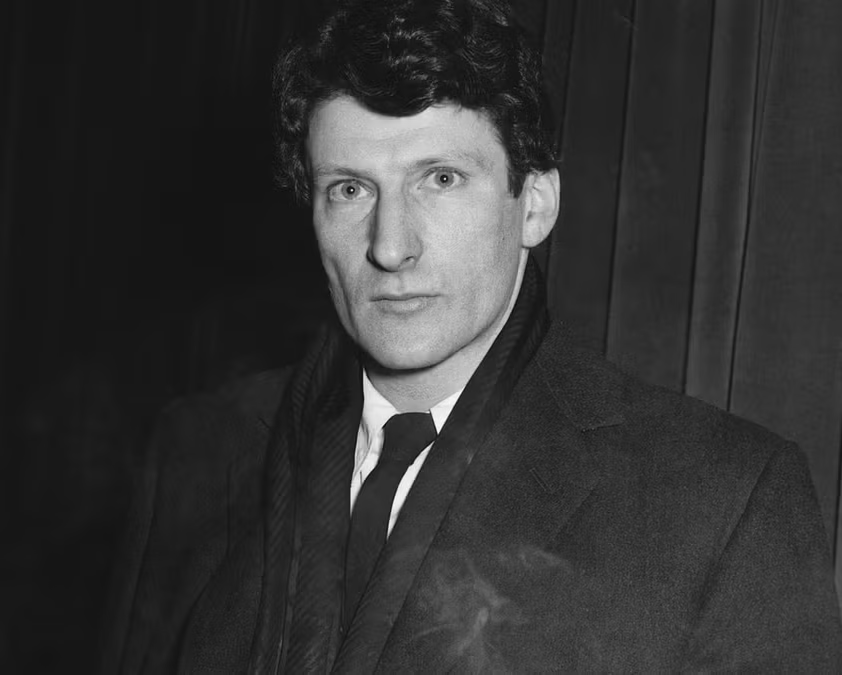
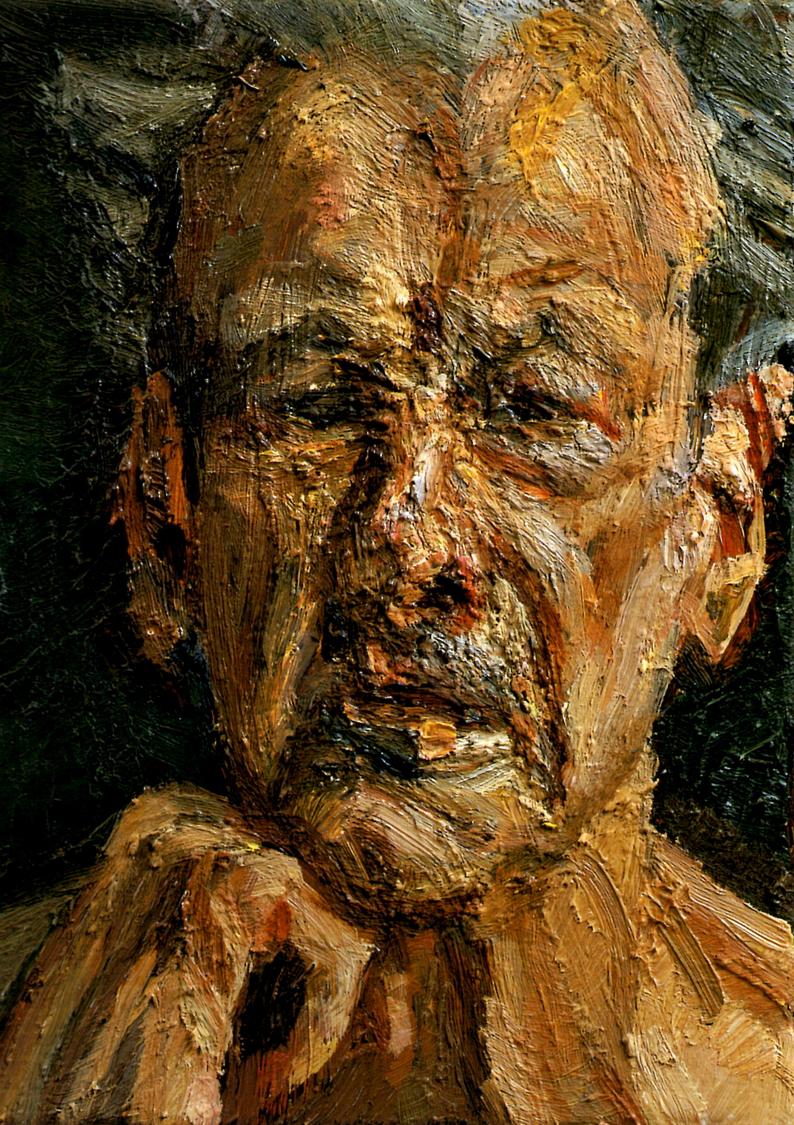
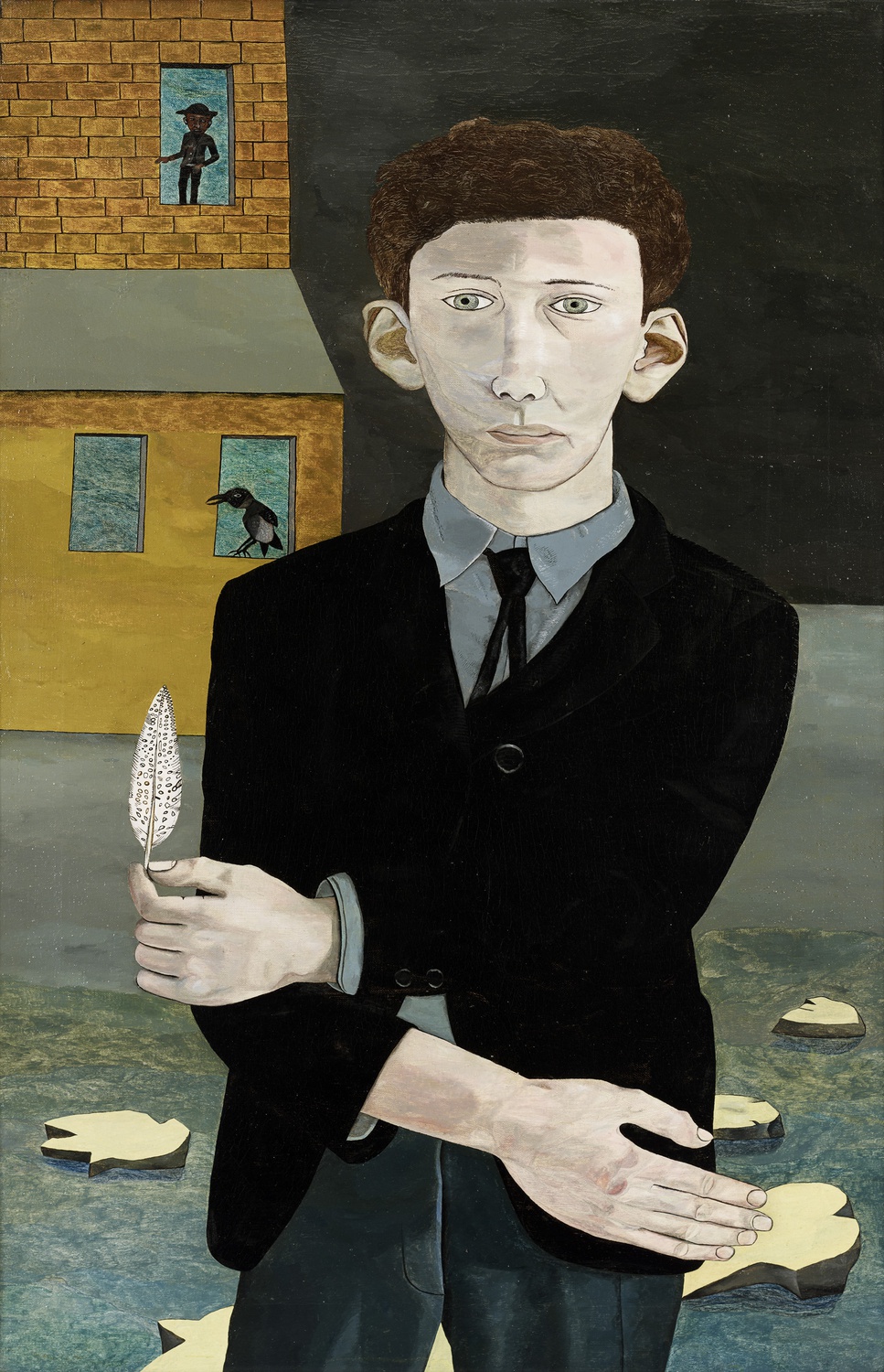
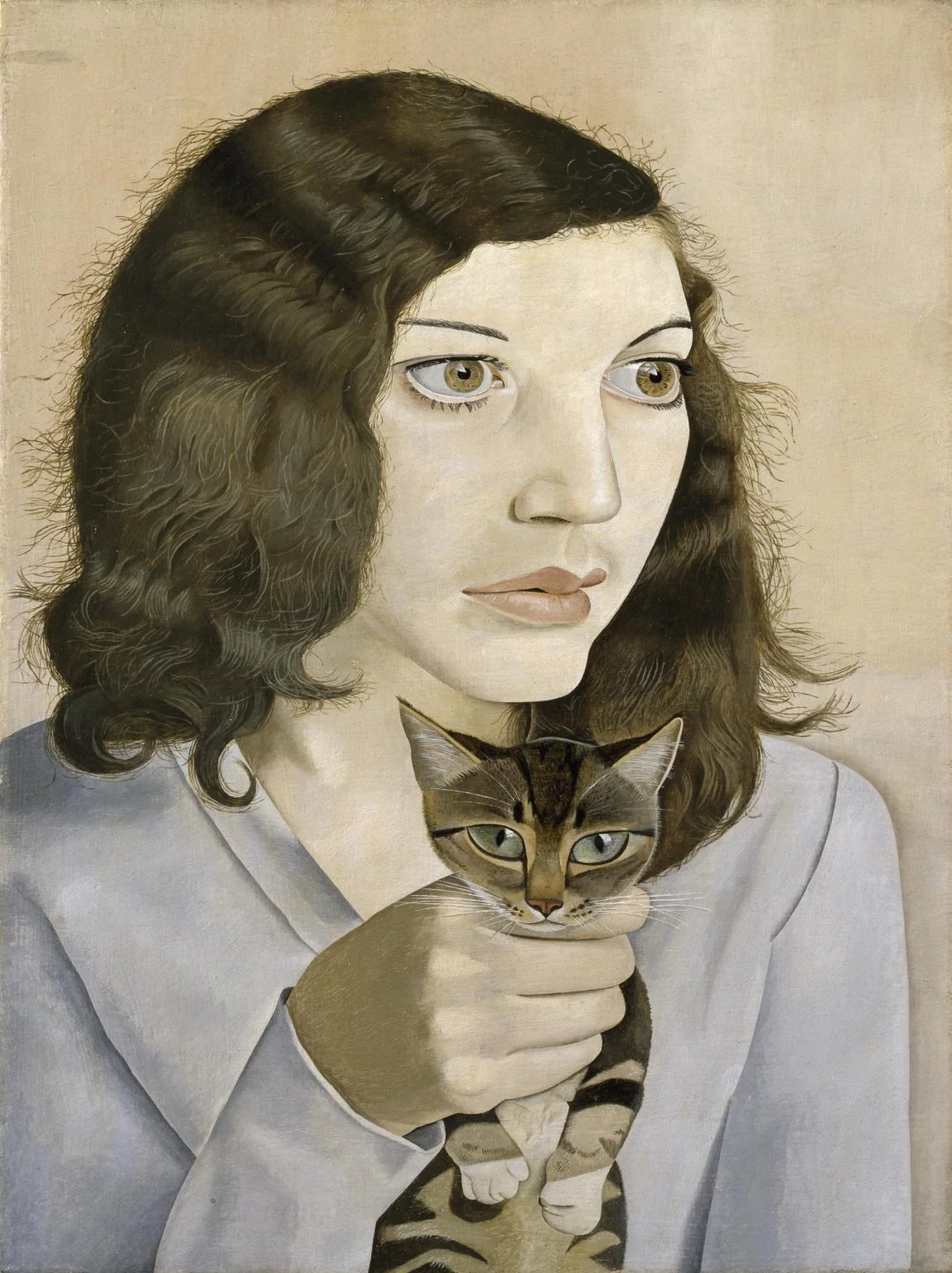
Lucian Freud (1922-2011) was one of the most influential painters of the 20th century, known for his raw and psychologically penetrating portraits. Born in Berlin, he moved to London with his family in 1933 following the rise of Nazism. His art, heavily influenced by the Neue Sachlichkeit and artists like Egon Schiele, is characterized by realism and emotional intensity, especially in his famous nudes and family portraits, where he delves into the physicality and psychology of his subjects. Freud was a charismatic man, known for his turbulent private life, which included numerous relationships and a prolific offspring, with at least 14 confirmed children. His family was often the subject of his artistic work, though his portraits, especially those of relatives, were often controversial, such as in the case of *Bella* (1982-83), which depicts his daughter nude in a disturbing manner. His career ran parallel to an intense passion for gambling, which also led to him being banned from racecourses in 1965 due to debts. Nonetheless, Freud remained fascinated by horses throughout his life. Even his portraits of public figures, like the famous *The Brigadier* (2003-04), are renowned for their unsparing treatment of the subjects, portrayed with an “unshakable cruelty.” Throughout his career, his style evolved, moving from more rigid brushwork to a looser, freer touch, which brought him closer to masters like Rembrandt and Titian. Freud remained steadfast in his commitment to figurative painting, resisting the prevailing trend toward abstraction. His work culminated in a series of self-portraits and portraits that combined refined technique with deep psychological analysis. His works, including miniature copper paintings and a vast body of prints, have been the subject of numerous studies and exhibitions, celebrating his legacy both as a painter and as a legendary figure. Although his later works, like *Sleeping by the Lion Carpet* (1996), were less appreciated for their lack of innovation, his impact on figurative art remains immense, further solidified by recent publications that explore various aspects of his work.