Lola Álvarez Bravo
Biography and criticism
Lola Álvarez Bravo (1903–1993) was a pioneering Mexican photographer, widely regarded as the first female Mexican photographer to achieve significant recognition. She played a crucial role in the post-revolution Mexican renaissance, using her lens to capture the cultural and social transformations of Mexico in the early 20th century. Her work was celebrated for its exceptional compositional skill and artistic depth, earning her recognition as a fine artist. In 1964, she was honored with the Premio José Clemente Orozco (José Clemente Orozco Prize) for her contributions to photography and her efforts to preserve Mexican culture. Her works are part of the permanent collections of prestigious international museums, including the Museum of Modern Art (MoMA) in New York City. Álvarez was born in Jalisco, Mexico, and moved to Mexico City as a child after her parents separated. She lived with her father until his death, after which she was sent to boarding school by her half-brother. In 1922, she enrolled at the Escuela Nacional Preparatoria, where she met Frida Kahlo, who would become a lifelong friend. Around the same time, Álvarez married photographer Manuel Álvarez Bravo, who taught her photography and development techniques. She worked as his assistant for nearly a decade, but the marriage ended in separation in 1934, as Álvarez sought to pursue her own artistic path. Álvarez’s career began as a teacher, but she also took on photographic assignments for magazines and newspapers, gaining a reputation as one of Mexico City’s few female photojournalists. Her work stood out for its candid, socially conscious portrayals of Mexican culture, focusing on the deeper meanings of everyday life rather than chasing sensational or newsworthy stories. In 1935, she began working for the Department of Education, cataloging photographs, and in 1937 she was appointed to lead the photography workshops at the National Autonomous University of Mexico, a position she held until her retirement in 1971. Beyond photojournalism, Álvarez Bravo was involved in promoting the work of contemporary Mexican artists. In 1951, she opened the Galería de Arte Contemporáneo, where she hosted exhibitions of various Mexican artists, including Frida Kahlo. In fact, she organized the only exhibition of Kahlo’s work held in Mexico during the artist’s lifetime, in 1953. Álvarez’s reputation grew internationally in the late 1970s, and she continued to receive recognition for her photographic legacy until her death in 1993. Her photographic archive is now housed at the Center for Creative Photography in Tucson, Arizona, preserving her legacy as a central figure in Mexican photography and culture.
Category of affiliation
- Photograph
Artworks
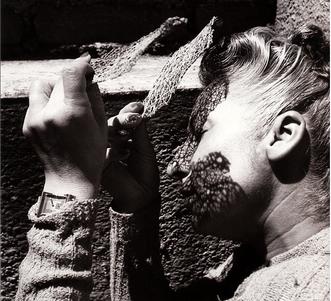
Burial in Yalalag
- 1946