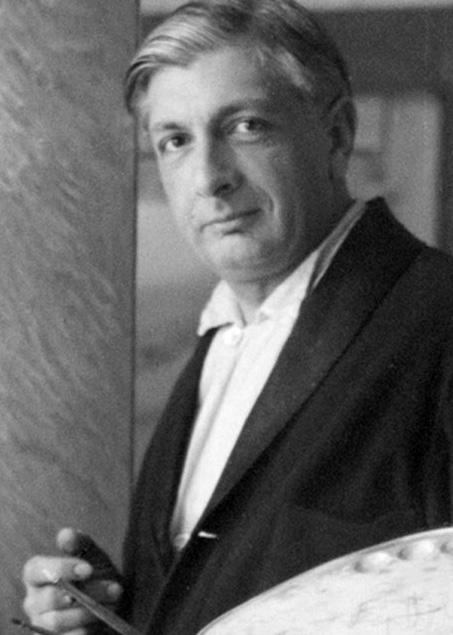
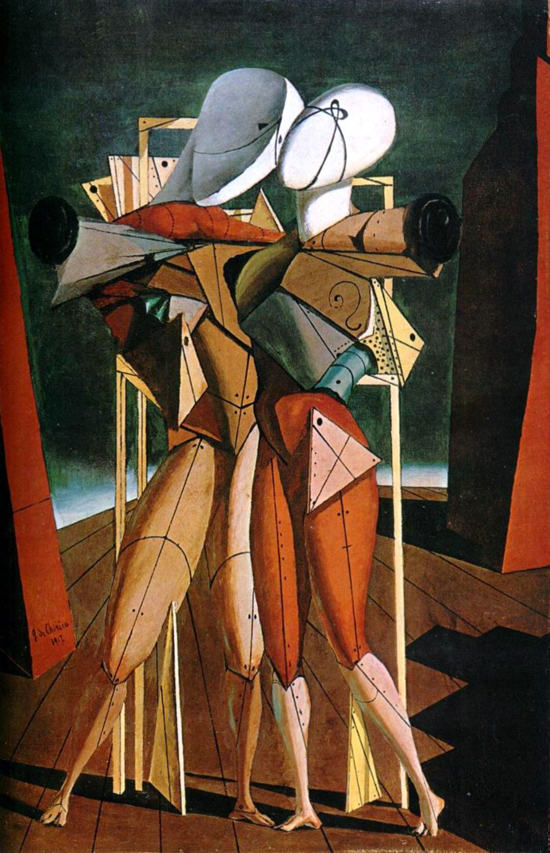
Giorgio de Chirico was born on a warm summer night in 1888 in Valos, a town in Thessaly, Greece, where his father, Evaristo (an engineer from Constantinople with Italian roots), was building a railway. His mother, Gemma, was born in Smyrna to a Genoese family. In the 1890s, the family moved to Athens, where Giorgio’s younger brother, Andrea, was born. Andrea would become the most important emotional connection in Giorgio’s life. In Athens, de Chirico studied classical subjects, music, and drawing under the guidance of the artist and future director of the Archaeological Museum, Jakobides. Despite being a center of neoclassicism rather than authentic classical antiquity at the turn of the 20th century, Athens had a profound impact on de Chirico’s education. The city was dominated by German culture and language, and its architecture was largely shaped by Bavarian architects. The de Chirico family was even neighbors to the famous archaeologist Heinrich Schliemann. In 1905, the death of his father deeply affected the family. Giorgio and Andrea decided to leave Athens and continue their studies in Munich. This marked the beginning of Giorgio’s lifelong journey. Although initially planning to go directly to Germany, the brothers decided to stop in Italy to explore a country they felt connected to, despite not knowing it well. They eventually made their way to Munich. In Munich, de Chirico became involved with a group of Greek intellectuals led by the architect Pikionis. He frequented the composer Max Reger’s circle, studied the works of philosophers such as Feuerbach and Schopenhauer, and grew disillusioned with the Secessionist movement. He developed a deep admiration for the romantic painters Arnold Böcklin and Max Klinger, whose mythological themes and mysterious, enigmatic atmospheres would influence de Chirico’s own work. These early artistic and philosophical interests helped shape his later, iconic style, characterized by dreamlike and unsettling imagery rooted in classical mythology and personal, often cryptic, symbolism.