Fabrizio Pruscini
Biography and criticism
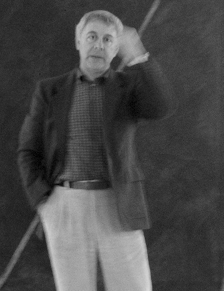
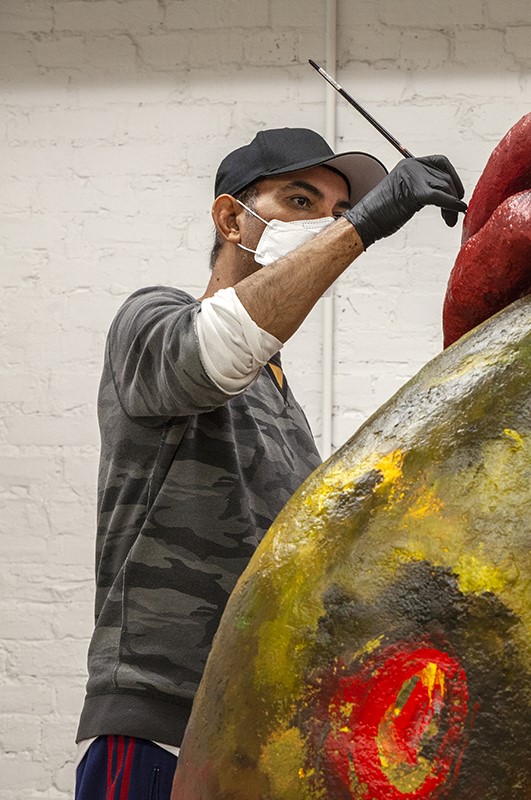
Fabrizio Pruscini, known as Pruscini Da Cavargine, was born in Città di Castello, in the province of Perugia, on July 23, 1963, where he lives and works. From his adolescence, he has had a passion for painting and writing poetry. He has received significant recognition in both painting and poetry, participating in numerous collective and solo exhibitions. He has been featured in books, yearbooks, magazines, and art catalogs. His works are permanently displayed in several art galleries in Italy. Among the recent international group exhibitions, notable ones include those in Cologne (Germany), Paris (France), Barcelona (Spain), the Duchy of Cornwall and Liverpool (England), Bangkok (Thailand), and Kerkyra (Greece). His works are also housed at the Italian Cultural Institute in Moscow, Russia. On October 25, 2014, he was named an “Academic” by the Academy of Applied Sciences of Rome for his creative artistic flair. In 2017, he received an Honorary Degree from the International Academy of Dioscuri of Taranto for successfully promoting art in Italy and abroad. In 2020, he was awarded an Honorary Master’s Degree in Art from the Maison d’Arte Academic Center in Padua. He has been described as a conceptual artist who does not follow any artistic trend but is in a constant search for a personal language that makes him easily recognizable in the international art scene. Professor Rosario Pinto, who has historicized his work, referred to his painting as “the painting of freedom.” Pruscini is a self-taught artist by choice. Fabrizio Pruscini, known as Pruscini Da Cavargine, stands out for his ability to express deep emotions through an artistic language that plays with the deconstruction of ideas and a palette rich in chromatics. His works are filled with flashes of warm colors that alternate with subtler shades, creating a rhythm that seems almost geometric and modular. These color and form games are a fundamental aspect of his art, which blends expressive exploration with a strong personal quest for creative freedom. Pruscini’s painting is never random. Every composition is an act of creation where the image becomes a symbol, a representation that transcends the mere figurative to become a visual reflection on freedom and the search for a unique language. His works do not simply reproduce reality but seek to interpret and transform it, giving rise to visions that can also be mysterious, as if telling stories hidden between light, shadows, and forms suspended in time. In many of his works, the use of color and light almost seems like a dance. The chromaticity not only colors the canvas but fills it with life, creating atmospheres that seem to vibrate and evade the gaze, like waves spreading across the surface. What emerges is a sense of suspension, as if time has stopped and the canvas has become a container of memories and sensations. Pruscini Da Cavargine’s painting is, essentially, a revisitation of memory, fragmented and fantastically recomposed. Every visual element is selected and reorganized with sharp sensitivity, both perceptual and cultural. What appears on the canvas is a fusion of visual and psychic components that give life to a language in constant movement, rich in meaning and emotions. Finally, his artistic research never stops, and it is interesting to note how it is based on a continuous play of geometric shapes that alternate and transform within the canvas, creating a dynamic rhythm that makes each work unique and in constant evolution. Pruscini Da Cavargine invites us to look beyond the surface, to perceive the world through the filter of his art, where every mark, color, and form tells a larger story, that of creative freedom and personal expression.
Category of affiliation
- Painting
Technique
Mixed media on wood / Acrylic on canvas
Quotations
The highest market valuation achieved with a painting is €4500
Critiques received from
Prof. Paolo Levi, Prof. Risario Pinto, Dr. Giorgio Falossi, Prof. Valter Curzi, Dr. Russo Salvatore, Dr.ssa Annamaria Biondolillo, Dr.ssa Monica Serra, Prof. Gianluigi Guarnieri, Prof. Lanfranco Rosati, Dr.ssa Carla D’Aquino Mineo, Prof.ssa Nadine Giove.

Artworks
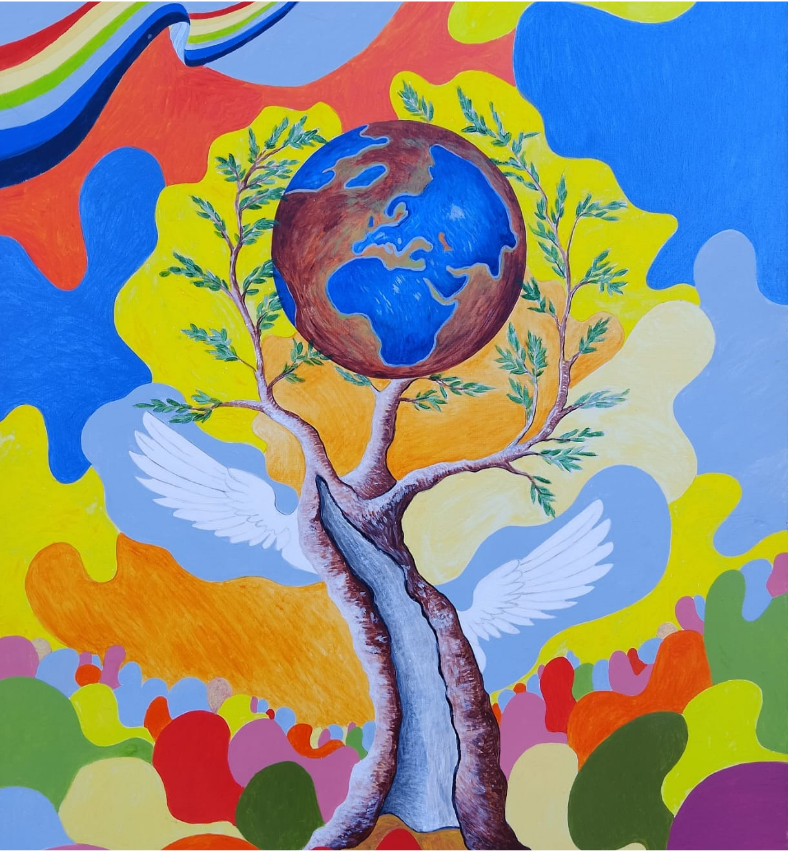
L’Ulivo della pace
- 2020
- 50 cm x 70 cm
- Acrylic on canvas
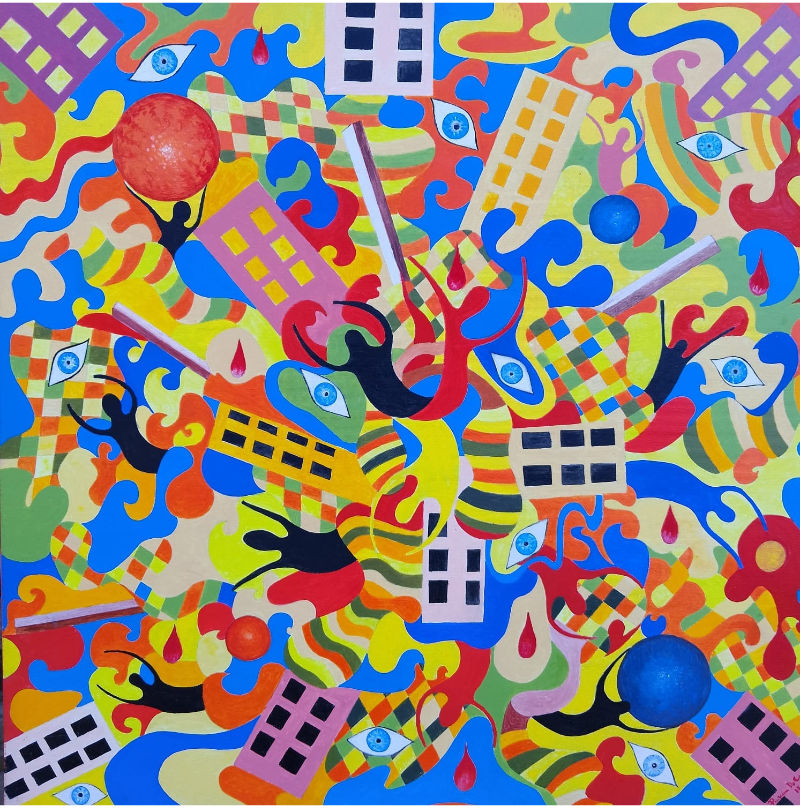
Vita moderna
- 2019
- 80 cm x 80 cm
- acrylic on canvas
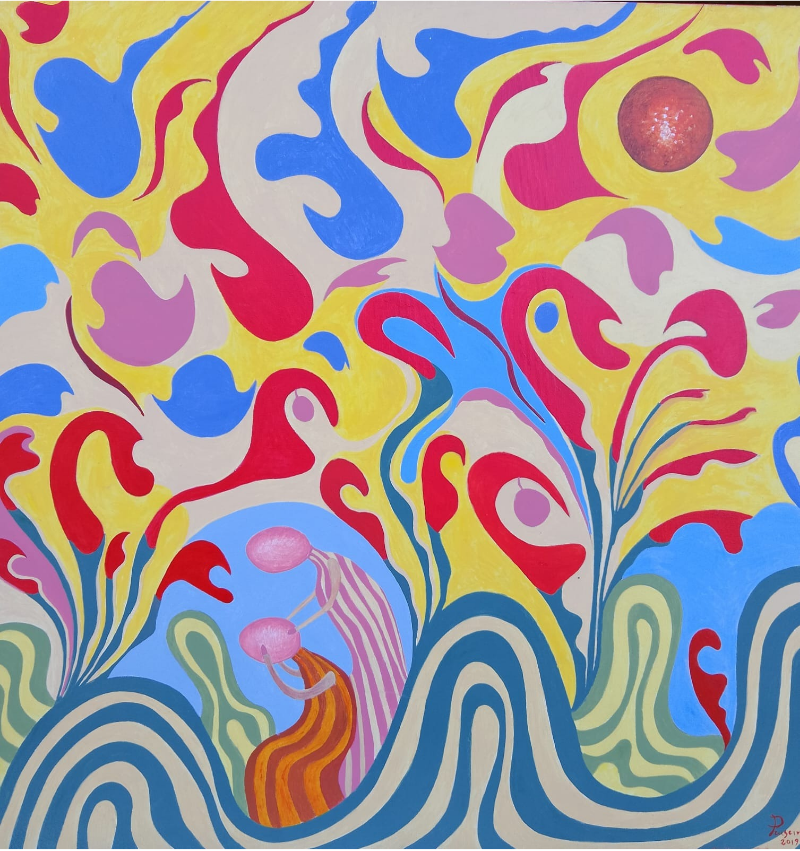
Il sostegno di un amico
- 2017
- 80 cm x 80 cm
- Acrylic on canvas