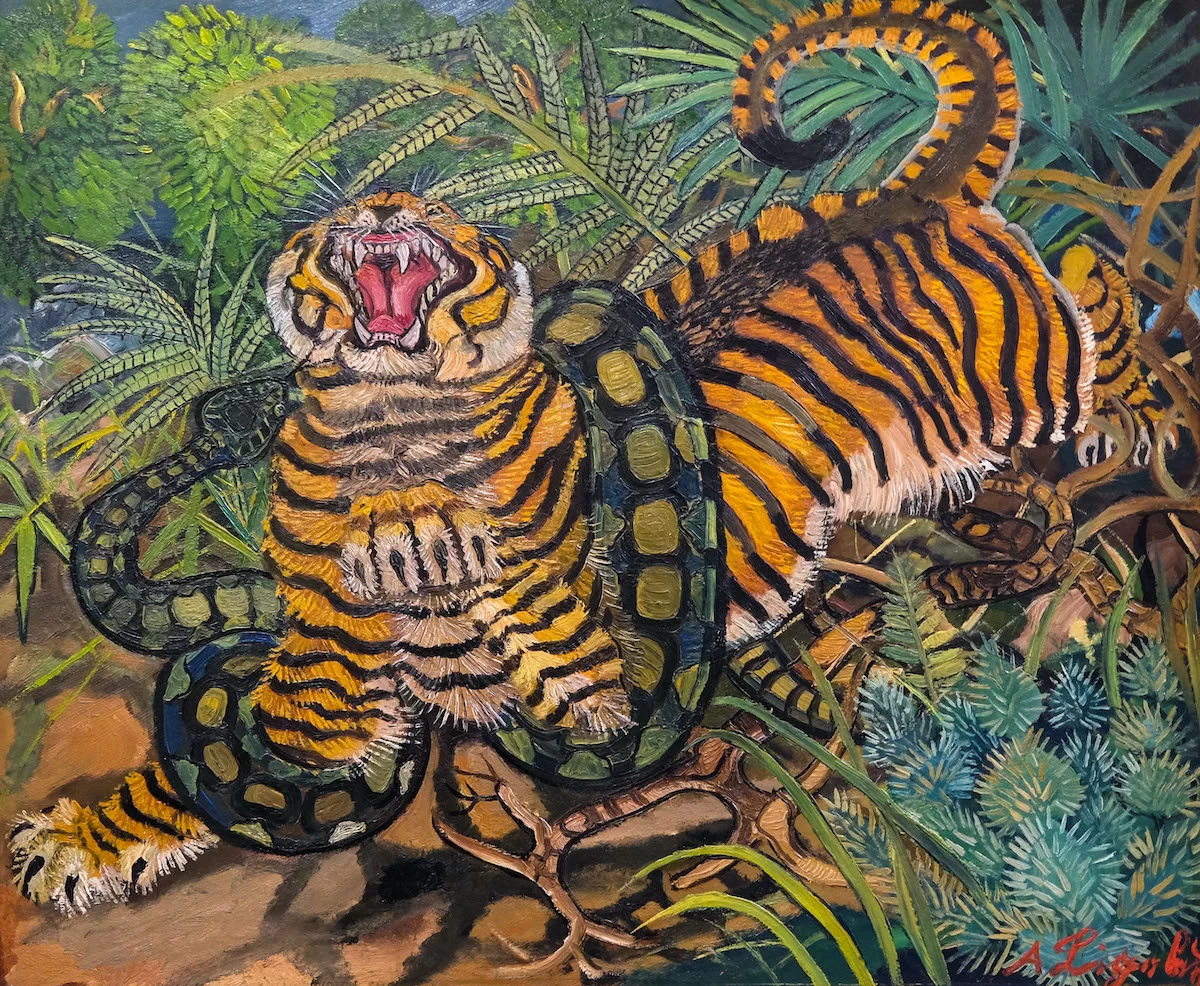
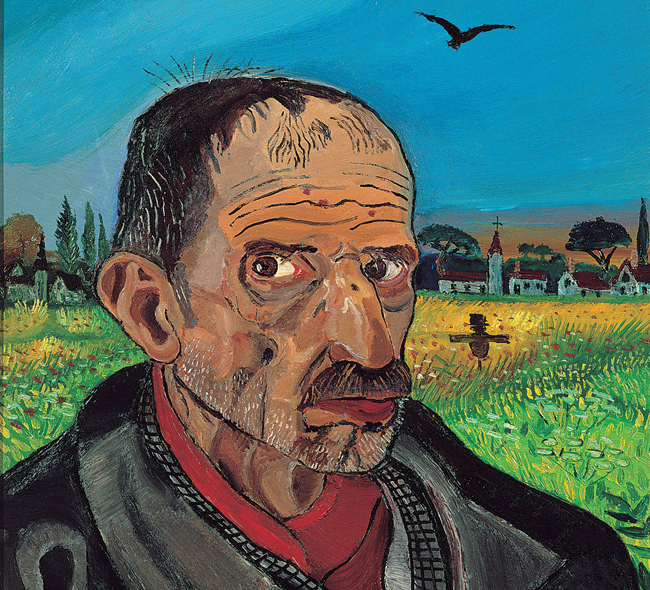
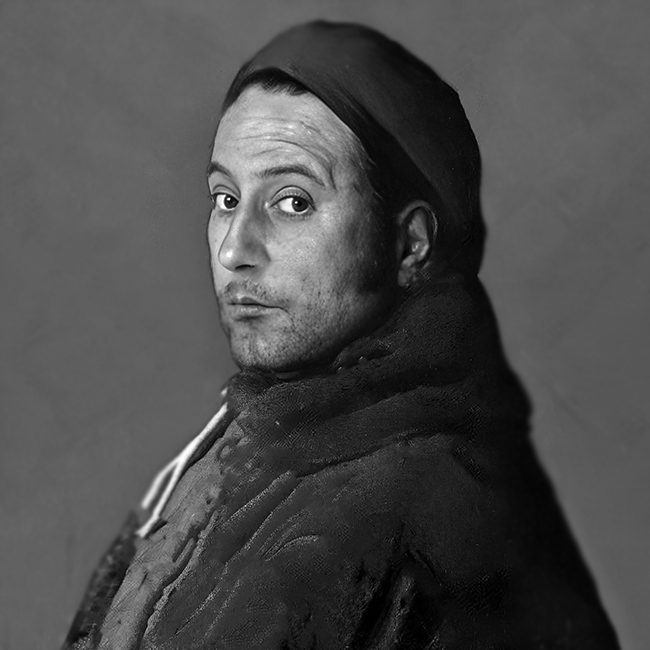
Antonio Ligabue’s life, marked by immense hardship, began on December 18, 1899, in Zurich, Switzerland, in a context of poverty and marginalization. Born as Laccabue to his mother Elisabetta Costa, a young Italian worker, he was initially registered under her surname. In 1901, however, he was legitimized by his adoptive father Bonfiglio Laccabue, originally from Gualtieri (Reggio Emilia). Despite this formal recognition, his childhood was characterized by a profound sense of abandonment, as, at just nine months old, he was placed with a Swiss-German couple. His physical and psychological conditions were compromised from birth due to vitamin deficiencies and rickets, leading to severe physical deformities and stunted development. These issues also affected his behavior, causing him to be placed in special education classes during his school years. His behavioral difficulties, fueled by an unstable family life, led to frequent school changes and expulsions, including from a religious institution for his habit of blasphemy. In 1917, after a nervous breakdown, Ligabue was first admitted to a psychiatric hospital. In 1919, he was expelled from Switzerland and sent to Italy, where, unable to speak Italian, he attempted to return to Switzerland. However, his stay in Italy became more stable, and he began working as a laborer on a road project along the Po River. It was during this period that Ligabue discovered his artistic calling, starting to paint in a self-taught manner. In 1928, a pivotal meeting with the painter Renato Marino Mazzacurati changed the course of his career. Mazzacurati taught him how to use oil paints and encouraged him to dedicate himself fully to painting. Ligabue led a solitary life, often spending long periods by the Po River, immersing himself in his art. However, Ligabue’s journey was also marked by repeated psychiatric hospitalizations. In 1937, he was once again admitted due to self-harming behaviors. Despite these challenges, his artistic talent began to gain recognition, and in 1948 he drew the attention of critics and art dealers. In 1957, a significant moment came when journalists Severo Boschi and photographer Aldo Ferrari visited him, producing a photo feature for *Il Resto del Carlino* that introduced him to the broader public. In 1961, Ligabue held his first solo exhibition in Rome, and in 1963, a major retrospective was organized in Guastalla. However, his life continued to be marred by illness, including a motorcycle accident and paralysis that further limited his abilities. He died on May 27, 1965, at the age of 65, due to health complications. He was buried in Gualtieri, where a bronze funeral mask made by sculptor Andrea Mozzali was placed on his grave. In the local dialect, Ligabue was nicknamed “Al Matt” (the madman) or “Al tedesch” (the German), due to his eccentric and solitary personality and his unusual appearance. His troubled life and his raw, unrefined art have made him a symbol of resilience and unshakable talent, posthumously recognized as one of the greatest Italian naïve painters of the 20th century.