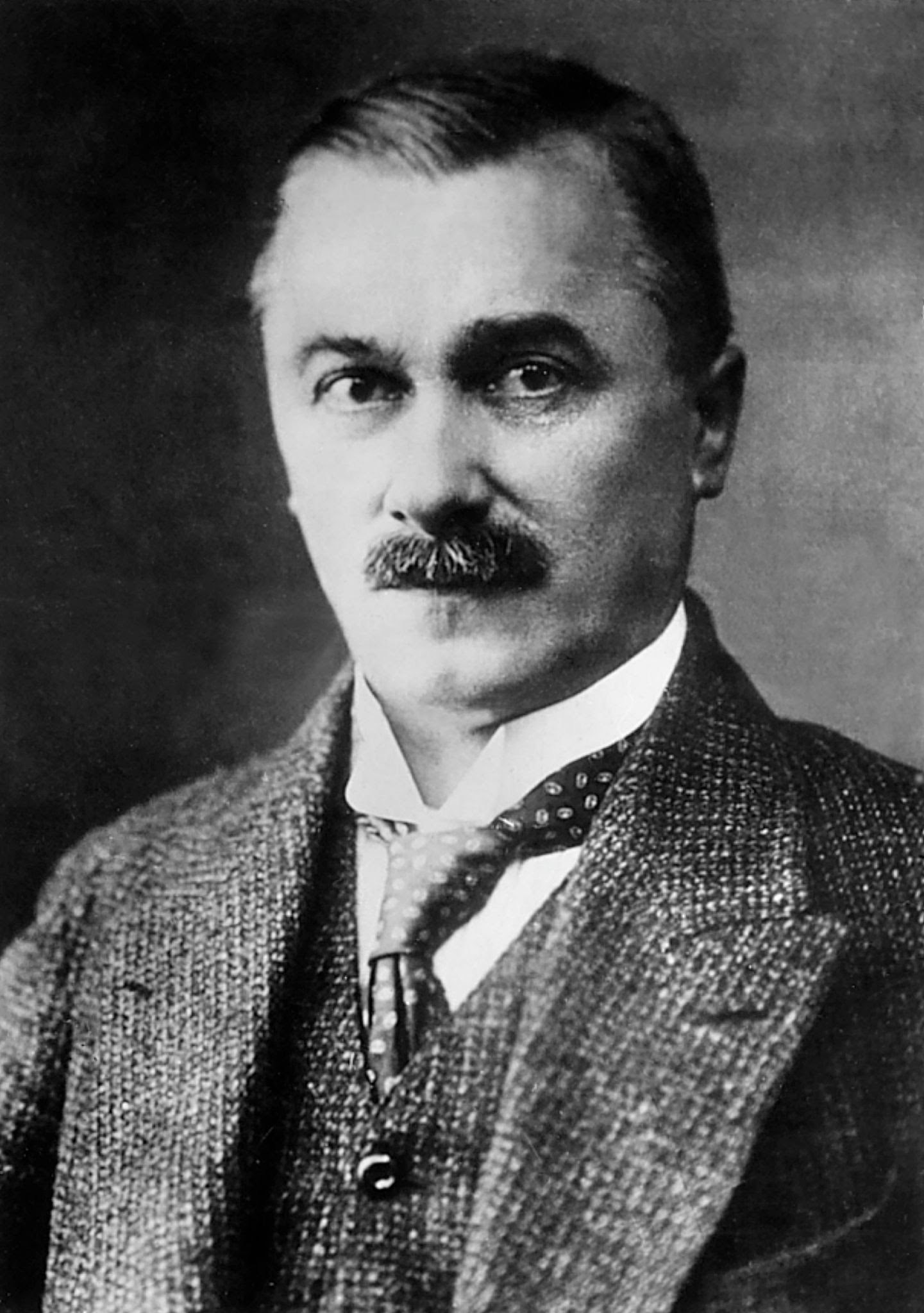
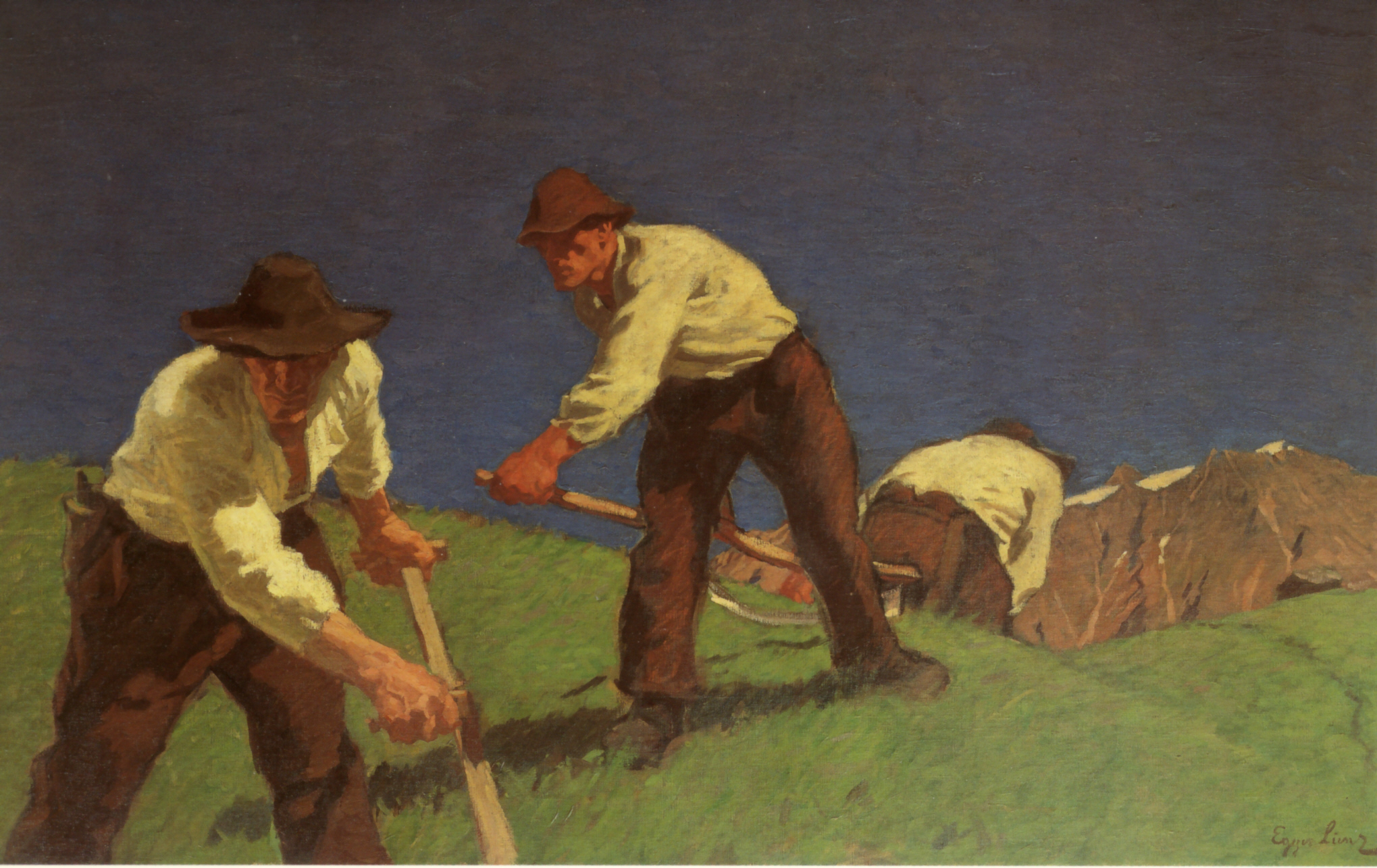
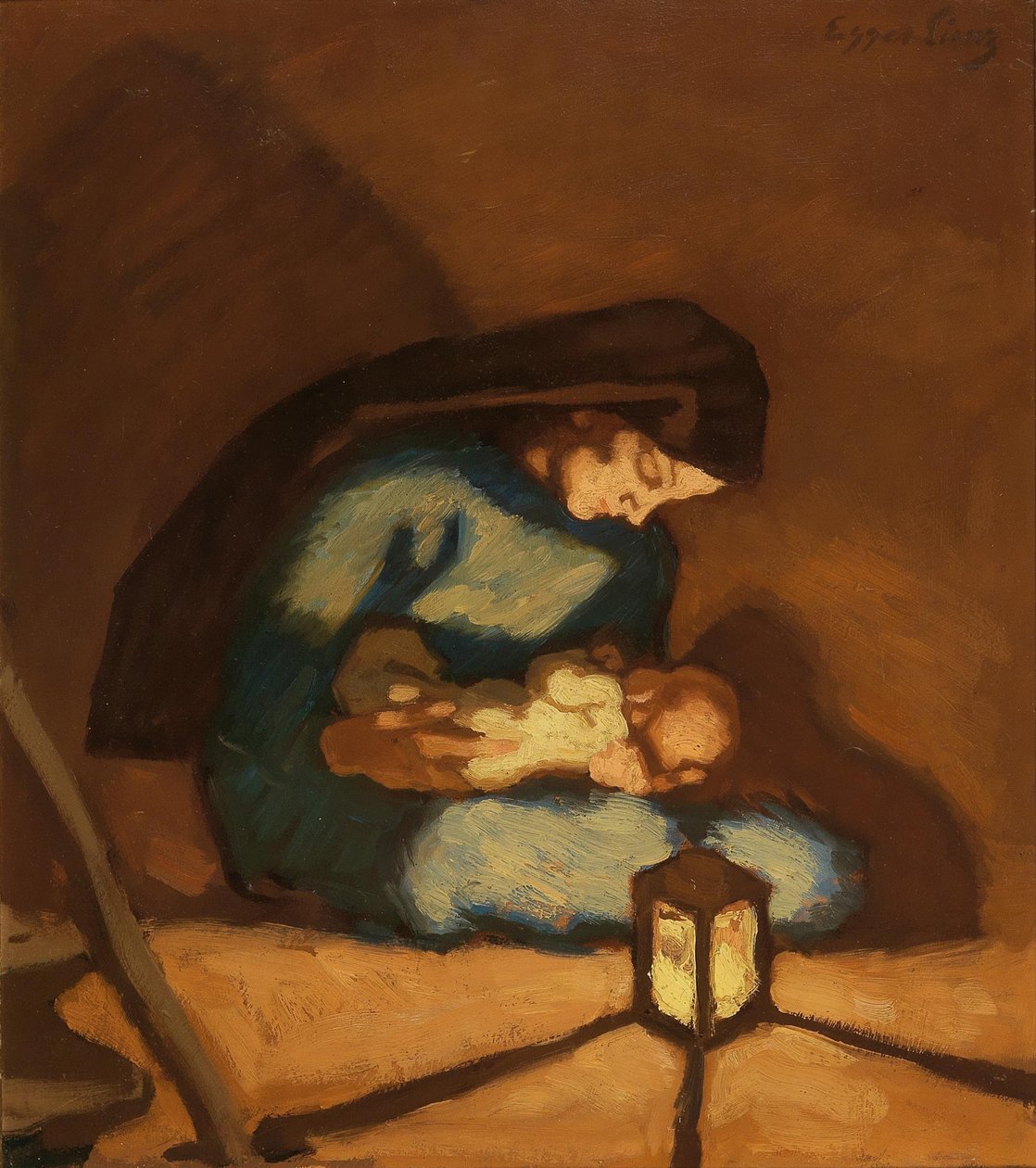
Albin Egger-Lienz (born March 1, 1868, in Striebach near Lienz – died November 4, 1926, in Rencio near Bolzano) was an Austrian painter known for his monumental works and depictions of rural life and human struggles. Egger-Lienz studied under his father, Georg, a painter of sacred subjects, before attending the Academy of Fine Arts in Munich from 1885 to 1893, where he studied under renowned artists such as K. Raupp, G. von Hackl, and W. Lindenschmitt. In 1899, he moved to Vienna, and in 1911, he was appointed to the School of Fine Arts in Weimar. In 1912, he settled permanently in Tyrol, where he would live and work for the rest of his life. Initially focused on plein air painting, Egger-Lienz evolved towards a more monumental style with simplified color palettes. This shift naturally led him to create large-scale murals in his later years. His early works often depicted genre or historical scenes, but he later expanded to more universal themes such as *Life*, *The Earth*, and *Generations*, often presenting them in cycles. With a strong ethical foundation, Egger-Lienz became a painter of great popular appeal, blending dramatic storytelling with a deep connection to human experience. His works are housed in various galleries, including those in Innsbruck, Mannheim, and Vienna. In 1925, he completed murals in the chapel dedicated to fallen soldiers in Lienz, cementing his legacy as a significant figure in Austrian art.