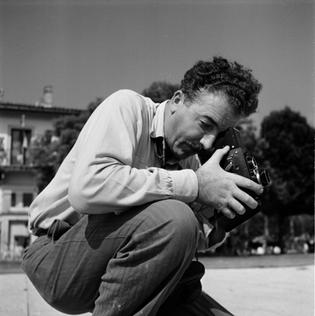
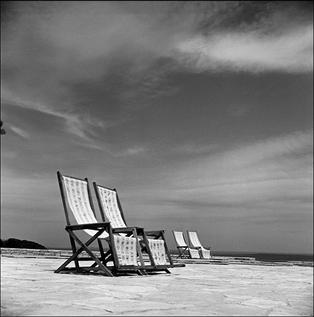
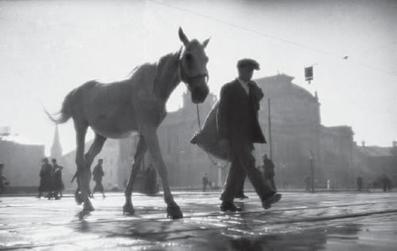
Tošo Dabac (1907–1970) was a renowned Croatian photographer, particularly celebrated for his black-and-white images of Zagreb street life during the Great Depression era. While his work was internationally recognized and exhibited, Dabac spent most of his career in Zagreb, contributing significantly to the city’s visual history. His photography captured the social and cultural life of the period, often focusing on everyday people and urban scenes. Born in Nova Rača, near Bjelovar in central Croatia, Dabac moved with his family to Samobor during his childhood. He attended the Royal Classical Gymnasium in Zagreb and later enrolled in the University of Zagreb’s Faculty of Law. However, he dropped out of law school in 1927 to pursue a career in photography and journalism. Dabac’s early professional work included a role at the Austrian film distribution company Fanamet-Film, followed by employment at the Metro-Goldwyn-Mayer (MGM) subsidiary in Zagreb, where he worked as a translator and press officer for Southeast Europe from 1928 to 1937. He was also the editor of *Metro Megafon*, a magazine published by MGM during this period. Dabac’s photographic career began in earnest in the mid-1920s, with his earliest known image, a panoramic photograph of Samobor, taken in 1925. His work was first publicly displayed in 1932 at an amateur exhibition in Ivanec, a small Croatian town. This exhibition was organized by a gallery that played a key role in the development of photography in Croatia, including the publication of Croatian-language editions of the European art photography magazine *Die Galerie*. In 1932, Dabac transitioned to full-time photojournalism, working closely with fellow photographer Đuro Janeković. His photographs from this period provide an important visual record of the socio-economic struggles and daily life in Zagreb during the 1930s, and his legacy endures as one of Croatia’s most prominent 20th-century photographers.