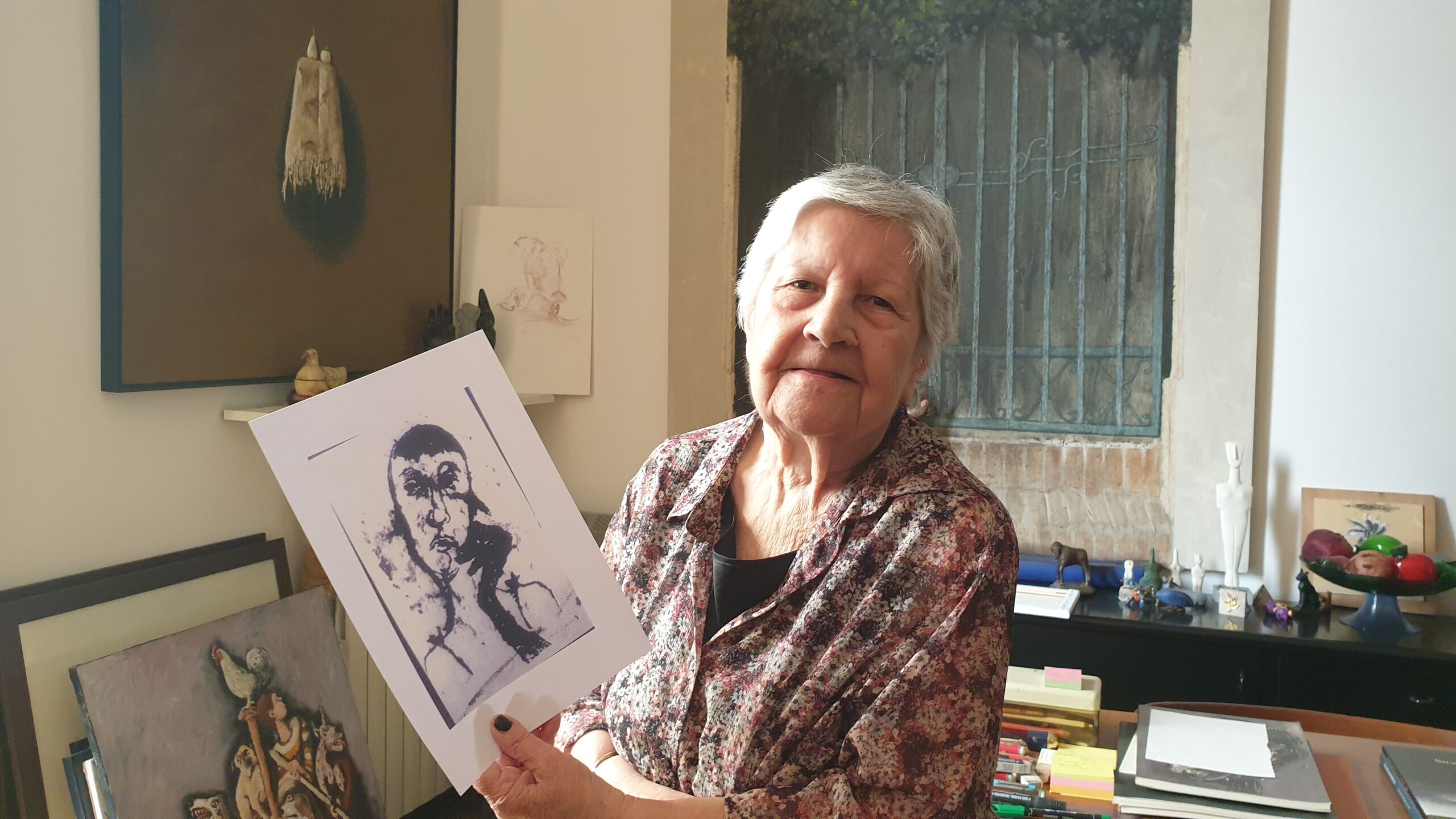
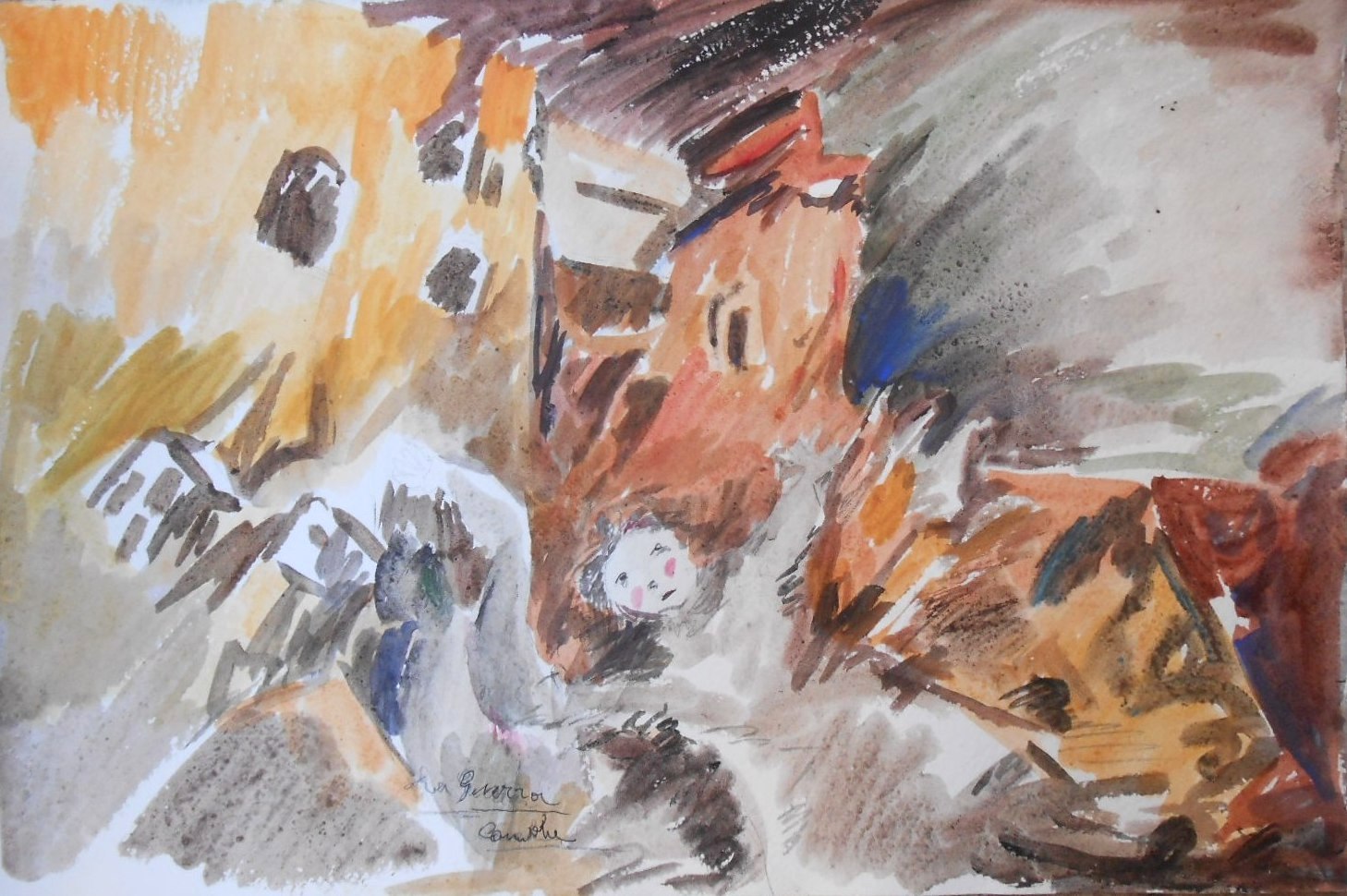
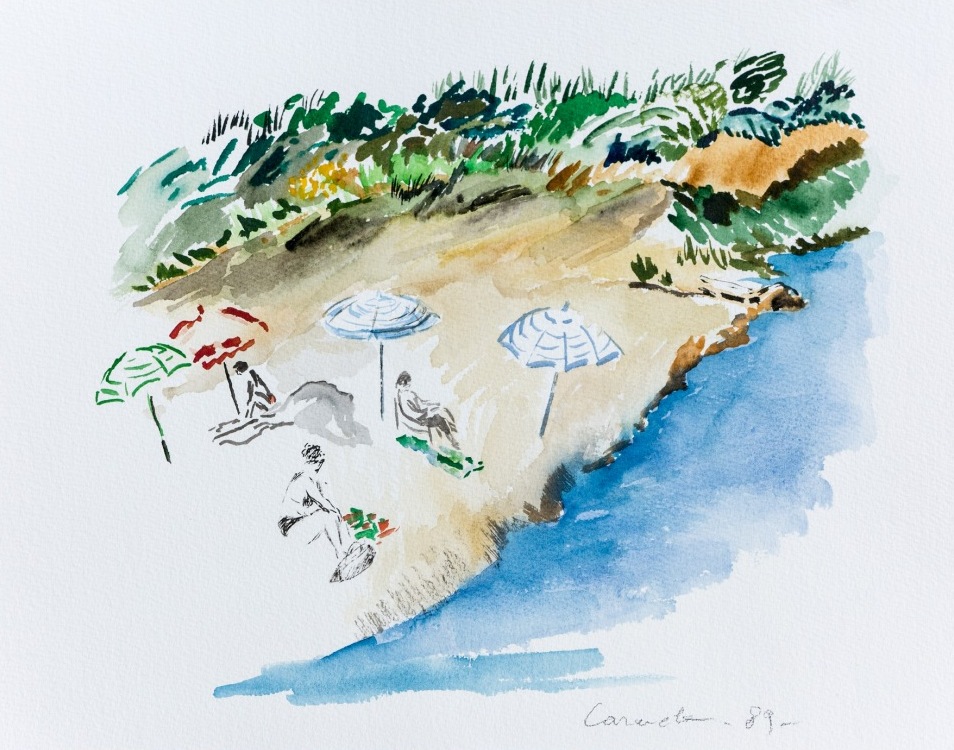
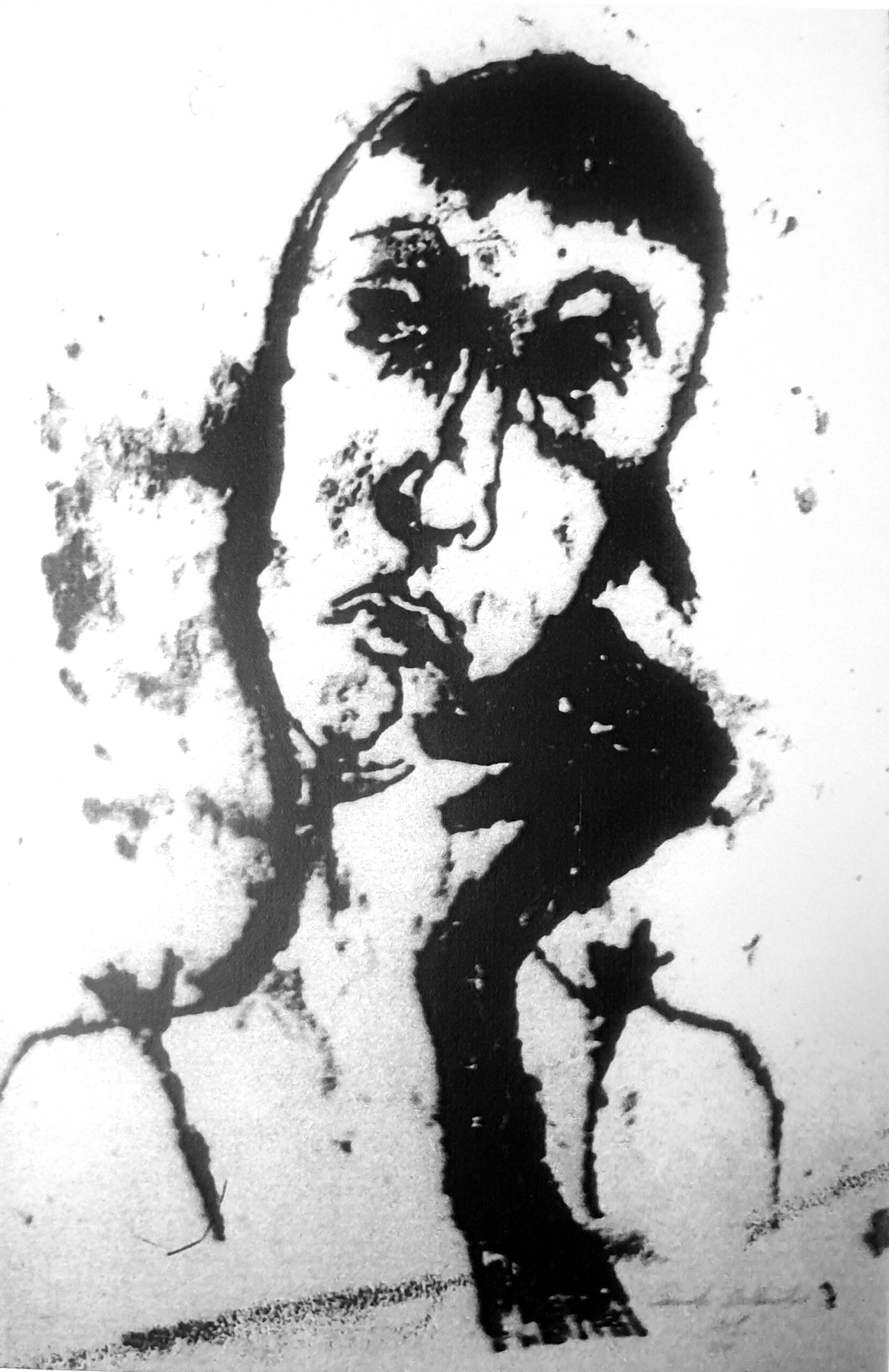
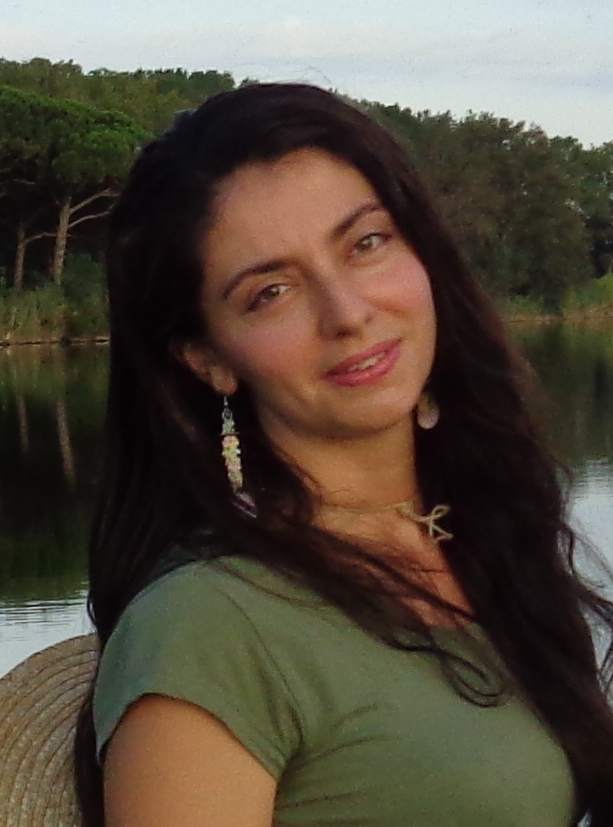
Carmela Orlando was born in Melito di Porto Salvo (RC), Italy, in 1932. As a young girl, she moved with her family to Verona, where she has lived and worked ever since. In 1951, she earned her diploma in Fine Arts in Venice. She taught at the “Duca D’Aosta” middle school in Verona. Since 1990, she has led two year-round courses at the University of Lifelong Education of the City of Verona: a painting workshop and a lecture series on the languages of art. Orlando began exhibiting her paintings in 1957, participating in various group exhibitions. That same year, she took part in the Centenary Exhibition with her painting Fiori, organized by the Verona Society of Fine Arts at Palazzo della Gran Guardia. In 1958, she participated in the Painting Biennale of the Municipality of Parma with the work Bambina. In 1959, she exhibited the graphic work Figura at the national drawing competition “Diomira” in Milan. The piece won a prize and became part of the Achille Bertarelli Collection at the Sforza Castle. In the early 1990s, she organized four women-focused exhibitions in Verona with the cultural association “Circolo della Rosa,” also contributing as an exhibiting artist. In 2018, her oil painting Paesaggio was featured in the exhibition Art Between Landscapes and Peripheries at the Sartori House Museum in Castel d’Ario (MN). In 2023 (February 25 – March 9), she held her solo exhibition The Sign Speaks: Life, the Journey at the Arianna Sartori Gallery in Mantua. She paints using a variety of techniques—watercolor, graphic media, and natural earth pigments—on supports such as canvas and paper. Her lifelong passion has been the study of art and its languages, both in teaching and in sharing it with others. Discussing Carmela Orlando’s artistic work means recognizing the subtle balance between apparent simplicity and expressive depth. The subjects she chooses—shells, cats, sheep, coastal views, and pastoral scenes—may seem spontaneous, but behind them lies a strong technical mastery paired with a deep, emotional sensitivity. Her preferred techniques, watercolor and ink on paper, offer images that are light only on the surface; each mark emerges from a powerful, lived emotion rather than mere illustration. A milestone in her career came in 1959 with her participation in the national “Diomira” drawing prize in Milan. Her monotype Figura won an award and entered the prestigious “Achille Bertarelli” permanent collection at the Sforza Castle—an important recognition of her expressive graphic work. The theme of travel runs through her entire artistic journey—not only the physical journeys between Calabria, Greece, Spain, and Tuscany, but also an inner, reflective voyage. Since childhood, Orlando observed the world with awe: the sea, shells, fruit, bread—simple things that became symbolic images in her work, full of memory and affection. In Shells, for instance, a pink shell in the top right corner of a watercolor seems fresh from the sea, still alive. In her Marine series, she depicts the places visited in her travels, capturing the local vegetation, blue water and skies, and lazy or sun-weary tourists beneath umbrellas. Even in urban views like Toledo, rendered with swift ink lines, one senses the urgency of her gesture—sketches often done during fleeting stops on bus or car journeys in the late 20th century—yet they retain a striking intensity. Among her most evocative works is The Sheep of Poggio Foco, inspired by the Tuscan countryside. The whites left unpainted are not accidents but become the sheep themselves, set within brown and green tones that recall the techniques of the Macchiaioli. Through her art, Carmela Orlando has captured the essence of her time. Her work—focused on everyday life, nature, and travel—offers a poetic and authentic voice in the context of 20th-century contemporary art.