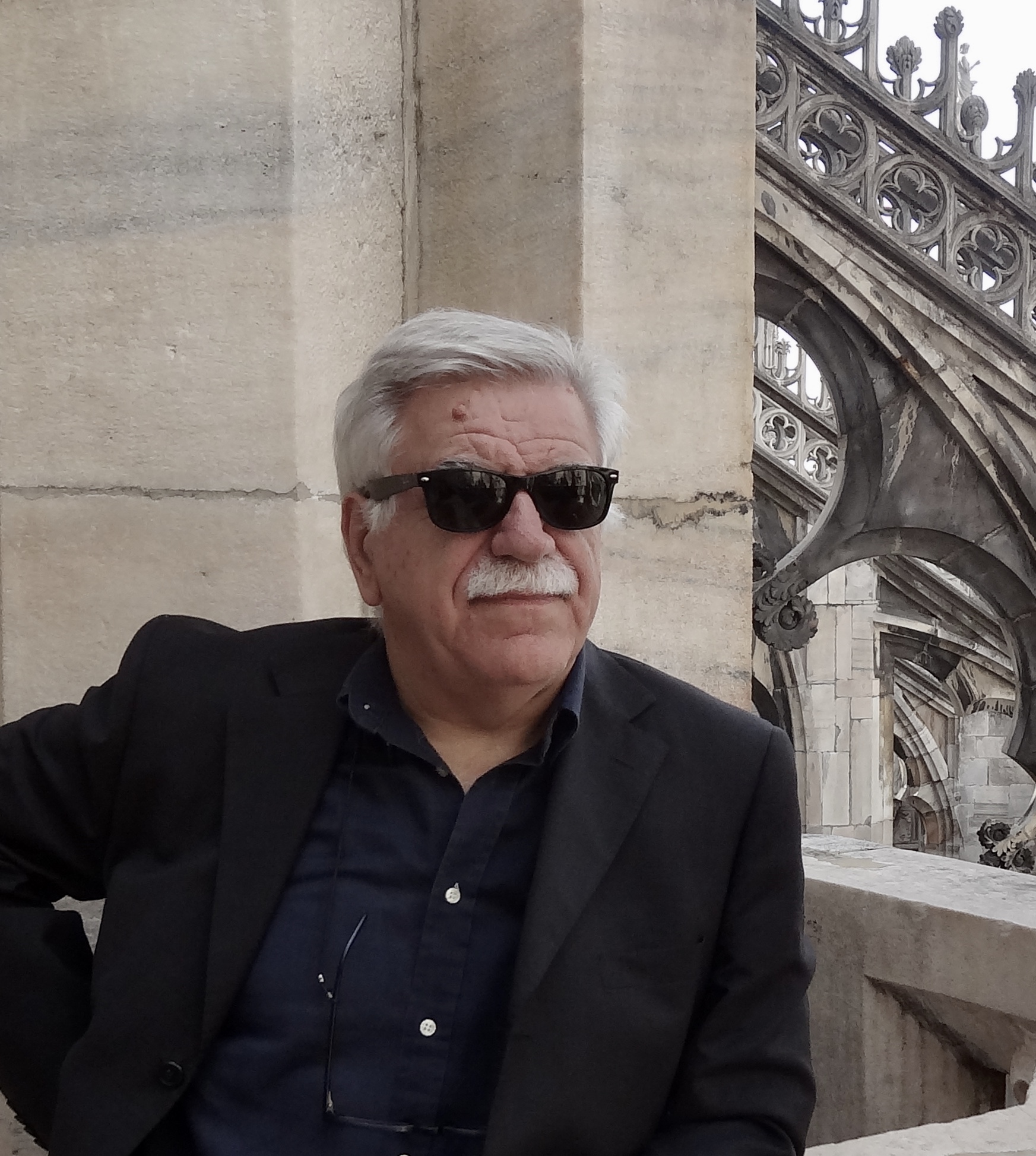
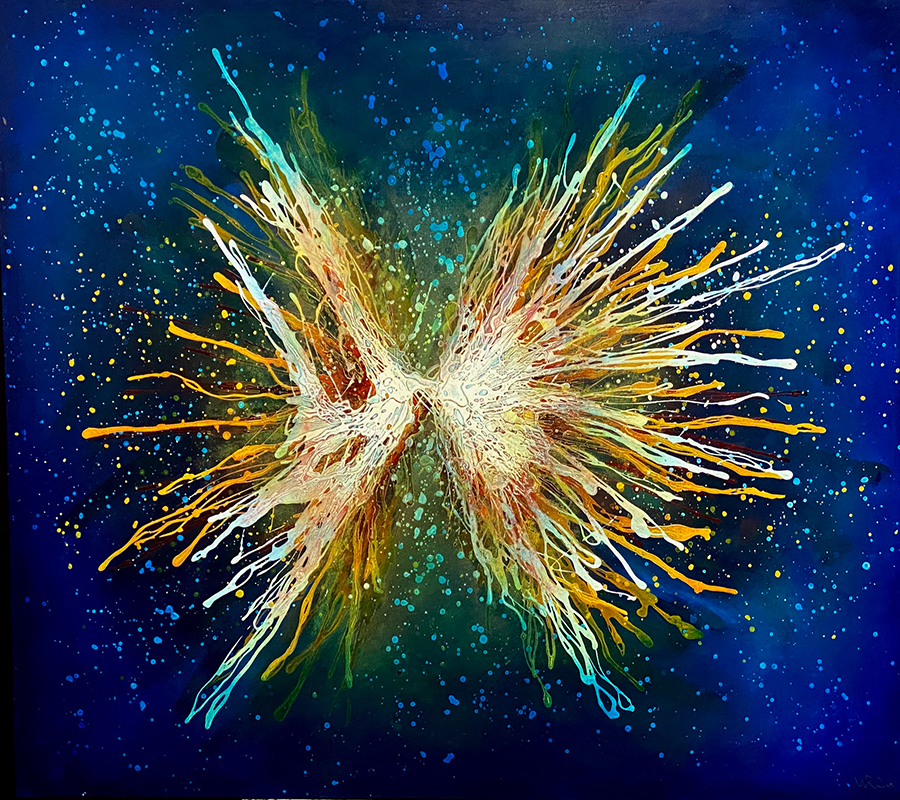
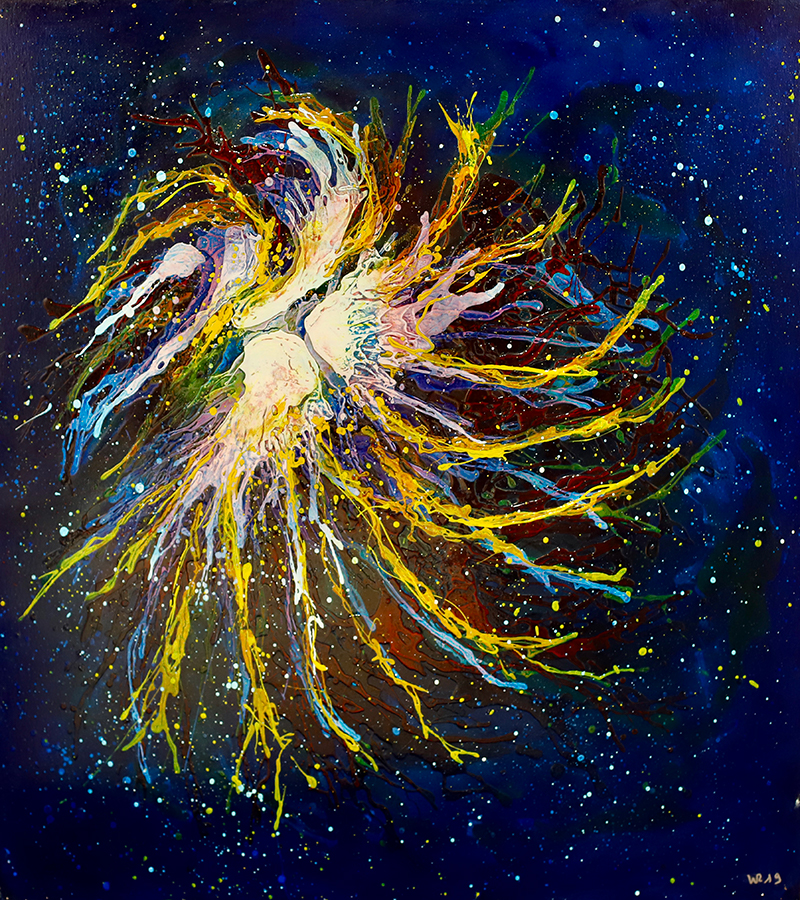
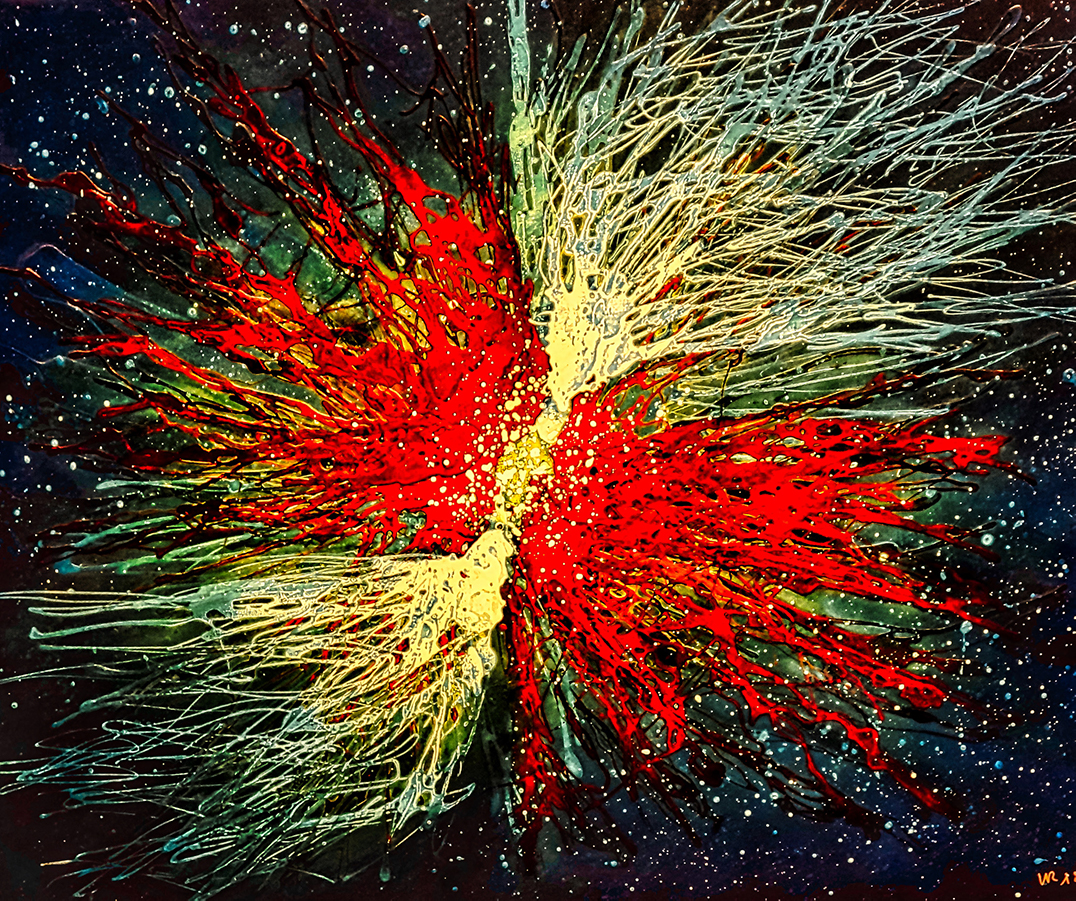
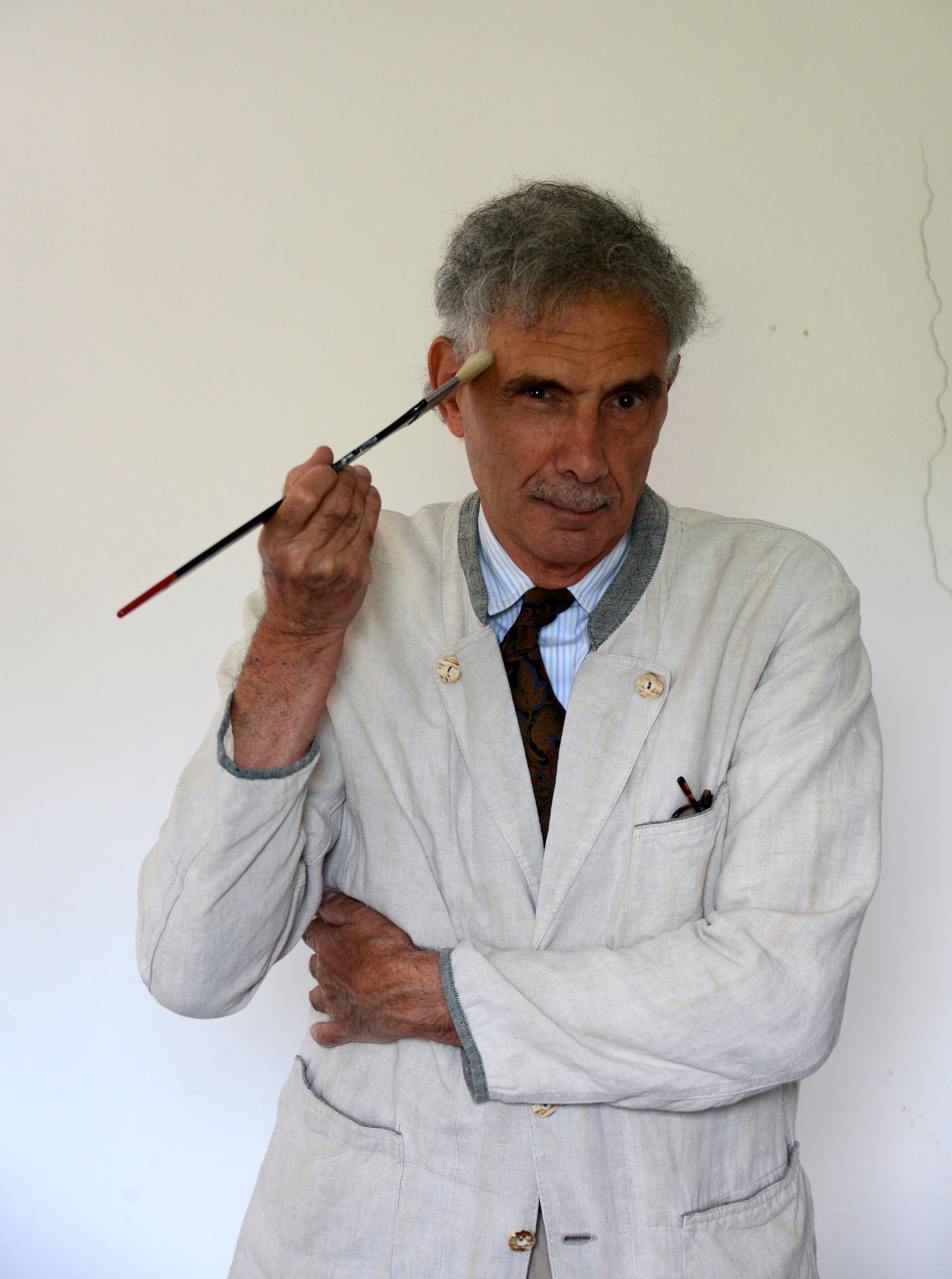
Walter Ricci was born in Argenta (FE) on January 8, 1951. He later moved to Ravenna, where he continued his studies and graduated in Engineering. He spent his professional career first in the private sector and then in the Public Administration. His life was consumed by work, but he could not help but cultivate his artistic passion, which had been present since his youth. From a young age, he enjoyed experimenting with still lifes, flowers, landscapes, and travel experiences, primarily working with oil paints on canvas. His art was always very private and reserved. Something changed in 2013, a radical shift in his expressive direction. He began working with great passion and pleasure, relying on acrylic paint and enamel, pouring and casting it onto canvases or wooden panels. The substantial dimension of his works became an important element. He found joy in discovering color combinations and in the relationship between graphic elements, trusting in the results that emerged from the marks and colors. He felt fulfilled and, more importantly, felt the need to share this process—experiencing the pleasure of transmitting an emotion that each viewer interprets and “feels” in their own way, leaving an impression in their imagination. This is the work of Walter Ricci, who found in informal language an expressive element that does not seek form but instead seeks emotion. Walter Ricci shows a strong commitment to both figurative and abstract art, but his stylistic evolution can sometimes appear as an unresolved tension between the desire for immediate emotional expression and a more rigorous formal exploration. While in his figurative works nature is depicted with great delicacy, evoking a sense of intimacy and grace, his painting technique, with its warm palette and synesthetic tonal exploration, sometimes feels too rooted in past aesthetic models, such as the post-war Italian expressionist movements. The search for formal purity and natural idyll, while successful in some moments, risks becoming somewhat repetitive, lacking that innovative spark that could elevate his art to a deeper level of introspection and originality. In the abstract realm, the lack of preparatory drawing or clear planning could be seen as a positive choice for its genuine expressiveness, but at the same time, it creates a sense of a lack of direction. The dripping technique and the fluid, spontaneous use of color suggest a connection to movements like abstract expressionism and French tachisme, but the repetition of these aesthetic solutions, without true evolution, might feel less impactful compared to other bolder experiments. His work, while full of material energy and spirituality, sometimes fails to achieve a completeness that truly reflects the evolution of contemporary artistic sensibilities. Although Ricci demonstrates technical skill and a deep emotional connection to his art, he risks remaining attached to a somewhat romantic and retrograde vision, lacking a genuine challenge to the aesthetic conventions of the present. His art, though moving in its beauty and atmospheres, doesn’t truly break away from tradition, occasionally remaining trapped in a dynamism that doesn’t always appear sufficiently dynamic or innovative.